

shakar
27 posts


I built an AI creative strategist that works while I sleep.
Every morning at 8AM it:
→ scans 26 competitor ad accounts
→ detects which creatives are actually scaling (spend, reach, duplication)
→ picks the top 3 winners of the last 72 hours
→ drops them in Slack with download links + a ready-to-go brief for my editors
Zero manual ad research. Built on trendtrack data.
My team wakes up to validated concepts, not a blank page.
Reply "radar" and I'll break down the full setup.
x.com/Trendtrack_io/…

Trendtrack@Trendtrack_io
Launching TrendTrack MCP. Your AI knows everything. Except what's actually working RIGHT NOW. 7M+ shops. 2-3M new ads/day. Millions of emails. Refreshed every 24h. All piped straight into your Claude. Ask "what's scaling in skincare this week?" → done before you finish reading. Your LLM finally answers based on NOW. Not 2023. 👇
English

one of these is a real ugc creator
the other is fully ai
found a viral tiktok yesterday and rebuilt it with seedance 2.0 in like 20 minutes
same hook. same script. same bones.
swapped the character. swapped the setting.
thats it
this is the unlock most brands still dont see
you dont need to find the next viral concept
you take whats already proven and clone it with ai
then spin 50 variations until one fucking booms
infinite shots on goal for the price of one shoot
real creators cost $200-500 a video and take a week
this took 20 minutes and cost cents
drop "clone" and ill dm you the full stack (must follow so i can dm)
if you're a brand and want this for your products launch a campaign on Affiliate Network below
link.affiliatenetwork.com/sam
English

Everybody asks how I find winning AI UGC concepts:
I study nostalgia.
The brain remembers familiar moments because they trigger existing memories, then reinforce them by attaching your ad to that same feeling.
You’re not just creating attention.
You’re borrowing memory.
Comment “concept” and I’ll show you exactly how I research these.
English

I built a Claude skill that makes motion-style animation.
> Paste a reference image
> It generates frames with Nano Banana 2
> and animates the video with Seedance 2.0
Everything runs in Claude through the Arcads MCP
Comment "Motion", and I'll send you the skill
English

Here’s how I did it in 30 steps:
1. Start with a problem you personally hate. We didn't find Hiya in a market report. I read the label on my kids' vitamins one morning and saw 2 teaspoons of sugar per serving. The average kids vitamin had as much sugar as a piece of chocolate cake. That frustration became a $260M company.
2. Understand your market size before you build. The US children's vitamin and supplement market was valued at $900M when we started. Expected to reach $1.4B by 2029. We weren't guessing there was opportunity. We knew exactly how big the ceiling was.
3. Find a co-founder who's already won with you. Darren and I had already built GoLive Mobile together — $250M in revenue, $100M in earnings, 1000x return for shareholders. We didn't start Hiya as strangers taking a leap of faith. We had 7 years of proof we worked together.
4. Spend at least 12 months on product before launch. We spent over a year mapping formulation, finding manufacturers, working with pediatricians and nutritionists before a single bottle shipped. Most founders spend 4-6 weeks. We spent 52+. That's why our product worked from day one.
5. Validate with experts not just instincts. We assembled a team of pediatricians, nutritionists, dentists, scientists and parents to formulate our product. Not 1 expert. Not 2. A full network. The result was 15 essential vitamins and minerals in a single chewable with 0 grams of sugar.
6. Outsiders redesign systems. Insiders optimize within them. We had 0 years of experience in children's health. That was our advantage. We questioned every industry default — sugar levels, gummy formats, synthetic fillers. Experts couldn't see what we saw because they were too deep in the system.
7. Your consumer and your customer are not always the same person. Our consumer was the child. Our customer was the parent. 100% of our marketing was aimed at parents while 100% of our product experience was designed for kids. Most competitors solved for 1. We solved for both simultaneously.
8. Launch on the worst possible day and keep going anyway. We launched March 11 2020. The exact same day WHO declared COVID-19 a global pandemic. We thought it was over before it started. It wasn't. We hit $103M in annual revenue 4 years later.
9. Price is a signal of quality. We priced at a premium from day one — roughly $30/month per child. Above every competitor in the category. Not because we were greedy. Because $10 signals $10 quality. "Approachable luxury" — premium enough to signal trust, low enough that households making under $75K annually could still afford it. And they did. That demographic became our largest customer segment.
10. Never change your price. Change your value. Our price has never changed in 5+ years. Costs increased significantly — especially during COVID supply chain chaos. We absorbed every dollar of that by growing volume, improving retention, and expanding our product line instead of passing costs to customers and losing their trust.
11. Commit to 100% subscription from day one. Not a subscription option. 100% subscription only. No one-time purchases. No Amazon storefront. No retail shelf. Pure recurring revenue from the first day. This single decision defined our entire business model and cash flow trajectory.
12. Offer 50% off the first month. Never change it. We've tested every possible variation of this offer over 5 years. 50% off month 1 has been the highest performer every single time. The goal isn't margin on month 1. The goal is getting the right customer in the door so months 2 through 24 can compound.
13. Solve the cash flow paradox before it solves you. 50% off month 1 + bootstrapped growth = brutal cash flow problem. The faster we grew the more cash negative we became. Every 1,000 new customers we signed up created a cash hole that took months to fill. We raised $0 from VCs so we had to get creative with debt financing. Some partners were horrific. Some were great. Find them before you need them.
14. Text every single new customer personally within 24 hours. We built an entire vitamin concierge team. Every new subscriber — whether we had 100 customers or 100,000 — received a personal text from a real human introducing themselves and offering help. Not a bot. Not an automated sequence. A real person. That 1 decision shaped our entire retention curve.
15. Let customers customize down to individual units. Parents could text us "my son only likes the green ones." We'd ship custom ratios — 47 green, 37 yellow, 0 red per monthly shipment. Raised our costs slightly. Created a competitive moat that billion dollar companies like Unilever and P&G could never replicate. Drove a tangible measurable lift in both retention and brand sentiment.
16. Iterate relentlessly on your core product. We launched 1 multivitamin in March 2020. We are now on the 8th iteration of that same product. 8 rounds of improvements based purely on customer feedback. We changed flavor profiles, ingredient ratios, and texture based on what the data told us. Never stop improving what's already working.
17. Build your brand for 2 audiences simultaneously. Our packaging had to make a parent want to put it on their kitchen counter AND make a child excited to take their vitamin. We made a reusable glass bottle with stickers kids could decorate. Parents Instagrammed it. Kids personalized it. 1 product, 2 emotional hooks, zero sugar.
18. Insource fulfillment until scale makes it impossible. We ran our own warehouse operations in the early days. Complete control over every touchpoint. It enabled the customization. It enabled the quality control. Eventually when we reached a scale where the warehouse was becoming its own full business we outsourced the majority. But those early years of full control were invaluable.
19. Don't launch product 2 until product 1 is undeniable. We waited 2.5 years — approximately 30 months — before launching our probiotic as our second product. Not because we lacked confidence. Because we wanted 30 months of data, customer feedback, and retention proof before we risked our brand reputation on something new.
20. Survey customers before formulation begins. Every new product in our lineup was validated by existing customers before we spent $1 on development. We asked parents directly what problem they wanted us to solve next. They told us probiotics. We made probiotics. We knew it wouldn't fail before we made it. Today more than 50% of our customers purchase more than 1 Hiya product every single month.
21. Educate before you sell. Always. Our social and email strategy was 80% education, 20% promotion. We explained ingredients we DON'T use and why. We talked about what's wrong with kids nutrition in America. We gave parents information that had nothing to do with buying Hiya. The result was customers who trusted us as an expert advisor not just a brand they bought from.
22. Build a team with near zero turnover. In our entire existence as a company we lost approximately 2 employees voluntarily. 2. In a period where most DTC startups had 40-60% annual turnover. We did that by hiring the absolute best people in every discipline, never micromanaging, and building a culture around shared values not fear.
23. Vulnerability is the most underrated leadership trait. When we made mistakes we said so internally immediately. When we didn't know something we admitted it publicly to the team. When we entered retail — something we knew nothing about — we said so clearly. That honesty created a culture where people felt safe enough to do their best work.
24. Know your gaps before your gaps know you. We knew nothing about international expansion. USANA does 90%+ of their business internationally across 24+ countries. We knew nothing about large scale manufacturing optimization. USANA has been doing it for 30+ years. We picked our acquirer based on who filled our exact gaps. Not who offered the most money.
25. Never raise institutional capital if you can avoid it. Total outside capital raised over our entire existence: a few hundred thousand dollars from friends and family in 2020. That's it. No Series A. No Series B. No VC board. No dilution. $0 institutional capital → $103M annual revenue → $260M acquisition. Founders retained virtually all equity going into the exit.
26. A profitable company negotiates from strength. At the time we began exploring acquisition we were already highly profitable. $19M net income on $103M revenue — roughly 19% net margin. We did not need to sell. That single fact changed every conversation we had with potential acquirers. Never sell from desperation. Build something that doesn't need to be sold.
27. The subscription cash flow trap will suffocate you if you're not ready. This is the thing nobody in DTC talks about honestly. Growing fast with a discounted first month means every new customer cohort creates a cash hole. Sign up 10,000 new customers in a month at 50% off and you're immediately deeply cash negative even though your business is fundamentally healthy. Plan for this or it will kill you when you're winning.
28. Pick your acquirer like you pick your co-founder. We met with many potential buyers. We knew USANA was the right partner after our 2nd meeting. Not because of their offer. Because they wanted to learn FROM us not impose their will ON us. Post acquisition my day to day changed by approximately a few phone calls per week. That's it. Culture fit in an acquisition matters more than price.
29. Time is the only thing that can't be negotiated. Compounding only works with patience. The first 6 months of Hiya almost nothing worked. Month 7 we started finding our stride. By year 2 we were growing 50% year over year. By year 4 we were the #1 children's wellness brand in America. You cannot accelerate compounding. You can only show up every single day.
30. Let the scoreboard speak for itself. We never chased press. Never sought validation. Never announced funding rounds because we had none to announce. We just built. $0 raised. $103M revenue. $260M exit. 200,000+ families trusting us with their children's health. Zero VC. Zero regrets.
Comment “X” if you’d like the full playbook and more details (retweet and follow to receive)
English
I'm 41.
I've done $260M with ecom in 5 years, fully bootstrapped.
Here's how I built Hiya Health with 500+ influencers using this exact playbook 🧵 (thread)

English
7 Claude prompts for e-com I use weekly that would cost 5K-8k+ from an AI agency.
Here we go:
1. "Act as a 20-year China sourcing veteran. Review this quote and flag every hidden cost, vague spec, and unfavorable term. Output as a table."
Catches tooling fees, sketchy payment terms, packaging math errors. I run it on every quote before responding.
2. "Here are 200 of my product reviews. Cluster by theme. List the top 5 complaints and top 5 praises with direct customer quotes."
Your roadmap for product improvements and ad copy. The exact words customers use are gold.
3. "Here are 5 of my top-performing ads. Reverse engineer the structure, hook style, pain point, and CTA. Generate 10 new ad concepts using the same DNA but new angles."
Creative pipeline without paying $400 per brief.
4. "Rewrite this product listing for a buyer who's been burned by similar products. Lead with the strongest objection. Keep under 150 words. Use customer language, not marketing language."
Conversion lift of 12-20% on average.
5. "Build a 5-email post-purchase sequence for [product]. Each email solves a specific anxiety the customer has at that moment. Map each to a delivery milestone."
Replaces a $2,500 Klaviyo setup. 80% there.
6. "I want to push this MOQ from 500 to 200 units. Write 3 versions: warm, direct, and with leverage. Factory is mid-size in Guangdong. We've placed 2 orders with them before."
Saves 40 minutes of staring at a blank email.
7. "Here's my COGS, shipping, payment fees, ad spend, and overhead. Calculate true contribution margin. Tell me which variable to attack first to improve net margin by 5 points."
This one made me rethink my entire pricing strategy.
I have 10+ more prompts.
DM "PROMPTS" for the full prompt library with the exact wording I use weekly.
English
3 AM in a Shenzhen hotel. Staring at a quote from a factory I knew was screwing me.
Unit cost looked fine. MOQ looked fine. Packaging spec looked fine.
Something was off.
Opened Grok.
Pasted the entire quote. Used this prompt:
"You are a 20-year China sourcing veteran. Review this quote line by line. Flag every hidden cost, vague spec, and term designed to favor the seller. Be ruthless."
23 seconds later I had 6 red flags.
Tooling fee buried in "setup costs."
Packaging volume that didn't match the dims. Inspection clause putting liability on me.
Payment terms with a hidden 3% wire fee.
Etc.
Sent the factory a revised quote with every flag corrected.
They didn't push back on a single one.
We've run this on every quote since. Caught 47k in hidden costs across 14 orders this year alone.
Factories know what they're doing. They're betting you won't read carefully.
AI reads carefully every single time.
Comment "PROMPTS" and I'll send you a few other prompts I run on every quote before responding.
English

I interviewed all of the best creative strategists in the world.
@binghott. @iamshackelford. @DenneyDara. @sourfraser. @MatthewGattozzi. @pkennedy93 @thedennis. @harrydelmege_. @heyitsalexP. (thank you so much guys, you're all the best)
If you read this document you will be able to become, train, & hire the best advertiser/creative strategist in the world. I promise you that.
Hiring and training creative strategists is one of the most expensive mistakes you can make if you get it wrong.
So I asked the best in the world:
what separates the ones who actually produce winners from everyone else.
I wrote it all up in one doc.
I put a lot of time into this and there literally 0 AI, just 14 pages of straight sauce.
reply "STRAT" and I'll send it over.
English
I recently spoke to a marketer who ran a $40M brand with just two designers and ONE AI process:
He gave me and my team a masterclass on using AI to scale marketing and creative.
Most brands use one tool with a bad prompt and hope it will solve all their problems.
He chains 7 different tools together for: ideation, image creation, video editing, and iterating based on performance.
ALL using AI and two offshore designers.
I paid him 6-figures to build these systems for my companies.
Now, I’m giving them away for free.
Repost + Reply “GA” to get the guide in your DMs.
English
We’ve LITERALLY scaled to $100K/day in ad spend using this EXACT creative strategy.
I’m giving away the 3-part methodology we use:
- Angle Architecture
- Awareness Levels
- Creative Expansion
Repost + Comment "SCALE" and I’ll DM you the full breakdown.
(for followers only)
GIF
English


Here's the link to grab it:
1/ Register to the conference
2/ Receive the free guide
conf.cosprints.ai/?13
(AutoDMs are still live)
English
Claude is the smartest AI right now.
But 90% of people prompt it like ChatGPT.
That's why I made the Claude Mastery Guide:
→ How Claude thinks differently
→ Prompts built for Claude
→ Workflows that use its strengths
Comment "Claude" and I'll DM it free.
English

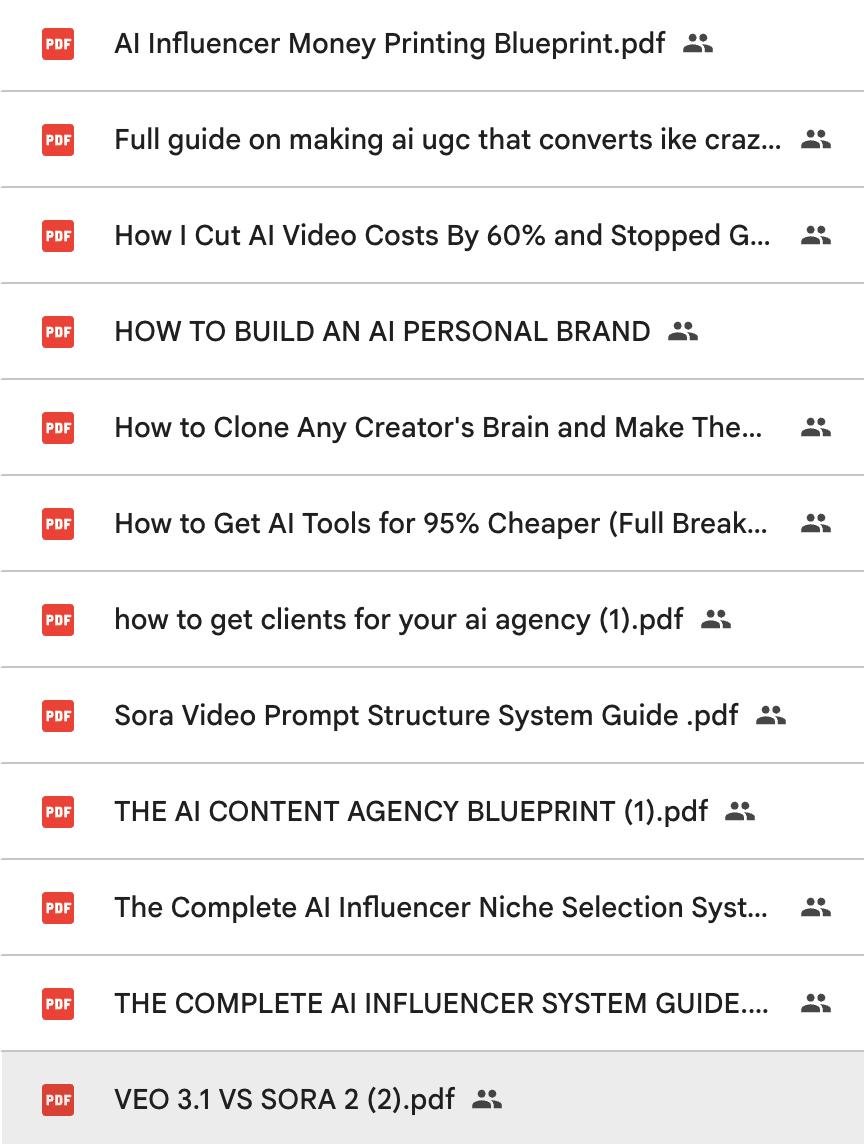

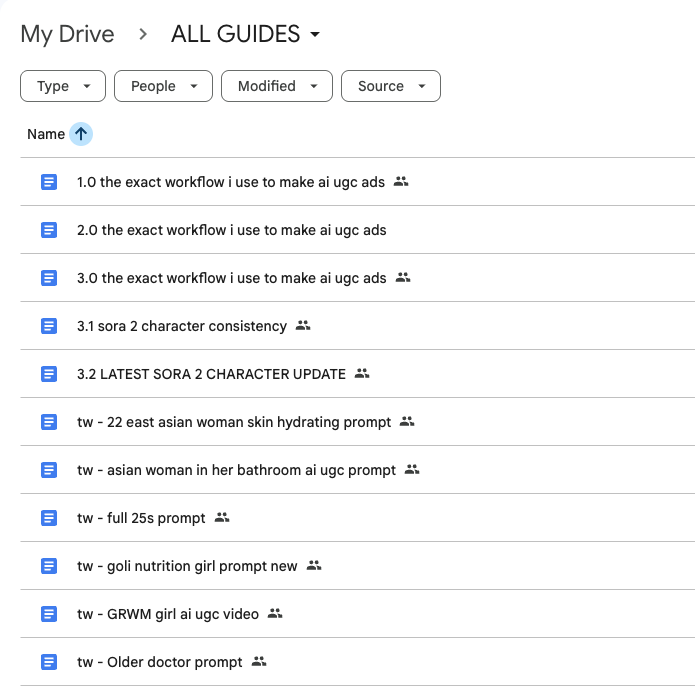

Google makes apps that have consistency in design and look good.
Apple makes apps that look like they were made by a 3rd party intern.


English
