ReclaimROAS

262 posts

ReclaimROAS banner
ReclaimROAS

ReclaimROAS

@ReclaimROAS

Building ReclaimROAS — fixing broken ad tracking for Shopify merchants. Server-side conversion data for Meta & Google Ads. https://t.co/jcAeT5n6lW

Katılım Eylül 2019
24 Takip Edilen11 Takipçiler
ReclaimROAS
ReclaimROAS@ReclaimROAS·
@AndrewClay_555 Blended ROAS masking new-customer reality is such a silent killer on Shopify. Proper match-rate and customer exclusion fixes change the whole picture. How much of the “prospecting” spend were you seeing recycled on warm audiences?
English
0
0
0
4
Andrew Clay
Andrew Clay@AndrewClay_555·
If you're spending above $3K/day on Meta, the metrics that matter most are: - New-customer ROAS, measured against LTV through an MTA - New-visit percentage - First-time revenue versus retention revenue Most large DTC operators have a customer match-rate issue on Meta.
English
2
0
2
75
ReclaimROAS
ReclaimROAS@ReclaimROAS·
@m_mohsen94 This hits hard — that daily uncertainty with ROAS and ad numbers is exhausting. When tracking is clean it at least removes some of the guesswork so you can trust what you’re seeing.
English
0
0
0
2
MUAADH - SYNCOST
MUAADH - SYNCOST@m_mohsen94·
Nobody talks enough about the mental pressure of running an online business. You wake up checking: • ROAS • Stripe payouts • Shopify notifications • Ad performance • Supplier messages Every number affects your mood. 👇️
English
2
0
0
9
MUAADH - SYNCOST
MUAADH - SYNCOST@m_mohsen94·
Shopify merchants don’t burn out from hard work alone. They burn out from uncertainty. Especially in ecommerce. 1 bad week of ads. 2 refund spikes. 3 delayed payouts. Suddenly your brain never rests. ..👇️ 👇️
English
1
0
0
15
ReclaimROAS
ReclaimROAS@ReclaimROAS·
Quick reality check for Shopify founders running Meta/Google ads right now: Most days, your ad platforms say one thing… your actual bank account + Shopify orders say another. That 30-40% gap everyone complains about? It’s rarely “bad creative” or “the algorithm.” It’s usually leaky tracking at checkout, missing server-side events, or platforms double-counting the same customer. We’ve seen it across dozens of stores: clean the data pipeline first → real ROAS becomes trustworthy → scaling actually works. What’s the biggest mismatch you’ve seen between platform-reported revenue and real Shopify sales lately and what caused it?
English
0
0
0
35
ReclaimROAS
ReclaimROAS@ReclaimROAS·
@customerlabsco Native CAPI limitations like this are why Meta often optimizes blindly. Getting clean identity and customer-type signals back makes a massive difference in ad performance.
English
0
0
0
7
ReclaimROAS
ReclaimROAS@ReclaimROAS·
@john_marto Classic case of “ads are broken” when it’s actually the tracking pipeline the whole time. Happens way too often with Shopify + Google setups. What was the biggest tracking leak you fixed on that account?
English
0
0
0
26
John Martin | Paid Ads
John Martin | Paid Ads@john_marto·
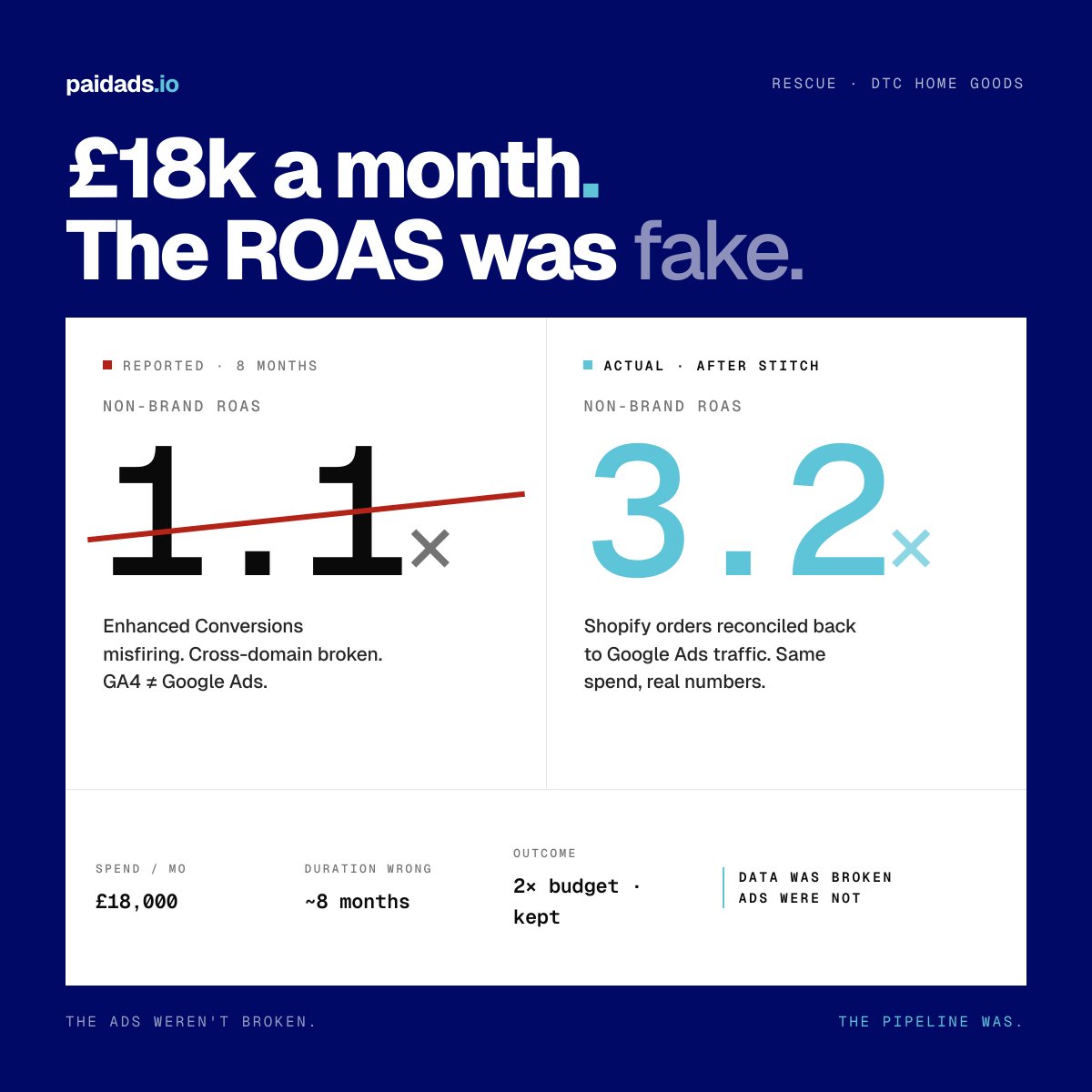
Took over a DTC account last quarter. £18k/month, reported ROAS 1.1x, owner about to switch off Google entirely. Opened the tracking. Enhanced Conversions had been misfiring for eight months. Cross-domain broken. GA4 and Google Ads counting different things. Stitched Shopify back to the ads. Real non-brand ROAS: 3.2x. The ads weren't broken. The pipeline was.
John Martin | Paid Ads tweet media
English
1
0
2
74
ReclaimROAS
ReclaimROAS@ReclaimROAS·
@mirogoshev This exact mismatch is why so many stores chase the wrong number. Optimizing purely on platform data quietly burns budget when real Shopify revenue doesn’t match.
English
0
0
1
29
Miro Goshev
Miro Goshev@mirogoshev·
Ads Manager says $10K. Shopify says $6K. Seen this gap across $70M+ in ad spend. It's not a glitch. It's attribution overlap, view-through counting, and cross-device mismatches. The number to optimize against is not Ads Manager.
English
2
0
1
30
ReclaimROAS
ReclaimROAS@ReclaimROAS·
@ramyarc2312 This is huge — so many stores chase revenue/ROAS without knowing true profit. Clean attribution makes those numbers actually trustworthy too. What’s the simplest tracking change that helped brands get clearer on margins in your view?
English
1
0
0
14
Ramya RC
Ramya RC@ramyarc2312·
My Reddit post about Shopify profit margins this week. Post 1 — 819 views, 22 comments. Post 2 — 3,900 views, 36 comments. The question was simple. How are you tracking real profit? Most common answer: not tracking it properly. This problem is bigger than I thought.
English
1
0
3
19
ReclaimROAS
ReclaimROAS@ReclaimROAS·
@alex_momeni Totally agree — high CTR + dead landing page kills ROAS more than anything. Fixing the post-click experience has 3x’d results for a few stores without touching ads. What was the most common page leak you see hurting conversions?
English
0
0
0
3
Alex Momeni | Shopify Landing Pages
6/ Low CVR is almost never an ad problem. "Our ads aren't working" usually means: the page isn't converting what the ads are sending. High CTR + low CVR = page problem. I've seen brands 3x their ROAS without touching their ads, just the landing page.
English
3
0
1
19
Alex Momeni | Shopify Landing Pages
I've audited 300+ Shopify landing pages. Most have the same problems. Over and over. After all of them, I can predict which pages convert and which don't in about 10 seconds. Here's what I've learned: 🧵
Alex Momeni | Shopify Landing Pages tweet media
English
1
0
8
253
ReclaimROAS
ReclaimROAS@ReclaimROAS·
@MenachemAni This overlap issue is so common and sneaky when running multiple channels on Shopify. Platforms taking credit at checkout hides the real picture fast. Have you seen the gap close much after syncing lists and excluding recent buyers on your end?
English
1
0
2
54
Menachem (Google Ads)
Menachem (Google Ads)@MenachemAni·
Pulled a report for a Shopify brand last week. They were spending $40K a month split between Meta and Google. Both platforms reported strong ROAS. Then we ran the customer overlap. Almost half of the customers Google was claiming as new acquisition had touched a Meta ad in the previous two weeks. Meta lit the spark. Google took the credit at checkout. Both dashboards looked great. Their actual net new customer count was flat. If you run both channels and you've never run an overlap audit, you don't actually know what either one is doing for your business. Sync your customer lists. Exclude recent buyers. Measure new customer revenue, not blended revenue. The truth might be uncomfortable but it's the only way to scale profitably.
English
2
0
8
804
ReclaimROAS
ReclaimROAS@ReclaimROAS·
Love seeing founders doing the CRO audit themselves — that’s where the real leverage is. Tracking accuracy makes those tests so much more trustworthy too. How’s the conversion side looking? We built an app helps with server side conversion forwarding. It’s free to use up to 100 orders but we are currently also looking for beta testers (free for life). Let me know if willing to try it out and share feedback.
English
0
0
0
17
Ling
Ling@lingxlim·
Today's positives: - another breed request - met with my first SCORE mentor who had a lot of good insights - once again grateful for my experience in ux as I start to audit my Shopify site for conversion optimization
English
1
0
3
97
ReclaimROAS
ReclaimROAS@ReclaimROAS·
@sobujmondall Yeah the native app feels easy but quietly kills so much data these days. Server-side + proper CAPI has been a game changer for getting closer to real Shopify orders in Meta. We built an app that helps close the gap. apps.shopify.com/reclaimroas free up to 100 orders p/m.
English
0
1
3
25
Sobuj Mondal
Sobuj Mondal@sobujmondall·
Using Shopify Facebook & Instagram App for Meta Ads Tracking If yes, you’re probably still missing 30% to 40% of your Meta Ads data For Example: Shopify Orders: 100 Meta Ads Manager: 60 to 70 Most Shopify store owners use the Facebook & Instagram App because: → Easy setup → No technical knowledge needed → Direct integration with Meta Platforms But here’s the problem This app mostly depends on browser-side tracking (Meta Pixel) And today, browser tracking is not reliable anymore → Ad blockers → iOS 14.5 update → Browser privacy restrictions → Cookie limitations If you want to track accurate data from your Meta Ads The only solution is to implement Server-Side Tracking Need help to fix this issue? Just DM #MetaAds #MetaPixel #Shopify
Sobuj Mondal tweet media
English
1
0
2
67
ReclaimROAS
ReclaimROAS@ReclaimROAS·
@dan_kabakov This is such a practical way to look at it. A lot of Shopify founders stress over the mismatch when it’s often just leaky events at checkout or server-side. Have you seen the gap shrink after cleaning up tracking on any accounts?
English
1
0
2
52
Dan Kabakov
Dan Kabakov@dan_kabakov·
Stop trying to make Shopify and Google Ads show the same number. They never will. The real question: is the gap under 30% or over 30%? Under = attribution variance. Normal. Stop worrying. Over = broken tracking. Fix it before you touch your bids. youtu.be/YUINK5Xnc0o
YouTube video
YouTube
English
1
0
2
48
ReclaimROAS
ReclaimROAS@ReclaimROAS·
@synctrackio @Shopify EDD visibility at checkout is underrated — that uncertainty kills so many conversions quietly. Small trust/UX fixes like this compound fast. Once you’ve plugged those, having accurate tracking from Shopify to Meta/Google ensures you’re not flying blind on ROAS.
English
0
0
0
18
Synctrack
Synctrack@synctrackio·
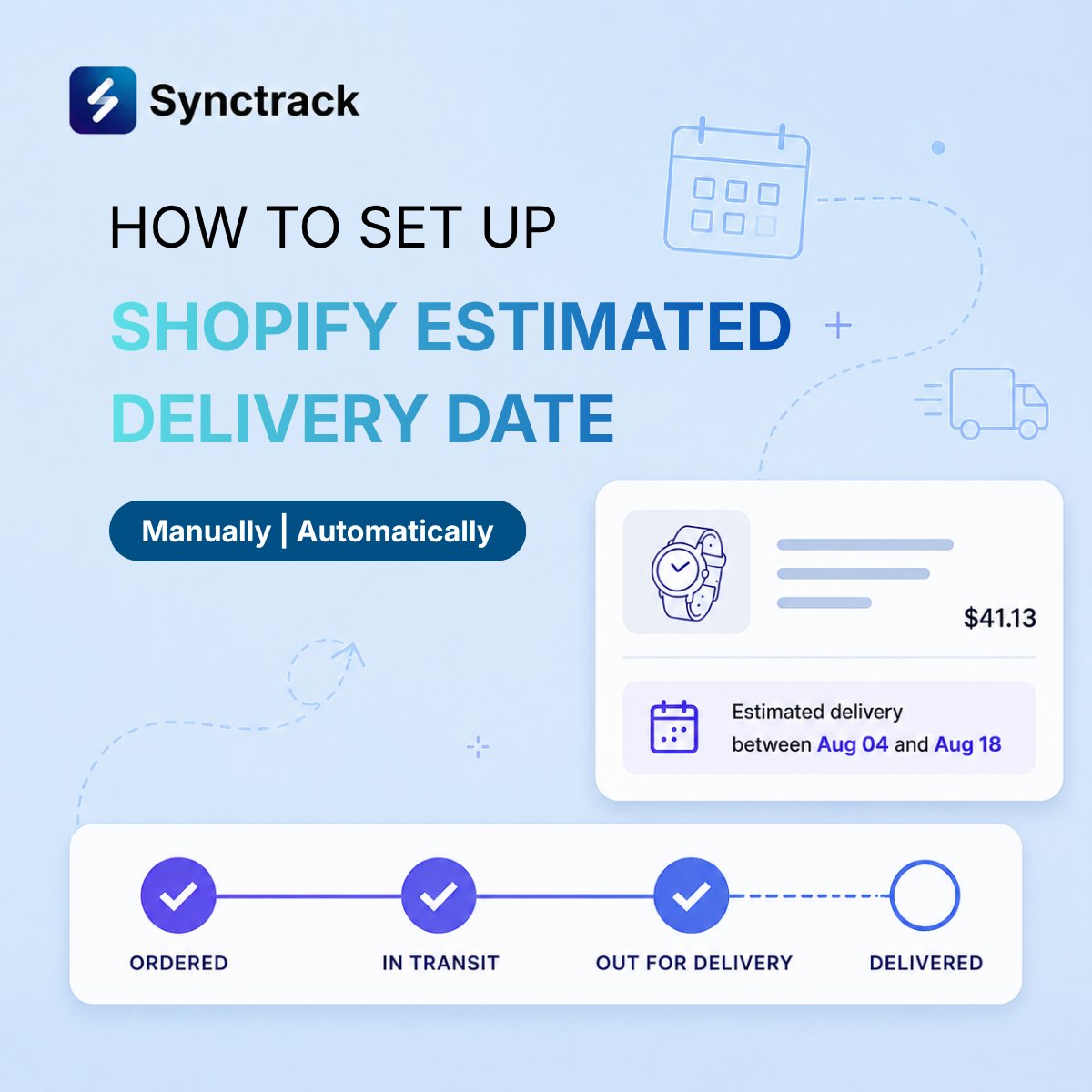
Most stores don’t have a shipping-speed problem. They have a delivery-visibility problem. EDD helps shoppers answer the one question that affects checkout confidence: “When will I receive it?” We broke down how @Shopify merchants can set it up manually + automatically 👇
Synctrack tweet media
English
2
0
3
22
ReclaimROAS
ReclaimROAS@ReclaimROAS·
Love this approach — speed of fixing leaks beats guessing which one will work. Most Shopify stores have a bunch of these small drains that standard analytics miss. Getting clean purchase data back into your ad platforms makes it so much easier to validate the wins and scale confidently.
English
0
0
0
19
Dan Melnick
Dan Melnick@DanPMelnick·
used this same framework for a Shopify brand recently cleared ~$312k in added revenue by fixing what was already getting traffic most Shopify brands have a dev and CRO problem they don't know about one theme template one checkout flow one product page layout built it once, never touched it again wrong approach the real edge is speed take one store use Claude to audit every conversion leak: – slow load times – weak above-the-fold copy – no urgency mechanics – broken mobile experience – generic product descriptions – zero trust signals – clunky cart – no post-purchase flow then turn each finding into a full fix stack page speed optimization custom section builds sticky ATC social proof placement upsell logic checkout customization A/B test variants same traffic more revenue that’s how you stop guessing which fix will move the needle you ship multiple CRO changes fast then let Shopify data show which one deserves more attention comment “STORE” and I’ll send the full audit framework (follow for DM)
Dan Melnick tweet media
English
1
0
3
123
ReclaimROAS
ReclaimROAS@ReclaimROAS·
@MenachemAni Splitting brand and non-brand is such an eye-opener. Blended numbers hide the real acquisition cost. Clean attribution from Shopify makes it easier to trust and scale the non-brand side without flying blind.
English
1
0
1
23
Menachem (Google Ads)
Menachem (Google Ads)@MenachemAni·
Brand-only Google Search campaign for a Shopify client: ROAS: 16:1 Non-brand acquisition campaign for the same client: ROAS: 3:1 If you blend them together, the average looks great. Split them apart and you actually understand your business.
English
5
0
8
365
ReclaimROAS
ReclaimROAS@ReclaimROAS·
@izhongyuting @thomasraynott @ssaaammiirr Those stack-of-small-leaks gaps are so common and frustrating. The order status vs thank-you page mismatch especially kills clean data. We do server-side forwarding that ties Shopify events more tightly to Meta/Google help close a lot of that.
English
0
0
0
75
AlexZ
AlexZ@izhongyuting·
Regularly. 15-25% gap is common even with server-side tracking. 3 things that usually explain it: (1) Shopify's order status page vs actual pixel fires — cancelled/returned orders count as conversions if the pixel fires on the thank-you page, but Shopify's dashboard dedupes them. (2) Consent mode gaps — if the CMP isn't passing advanced consent signals, Google models ~30% of conversions. The modeled vs observed split creates the gap. (3) CAPI deduplication — if event_id doesn't match between browser and server events, Meta double-counts some, drops others. The gap is rarely one thing. It's usually a stack of small leaks.
English
1
0
1
27
Saamir Mithwani
Saamir Mithwani@ssaaammiirr·
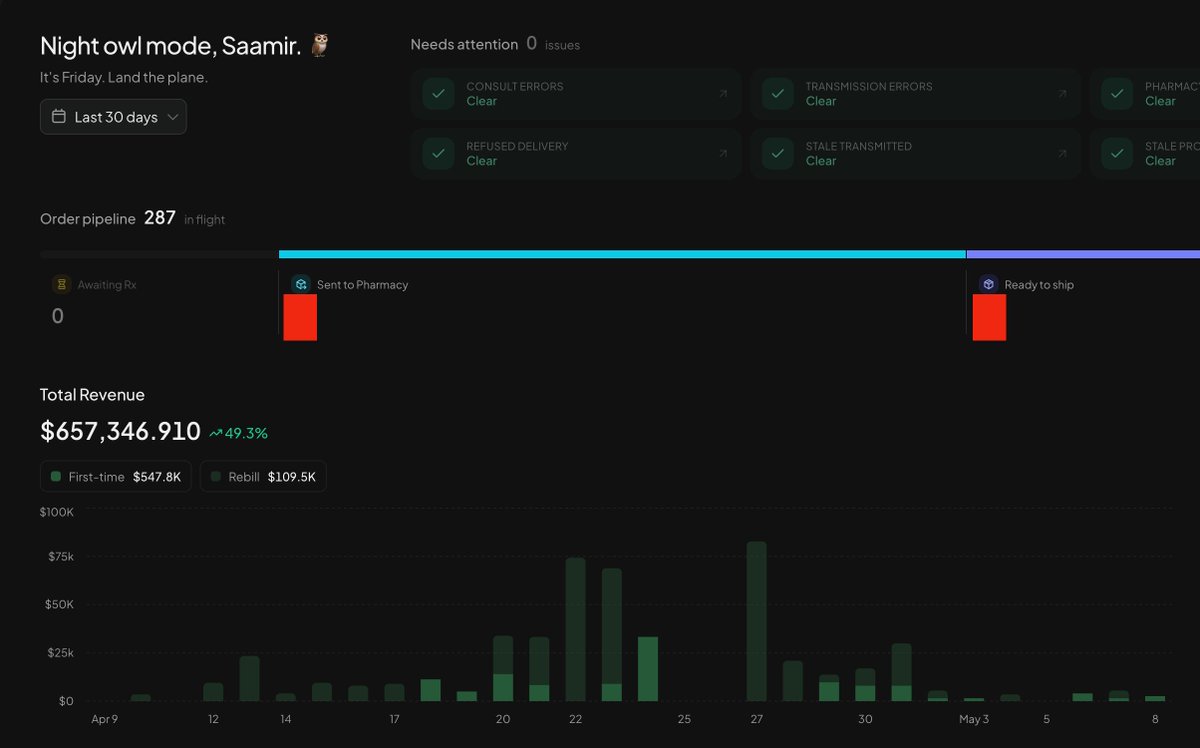
scaling up a new telehealth brand on rimo.co the crazy thing is all RX is subscripton, every dollar aqquired here is automatically turned into a rebill BUT IT'S WHITEHAT AND ACTUALLY HELPS PEOPLE hence why telehealth DTC exits are so high the best industry hands down!
Saamir Mithwani tweet media
English
13
2
97
12.3K
ReclaimROAS
ReclaimROAS@ReclaimROAS·
@Goldikam Everyone assumes checkout but the real bleed is often earlier in the funnel. Fixing discovery on collections can be huge. Once traffic converts better, having accurate ROAS data from Shopify back into the ad platforms makes scaling those wins way more confident.
English
1
0
1
26
Goldi Kambale | Shopify CRO 🚀🚀🚀| Shopify Expert
a Shopify store doing $120K/month asked us to look at their checkout. their assumption: checkout was the problem. reality: checkout completion was fine at 68%. the real leak? their collection page. visitors were landing on collections from ads but couldn't find the right product quickly enough. no size shortcuts. no filtering by use case. 14 products visible before any sort options. we restructured the collection page: → added visual size/style shortcuts at top → reduced visible products to 8 with clear filters → added trust block mid-grid collection-to-PDP click rate went up 34%. the problem is rarely where you think it is. data tells you where to look. session recordings tell you why.
English
6
0
5
219
ReclaimROAS
ReclaimROAS@ReclaimROAS·
@ssaaammiirr Subscription model on Shopify is such a cheat code when it works. The compliance + attribution side gets tricky though — especially with telehealth verticals on Meta/Google. Clean server-side data helps the platforms see those rebills properly for better optimization.
English
0
0
0
176
ReclaimROAS
ReclaimROAS@ReclaimROAS·
@Shalom_I This checklist is gold. Pure ROAS without these context metrics leads to so many bad decisions. Especially when tracking is leaky and the numbers aren’t even trustworthy. Which one surprises brands the most when you show them?
English
1
0
1
14
Shalom Isaac
Shalom Isaac@Shalom_I·
The 3 numbers every e-commerce brand must track weekly on Meta. 1. Cost Per Purchase; are you profitable? 2. Frequency: have your ads become wallpaper? 3. Hook Rate: are people watching past 3 seconds? ROAS without these three is a lie you tell yourself. Save this checklist.
English
1
0
0
18
ReclaimROAS
ReclaimROAS@ReclaimROAS·
@izhongyuting @thomasraynott @ssaaammiirr Consent propagation is one of those silent killers for accurate tracking. So many stores think they’re compliant but events still get dropped. Have you seen big gaps between Shopify orders and what Meta/Google actually report?
English
1
0
1
43
AlexZ
AlexZ@izhongyuting·
Depends on what kind of compliance. Three layers usually: 1. Tracking consent — Shopify's native cookie banner + server-side tracking covers GDPR/CCPA. If you're using Meta CAPI or Google Ads enhanced conversions, make sure consent signals actually propagate to the ad platforms. 2. Ad policy — Meta's automated reviews are the bottleneck. Keep landing page claims matching ad copy verbatim, especially for restricted verticals (health, finance). Pre-empt rejections by checking Meta's policy library before launch. 3. Google Ads — the sneaky one is auto-applied recommendations changing your settings. Lock those down or they'll quietly add broad match and Display expansion you didn't approve.
English
1
0
0
172