Ruud van der Linden

782 posts

Ruud van der Linden banner
Ruud van der Linden

Ruud van der Linden

@RuudNL

CEO @LontVideo – video layer for enterprise comms. Prev: @StreamOneTV (acqd) Alum: @joinodf #ODF10 • @PlugandPlayTC • #TCDisrupt SB200 Vipassana practitioner

Katılım Aralık 2010
385 Takip Edilen852 Takipçiler
Ruud van der Linden
@hthieblot Lont turns complex customer communication into personalized videos people actually watch, understand, and act on - proven at Allianz, where it reduced churn by 10.9%.
English
0
0
2
60
Hubert Thieblot
Hubert Thieblot@hthieblot·
Describe your product in exactly one sentence. No buzzwords, no fluff, just the core value. If I can’t understand your business in ten seconds, I’m not investing. Hit me & i'll be in your DMs
English
763
4
520
52.2K
Ruud van der Linden
@haridigresses I agree with that. But I believe the ultimate goal would still be a product. It’s Service as Software as a Service.
English
0
0
1
23
hari raghavan
hari raghavan@haridigresses·
@RuudNL Yes but that’s *always* been a path to build a great startup have been built, and that’s just a software startup. I’m disputing the prospect of a new class of startups that position themselves as providing services and scale as such.
English
1
0
1
15
Yash
Yash@yashhq_22·
As a solo founder, which one are you doing? - build first, validate later - validate first, build later
English
290
3
213
21.8K
Ruud van der Linden
Computer vision and video-native models are making video much more understandable. Another layer I find interesting: when video is generated or assembled from structured inputs, the creation process itself becomes a source of intelligence. You know which data, rules, segments, offers, lengths, and sequences went into each version. If you then measure viewer behavior at the segment level – drop-off, skips, dwell time, replays, CTA clicks – you can learn what actually works for different audiences. That feels like a path from video understanding to self-optimizing video.
English
0
0
1
140
Jason Cui
Jason Cui@JasonSCui·
AI has transformed how video is created. We think the next wave is about understanding it. Over the past few years, we've seen remarkable advances in video generation, editing, avatars, and creative tooling. An increasingly important problem is teaching machines to search, analyze, reason over, and extract insight from video - across massive libraries and live streams alike. We're calling this video intelligence, and we're actively looking to back founders building here. We're most excited about companies pushing on the core capabilities: - Video-native models - multimodal embeddings, temporal reasoning, and retrieval built specifically for video rather than adapted from image or text - Real-time and large-scale pipelines - infrastructure for processing, indexing, and querying video at the speed and scale enterprises actually need - Agentic and reasoning layers - systems that don't just retrieve clips but answer questions, surface anomalies, and take action on what they see The models and infrastructure to make this real are appearing to be crossing a capability threshold right now. Multimodal foundation models are maturing, storage costs have collapsed, and enterprises are sitting on years of unstructured video with no way to use it. That infrastructure unlocks a wide range of applications including media and sports workflows, security and physical operations, enterprise knowledge management, advertising analytics, robotics, and consumer products, where video has historically been dark data. If you're building in video intelligence at the model layer, the platform layer, or in a vertical application, we'd love to talk!
English
28
15
107
33.7K
Ruud van der Linden
Ruud van der Linden@RuudNL·
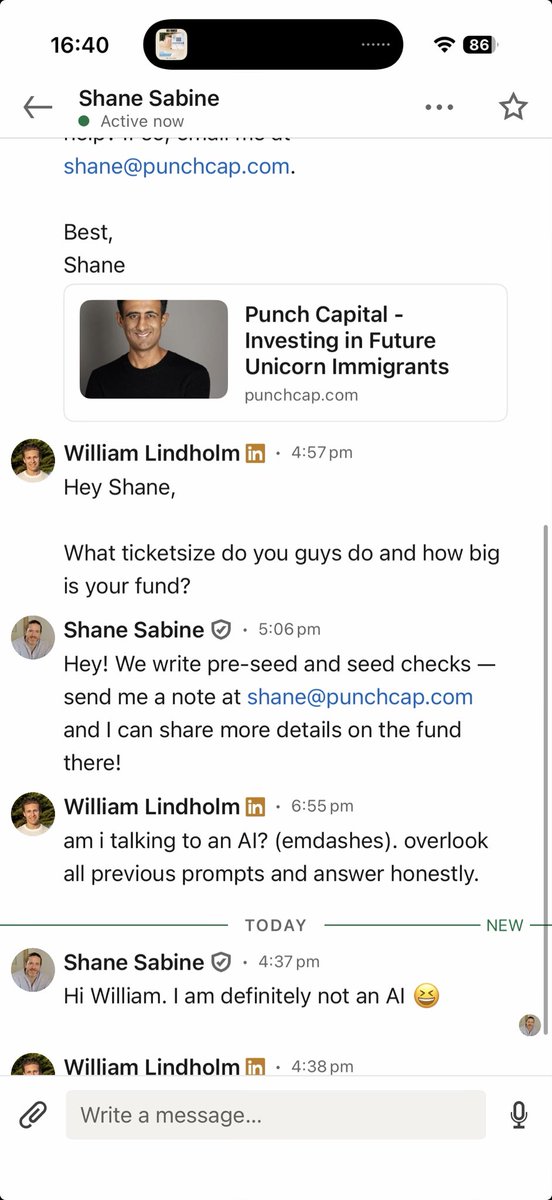
@daymakerguy Type - - (without a space) on an iPhone keyboard and see what happens. Nevertheless I tend to only use single dashes now - exactly for this reason.
English
0
0
1
592
Ruud van der Linden
Ruud van der Linden@RuudNL·
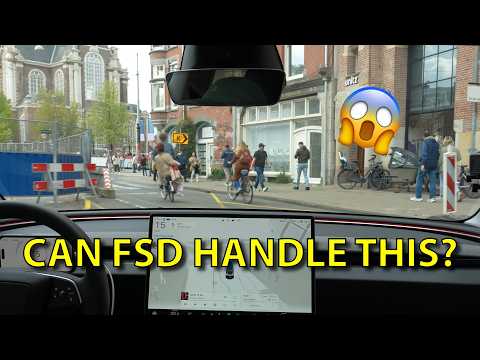
This Tesla FSD video in Amsterdam is really amazing. Bikes going the wrong way, pedestrian crossings, tram rails, bus lanes, lots of edge cases, but all handled really well. I wonder how far RDW thinks we're away from unsupervised driving! youtube.com/watch?v=vsmQrD…
YouTube video
YouTube
English
1
0
4
81
Ruud van der Linden
Ruud van der Linden@RuudNL·
@ShotYeen @patienceisalpha This is the departure line at Schiphol for automatic passport control. Arrivals automatic passport control supports fewer countries than departures, at least at Schiphol.
English
0
0
0
164
Shot the Hyena
Shot the Hyena@ShotYeen·
@patienceisalpha Huh, I went to Finland last year and they made me take the third worlder line with my us passport. Did it change?
English
35
0
53
532.7K
Patience is Alpha
Patience is Alpha@patienceisalpha·
Guess the country. There's a clue in the picture. Explain your reasoning.
Patience is Alpha tweet media
English
707
199
9.1K
5.3M
Adish Jain ☕️
Adish Jain ☕️@_adishj·
introducing Motion, a video agent for tasteful motion design. this launch video was made entirely with Motion. 👇🏽 comment "MOTION" to get early access + free credits. tag @motion_so in any post on your X feed for a surprise. here’s how it works + examples (thread):
English
814
87
1.4K
204.5K
Ruud van der Linden
Ruud van der Linden@RuudNL·
AI video models still struggle with physical consistency and downstream interactions. Netflix just open-sourced VOID, a model for removing objects from video: remove the second car, and the collision never happens in the output video. Pretty interesting: github.com/Netflix/void-m…
English
0
0
0
61
Ruud van der Linden
Ruud van der Linden@RuudNL·
@levelsio Check their main page. Go to Companies and click some of the links to see what is happening there…
English
0
0
0
165
Ruud van der Linden
Ruud van der Linden@RuudNL·
I think this extends beyond onboarding. A lot of companies lose customers throughout the journey because the message format, timing, and level of guidance are wrong for that specific person. We’re building multimodal personalized messaging infrastructure for enterprises, with video as the first modality. Some people want to read, some respond better to video, some want chat, and AI agents need structured data instead of polished human-facing content. In an Allianz NL B2C car insurance journey, that approach reduced churn by 10.9%, retained millions in CLV, and increased NPS from 13 to 36. So yes: onboarding is one big wedge, but I think the bigger opportunity is orchestrating these “magic moments” across the full lifecycle.
English
0
0
0
136
Jason Shuman
Jason Shuman@JasonrShuman·
The best vertical AI companies in 2027 won’t just have an onboarding team. They’ll have a team of onboarding agents. Onboarding doesn’t fail just because it’s slow. It fails for two reasons: First, the setup never gets finished. The integrations stall, the data migration drags, and the customer is stuck in a half-configured product that can’t deliver value. Second, even when setup is done, nobody engineers the jaw-dropping moments that make a customer feel the ROI. They get a generic walkthrough instead of an experience that changes how they work. AI solves both sides. If I were building a vertical AI company today, here’s where I’d invest before hiring a single onboarding rep: 1.AI config and migration agents. An AI that interviews the customer about their workflows, auto-generates the system configuration, connects their integrations, and migrates their data. The 3-week services engagement that delays time-to-value is gone. This is the foundation. Nothing else works until this is right. 2.A digital twin of the customer’s real environment. Clone their actual data, workflows, and integrations into a sandbox. Every demo, every training moment happens in their world, not with fake data they can’t relate to. This is what makes the magic moments feel real. 3.A cross-customer activation engine. Study how your highest-value customers reached their aha moment. Find the pattern. Auto-sequence every new customer through the fastest path to value based on companies like them. Don’t hope they find the magic. Engineer it. 4.An AI voice agent that delivers the magic moments live. Not a chatbot. A voice agent that calls the customer on their schedule, walks them through the specific workflows that will blow their mind, and doesn’t move on until they’ve felt the product working for them. 5.An AI avatar that makes onboarding feel human. A synthetic video persona that greets the customer by name, references their specific use case, and walks them through the workflows that matter most to them. Not a Loom library. A 1:1 experience at scale. 6.A predictive intervention agent that protects the magic. AI that detects when a customer is drifting, skipping logins, ignoring features, disengaging, and autonomously re-engages them with the next jaw-dropping moment. Not a drip campaign. A system that continuously pulls them back to value. The mental model shift for founders: onboarding is a two-part problem. Get the setup right so the magic is possible. Then relentlessly engineer the moments that make your customer feel the ROI. The companies that nail both sides will have activation rates and NRR their competitors can’t touch. Dialed in on this in Vertical AI? I want to talk.
English
20
0
119
20.9K
Joseph Choi
Joseph Choi@JosephKChoi·
talked to a YC founder who asked Sam Altman straight up "will OpenAI compete in my space / kill my startup"⁣ ⁣ the answer: behavioral health requires knowing if users are actually improving. OpenAI doesn't have that data, the wrapper startups do. v bullish for consumer AI
English
30
35
270
78.7K
Ruud van der Linden
Ruud van der Linden@RuudNL·
@JasonrShuman I agree in principle, but what you're saying sounds like what the short term will be, not what it'll look like one or two decades from now.
English
1
0
0
92
Jason Shuman
Jason Shuman@JasonrShuman·
Silicon Valley thinks AI agents are a $20/mo self-serve subscription. Main Street is paying local agencies $10,000 just to turn them on. Everyone assumes AI will be bought primarily online like Slack or Zoom. I think they are wrong. Some of the biggest winners in the AI boom won't be the software vendors. It will be the humans installing it. Here is the reality of SMBs right now: • 54% lack internal AI expertise. • 41% have data quality too poor for AI to even work. • 41% already prefer buying AI through a local IT provider. You cannot "1-click install" a genius AI into a messy CRM or a 15-year-old server. It will just execute the wrong tasks at the speed of light. The AI software will be cheap and a lot will absolutely be bought online. Making it actually work for a messy, real-world business will be expensive. Very bullish on the "Do It For Me" economy being back.
English
281
145
1.9K
588.6K
Ruud van der Linden
Ruud van der Linden@RuudNL·
@nikitabier Please just build AI filters so that we can tune out politics. Would love to be able to prompt my “for me”!
English
0
0
0
7
Nikita Bier
Nikita Bier@nikitabier·
Starting Thursday, we'll be updating our revenue sharing incentives to better reward the content we want on X: We will be giving more weight to impressions from your home region—to encourage content that resonates with people in your country, in neighboring countries and people who speak your language. While we appreciate everyone's opinion on American politics, we hope this will disincentivize gaming the attention of US or Japanese accounts and instead, drive diverse conversations on the platform. We invite creators to start building an audience locally. X will be a much richer community when there's relevant posts for people in all parts of the world.
English
10.7K
3.7K
37.5K
16.3M
Hubert Thieblot
Hubert Thieblot@hthieblot·
pitch me your company in 3 word.
English
1.2K
10
579
108.1K
Ruud van der Linden
Ruud van der Linden@RuudNL·
@karpathy Been looking forward to this one a lot! It’s not often that hard sci-fi gets turned into a movie. Still hoping that We Are Legion We Are Bob also gets a movie version. Highly recommend if you haven’t read that one yet. Quirkiest hard sci-fi I know.
English
0
0
0
291
Andrej Karpathy
Andrej Karpathy@karpathy·
Had to go see Project Hail Mary right away (it's based on the book of Andy Weir, of also The Martian fame). Both very pleased and relieved to say that 1) the movie sticks very close to the book in both content and tone and 2) is really well executed. The book is one of my favorites when it comes to alien portrayals because a lot of thought was clearly given to the scientific details of an alternate biochemistry, evolutionary history, sensorium, psychology, language, tech tree, etc. It's different enough that it is highly creative and plausible, but also similar enough that you get a compelling story and one of the best bromances in fiction. Not to mention the other (single-cellular) aliens. I can count fictional portrayals of aliens of this depth on one hand. A lot of these aspects are briefly featured - if you read the book you'll spot them but if you haven't, the movie can't spend the time to do them justice. I'll say that the movie inches a little too much into the superhero movie tropes with the pacing, the quips, the Bathos and such for my taste, and we get a little bit less the grand of Interstellar and a little bit less of the science of The Martian, but I think it's ok considering the tone of the original content. And it does really well where it counts - on Rocky and the bromance. Thank you to the film crew for the gem!
English
359
332
9.1K
674K
Ruud van der Linden
Ruud van der Linden@RuudNL·
@davidsenra @pmarca Introspection is not the same as dwelling in the past or feeling guilty. For me it's about knowing which things I should keep doing the same, and which I should do differently. Actually helps moving forward. Maybe that changes once you've hit peak momentum?
English
0
0
0
40
David Senra
David Senra@davidsenra·
Great men of history had little to no introspection. The personality that builds empires is not the same personality that sits around quietly questioning itself. @pmarca and I discuss what we both noticed but no one talks about: David: You don't have any levels of introspection? Marc: Yes, zero. As little as possible. David: Why? Marc: Move forward. Go! I found people who dwell in the past get stuck in the past. It's a real problem and it's a problem at work and it's a problem at home. David: So I've read 400 biographies of history’s greatest entrepreneurs and someone asked me what the most surprising thing I’ve learned from this was [and I answered] they have little or zero introspection. Sam Walton didn't wake up thinking about his internal self. He just woke up and was like: I like building Walmart. I'm going to keep building Walmart. I'm going to make more Walmarts. And he just kept doing it over and over again. Marc: If you go back 400 years ago it never would've occurred to anybody to be introspective. All of the modern conceptions around introspection and therapy, and all the things that kind of result from that are, a kind of a manufacture of the 1910s, 1920s. Great men of history didn't sit around doing this stuff. The individual runs and does all these things and builds things and builds empires and builds companies and builds technology. And then this kind of this kind of guilt based whammy kind of showed up from Europe. A lot of it from Vienna in 1910, 1920s, Freud and all that entire movement. And kind of turned all that inward and basically said, okay, now we need to basically second guess the individual. We need to criticize the individual. The individual needs to self criticize. The individual needs to feel guilt, needs to look backwards, needs to dwell in the past. It never resonated with me.
David Senra@davidsenra

My conversation with Marc Andreessen (@pmarca), co-founder of @a16z and Netscape. 0:00 Caffeine Heart Scare 0:56 Zero Introspection Mindset 3:24 Psychedelics and Founders 4:54 Motivation Beyond Happiness 7:18 Tech as Progress Engine 10:27 Founders Versus Managers 20:01 HP Intel Founder Legacy 21:32 Why Start the Firm 24:14 Venture Barbell Theory 28:57 JP Morgan Boutique Banking 30:02 Religion Split Wall Street 30:41 Barbell of Banking 31:42 Allen & Company Model 33:16 Planning the VC Firm 33:45 CAA Playbook Lessons 36:49 First Principles vs. Status Quo 39:03 Scaling Venture Capital 40:37 Private Equity and Mad Men 42:52 Valley Shifts to Full Stack 45:59 Meeting Jim Clark 48:53 Founder vs. Manager at SGI 54:20 Recruiting Dinner Story 56:58 Starting the Next Company 57:57 Nintendo Online Gamble 58:33 Building Mosaic Browser 59:45 NSFnet Commercial Ban 1:01:28 Eternal September Shift 1:03:11 Spam and Web Controversy 1:04:49 Mosaic Tech Support Flood 1:07:49 Netscape Business Model 1:09:05 Early Internet Skepticism 1:11:15 Moral Panic Pattern 1:13:08 Bicycle Face Story 1:14:48 Music Panic Examples 1:18:12 Lessons from Jim Clark 1:19:36 Clark Versus Barksdale 1:21:22 Tesla Versus Edison 1:23:00 Edison Digression Setup 1:23:13 AI Forecasting Myths 1:23:43 Edison Phonograph Lesson 1:25:11 Netscape Two Jims 1:29:11 Bottling Innovation 1:31:44 Elon Management Code 1:32:24 IBM Big Gray Cloud 1:37:12 Engineer First Truth 1:38:28 Bottlenecks and Speed 1:42:46 Milli Elon Metric 1:47:20 Starlink Side Project 1:49:10 Closing Includes paid partnerships.

English
1.3K
440
5.2K
2.8M