Ryan Semillano Soriano ⏱️🌏🪙

83 posts

Ryan Semillano Soriano ⏱️🌏🪙 banner
Ryan Semillano Soriano ⏱️🌏🪙

Ryan Semillano Soriano ⏱️🌏🪙

@RyanCygnusA2

Founder & CEO of Cygnus-A2, which transforms illiquid assets into cash within 15 min without selling them. We serve the $11.6T underserved 🇺🇸 UHNWIs.

London Katılım Nisan 2026
182 Takip Edilen1 Takipçiler
ZeroToTom
ZeroToTom@zerototom·
I quit my job today. Feels good man.
English
23
2
101
4.6K
Ryan Semillano Soriano ⏱️🌏🪙
@HadickM 👋👋👋 At Cygnus-A2, we transform illiquid assets (RWA) into cash < 15 minutes whitout selling them. This is 8,640 times faster than traditional ones (90-day bank loans). Cygnus-A2 serves the $11.6T underserved 🇺🇸 Ultra-High Net Worth individuals & wealthy families.
English
0
0
0
4
Rob Hadick >|<
Rob Hadick >|<@HadickM·
The discourse this weekend around venture capital, especially in crypto, broadly misses the mark. Venture capital is a marketplace, and venture capitalists sit at the center of it. Most of the conversation has missed how decisions are actually made on both sides. I have clients — my investors (LPs). They're the ones that keep us in business and let us continue doing this job. The best VCs also have a lot of skin in the game personally, so we are our own clients too. On the other side you have startups. I have real obligations to my founders (and they know how seriously I take them), but the startups I invest in are ultimately downstream of a single premise: can I serve my clients well and make them happy? That doesn't just mean providing good absolute returns, because that's not how clients think about the world. They care about a bunch of things, some more important than others: risk-adjusted returns, reputational risk, regulatory risk, time to liquidity, who they're invested alongside, being part of the right information flow, having exposure to the asset classes and verticals they want to talk about at parties, and being in business with people they enjoy. There are large funds we all know of that people jump at the chance to allocate to that consistently underperform competitors. That's life in a market where choices are multimodal. So when you see data like @dunleavy89's post (x.com/dunleavy89/sta…), that doesn't tell you "people aren't deploying" — at least not in a way that's causative on its own. It tells you that clients want either less exposure or want exposure through fewer funds. Either the dollar amount they want to allocate to the space is shrinking, or they just want to allocate to higher-quality managers. In traditional VC, it's the latter. In crypto, it's both less money and fewer managers. The consolidation isn't a sign of dysfunction — it IS the market working. And that can be driven by a lot of things, but risk-adjusted returns and liquidity are the main culprits in crypto, with a side of not wanting to be associated with some of the people and events that have defined the space. So venture capitalists, if they want to stay in business, have to make sure their strategies align with what clients want (or with what we can convince them they want). You're constantly asking yourself: am I investing in the right founders, the right asset classes, the right verticals? Am I taking the right amount of risk, investing at the right stage? VCs are rewarded for rightsizing those things to make clients happy. (There's a side conversation here about how often what makes LPs happy in the moment is not what will make them happy down the line — but that's also a decision tree for VCs.) It means you had to have exposure to stablecoins, perps, and prediction markets this cycle, even if you weren't early to the winners like some of us were. That doesn't mean you don't also fund high-conviction, low-probability, contrarian bets — but you have to earn the right to do that. A VC who takes huge contrarian swings and is wrong doesn't get to raise another fund. A VC who is boringly right and returns capital does. And contrarianism is a sliding scale - it wasn't consensus when us and FF invested in the Polymarket extension in late 23/early 24, in fact I would say most told me they didn't get it and that I was burning capital in a thing that only had PMF every four years, but it certainly wasn't THAT far out on the risk curve for a VC either. The business of venture rewards consistency more than it does heroics — and the people who get to make the big non-consensus bets are the ones who've already proven they can do that, or everything else, well. There's also this framing (x.com/no__________en…) that the mark of a great investment is one where you wrote the first check, other funds passed, and the founder would have failed most firms' pattern match. That sounds romantic, and it is when those stories work. But the likelihood is that if a founder doesn't fit any other fund's pattern matching, it's probably not that I'm smarter than 1000 other people and just that i'm missing something. That's not always true, and I and we have invested in founders who have been overlooked by the market because we thought we had an edge, but the data shows that is more of a losing proposition than betting on the founders that are more obvious. On the other side, you see posts like this (x.com/richardchen39/…) blaming the state of things on a lack of original ideas from founders. This also misses the point. Founders react to incentives, and those incentives are broad and complicated too: do I like working on this idea, can it attract venture capital so I have a shot, do I believe I can make this a big business, is this something I'm proud to talk about? Ambitious founders generally want to tackle big ideas with big potential payoffs, but that doesn't mean ideas need to be new or novel. The "copycat" framing is lazy — most great businesses weren't first to a category, they were best. Google wasn't the first search engine. Facebook wasn't the first social network. Redotpay hasn't built the last unicorn neobank. Morpho hasn't built the last unicorn onchain lending business. I'm sure there will continue to be meaningful innovation in prediction markets (and I say this as a longstanding Polymarket supporter). Novelty is not the only relevant variable. Ultimately, it's just markets. Venture capitalists don't get rewarded for being contrarian. They get rewarded for being right and for providing a product that clients want, accounting for every branch of their decision tree. That might be achieved by being contrarian, but it often is not. Founders don't get rewarded for taking the biggest swings. They get rewarded for building something people want to use, that makes money, and that creates value — and they raise VC by convincing allocators they can do that. The ideological grandstanding is just that. But in the end, it all boils down to market forces. *And, I guess, an obligatory "our doors are always open" for founders that are consensus, contrarian, early stage, late stage, and everywhere in between.
English
24
18
222
23.1K
Rohit Mittal
Rohit Mittal@rohitdotmittal·
The most rewarding thing about building Helium Ventures is the founders. At Stilt, I was mostly working with fintech founders, but now we work with founders across every vertical. We've looked at companies in every vertical: - Fintech - Hard tech - InsurTech - Vertical SaaS (so many verticals) - EdTech - HealthTech - Logistics Tech - MarTech - HR Tech - Legal Tech - Cybersecurity - RestaurantTech - PropTech The common thread across all these verticals is: founders. At Helium, we believe that founders deserve exits. We know the risks, the low salaries, the constant struggles, and friends making bank at big tech. But when it comes to exits, there's no help. We want to help more founders with exits - even if we are not the right home. We have already helped many more founders find the right home for their startups than the companies we have acquired. If we can help in any way, feel free to DM.
English
6
2
12
518
grace
grace@0xgrace·
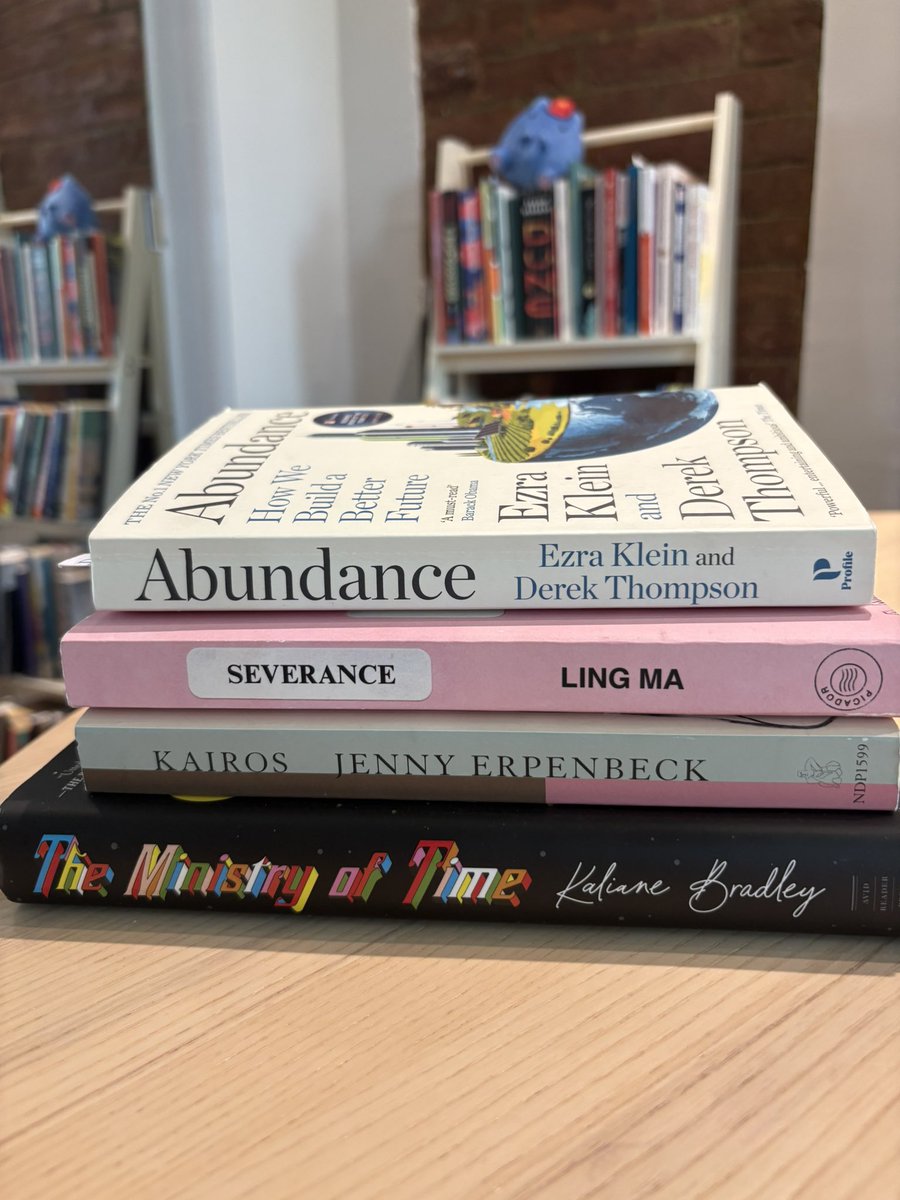
sooooo excited about this book stack (bottom 3 are courtesy of our office book swap from earlier this week 🤩)
grace tweet media
English
2
0
9
236
Sarah Wolf
Sarah Wolf@sarahzorah·
My time at @coinbase is coming to an end after nearly five years. These last few years have been an exciting chapter of my life and career. I’ve had the privilege of working with some of the smartest and most talented people I’ve ever met - not only at Coinbase, but across the Base and broader crypto community. It’s been an honor building alongside all of you. I joined Coinbase as the first builder marketer. I met @jessepollak and launched @base 🔵 in 2023, growing it into one of the leading blockchain ecosystems. What started with our first small pizza meetup in 2023 grew into a thriving builder community in over 52 countries all over the world. Somewhere along the way, I became a builder too. We had many Onchain Summers, partnering with brands like Adidas and Coca-Cola, and working with filmmakers, musicians, and artists to explore the bounds of creativity onchain. We pioneered Coinbase’s first livestream showcase with A New Day One, made onchain payments as easy as fiat (from the first BaseCafe to bringing USDC payments to millions of people through Shopify). We created BaseCamp — starting as a small, scrappy gathering in the woods to a full-fledged builder summit. I had the chance to hire an incredible team of marketers and work alongside some truly world-class creative talent. They will continue pushing Base marketing and creative forward and I’ll be cheering them on. I’m especially grateful to @jessepollak for the opportunity and the trust. This experience showed me that small teams can indeed change the course of a company — and sometimes an entire industry. Next, I’m excited to share that I’m joining @AnthropicAI to lead startup marketing. I’m especially excited to support the startup ecosystem forming around Claude. The time between having an idea and shipping it has never been shorter. A new generation of builders is emerging and they will not look like the builders who came before. If you’re a founder, builder, or startup building with Claude, my DMs are open. I’d love to hear what you’re building and how we can support you better. also... hi, this is me!
Sarah Wolf tweet media
English
120
7
476
20K
Cointelegraph
Cointelegraph@Cointelegraph·
🚨 BULLISH: Morgan Stanley CFO Sharon Yeshaya says tokenization and on-chain finance will reshape wealth management business.
Cointelegraph tweet mediaCointelegraph tweet media
English
47
93
546
26.7K
Katarina Ore
Katarina Ore@katarinaore·
9-5 is better than being a founder. Most stable $$, better social life.. Prove me wrong?
Katarina Ore tweet media
English
42
0
51
3.6K
sourcery
sourcery@sourceryy·
"We're a very young company." — Palantir CEO Alex Karp "Not just in terms of age, which is also true, but it's just a young, fresh vibe." "We've reached anti-aging." "Our company is 20 years old, has the scale of a 20-year company, but the vibe of a 4 or 5-year-old company."
Molly O’Shea@MollySOShea

BREAKING: Inside Palantir with Alex Karp Exclusive interview in Palantir’s office. We cover: - $PLTR record earnings - ~$500B market cap milestone - New Biography: The Philosopher in the Valley - The rise of AIP & its impact on global enterprise - Morality, value creation, & helping Americans win - Dyslexia, artistry, & Karp’s leadership philosophy - The Legacy of Rosita - Cupcakes Special thank you to @elianoayounes for the strategic vibes & the @PalantirTech team for helping put this together! Highlights: (00:00) Inside Palantir w/ Alex Karp (02:16) Building w/o hierarchy, the anti-playbook culture (05:00) Artistry & conviction in product creation (06:45) Ignoring consensus & betting on vision (08:45) Helping Americans win - soldiers, workers, investors (11:00) Moral conviction & the foundation of Palantir (13:00) Meritocracy, realism, & Western values (15:41) The Eisenhower Award & moral leadership (19:45) Dyslexia, intuition, & leading through instinct (22:38) Value creation vs. hype in the AI boom (26:19) Launching AIP - Palantir’s turning point (28:30) AIP as the operating system for the AI era (33:15) Rosita - family (39:55) Cupcake

English
3
3
51
33.6K
Justin Liao
Justin Liao@imjustinliao·
I was rejected by @fdotinc 3 months ago, and I got accepted 3 days ago. Here’s what I’ve done that increase your odds of success: - keep building in public, whether it’s project, posting content…etc. - become extremely obsessed with the problems you’re solving, essentially you have to be emotionally attached to it. - focus on a niche yet strong community that may sound absurd to most people, they are most likely undersubscribed. - focus on the vision over short-term rewards, you should be able to come up with infinite ideas for whatever you’re building. Most importantly, don’t ever think about giving up, stay delusional and know that you will win. If you’re also accepted or just want to chat, comment “Canopy” and I’ll send you an invite. Kudos to my team @ThomasSuen6 @itsmee040 Follow along my journey from 0 to 1, as I’ll post big updates soon! It’s time to win.
Justin Liao@imjustinliao

It's time to build @fdotinc Thank you @hthieblot @adriannalakatos and the entire Founders Inc team! Got rejected 3 months ago btw. How hard can it be?

English
5
0
30
1.1K
Laura Rodriguez🌴
Laura Rodriguez🌴@TheMiamiApe·
If you could only have 3 subscriptions right now, what would they be?
English
9
0
12
1.1K
Sage
Sage@oranahh·
what are you building today? I NEED more founders on my feed.
English
134
0
83
3.3K
Tim Draper
Tim Draper@TimDraper·
I built chatbot and voice versions of myself so founders can get feedback without waiting for my calendar. It stress-tests decks and filters the strongest pitches to my team. Was just featured byPitchBook. The tech has gaps but waiting for perfection costs more than starting now. Ship and utilize now. Fix and refine later. pitchbook.com/news/articles/…
English
13
0
19
2.8K
Yuli Kay
Yuli Kay@yulikay·
Looking for AI founders and creators in Da Nang 🇻🇳 I make content for AI companies (video, social, launches). If you’re building something and want to grab coffee, have a chat and figure out if there’s a collab here: reply or DM. In town for the next couple of weeks 🙌🏻
English
17
0
54
1.8K