Sabitlenmiş Tweet
Samir C. Grover, M.D.
9K posts

Samir C. Grover, M.D.
@Samir_Grover
EVP Academics @SHNCares | GI @UofTGastroHep | Assoc Prof @UofT_DOM | @LabGrover @SHN_Education | #AI | #MedEd | best laid plans this side of Victoria Park
Toronto Katılım Ekim 2008
6.6K Takip Edilen12.4K Takipçiler

Not at the top, but I think top-20 in scoring.
After all bro is 60 years old now.
Alan@AlanDownward
Which retired NHL player would still survive, and thrive, in today’s game? I’ll go first: Mario Lemieux

English
Samir C. Grover, M.D. retweetledi

I’ve said it many times before and I will say it again. Our kitchen staff is comprised of Christian’s, Hindus , Muslims and Jews. We get along famously, and give each other the respect we each deserve. Why can this not be a microcosm of Canada and indeed The World??#Moderates #Peace #Tolerance #Respect. #ZeroHate


English

On feedback in medical education, and AI:
When I was a third-year resident, I received a mediocre communication score on an in-training evaluation report (ITER). I thought I was advocating for a patient. But my attending thought I was being far too pushy.
He was right.
And honestly, I am grateful he told me. The feedback helped me. I introspected and made specific thoughtful changes to my approaches with colleagues. I did not love the feedback in the moment, but it was specific, honest, and memorable enough that I still think about it decades later. I worry we are losing that. Not because faculty do not care. Most do. But because everyone is scared.
Faculty are scared to write anything that sounds negative.
Learners are scared that any criticism will follow them forever.
Programs are scared of conflict.
So feedback gets laundered into something safer.
"Good job."
"Continue to read around cases."
"Keep on improving."
These milquetoast comments are not really feedback. They are avoidance couched in professional language.
And on top of it, we act surprised when learners do not improve.
But AI changes the comparison point.
Learners can now ask AI for feedback that is immediate, specific, and low-drama. It will not flinch. It will not worry about an awkward conversation. It will not spend ten minutes trying to soften one sentence. It can provide relatively objective, structured, documented, and goal-directed feedback to learners. Regularly. And document improvement.
Right now that does not mean AI should replace faculty.
But it does mean our culture needs to eliminate the stigma associated with providing feedback, so that we can maximize learner gains.
I wrote about this here:
samirgrovermd.substack.com/p/we-need-to-d…
#AI #MedEd
English
Samir C. Grover, M.D. retweetledi

Studies show AI scribes have inaccuracies. But before we blame the models, we need to ask the right technical questions.
Is it an AI problem, or a hardware/input problem?
3 factors we must evaluate:
- Audio Quality: Was the recording environment compromised?
- Hardware: Was it captured on a premium phone, a cheap laptop, or a dedicated mic?
- The Delta: How did the final clinical note actually compare to the raw transcript?
We need to stop treating AI scribes like a black box.
Is the failure happening at the Audio to Transcription layer, or the Transcription to Note layer?
Fixing the pipeline starts with identifying where the data gets corrupted.
English
Samir C. Grover, M.D. retweetledi

We’re marking #ClinicalTrialsDay🔬
Thanks to our clinical researchers, the SHNRI team, and everyone who joined our first Research Talks. Great discussion, strong questions, and a valuable opportunity to connect and advance research together.
Learn more: shn.ca/research-that-…


English

Ask a frontier LLM the same question... twice. You do not always get the same answer!
ChatGPT etc. will say a different answer on the same prompt even on the same model!
So if we want to use it in medical education... surely this is a problem!!
I argue it is not... because medicine itself is non-deterministic.
Hand the same breast biopsy slides to twelve pathologists: concordance with the expert reference is 75% overall, and drops to 48% on the slides that decide a mastectomy (Elmore et al., JAMA 2015). So many more examples of the same across all areas in medicine.
So LLMs demonstrating "same prompt, different answer" are not alien.
They are just the latest member of the non-deterministic family.
I posted the full article on Substack.
AI is non-deterministic! So what? So is medicine.
samirgrovermd.substack.com/p/ai-is-non-de…
#MedicalEducation #AIinMedicine

English
Samir C. Grover, M.D. retweetledi

Much of primary care as we know it will be replaced by AI.
I say this as a primary care physician with 25 years of global practice experience, as well one who's building in AI.
I'm not catastrophizing. I'm making a prediction.
32% of Americans now use AI chatbots for health information. 64% of those do it weekly. Among millennials and Gen Z, usage is approaching 50%. These are the patients of tomorrow — they're not waiting.
AI is in its infancy. It hallucinates. It gets things wrong. People still use it. Imperfections eventually get sorted out, an imperative for healthcare.
Primary care was already on life support.
Only 24.4% of U.S. physicians practice in primary care, well below the 50% benchmark. As of December 2025, 92 million Americans live in federally designated primary care shortage areas.
We don't have enough primary care doctors, and we're not going to catch up.
It's not like AI is displacing a thriving PCP workforce. It's filling an access gap patients have suffered for years.
Procedures will migrate to specialists. Pap smears to gynecologists, lacerations to urgent care, skin biopsies to dermatologists. Human needs — anxiety, grief, chronic loneliness — will go to nurses, therapists, and social workers. Those who spend more than 15 minutes with you.
Primary care was never about procedures. It was about the "relationship". That relationship was destroyed by the system long before AI arrived.
Trust in doctors dropped from 71.5% in 2020 to 40.1% in 2024.
Trust in one's own doctor fell from 93% to 85% in just two years.
People don't distrust science. They distrust being dismissed.
AI doesn't dismiss you. It doesn't judge you. It has infinite patience. It doesn't get up after 15 minutes.
The healthcare AI companies being built today, including the ones called "chatbots", are the beginning of something massive.
The global healthcare AI market was $32 billion in 2024. It's projected to reach $431 billion by 2032.
Some of these companies will become the largest in the world. The ones that win will be built by clinicians. Technical brilliance without clinical insight produces falsely-impressive tools that give dubious or dangerous answers.
Regulation is coming. Guardrails are coming. Malpractice frameworks are coming. That's not a bad thing, it's legitimacy.
Primary care won't disappear. It will transform.
The doctor who triages 30 patients in a morning, refills metformin, orders routine labs, and manages hypertension by protocol? AI will do that. Better. Faster. At all times. In any language.
Doctors won't disappear, but their roles will change. They'll become diagnosticians. Guides. The necessary human presence.
When auto-pilot fails, pilots are needed.
The question isn't whether primary care will change.
The question is who builds what people want, not what doctors and payers want.
A new dawn approaches.

English
Samir C. Grover, M.D. retweetledi

@drpiyushENT Doing well sir. Hope the world of ENT is treating you well!
English

@Samir_Grover Was just thinking about you yesterday. How have you been sir?
English

I wrote a new Substack article. (Just like Tybalt it's a saucy boy.)
The title: "Medical schools should stop banning AI. Rather they should mandate that AI be used."
substack.com/home/post/p-19…
When a clinical teacher asks a learner "did you ChatGPT this?" in 2026, it is supposed to be an insult. The implicit accusation is that the learner did not think.
But no supervisor asks "did you UpToDate this?" the same way.
Somewhere along the way we have decided that one tool is studying and the other is cheating.
PBL was designed sixty years ago at McMaster by Evans, Spaulding, Mustard and colleagues to put students in front of cases with curiosity, send them out with learning objectives, and have them come back having filled the gaps on their own.
In 2026 that gap-filling happens, for nearly every student in the course, with LLMs. They ask the LLM about the case, push the model for differentials, branch through management, generate figures and images, and learn together socially. Some tutors learn alongside. The sessions are sharper than they were even a couple of years ago. The technology caught up.
And yet most institutions are still telling students it is cheating. Students hide it. This is the hidden curriculum we are actually running.
It does not have to be.
Students please use AI.
Full piece (with the receipts): substack.com/home/post/p-19…
#MedicalEducation #AIinMedicine #CBME

English

35 years ago today, Mario Lemieux scored one of the most iconic goals in NHL history during the 1991 #StanleyCup Final! 😍
Mike Lange on the call 🎙️ for this Super Mario goal was pure magic.
#LetsGoPens
English
Samir C. Grover, M.D. retweetledi

Today on International Day Against Homophobia, Biphobia, and Transphobia, and every day, we stand for love and against discrimination. We continue to strive to make our game an inclusive space for all to ensure that hockey is for everyone! 🏳️🌈
#IDAHOBIT

English
Samir C. Grover, M.D. retweetledi

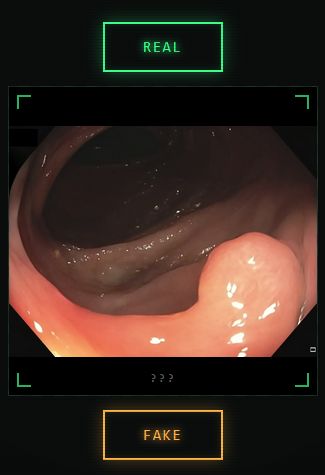
Is this a real polyp, or a fake one? Test your knowledge at thispolypdoesnotexist.com and read the accompanying scientific paper.
thieme-connect.com/products/ejour…
@Samir_Grover @tberzin @drkeithsiau @KralJan @EUSandEndoscopy @KMonkemuller

English
Samir C. Grover, M.D. retweetledi

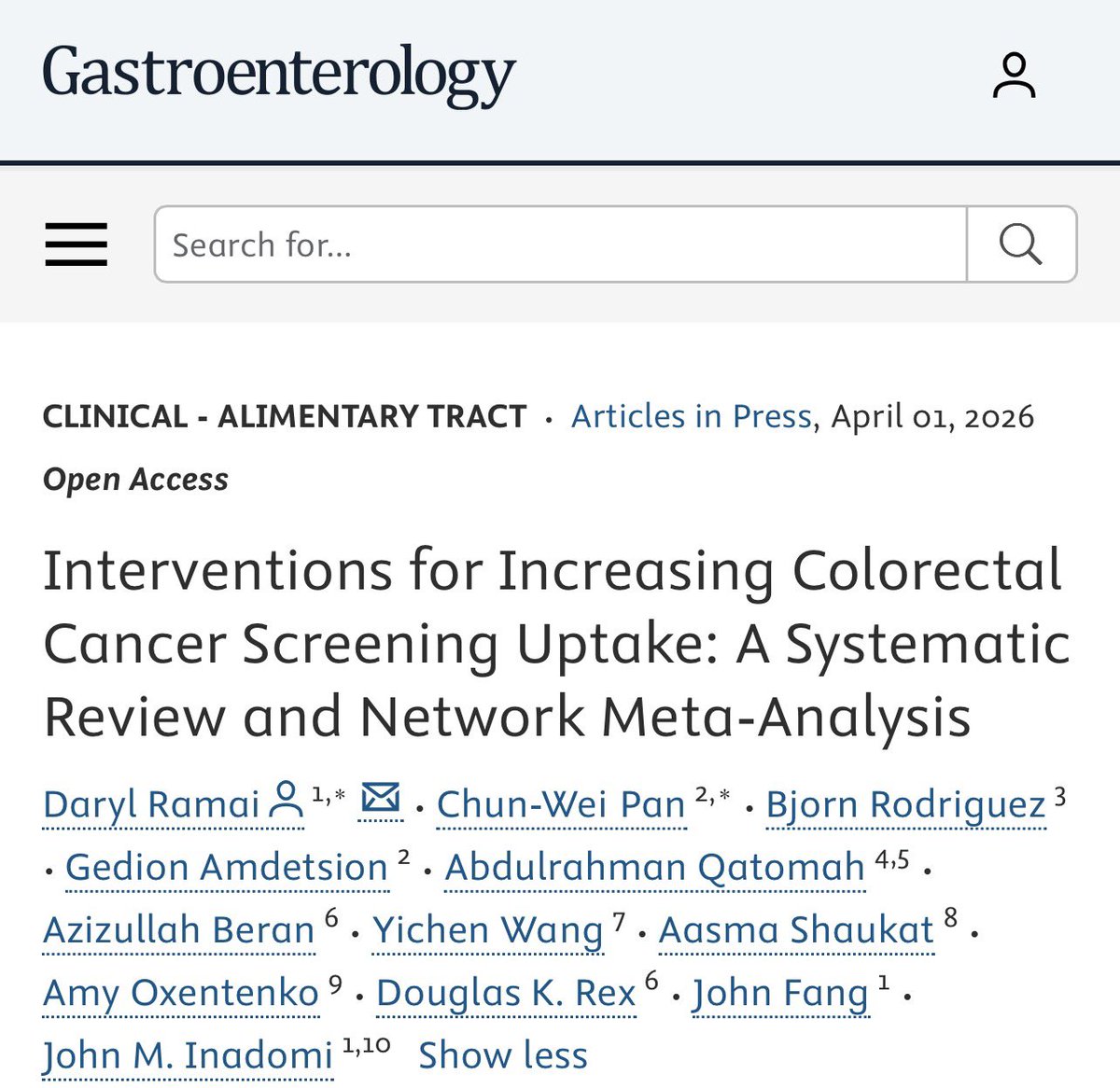
Our network meta-analysis @AGA_Gastro ranks interventions to boost colorectal cancer screening!
🩺 Based on 76 RCTs and 400k+ patients
🚀 Top performers: Patient Navigation (RR, 1.58; 95% CI, 1.23-2.02; P score .81) & Mailed FIT Outreach (RR, 1.36; 95% CI, 1.07-1.74; P score = .79)
🎯 For low baseline uptake (<30%), Mailed FIT was most effective (RR, 3.12; 95% CI, 1.70-5.71)
📈 Educational multimedia shows promise for high-uptake population (> 30%)
Read more: pubmed.ncbi.nlm.nih.gov/41932450/
#CRC #ColonCancerScreening #MedEd #Gastroenterology

English

Happy Nursing Week to all of my fantastic colleagues.
From everything from sharing in patient care, co-developing educational programs, teaching me, and above all friendship (lots of laughs) - I am personally incredibly grateful for the nurses in my life.
@SHNcares
Scarborough Health Network (SHN)@SHNcares
This #NursingWeek2026, we recognize the dedication, skill, and compassion of our nursing professionals. Nurses are central to everything we do at SHN—from delivering exceptional, quality care to shaping better experiences for patients, families, and our community. #SHNcares
English
Samir C. Grover, M.D. retweetledi

Pleased to present on behalf of the ASGE-ESD task force our two projects at #DDW2026 :
North American Expert Consensus on the Development of a Standardized Assessment Tool for Training in Endoscopic Submucosal Dissection.
&
American Society of Gastrointestinal Endoscopy (ASGE) Standards for Fellowship Training in Endoscopic Submucosal Dissection (ESD).
Honored to be part of this task-force and grateful to the chair of advanced endoscopy committee at @ASGEendoscopy @SighPichamol , @ThirdspaceEndo and @DennisYangMD
@DDWMeeting


English
Samir C. Grover, M.D. retweetledi

🔥This was #DDW2026 in #Chicago
➡️ @DDWMeeting 2026❗️🌆🏙️
➡️ See you soon at ESGE Days 2026 in #Milan, #Italy❗️🇮🇹🤗🙃
💥 #ESGEatDDW 💥
💥🔵@ESGE_news🔵💥
💥⚪️@endoscopyjrnl ⚪️💥
🔴 @ASGEendoscopy 🔴
🟠 @AmerGastroAssn 🟠
@KralJan @MN_GIMD
English
Samir C. Grover, M.D. retweetledi