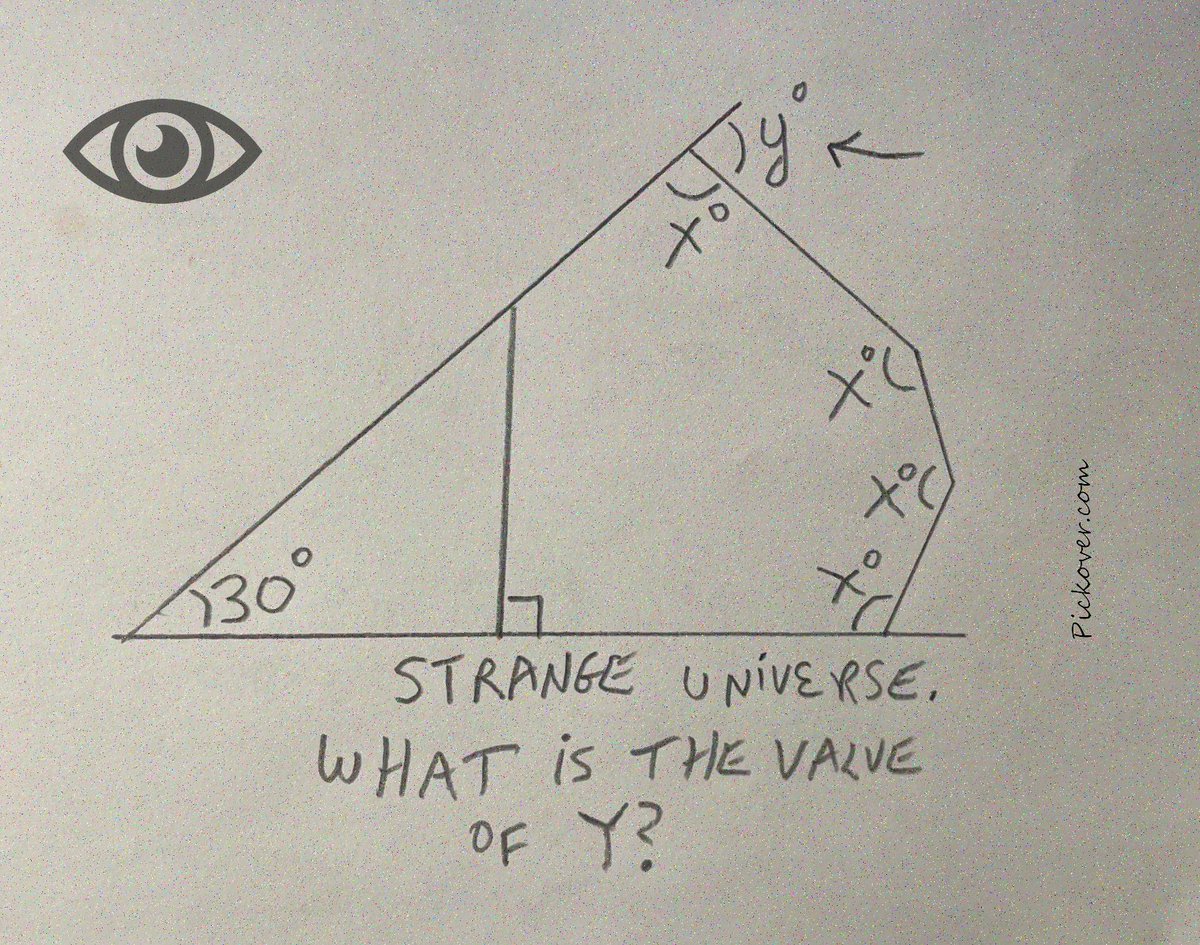
@pickover It is both 52.5 AND 22.5 it depends if you use the pentagon or the hexagon. The real issue is that while all 4 angles are marked as X0 they are clearly not actually equal.
@MarioBrothBlog It's too bad they spent so much effort making the rocks look nice when the grass looks like tile garbage. 😕 I remember opening this game on Christmas morning and being thoroughly unimpressed.
@Dr_TheHistories These things were literally always broken. In practice, was more like impossible to fix. They were prone to leaks, finding the leak was difficult and they didn't last long. If we made cars like this today people would riot. They got away with it because few cars had AC at all.
For much of the 1970s and 1980s, American cars used simple slider-style climate control panels like this one. Before digital displays and touchscreens, drivers adjusted temperature, fan speed, and airflow using mechanical levers connected directly to cables and vacuum actuators behind the dashboard. These systems were inexpensive, reliable, and could often be repaired with basic tools.
By the late 1970s, air conditioning had shifted from a luxury option to a mainstream expectation. In 1970, fewer than 55% of new cars sold in the United States had factory air conditioning. By 1980, that figure had climbed to more than 80%, and by the mid-1990s, air conditioning was standard equipment on most passenger vehicles.
The faux woodgrain trim surrounding controls like these became especially popular after the success of luxury American cars in the 1960s, remaining a styling staple on sedans, station wagons, and personal luxury coupes for decades.
The first fully automatic automobile climate control system was introduced by Cadillac in 1964. Called "Comfort Control," it used sensors and electronics to maintain a selected cabin temperature, an early precursor to the automatic climate systems found in modern cars.
#drthehistories
@lane___n@lastliphe@IGN I can see dbrands troll image coming back to bite it. Like they got permission for the post, but valve thought it was a joke etc. Knowing these companies I expect this to be a delay, not a cancel but who knows.
@lastliphe@IGN And i have seen the companion cube for ads for a while now. Like i said dbrand shoudl of done due diligence, but im sure they have stock that is now useless. Seem like as a whole this will be a waste when consumers were clearly ready to buy it.
Tech accessory company dbrand has canceled its Steam Machine Companion Cube enclosure effective immediately because it didn't ask Valve for permission to make it in the first place. bit.ly/4vCtqqr#IGNSummerOfGaming
@yamikokun21@AlllGas@IGN This is such a cursed comment. The game is called Portal. Any other appearances are a callback to this silly, emotional moment.
@mike42w@archeohistories Considering Japan occupied modern day Thailand and Germany has control of large portions of Africa, not to mention aircraft carriers this would be very possible. Also consider that in war borders and ranges are highly unpredictable and making things takes time you may not have.
@vfine91350@kinnaman_joe@Habubrats71 Umm, no. Space capsules have sacrificial layers of phenolic that burns and causes insulating char and smoke. Space shuttle heat panels were made of ceramic and were extremely delicate like glass, but were (technically, but not practically) reusable.
@kinnaman_joe@Habubrats71 Because it’s a sacrificial layer. Meaning it’s replaced every time after re-entry. Thus the 2nd shuttle accident. A loose tile during re-entry.
The SR-71’s speed was not limited by the power of its engines. It was limited by the heat its structure could withstand.
Titanium makes up 93% of the SR-71s structure. A material that had never been truly utilized to its full potential until the SR-71 came along.
Each SR 71 was handmade. That means everyone of the Blackbirds were ever so slightly different. The men that flew the SR’s had their favorites and then there were the hangar queens that no one liked to fly..
The reason why titanium was so expensive was the process to make it usable.
The first reliable process to produce chemically pure titanium was developed in the 1940s. This process made the SR-71 possible. It begins by first converting the titanium dioxide to titanium chloride.
How do we convert the Titanium?
To do this titanium dioxide is mixed with chlorine and pure carbon and heated. Any oxygen or nitrogen leaking in will ruin the process, so this has to be done in relatively small batches in a sealed vessel. Once this process is complete, we have Titanium Chloride.
We then need to purify the Titanium Chloride from any impurities in the titanium ore through distillation. Where we heat the product and separate titanium chloride using its lower boiling point.
This Titanium Chloride vapor is fed into a stainless steel vessel containing molten magnesium at 1300 kelvin. Titanium is highly reactive with oxygen at high temperatures, so the vessel also needs to be sealed and filled with argon. Here the Titanium Chloride reacts with the magnesium, which itself is an expensive metal, to form titanium and magnesium chloride.
At times the engineers were perplexed as to what was causing problems, but thankfully they documented and cataloged everything, which helped find trends in their failures.
They discovered that spot welded parts made in the summer were failing very early in their life, but those welded in winter were fine. They eventually tracked the problem to the fact that the Burbank water treatment facility was adding chlorine to the water they used to clean the parts to prevent algae blooms in summer, but took it out in winter. Chlorine as we saw earlier reacts with titanium, so they began using distilled water from this point on.
They discovered that their cadmium plated tools were leaving trace amounts of cadmium on bolts, which would cause galvanic corrosion and cause the bolts to fail. This discovery led to all cadmium tools to be removed from the workshop.
Converting Titanium for the SR-71 is really slow
This reduction reaction is extremely slow, between 2 and 4 days. It’s pretty clear that titanium is expensive and extremely difficult to work with. But without Titanium and the SR-71, we wouldn’t be where we are today, talking about the fastest, air, breathing airplane in the world. You can read the full article here. Linda Sheffield.
wisconsinmetaltech.com/titanium-and-t…
Eric Erik Simonsen image of 17974
@histories_arch I would love to know how the crystal was cut and scribed and polished perfectly without diamond stylus or polishing compounds unless this image is Ai
Imagine holding a beautifully carved crystal object that was tossed by ancient hands over two millennia ago to seek chance or wisdom....
This remarkable 20‑sided crystal die known from the Roman and Hellenistic world. This small icosahedron, now preserved in major museum collections, offers a rare glimpse into how ancient people combined mathematics, belief, and play in objects we once thought were only part of modern gaming culture.
Archaeologists have uncovered several polyhedral dice from the ancient Mediterranean, especially from Egyptian and Roman contexts, dating as far back as the Ptolemaic and Roman periods between 2nd Century BC and 4th Century AD. Among the most fascinating are 20‑sided dice (icosahedra) carved from stone, serpentinite, faience, or even rock crystal. At the Musée du Louvre and Metropolitan Museum of Art, such dice show faces inscribed with letters or numerals — clues that they were not just decorative but carried a purpose in everyday life or ritual.
Unlike the familiar six‑sided dice of modern board games, a 20‑sided form reflects a sophisticated understanding of geometry and balance. Its 20 triangular faces correspond to what mathematicians call an icosahedron, a shape prized in antiquity as much for its symmetry as for its symbolic complexity. While today many know the 20‑sided die from tabletop gaming culture, ancient versions likely had a different function.
Scholars suggest that these icosahedral dice may have served in divination or cleromancy, a practice where throwing lots reveals answers from the gods or fate. Some ancient guidebooks, such as Greek Homeromanteion, refer to systems where a thrown number would be matched to oracular texts, offering answers or predictions. This places the die as an instrument in belief as well as chance.
Yet despite these theories, the precise ancient rules or uses remain partly mysterious. Whether they were tools for prophecy, gambling, teaching, or entertainment, these ancient dice remind us that humans have long been fascinated by chance and destiny. They are tangible connections between mathematics, art, and human curiosity in the distant past.
#archaeohistories