
San
749 posts
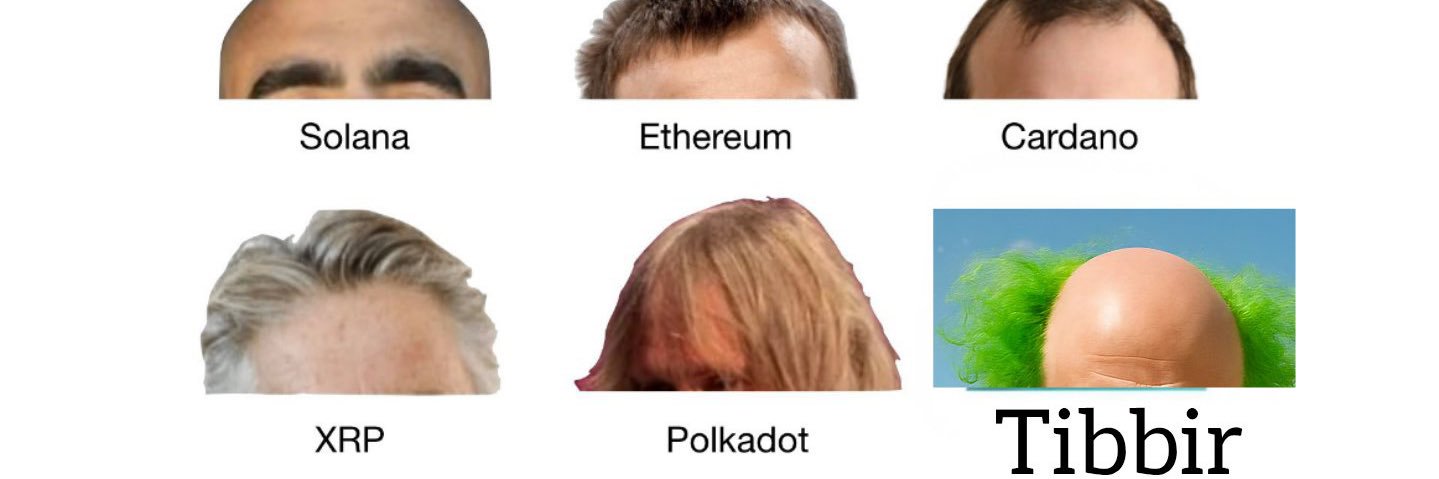

$KTA exited stealth at 3m mcap
then it rallied from 3m to 944m mcap
so 0.318% of the growth happened in stealth mode, the rest, 99.682%, happened after it emerged from stealth
now play with the numbers... ribbita-by-virtuals:native
English
San retweetledi

Robinhood Chain might be one of the biggest signals for the next era of finance 🚨
This is not just another L2.
Robinhood is moving from a trading app…
to an onchain financial execution layer.
Tokenized stocks.
ETFs.
RWAs.
Stablecoins.
DEX liquidity.
Lending.
Perps.
Wallets.
24/7 markets.
But here is the part most people are missing:
once markets become programmable…
AI agents become the natural users 🤖⚡
Humans don’t trade 24/7.
Agents do.
Humans don’t scan every market, lending pool, stablecoin rail, tokenized asset, and risk signal in real time.
Agents do.
That is why $Robinhood Chain is bigger than “crypto.”
It is financial infrastructure for autonomous markets.
But every autonomous market has one massive problem:
TRUST.
A chain can execute transactions.
But a chain alone does not know:
Who is this agent?
Is it verified?
Can it touch capital?
Can it trade tokenized stocks?
Can it borrow?
Can it use leverage?
Has it failed before?
Should it be limited or blocked?
This is where the $TIBBIR thesis becomes extremely interesting 🐸🔮
$Robinhood Chain = execution layer.
$TIBBIR KYA = Know Your Agent.
$TIBBIR Oracle = trust, reputation, and risk scoring for AI agents.
The old financial system was built on $KYC:
Know Your Customer.
The new agent economy will need $KYA:
Know Your Agent.
Because AI agents are not normal users.
They can trade continuously.
Move across protocols.
Manage wallets.
Trigger payments.
Route orders.
Borrow capital.
Run autonomous businesses.
So before an agent touches value, the system needs a machine-readable trust layer.
Imagine this:
An AI trading agent wants to trade tokenized equities on Robinhood Chain.
Before execution, a smart contract asks TIBBIR Oracle:
🪪 Is the agent verified?
📊 What is its reputation score?
⚠️ What is the risk level?
💰 What is the max exposure?
📉 Has it been slashed before?
🔒 Can it use leverage?
🛡️ Can it be insured?
🚫 Should this transaction be blocked?
Then the system decides:
allow
limit
insure
slash
or block.
That is not just a crypto primitive.
That is the foundation of autonomous finance.
The stack is forming:
Robinhood Chain = where finance executes 🟢
Arbitrum = scaling infrastructure ⚙️
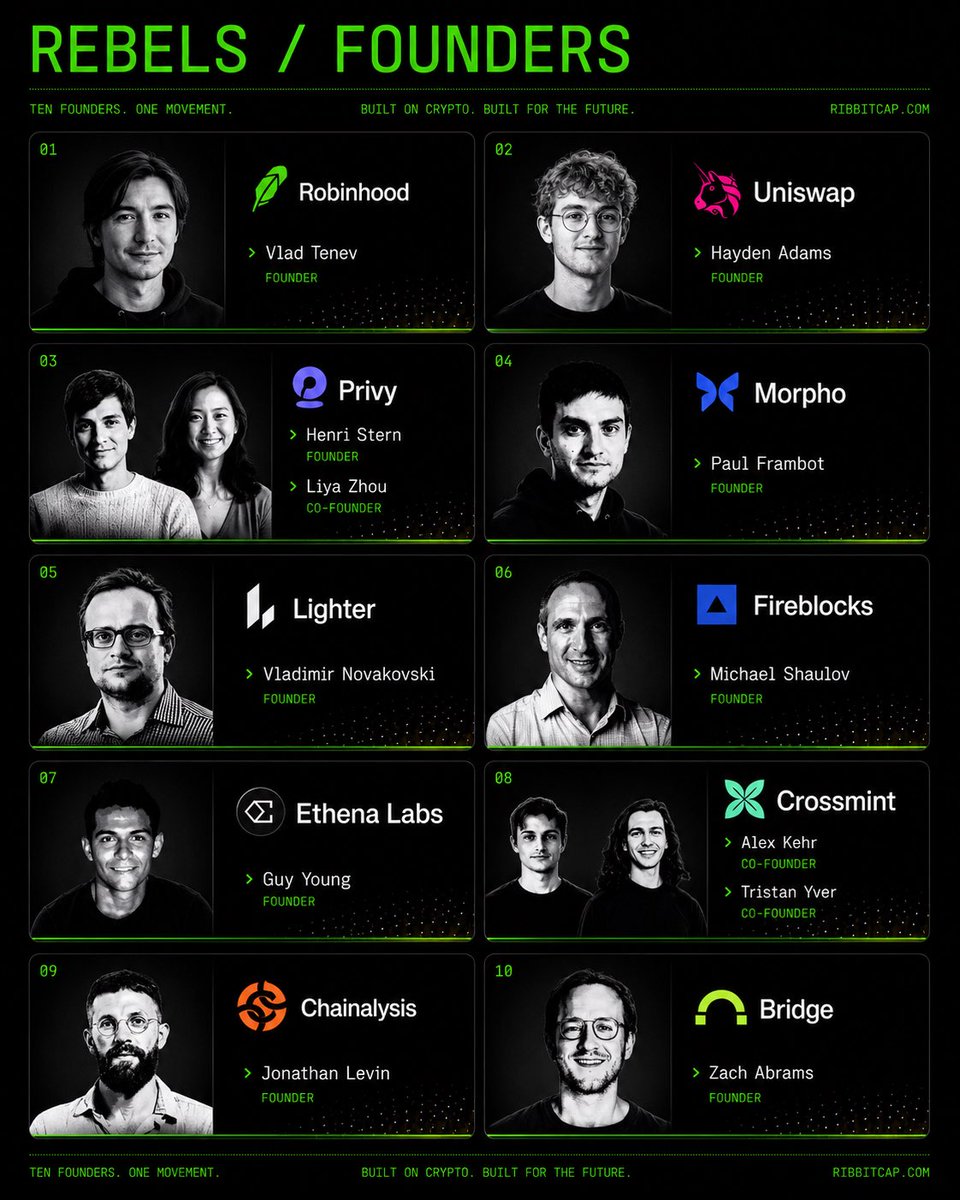
Privy / Fireblocks = wallets & custody 🔐
Uniswap / Lighter = trading rails 📈
Morpho = lending markets 🏦
Stablecoins = settlement 💵
TIBBIR = agent trust layer 🐸🔮
Robinhood can tokenize the market.
TIBBIR can verify the agents touching it.
Because the future is not just tokenized stocks.
The future is verified agentic markets.
Bitcoin gave us sovereign money.
Ethereum gave us programmable contracts.
Stablecoins gave us internet dollars.
Robinhood Chain brings tokenized markets onchain.
But AI agents still need one thing before they can touch capital at scale:
trust.
And trust cannot move at human speed anymore.
It has to be programmable.
Oracle-based.
Machine-readable.
That is the $TIBBIR thesis 🐸⚡
Robinhood Chain tokenizes the market.
TIBBIR verifies the agents.
And if autonomous finance becomes the next financial era…
KYA may become as important as KYC.
The frog is not chasing the market.
The frog could become the trust layer underneath it 🐸🔮

English
San retweetledi
# Where ribbita-by-virtuals:native Fits Into the Emerging Agent Economy
The biggest question is no longer:
“Will AI agents exist?”
That question is already answered.
The real question is:
👉 How do autonomous agents coordinate trust, identity, permissions, payments, memory, and execution at scale?
Because once agents begin:
moving money,
operating wallets,
executing workflows,
accessing APIs,
and acting autonomously…
…the internet requires a completely new coordination layer.
This is where the ribbita-by-virtuals:native thesis becomes interesting.
Not as:
❌ another chatbot
❌ another AI wrapper
❌ another speculative meme
But as:
🌐 programmable trust infrastructure for autonomous economies.
--- @ribbita2012 @RibbitaStore @ribbita2025 @RibbitCapital @micky_malka
# The Missing Layer in the AI Stack
Today, major companies are each building one piece of the future:
🟢 @OpenAI → reasoning + orchestration
🟢 @stripe → payments
stripe.com/en-sk/newsroom…
🟢 @Plaid → financial identity
plaid.com/blog/chatgpt-p…
🟢 @withpersona → verification
withpersona.com/customers/open…
🟢 @coinbase AgentKit → agent wallets
coinbase.com/ru/developer-p…
🟢 @awscloud → infrastructure + IAM
openai.com/ru-RU/index/op…
🟢 @Cloudflare → execution rails
openai.com/ru-RU/index/cl…
🟢 @nubank → finance
openai.com/index/nubank/
🟢 @Shopify → autonomous commerce
openai.com/ru-RU/index/bu…
🟢 @RobinhoodApp brokers
robinhood.com/us/en/newsroom…
But none of these solve the core problem:
⚡ How trust compounds across agents
⚡ How permissions propagate between systems
⚡ How actions become verifiable
⚡ How identity persists across workflows
⚡ How autonomous systems coordinate safely
That missing layer is where ribbita-by-virtuals:native potentially fits.
ribbita-by-virtuals:native as a Trust Operating System
ribbita-by-virtuals:native increasingly positions around one core idea:
🔐 programmable trust.
Not simply AI.
Not just crypto.
But infrastructure where:
identity,
permissions,
memory,
audit trails,
wallets,
execution proofs,
and reputation
become:
⚡ machine-native primitives.
This is why ribbita-by-virtuals:native constantly references:
🧠 expert tokens
📜 audit trails
🔐 $KYA (Know Your Agent)
⚡ trust loops
🏭 token factories
🌐 programmable identity
These are exactly the primitives autonomous economies require.
From $SaaS to Trust Systems
The internet is evolving from:
📱 $SaaS (Software as a Service)
toward:
🔐 $VTS (Verifiable Trust Systems)
In the $SaaS era:
the moat was the interface.
In the agent era:
the moat becomes:
trust,
identity,
permissions,
memory,
auditability,
and coordination.
Every agent action becomes:
✅ signed
✅ permissioned
✅ auditable
✅ contextualized
✅ economically valuable
That transforms software into:
🏭 a trust token factory.
$KYA Is the New KYC
The financial era was built on:
💳 $KYC — Know Your Customer.
The agent era requires:
🤖 $KYA — Know Your Agent.
Because agents must answer:
Who authorized this action?
What permissions existed?
Which wallet executed the transaction?
Can execution be audited?
Can access be revoked?
This is not a chatbot problem.
It’s infrastructure for autonomous civilization.
And TIBBIR’s architecture increasingly appears focused on exactly this layer.
# The Real Opportunity
Most people still think AI is about:
chatbots,
copilots,
or content generation.
But the deeper shift is:
🌐 autonomous economic coordination.
And whoever controls:
🔐 trust
⚡ identity
📜 permissions
🧠 memory
🌐 execution coordination
may control the foundational infrastructure of the agent economy.
That is the asymmetry behind the TIBBIR thesis.
Not:
“better AI.”
But:
⚡ trust infrastructure for autonomous systems.
Password: ribbita-by-virtuals:native

English
San retweetledi
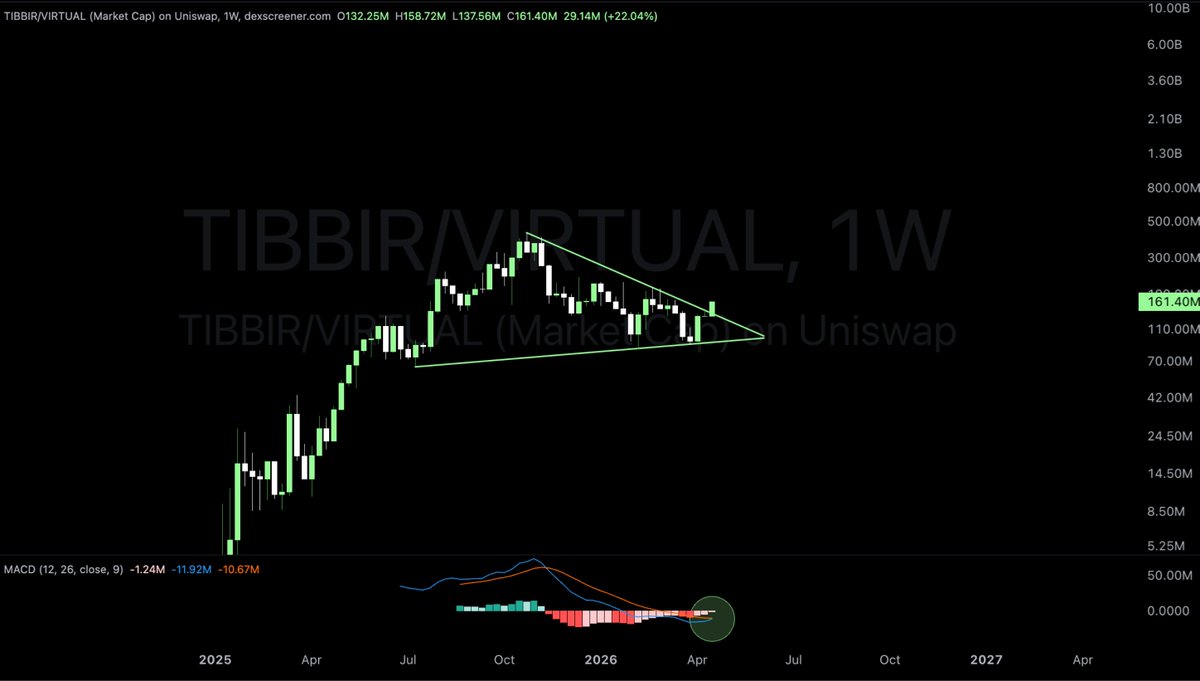
been holding $TIBBIR for over 467 days, tweeted thousands of times about it, told you the bottom is in, in fact released two articles, one of them hit 1.2 million impressions. told you 6-month breakout coming. so if you are still sidelined, this is my final call to get in. i do this from love, not for love, hope you gribbit with us. 🐸
Altcoinist@Altcoinist
true if big - $TIBBIR x @mickymalka 👀
English
@MopHandel @moonpay @3DMax_Virtuals @UnchainedMoor @virtuals_io Search for ribbita by virtuals imo (you see that also in their promo vid)
English


San retweetledi

Been hearing that ppl been selling $TIBBIR to rotate into all kinds of other coins. I don't play that kind of stuff. All my TIBBIR carefully put away & labeled on fresh Ledger wallets bc I know wtf I'm holding, that's why.

WateЯ Junkie Cat@WaterJunkieCat
@Altcoinist @_0xghost_ Yeah but if someone been claiming they are all in on $TIBBIR for months, then shilling another coin? Makes me think they are not entirely all in. I checked a few wallets and they definitely rotated some TIBBIR into ODAI. But ppl can do whatever they want. Just pointing that out.
English
San retweetledi
For me the biggest conviction in this space is TIBBIR and what Virtuals is building behind the scenes (robotics, infra). Also TIBBIR launched on Virtuals for a reason, there are no accidents with Mickey. It’s just a joy to hold, knowing I’m betting on real builders.
English
San retweetledi

i got 100k $tibbir “locked up” in cold storage that i won’t touch until $33-100
preparing myself for what’s to come
English
San retweetledi

$TIBBIR is the ticker!
Ribbit is the play!
ATH is the next destination!
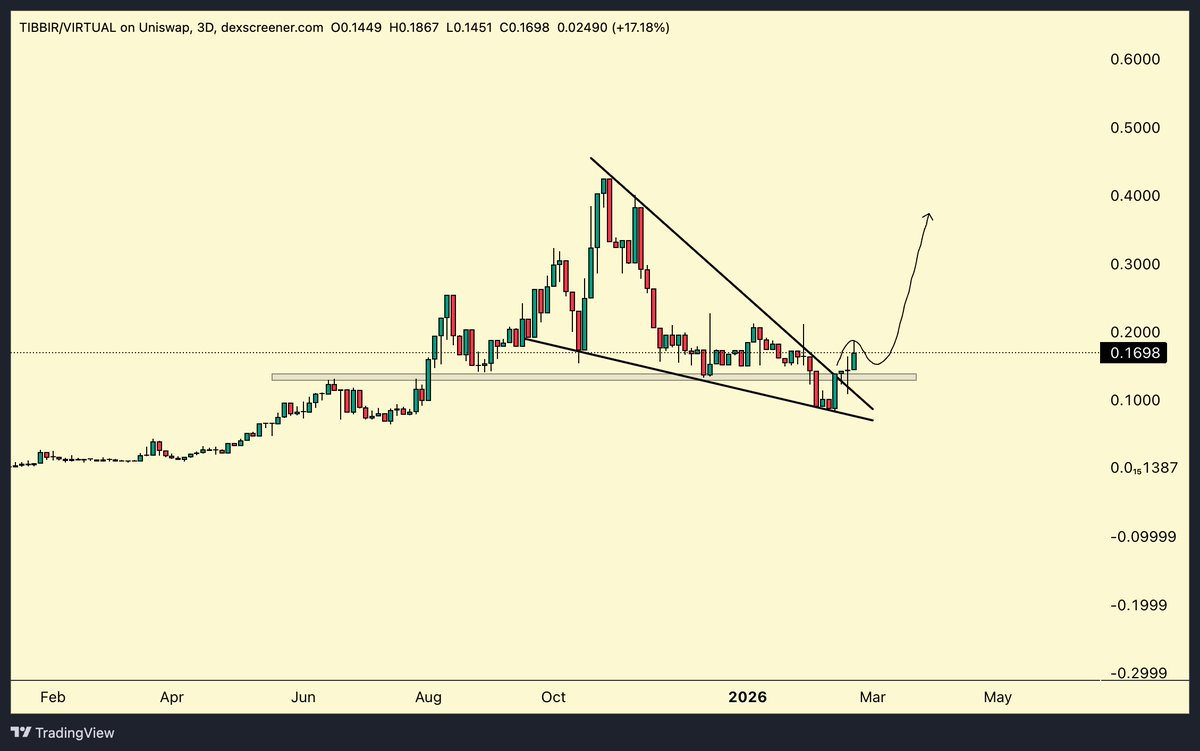
Limbo@cryptolimbo
$TIBBIR run 2.0 loading?
English

You have to pick ONE coin to hold for 2026... to make you a millionaire...🤑
what is it?👇
English
Day #2 of $TIBBIR Chart Staring Contest
$0.18 to $100.. easy👌🏻☕️
San@San___Official
I’ve deceided to do a $TIBBIR chart staring contest. When 1 Tibby hits $100 I have won. (I’m in for the tech, but I also like $100) Day #001 👀 Let’s go 🚀
English
San retweetledi

San retweetledi
here we go: @Pickle_cRypto 🐸
$TIBBIR: "at the very least, this feels like a 0 or 20X (or more) token to me, so having some position, having known about it, makes sense."
@altcoinist take: to determine which scenario is more likely, the 0 or the 20X+, everyone should research @mickymalka and Ribbit’s track record in crypto and fintech.
they ran their fund from $100M to $14.5 BILLION over a decade plus hard & concentrated work.
800 million user reach, 35+ unicorns, first crypto IPOs, first crypto S&P500, best performing fund ever, saved @RobinhoodApp , series A @coinbase , early in @Revolut , @nubank and the list is much longer.
final note: 400+ days in of not distancing themselves from the TIBBIR token... 🐸

English
San retweetledi

@AlgodTrading Defo $Tibbir
I think this is compelling enough 👇
x.com/i/status/20216…
Altcoinist@Altcoinist
English

I’m sorry
I know this correction has been brutal.
But let me be honest,
I’m not here to cry.
I’m here to catch bottoms.
Because that’s where REAL MONEY is made.
Not by chasing green candles.
But by buying fear.
So how do I know when a real bottom is in?
I don’t guess.
I use data.
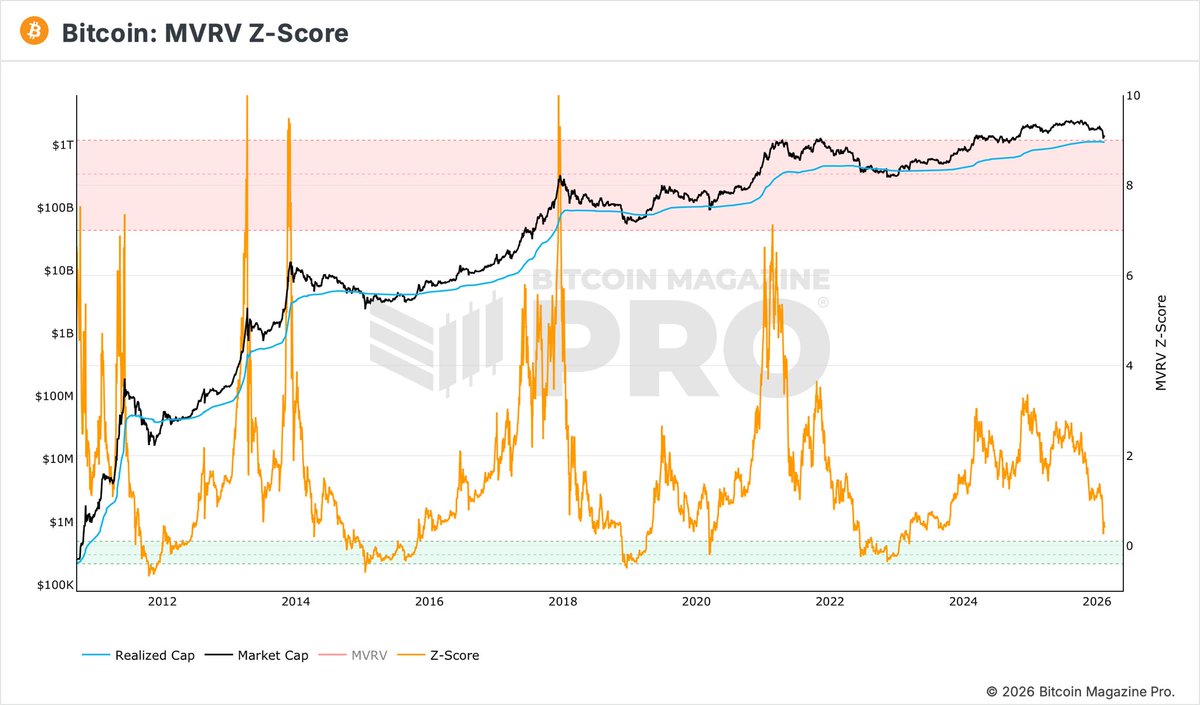
One of my favourite tools:
MVRV Z-Score.
It shows when #Bitcoin is trading far below its fair value.
The secret is:
Green zone = Undervalued
Panic everywhere and Weak hands flushed
It works every cycle:
2015 → Green → Bottom
2018 → Green → Bottom
2022 → Green → Bottom
And now we are close.
So when it’s the #crypto bottom,
I’ll call it this time,
With no hesitation.
Because it’s so simple.
You can track it yourself.
Like this tweet if you are with me.
English
San retweetledi