Luke Summerfield
10.4K posts

Luke Summerfield
@SavvyLuke
Helping others grow better 👉🏼 Product Strategy at @hubspot💡BJJ Black Belt, surfer, yogi, hiker, photographer, pugs. Join the book club 👇🏼
San Diego, CA Katılım Ocak 2012
1.2K Takip Edilen3.6K Takipçiler
Sabitlenmiş Tweet
Luke Summerfield retweetledi

this video is the CLEAREST explanation of how claude skills + AI agents work and how to use them
most people set up an AI agent and wonder why it keeps disappointing them.
the context window is everything
context is what the model assembles before it takes any action. think of it like everything the agent needs to read before it does anything. the quality of what goes in determines the quality of what comes out. the models are genuinely really good right now. claude and gpt are exceptional. the variable is almost always the context you give them.
1. agent.md files are mostly unnecessary
every single line you put in an agent.md file gets added to every single conversation you have with your agent. a 1000 line file is around 7000 tokens burning on every run. the model already knows to use react. it can read your codebase. save the agent.md for proprietary information specific to your company that the model genuinely cannot know on its own.
2. skills are the actual unlock
a skill.md file works differently. what loads into context is only the name and description, around 50 tokens. the full instructions only appear when the agent recognizes it needs that skill. so instead of 7000 tokens on every run you have 50. and the agent stays sharp because the context window stays lean. the closer you get to filling the context window the worse the agent performs, same way you perform worse when someone dumps 10 things on you at once.
3. here is how to actually build a skill the right way
most people identify a workflow and immediately try to write the skill. what you want to do instead is run the workflow by hand with the agent first. walk it through every single step. tell it what to check, what good looks like, what bad looks like. correct it in real time. once you have had a full successful run from start to finish, tell the agent to review everything it just did and write the skill itself. it writes a better skill than you will because it has the full context of what actually worked in practice not in theory.
4. recursively building skills is how you go from frustrated to reliable
when the skill breaks, and it will break, ask the agent exactly why it failed. it will tell you specifically what went wrong. fix it together in that same conversation. then tell it to update the skill file so that failure mode never happens again. ross mike did this five times with his youtube report generator. it now pulls from eight different data sources and runs flawlessly every single time without him touching it.
5. sub agents are something you earn not something you set up on day one
start with one agent. build one workflow. turn it into one skill. once that works add another. ross mike has five sub agents now covering marketing, business, personal and more. it took months to get there and every single one exists because a workflow proved it deserved to exist. the people who set up 15 sub agents on day one and wonder why nothing works skipped all the steps that make the thing actually run.
6. your workflow is the thing the model cannot get anywhere else
the model has been trained on everything. it knows more than you about most things. what it does not have is your specific process, your taste, your way of doing things. that is what skills capture. that is what makes your agent actually useful versus a generic one. downloading someone else's skill means downloading their context onto your setup and it will not work the way you want it to because it was never built around how you work.
this is the clearest explanation of how agents actually work i have heard. @rasmic runs this stuff every single day and the results show it.
full episode is now live on @startupideaspod where you get your pods
people charge for this sorta stuff
i give away the sauce for free
i just want you to win
watch
English
Luke Summerfield retweetledi

Luke Summerfield retweetledi

In the AI era, the middle manager is in trouble.
@ouraring CEO Tom talks about the "Dilbert problem": a middle manager whose only ambition is to make their own life manageable.
English
Luke Summerfield retweetledi

We are completely humbled by the amazing response to our launch last week! 🫶 Now, we want to help you get the absolute best results from Stitch.
In this new video, David East walks you through how to consistently get premium results.
We also launched a new prompt enhancer (located under ‘+’ menu) to help you quickly collaborate on your vision before you submit your first prompt.
Stitch doesn't replace the design process—it is a tool for fast exploration and refinement, which is most effective when you step into the role of Creative Director.
Here are David's top strategies for taking your designs from generic to amazing:
🧠 Start with Intent: Define exactly who the design is for and how you want them to feel before you start building.
🎨 Enhance your prompt: You can use the new prompt enhancer (under the ‘+’ button’) to teach you design language and swap abstract words like "sporty" for tangible aesthetic descriptions like "high-end stationery" or "architectural limestone".
📐 Master Color Hierarchy: Treat colors as visual weight—Neutral for the canvas, Primary for ink, and Tertiary for your loudest accents.
Watch the full breakdown and see the transformation here👇images in 🧵
English
Luke Summerfield retweetledi

@bhalligan Love where this is going… but had to google “Suno” to connect the dots on the analogy. Maybe use something more well understood, ex: Mixtable Sampling or Freestyle (tho that’s arguably what Jazz is).
English
Luke Summerfield retweetledi

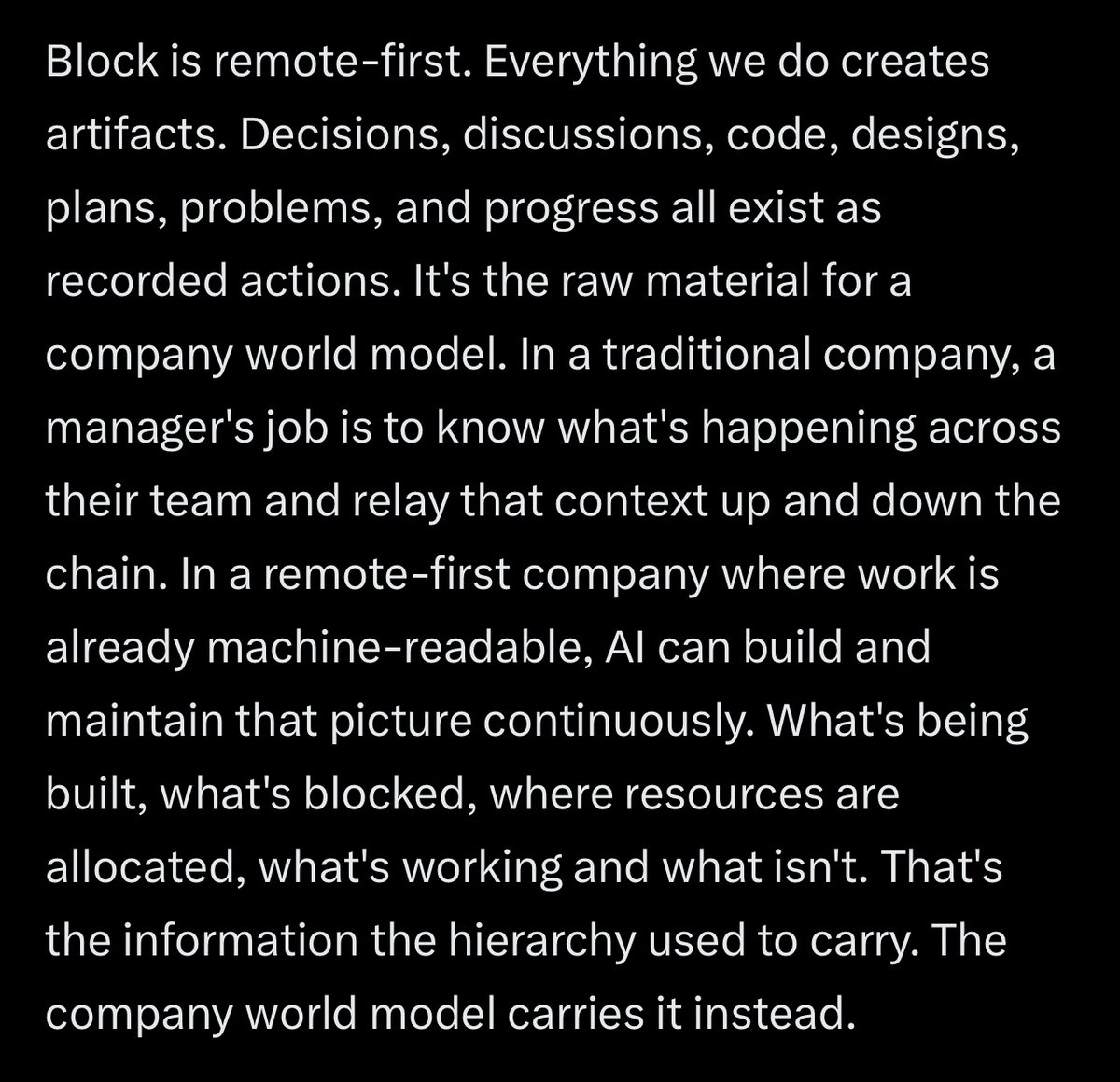
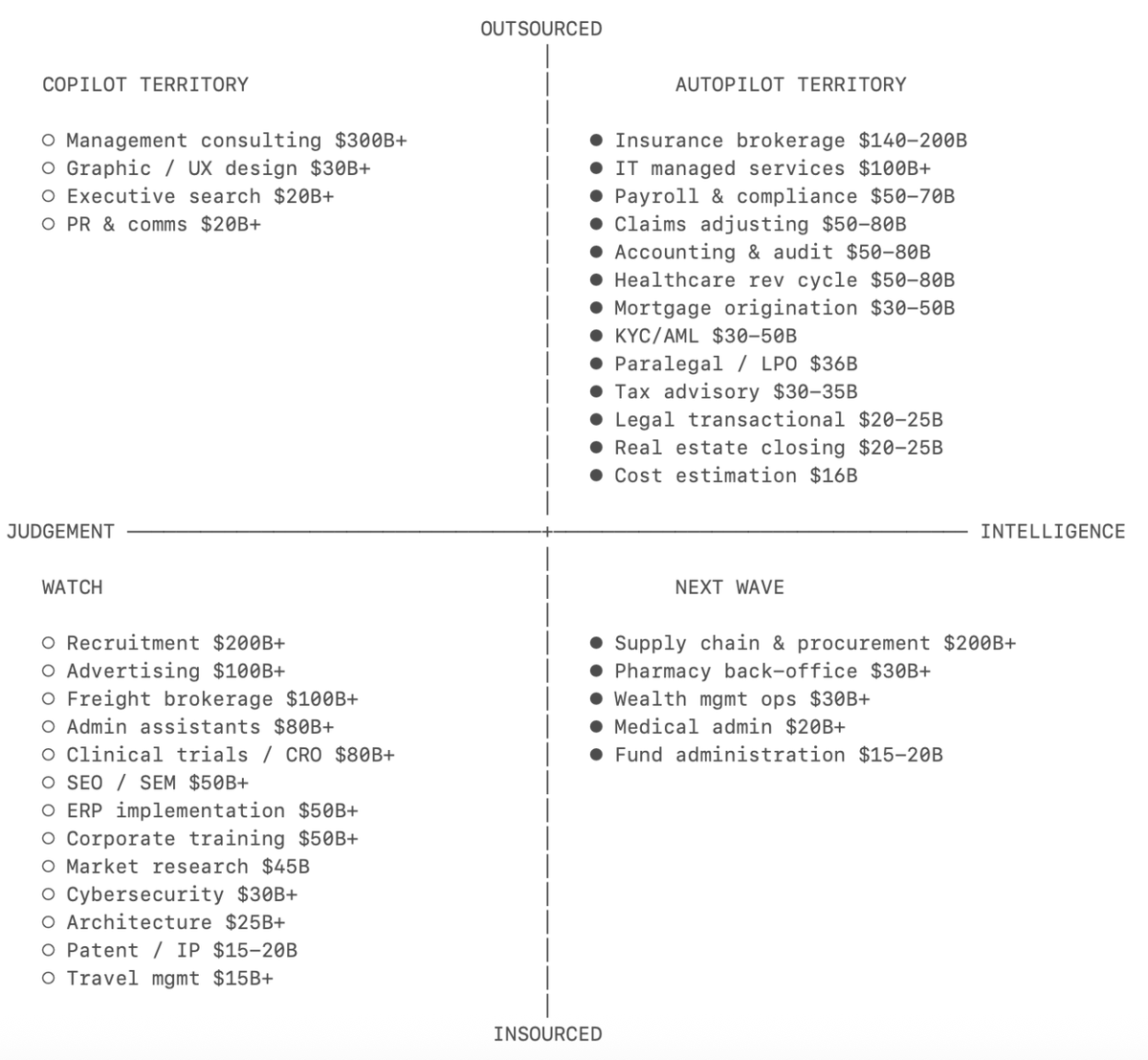
I got a chance to interview Jack Dorsey for the Long Strange Trip pod about his new article (in comments) on how to build a modern ai native company in 2026.
I took some of his ideas and mixed them with some observations about the hyper scaling ai native CEOs I work with every day. This is a first draft. Thoughts? If this is landing, I can flesh it out more.

English
Luke Summerfield retweetledi

Contrarian take: there's never been a better time for early career professionals to command the attention of leaders in their company. How?
Become the AI Guru in your company.
Every co has a few of them & they instantly earn visibility with the c-suite...
If you're an SDR, map out the inbound SDR process end-to-end in your org and build an AI agent on Vercel that automates several/all steps.
If you're an engineer, evangelize Claude Code & lead enablement workshops, helping other technical folks understand everything from hooks to worktrees to claude[.]md.
If you're a growth marketer, build a paid media workflow that mines creative ideas from reddit, spins up 100s of ads using Nano Banana, sets up the campaign on Meta, and drives traffic to custom landing pages, so you can test ad spend far more efficiently at scale.
You could be the most junior person in your company, but if you're truly viewed as the AI Guru, you are wildly valuable & have way more leverage than you think.
English
Luke Summerfield retweetledi

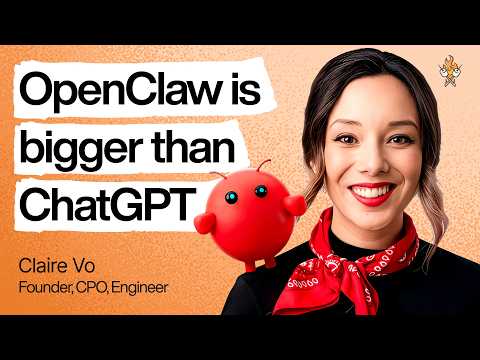
Claire Vo's first day with @OpenClaw it deleted her family calendar.
Now she runs 9 agents across 3 Mac Minis, and said "I haven't felt like this since I was a teenager learning to code."
Her sales agent Sam does a daily CRM sweep, identifies decision-makers from new signups, and sends personalized outreach—replacing a part-time salesperson she was paying 10 hours a week.
Her home agent Finn pings her and her husband every day at 3pm: "Which of you is picking up which kids?" Then flags when the oldest's basketball conflicts with the middle kid's soccer and asks how they want to split duties.
She also has agents for podcast prep, kids' homework help, and course project management.
Claire (host of How I AI, founder of @ChatPRD) started as one of OpenClaw's most vocal skeptics. She now calls it "a ChatGPT moment."
In our in-depth conversation, she breaks down:
🔸 Her exact setup: Mac Mini, separate Gmail, dedicated local account
🔸 The progressive trust model: first calendar access, then read email, then draft, then send — just like onboarding an EA
🔸 Why one agent is a mistake—and why she thinks about it like Slack channels, not a single assistant
🔸 How to use Claude Code as a "brain surgeon" to fix and manage your OpenClaw when things break
🔸 "The yappers API" — why rambling into a voice note is the highest-bandwidth way to set up your agent
🔸 Why management skills matter more than technical skills for making this actually work
Listen now 👇
youtu.be/DIa0MYJzM5I

YouTube
English
Luke Summerfield retweetledi

Luke Summerfield retweetledi

Your work tools in Claude are now available on mobile.
Explore Figma designs, create Canva slides, check Amplitude dashboards, all from your phone.
Give it a try: claude.com/download
English
Luke Summerfield retweetledi

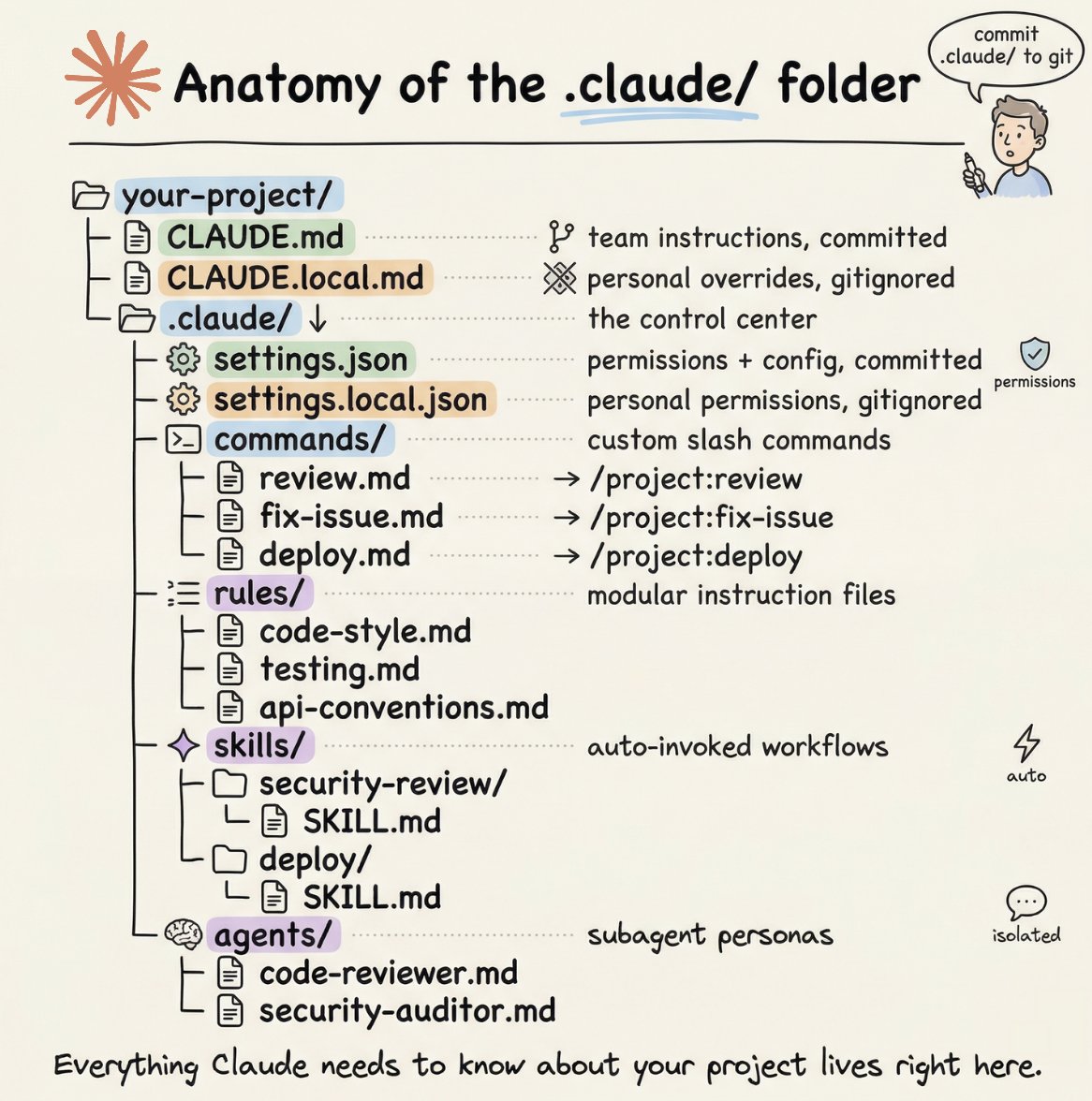
How to setup your Claude code project?
TL;DR
Most developers skip the setup and just start prompting. That's the mistake.
A proper Claude Code project lives inside a .𝗰𝗹𝗮𝘂𝗱𝗲/ folder. Start with 𝗖𝗟𝗔𝗨𝗗𝗘.𝗺𝗱 as Claude's instruction manual. Split it into a 𝗿𝘂𝗹𝗲𝘀/ folder as it grows. Add 𝗰𝗼𝗺𝗺𝗮𝗻𝗱𝘀/ for repeatable workflows, 𝘀𝗸𝗶𝗹𝗹𝘀/ for context-triggered automation, and 𝗮𝗴𝗲𝗻𝘁𝘀/ for isolated subagents. Lock down permissions in 𝘀𝗲𝘁𝘁𝗶𝗻𝗴𝘀.𝗷𝘀𝗼𝗻.
There are two .𝗰𝗹𝗮𝘂𝗱𝗲/ folders: one committed with your repo, one global at ~/.𝗰𝗹𝗮𝘂𝗱𝗲/ for personal preferences and auto-memory across projects.
The .𝗰𝗹𝗮𝘂𝗱𝗲/ folder is infrastructure. Treat it like one.
The article below is a complete guide to 𝗖𝗟𝗔𝗨𝗗𝗘.𝗺𝗱, custom commands, skills, agents, and permissions, and how to set them up properly.

Akshay 🚀@akshay_pachaar
English