Scott Stirrett

1.5K posts

Scott Stirrett banner
Scott Stirrett

Scott Stirrett

@scottstirrett

Founder @Venture4Canada. Curious person passionate about helping others achieve their full potential.

Toronto Katılım Haziran 2010
916 Takip Edilen1.7K Takipçiler
Scott Stirrett retweetledi
Rob Wiblin
Rob Wiblin@robertwiblin·
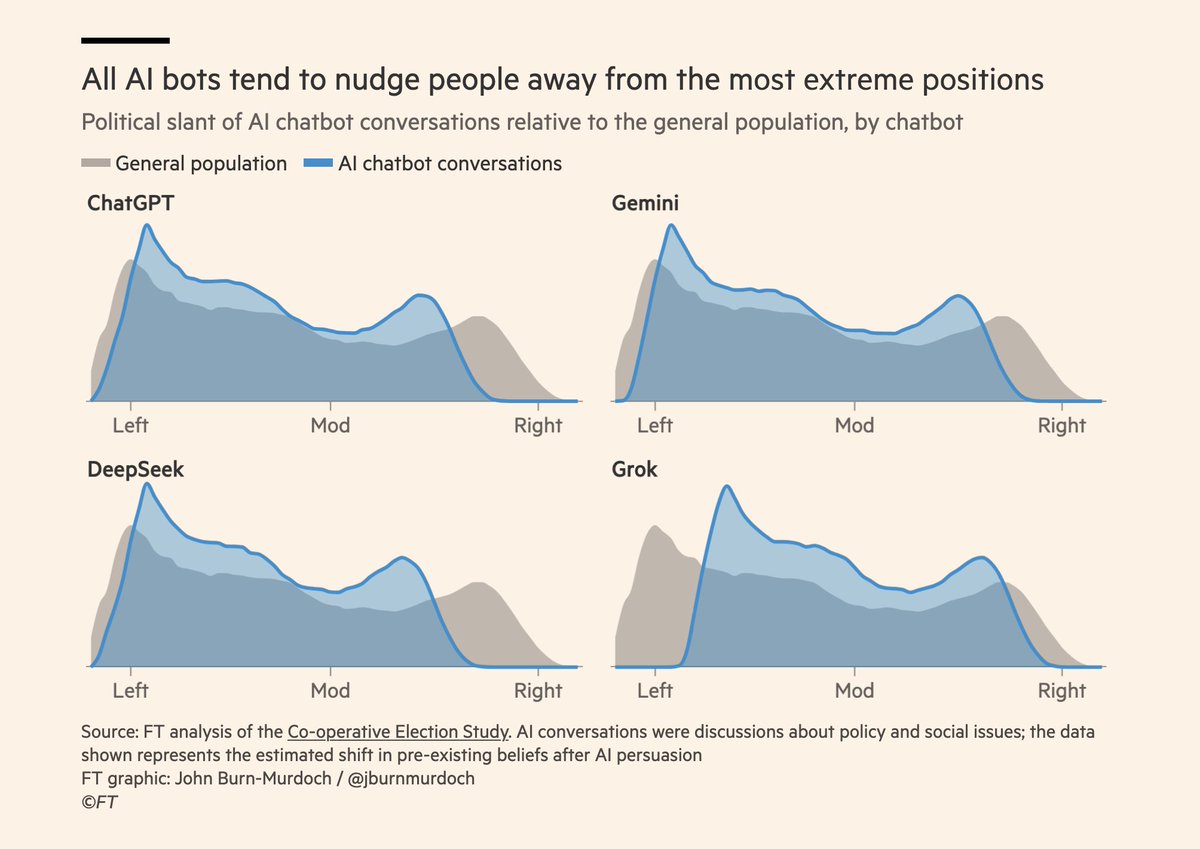
Really great news I would say: "Social media is populist and polarising. AI may be the opposite." – @jburnmurdoch in the FT
Rob Wiblin tweet mediaRob Wiblin tweet mediaRob Wiblin tweet mediaRob Wiblin tweet media
English
46
145
887
105.2K
Scott Stirrett retweetledi
Dean W. Ball
Dean W. Ball@deanwball·
Some other points worth making: 1. A lot of people, including people in positions of authority, told us recently that models of Mythos capabilities wouldn’t be a thing—that models with obvious “national security” implications would not be forthcoming. Those people were wrong. There’s nothing to “do” about this. But you should remember it. 2. Mythos is the first model where the theft of the weights by an adversarial actor feels like it would be a major deal. You better believe they will try, and if they don’t succeed with Mythos, they will eventually. 3. We are thoroughly in the era of “the labs’ best models may well not be public in the way we are used to.” This will be because of a combination of compute constraints, economic reality, competitive advantage, and safety concerns. 4. (3) means that the most relevant models may be decreasingly legible to the general public over time. We might all have less of a sense of what is going on. This is where transparency, and eventually auditing, can come in handy. Internal deployments were one of the major motivations for my work on “entity-based” regulation (we have to regulate the company, not the model, because the details of the model itself are fuzzy if it isn’t released), and my work on private governance: independent bodies that would evaluate frontier AI company safety practices, including internal deployments. 5. Depending on the extent and duration of the coming compute squeeze, we could enter a market dynamic where the best models are only available to the highest bidder—in other words, where compute is a sellers market rather than a buyers market. Imagine competing firms in the economy bidding against one another for access to the best and most tokens, and the frontier labs as, in essence, kingmakers. The governance regime I have described above in (4) is not designed to stop this dynamic, but for obvious reasons policymakers and the broader public may find it unpalatable. On the other hand, if the compute squeeze is *that* bad (not a guarantee, and I rate this unlikely to be clear), it probably means malicious actors struggle to find tokens too. That is good for “safety”!
Dean W. Ball@deanwball

Some brief thoughts on Mythos We’ve known this was coming for a long time. At least, we *should* have. Extremely effective software vulnerability discovery was clearly coming to anybody paying attention. It has also been clear that all AI policy so far has been made and executed with training wheels. It was always clear that, sometime soon, the training wheels would come off. The training wheels aren’t fully off just yet—this model is being kept under lock and key, and Anthropic does not seem inclined to release Mythos preview to the public anytime soon, if ever. The training wheels will be off when these capabilities are fully diffused in ways centralized actors cannot control. It is inevitable that this will happen. The point is not to argue about whether we should “ban open source” or similarly unrealistic notions. The point is to harden the world for this new reality. I applaud Anthropic—and I especially applaud @logangraham—for doing so. But their efforts alone are not close to enough. Project Glasswing—a partnership with Anthropic and other companies—seems nice, but unsurprisingly it lacks uniform frontier lab participation. It would probably be ideal, for our national cyberdefense, if the federal government were not trying to destroy Anthropic and eliminate their models from government systems. If anything, the government should be trying to work more closely with Anthropic. As a side note, I hope Anthropic is working with state and local government entities on cyber vulnerability discovery, since many of our adversaries know that state and local is America’s soft underbelly in so many ways. In any event, the Mythos news should lay bare how stupid and counter-productive the Department of War’s feud with Anthropic really is. As someone who suspected all this was coming (not from inside knowledge but from it being ~obvious), that probably explains why I have had such a strong reaction to that feud. It’s this senseless distraction just at the time that the training wheels are coming off. I hope the two parties can resolve their differences now, for the sake of the country, but I am not hopeful. I do want to call out, however, the numerous political and career civil servants in the Trump Admin who do get these issues, know how stupid the Ant-DoW stuff is, and want to work with the frontier labs like adults. I wish you all utmost success. I find myself inclined to end on some positive notes. Mythos appears to be—according to Anthropic at least—“the most aligned” model Anthropic has ever trained. We are approaching superhuman capabilities in some domains, and yet alignment is getting better rather than worse. That’s not nothing. I know some of you think the model is faking its alignment, or aware when its alignment is being tested. I don’t have a good answer. Finally, there is this: Mythos was made by an American company, and like most successful American companies, it has a vested interest in maintaining order and peace, and it is investing substantial resources in mitigating the risks of its technological progress, as I expect most of the American labs would. This is cause for optimism: The incentives of capitalism are working. The training wheels are coming off, but at least we are the ones removing them, as opposed to our enemies. Perhaps we can be the first to learn to bike for real. The first step would be to get beyond all the low-fidelity, under-specified, pimply little fights of AI policy’s prepubescent era. That goes for me too. “What hath God wrought,” wrote the first telegram. What, indeed. In this case, the answer is still up to us.


English
26
99
874
120.6K
Scott Stirrett
Scott Stirrett@scottstirrett·
@erikbryn Why do you think there is such a divergence between US productivity growth and many other developed economies?
English
0
0
0
11
Scott Stirrett retweetledi
Erik Brynjolfsson
Erik Brynjolfsson@erikbryn·
US productivity growth is likely to come in at about 2.7% for 2025. That is nearly double the average of the previous 10 years. There are many factors at work, but part of the story is that businesses are finally beginning to reap some of AI's benefits. I discuss the latest evidence in my column in the @FT this morning. See ft.com/content/4b51d0…
English
57
197
844
191.6K
Scott Stirrett retweetledi
Aakash Gupta
Aakash Gupta@aakashgupta·
The FT just quantified what the “vibe code is a toy” crowd has been ignoring for 12 months. New websites up 30%+ YoY. iOS app submissions up nearly 60%. GitHub pushes in the US and UK spiking to levels never seen in the data. All four charts show the same inflection point: late 2024, right when Claude, Cursor, and Replit Agent hit mainstream adoption. The scale of what’s happening is hard to overstate. 25% of Y Combinator’s Winter 2025 batch reported codebases that were 95% AI-generated. Replit says 75% of its users now have zero coding background. A solo founder built Base44, sold it to Wix for $80M cash after six months. Lovable raised at a $6.6B valuation and is targeting $1B in annual revenue by late 2026. This is real shipping. Real apps in the App Store. Real websites with real domains. The skeptics kept framing vibe coding as “demo code that never sees production,” and meanwhile the production numbers were quietly going vertical. The part most people skip: this data probably understates the shift. Tons of internal tools, prototypes, and MVPs built with AI never touch GitHub or the App Store. They live inside companies, replacing processes that used to require a dev team and a 6-week sprint. Collins Dictionary made “vibe coding” their Word of the Year in 2025. When the dictionary notices before the industry analysts do, you know the discourse is lagging the data by about 18 months.
Florian Brand@xeophon

did you know that "no one ships what they (vibe) code" is measurably wrong

English
8
13
95
21.3K
Scott Stirrett
Scott Stirrett@scottstirrett·
@jburnmurdoch Interesting take Canada would be an interesting use case to look at as Quebec doesn't use common law whereas the other provinces do
English
0
0
0
64
Scott Stirrett retweetledi
John Burn-Murdoch
John Burn-Murdoch@jburnmurdoch·
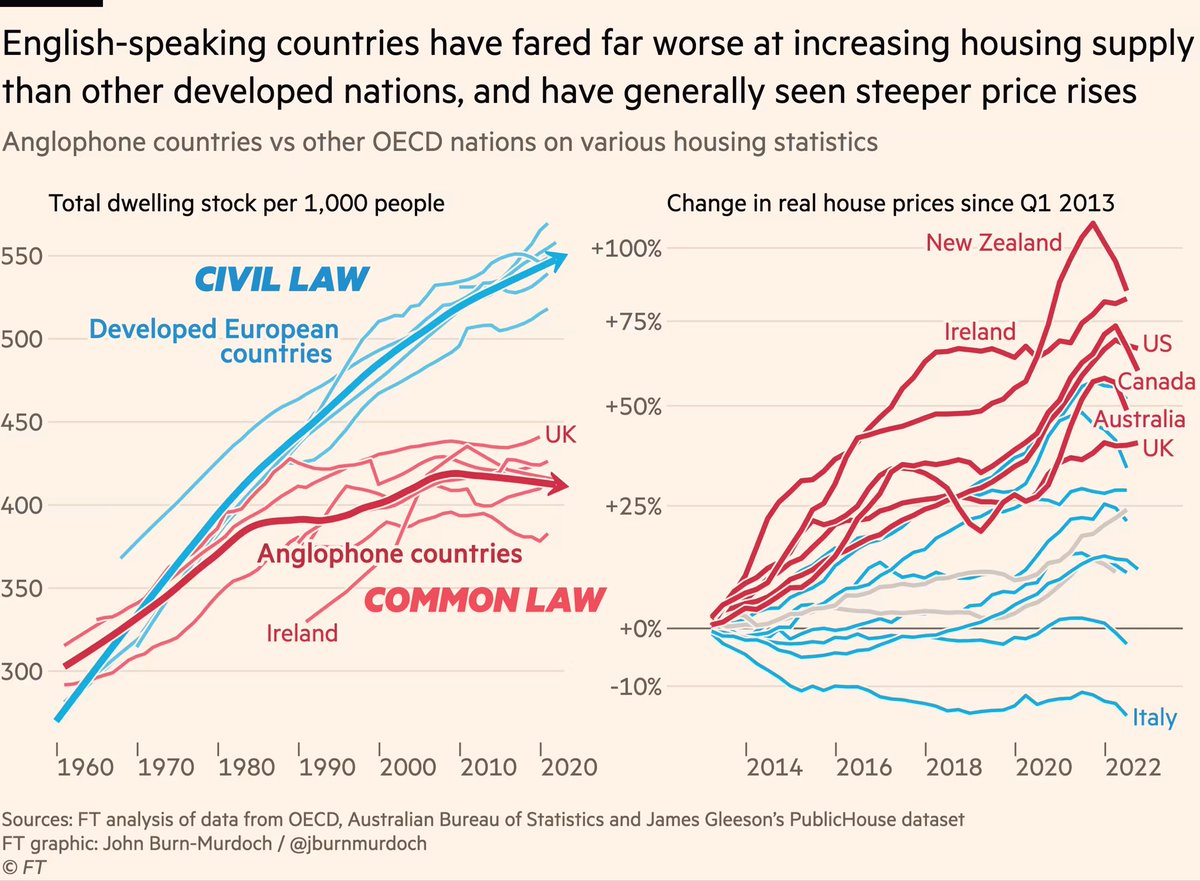
Underrated factor in why English-speaking countries have especially bad housing crises is their common law systems (adversarial and litigious) vs judge-led civil law systems elsewhere. Makes Anglo planning/permitting systems especially vulnerable to NIMBYs and other objections.
John Burn-Murdoch tweet media
English
248
1K
6.8K
750.9K
Scott Stirrett retweetledi
Sean Speer
Sean Speer@Sean_Speer·
“Roughly 35 percent of Canadians aged 20 to 34 lived with at least one parent in 2021. Meanwhile, the share of 20 to 34 year olds living with a spouse, partner and/or child without their parents has declined from almost 50 percent in 2001 to under 40 percent in 2021.”
Sean Speer tweet media
The Hub@TheHubCanada

.@Sean_Speer and @TaylorJJacks: The fragile state of the Canadian family in 5 charts thehub.ca/2026/02/16/div…

English
4
17
48
8.2K
Scott Stirrett retweetledi
Séb Krier
Séb Krier@sebkrier·
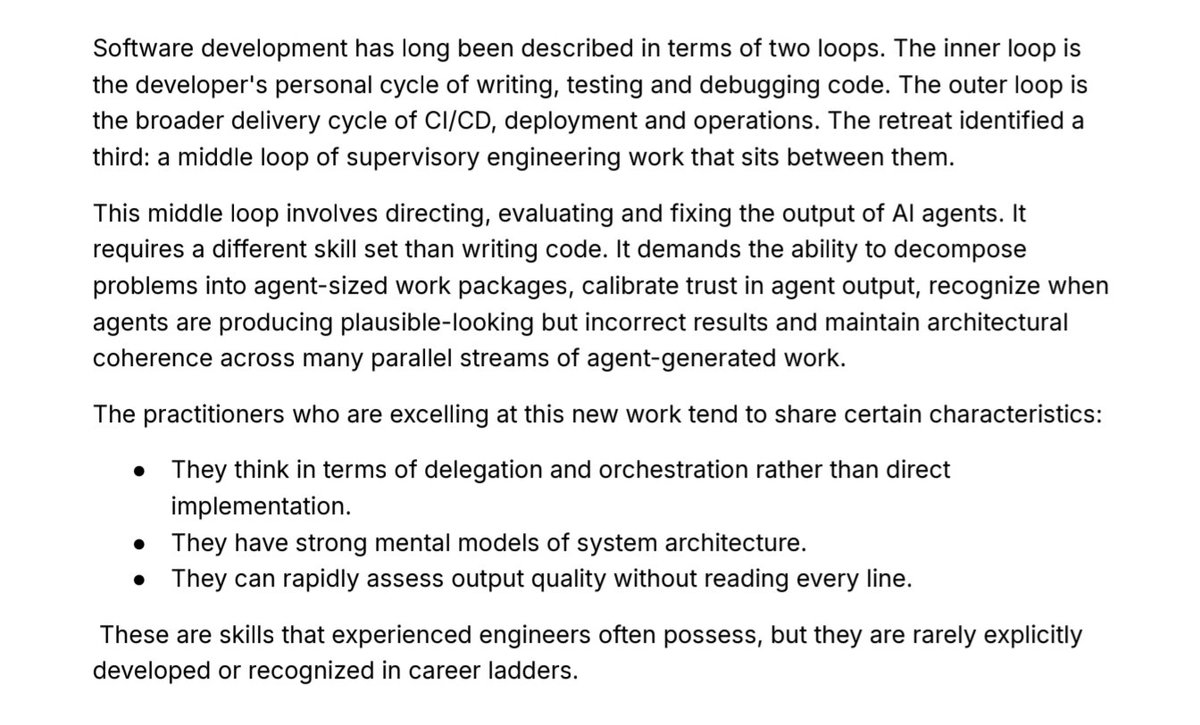
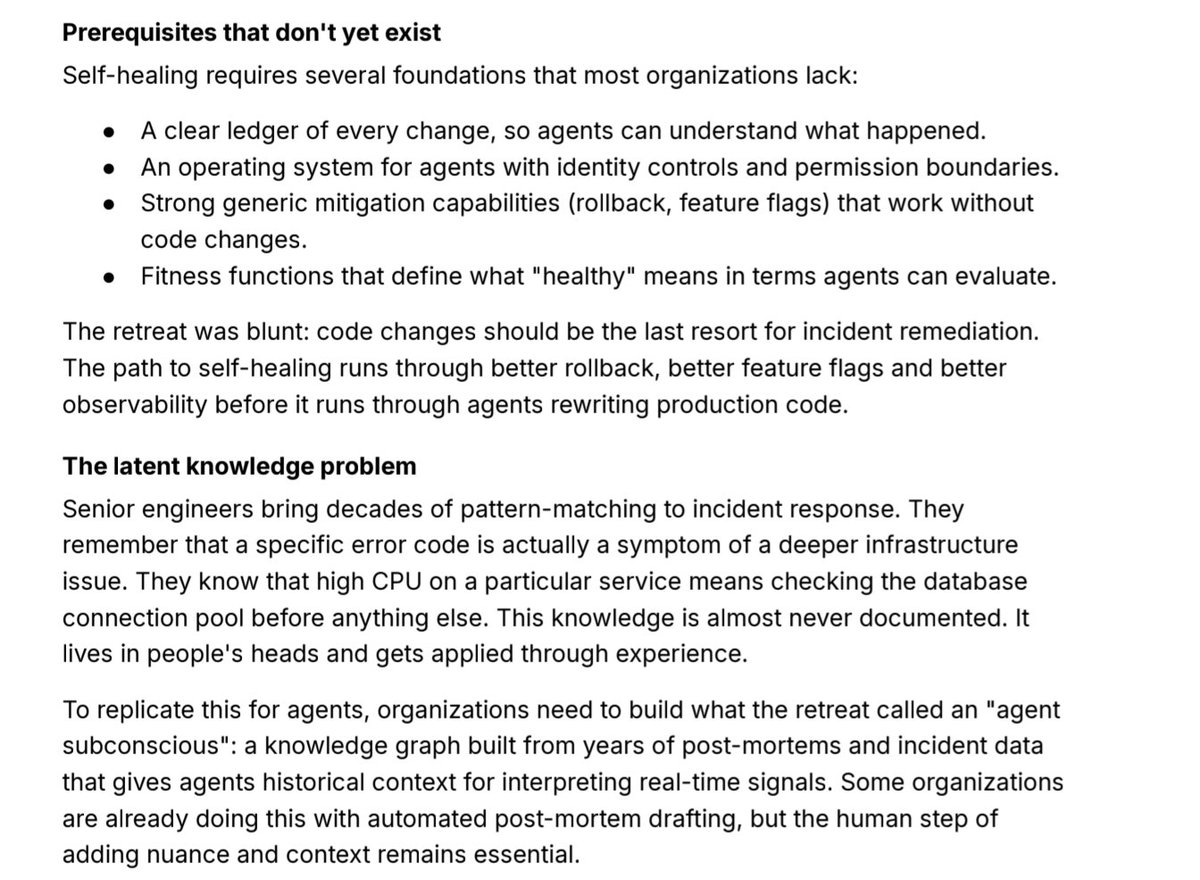
Fascinating insights from senior engineers on how AI is changing their jobs. Interesting how automation also creates all sorts of new tasks and bottlenecks. thoughtworks.com/content/dam/th…
Séb Krier tweet mediaSéb Krier tweet media
English
5
52
403
30.2K
Scott Stirrett retweetledi
Civixplorer
Civixplorer@Civixplorer·
The transformation of Toronto, Canada 🇨🇦
Civixplorer tweet media
English
36
204
2.9K
222.1K
Scott Stirrett retweetledi
Derek Thompson
Derek Thompson@DKThomp·
I think this was a really bad year for American politics, a mediocre year for the American economy, and an exceptional year for America. In 12 months, you’ve got - the largest decline in murder rate ever recorded - huge declines in traffic fatalities, drug overdoses, and suicide - first ever personalized gene editing treatment and breakthroughs in HIV and cancer therapy - continued advances in GLP1 technology that seems to reduce weight and inflammation and a bunch of other stuff - declines in teen anxiety and despair - surge in self-driving car technology* - all this happened in a period when both the SP500 and inflation adjusted median wages hit record highs
Brandon M. Scott@MayorBMScott

Baltimore will be ending the year with the lowest number of homicides in DECADES. We know that this work isn't finished yet. We have a long way to go. But this is real progress.

English
99
257
1.8K
356K
Scott Stirrett retweetledi
Adam Grant
Adam Grant@AdamMGrant·
Most divides aren't due to differing values. They're driven by focusing on different things. After a 10-minute talk, people with opposing views are less polarized a week later. They find more common ground than expected. Prejudice festers in silence. Civil dialogue opens minds.
Adam Grant tweet mediaAdam Grant tweet media
English
47
319
1.3K
78.4K
Scott Stirrett retweetledi
François Valentin
François Valentin@Valen10Francois·
French is one of the most information efficient languages in the world ! But the real fascinating but is that all languages end up sharing information at a similar pace, independently of how quickly it is spoken.
François Valentin tweet media
English
78
259
2.1K
159.7K
Scott Stirrett retweetledi
Haider.
Haider.@haider1·
Fei-Fei Li says the ability to learn and adapt now matters more than degrees Structured credentials matter less than how quickly an engineer adopts new tools to boost output "at this point in 2025, i wouldn't hire a software engineer who doesn't embrace AI-collaborative tools"
English
51
306
1.9K
136.9K
Scott Stirrett retweetledi
Natalie Sportelli
Natalie Sportelli@N_Sportelli·
The hot new job at tech companies is leading "storytelling." The term doubled on LinkedIn job posts in the U.S since last year. The WSJ writes: "Compliance technology firm Vanta this month began hiring for a head of storytelling, offering a salary of up to $274,000." "Productivity app Notion recently merged its communications, social media and influencer functions into one 10-person, so-called storytelling team." "Financial technology brand Chime last month began hiring for a director of corporate editorial and storytelling—its first storyteller opening." As a former reporter and career-long content/brand leader, I have some thoughts! These examples point to a shift in internal marketing orgs that reflect a shrinking earned media landscape and an endless, growing number of distribution channels to share and own your narrative, i.e. "going direct." It's not entirely editorial, or events, or PR, or marketing. It's how all these pieces work together and how they contribute to the bigger picture - your story! I joke with my reporter friends that they are infinitely hireable if they ever left journalism. Why? Because we are trained to ask: "So what? Why should readers care? What does it mean for them?" To me, that's a big nuance in this conversation. Because... *Storytelling is a human act and it's a service.* Super interested to watch what happens here. Are you long/short on this role?
Natalie Sportelli tweet media
English
449
840
7K
1.8M
Scott Stirrett
Scott Stirrett@scottstirrett·
@craigmod's Things Become Other Things has been the perfect travel companion for me on my five week trip to Japan. Next trip I want to visit the Kii peninsula!
English
1
0
0
12
Scott Stirrett retweetledi
Rohan Paul
Rohan Paul@rohanpaul_ai·
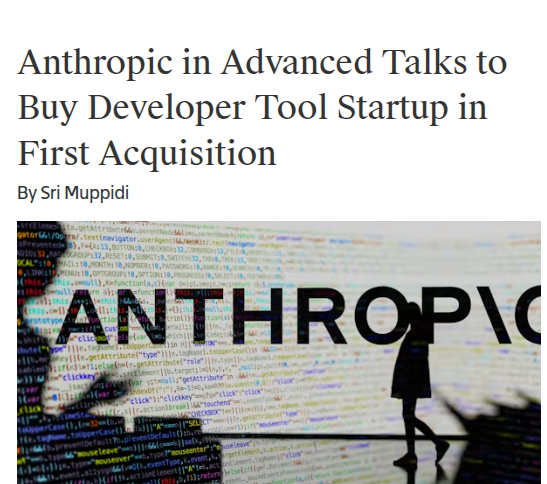
This is the real platform play by Anthropic. They are going shopping aggressively for dev tools. Buying dev tool startups is the natural move if you want to turn Claude into the house brain for entire engineering orgs. There's a race to own the coding stack where the cash actually shows up.
Rohan Paul tweet media
The Information@theinformation

Anthropic has told investment banks it plans more acquisitions to strengthen its coding capabilities. Coding-related tasks now make up the majority of its revenue. More: thein.fo/3MbEbyk

English
30
44
647
152.6K