
Sabitlenmiş Tweet
Shuli Gilutz, Ph.D.
12.4K posts

Shuli Gilutz, Ph.D.
@ShuliGilutz
Children's tech strategy/design/UX/research. #childrights in the digital world at @UNICEF. Prev: UGlabs, @telavivuni, @D4C_Guide founding board member.
Katılım Kasım 2012
1.4K Takip Edilen2K Takipçiler
@markovenden @Dauntbooks I love the cover image! Is there a poster /postcard and/or download available? 🙏🏼
English

Hoping "Transit Maps of the World" has arrived in the beautiful bookstore @Dauntbooks ? penguin.co.uk/books/transit-…

English
Shuli Gilutz, Ph.D. retweetledi

Hasbro CEO thinks the video game industry needs to "think about things differently"
gamesindustry.biz/hasbro-ceo-thi…

English
Shuli Gilutz, Ph.D. retweetledi

Shuli Gilutz, Ph.D. retweetledi

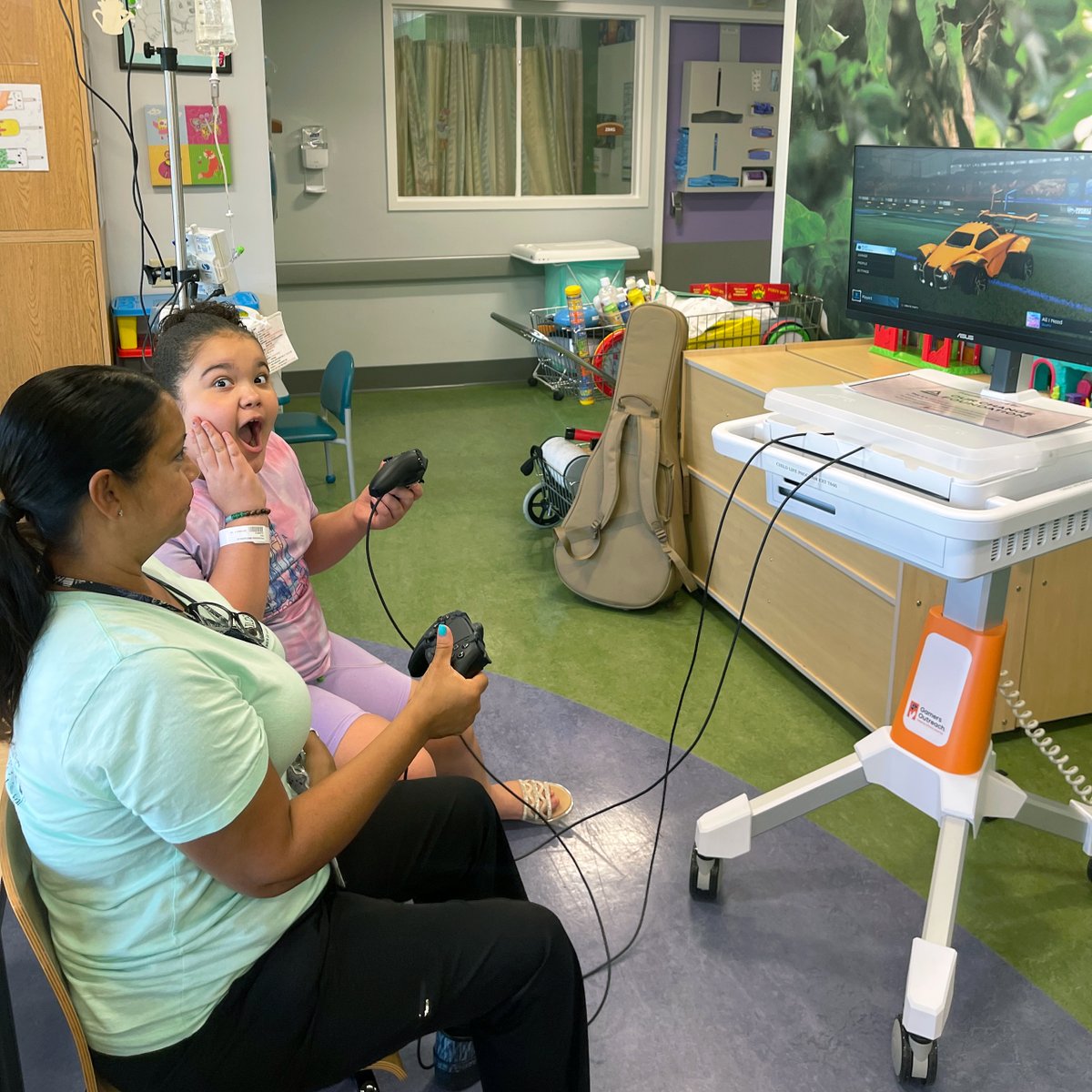
The only kind of hospital cart that gets this reaction when it rolls in 😮
English
Shuli Gilutz, Ph.D. retweetledi

So the French public TV decided to broadcast the movie Persepolis, an autobiographic movie about a girl and her family going through the 1979 revolution in Iran and the years that follow. It deals with the brutal repression of the opposition by the Shah prior to the revolution as well as the brutal social control imposed after the revolution by the mollahs. A great movie and a must watch/read (it's also a graphic novel).
But it is now being criticised by a number of leftist activists as "war propaganda", an islamophobic movie that depicts a caricature of Iran under the mollah and that actually most women are actually better off under their regime.
I'm starting to be convinced that part of the left actually wants the far right to come into power next year.
france.tv cinéma@francetvcinema
🔴 En raison de l'actualité, nous diffuserons "Persepolis" (Prix du jury à Cannes et lauréat de 3 César en 2007) de Marjane Satrapi, ce samedi soir à 21h sur France 4.
English
Shuli Gilutz, Ph.D. retweetledi

Just in time for International Women’s Day, @Mattel has unveiled a new @Barbie doll range inspired by IRL female trailblazers in sports, science and music.
kidscreen.com/2026/03/06/bar…
English
Shuli Gilutz, Ph.D. retweetledi

As governments around the world are trying to understand games, it's important to consider that gaming belongs on the side of fun and art, not addiction. gamesbeat.com/turkiye-makes-…
English
Shuli Gilutz, Ph.D. retweetledi

The Case for Childhood Boredom.
A strange thing has quietly disappeared from childhood.
Boredom.
For most of human history, boredom was unavoidable. Childhood unfolded in long, uneven stretches of time that nobody bothered to organize. Summer afternoons drifted by without a schedule, car rides lasted hours with nothing but the passing landscape, and children spent entire days outside with only a loose instruction to be home before dinner.
And something curious tended to happen in those empty spaces.
Children invented things.
A stick became a sword, and then a fishing rod, and then, without warning, a wand capable of defeating imaginary monsters. A patch of grass became a battlefield. A cardboard box became a spaceship. Entire worlds emerged out of nothing more than idle time and a restless mind.
Neuroscientists now understand that the brain behaves differently in those moments. When external stimulation fades, a network deep in the brain called the default mode network begins to activate. It is the circuitry associated with imagination, memory integration, and abstract thinking. When the mind has nowhere specific to go, it begins to wander, and while it wanders it starts connecting dots that rarely meet during structured activity.
Creativity often lives in that wandering.
Modern childhood, however, has undergone a quiet redesign. Empty time has been steadily replaced with organized activity. Sports leagues, tutoring sessions, music lessons, enrichment programs. Even the small gaps between activities tend to be filled with screens engineered with extraordinary precision to eliminate boredom the moment it begins to appear.
Parents worry when boredom surfaces. A child announcing “there’s nothing to do” can feel like a problem waiting to be solved, a signal that the environment lacks sufficient stimulation.
But boredom is simply the brain beginning a different mode of operation.
The mind starts generating its own stimulation instead of consuming someone else’s.
Look closely at the childhoods of unusually creative people and a pattern emerges. Steve Jobs spent long stretches wandering the neighborhoods of Silicon Valley, exploring electronics shops and experimenting in garages. Albert Einstein famously described hours of quiet daydreaming as a child, staring out windows and imagining physical problems in his head. J.K. Rowling began inventing elaborate stories long before she had any audience for them.
Each of them had something that has become surprisingly rare.
Psychological whitespace.
Modern childhood often resembles a corporate calendar. Every hour accounted for. Every activity supervised. Every quiet moment quickly filled by a glowing rectangle designed by teams of behavioral scientists whose job is to make sure attention never drifts into silence.
And yet many of the qualities parents hope their children will develop—creativity, resilience, independence—tend to emerge from precisely the conditions we have learned to eliminate.
Unstructured time confronts a child with a deceptively simple problem.
What should I do next?
That question trains the brain in powerful ways. It forces the mind to generate ideas, to tolerate the mild discomfort of inactivity, and eventually to invent something interesting enough to fill the gap.
Children who rarely encounter boredom often struggle to resolve it on their own.
They wait.
They look outward for stimulation rather than inward for possibility.
Childhood boredom, in that sense, becomes a kind of workshop. It is the place where imagination practices building things from nothing, where the mind experiments freely without instruction, and where curiosity slowly learns how to entertain itself.
Left alone long enough, the mind begins to wander.
And wandering minds have a peculiar habit of discovering entirely new worlds.

English
Shuli Gilutz, Ph.D. retweetledi

Earlier this year, Xbox launched the Adaptive Joystick, designed for play with a chin, a toe, or a single limb. It’s compatible with regular Xbox controllers and the Xbox Adaptive Controller. It even comes with customizable toppers for added comfort!


English
Shuli Gilutz, Ph.D. retweetledi

Persepolis (2007) is an animated feature film directed by Marjane Satrapi and Vincent Paronnaud. It follows Marjane’s coming-of-age as she grows up in Iran during the Islamic Revolution, navigating war, political repression, exile in Europe, and the struggle to reconcile personal freedom with cultural identity.
English
Shuli Gilutz, Ph.D. retweetledi

Only two days away!! Join us on March 4th, from 12–1 p.m. (EST) for "Curiosity and Awe in Technology and Media Use" with Emma Swift-Lee, Erin Walsh, and special guest Deborah Farmer Kris, a child development expert, educator, and author.
Register Today: us06web.zoom.us/webinar/regist…

English
Shuli Gilutz, Ph.D. retweetledi

Any Pokémon fans out there? This brief interview with video game critic Gene Park is thoughtful, informative, and a good intro to the beloved franchise’s 30th anniversary.
Gene Park@GenePark
here’s my first CNN appearance today, on Pokémon’s 30th anniversary
English
Shuli Gilutz, Ph.D. retweetledi

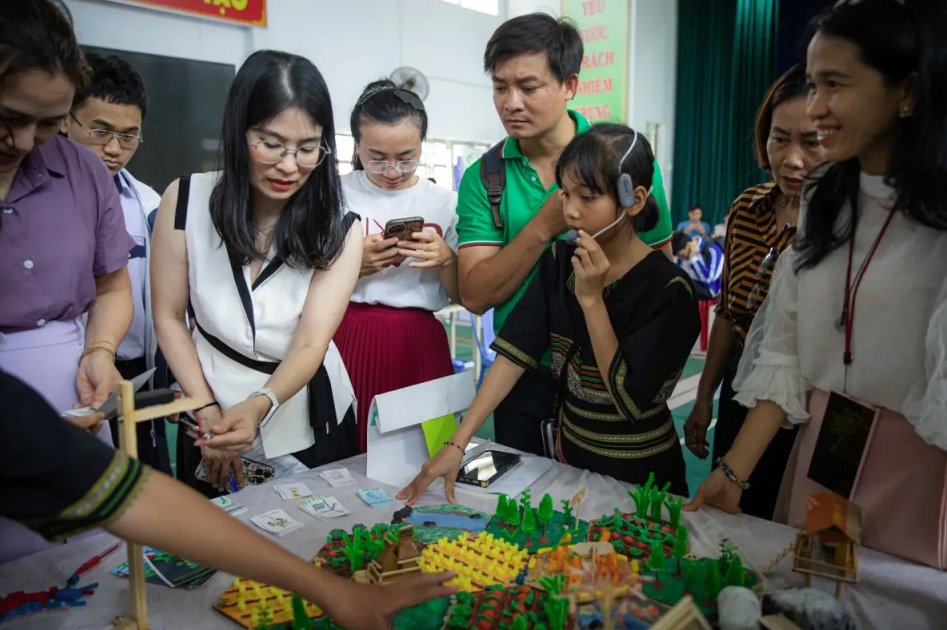
@UNICEF’s Tinkering with Tech builds AI and digital skills through hands-on, classroom-ready learning 💻
In partnership with @Arm, @microbit_edu and @RaspberryPi_org, the initiative is expanding from 2024 pilots to reach children in Lao PDR, Ukraine and Uzbekistan.
Learn more 👉 lnkd.in/gHe-trnT
English
Shuli Gilutz, Ph.D. retweetledi

Today I begin my role as CEO of @Xbox.
Here are my three commitments:
1/ GREAT games
2/ Return of @Xbox
3/ Future of play
blogs.microsoft.com/blog/2026/02/2…
English
Shuli Gilutz, Ph.D. retweetledi
The global learning crisis demands faster progress for children. Innovation can help accelerate it ⏩
At the @UNICEF Office of Innovation, we’re using AI and video games to remove learning barriers at scale and equip children with the skills to thrive in a changing world.
On this #InternationalDayOfEducation, we’re focused on learning by design, not by chance.
English
Shuli Gilutz, Ph.D. retweetledi

Really great new paper using agent-based modelling to show how an exploratory childhood can lead to innovation in the population at large.
royalsocietypublishing.org/rspb/article/2…
English
Shuli Gilutz, Ph.D. retweetledi

・ 。
∴。
・゚*。.
・ *゚
・ ゚*
・。
*・。
*.。
。・
°*. ゚。
°*.
゚*.
。。 ・
。 ・゚
。°*.
。*・。

日本語
Shuli Gilutz, Ph.D. retweetledi

Little ones thrive on nurturing interactions with caring adults. Discover free resources, activities, and videos that help you track milestones and support children as they grow: m.sesame.org/45W2NSx
English
Shuli Gilutz, Ph.D. retweetledi


Shuli Gilutz, Ph.D. retweetledi

43 years ago today, Fraggle Rock debuted.
The theme song will always be a banger.
English