Everyone should read this story...
Imagine someone is struck by a poisoned arrow.
A doctor is called to remove the arrow, but the man stops him.
"Not so fast! Before you remove it, I want to know who shot me. What town or village does he come from? What kind of wood was his bow made from? Was it a crossbow or a longbow?"
While he asks the questions, the poison takes hold and he dies.
Like the man in the story, we occasionally get shot with the poisoned arrows of life.
But ruminating too much on the nature of those arrows is unlikely to help.
This is a trap we all fall into:
We think we need more information to solve our problems, when all we really need is more action.
The trap is becoming more challenging to avoid in a modern era where information is abundant.
We've become conditioned to get our dopamine from information gathering.
But you see, dopamine from information gathering is a dangerous drug. It convinces you that information alone is enough. That it's sufficient. That it's all you need.
But information alone is never enough. Information is nothing without action.
The information meant to push you forward can quickly start to hold you back.
Struck with the poison arrow, you feel a surge of satisfaction from learning that your attacker was from a nearby village, that his bow was made from oak, and that it was a longbow.
And then, you're dead, because the information you wanted had become a distraction from the action you needed.
This is what I call the Poison Arrow Principle:
Never allow information-gathering to get in the way of action-taking.
The next time you're in an overthinking loop, ask yourself:
Do I really need more information, or do I simply need to act on the information I already have?
I just don't understand how AI could kill everyone. I get how AI companies will build robotic factories that will make robots which will make more factories and data centers and power plants, and how all of that will expand to consume most of earth's resources to build even more robotic factories and rockets and von neumann probes. Like totally. Infinite money glitch. Of course AI companies will do that. But can someone explain the part where humans all die as a result? Seems pretty implausible. Is it the robotic factories that kill the humans? Or the robots the factories build? Or is it supposed to be some side effect of all the rockets that are launching? It doesn't make sense. Even if the AIs did want to kill all the humans, how would they actually accomplish that? They'll only have control over a few million autonomous factories and a few billion industrial robots and power plants across the earth and then a few trillion von neumann probes leaving the solar system. Even if there were a problem I don't see why we couldn't just pull the plug. Anyway, if someone could explain I'd find this helpful.
The fact that women can have their photos leaked and have their whole career go down the drain, but powerful men can be linked to the Epste!n files and still stay in the highest positions of power… yeah, I don’t want to hear anyone argue that gender inequality doesn’t exist.
I broke my phone addiction in 30 days.
• Screen Time down ~70%
• Phone pickups down ~50%
I reclaimed 4 hours 30 minutes per day. That's 1,635 hours across a full year. 68 days of life from a single behavior change.
Here's exactly what I did (save this):
1. Grayscale Mode
Put your phone on Grayscale Mode for the entire day.
Grayscale Mode removes the colors to make your phone immediately less appealing and addicting.
It takes 30 seconds to set up.
If you have an iPhone, follow these steps:
• Settings
• Accessibility
• Display & Text Size
• Color Filters -> On
• Grayscale
Next, create a simple shortcut:
• Settings
• Accessibility
• Accessibility Shortcut
• Color Filters
Now, if you triple-click the side button, you'll be able to toggle it on and off.
For non-iPhone users, you can find instructions with a simple search.
I kept my phone on Grayscale at all times and only removed it for specific reasons (like posting something that required me to see the color, looking at photos, etc.).
It made me less interested in grabbing my phone for the random "just checks" during the day.
2. No-Phone Zones
Set specific locations, times, and events where you won't have your phone on you.
I called them No-Phone Zones:
• Downstairs (kitchen, living room)
• Creative flow time (from ~5-8am)
• Family flow time (from ~5-7pm)
• Family gatherings
During these windows, my phone would be in a lock box or in a drawer in my office. If we were out at a family gathering, I would leave it in the car or in my wife's bag where I couldn't feel it.
Specifically listing out these No-Phone Zones had the benefit of making it a clear rule that I could cement in my mind.
Create your list of No-Phone Zones. Write it down if you need to.
3. Strategic Friction
Even with the Grayscale Mode and No-Phone Zones, my phone addiction intervention would have been difficult to execute without this final piece of the puzzle.
Motivation and discipline are never enough when you're trying to crack a deeply entrenched behavior.
There's a theory in cognitive science called Choice Architecture, which is the idea that you can design your environment to make good choices easier and bad choices harder.
Basically, I wanted to add strategic friction to make it much easier to adhere to my rules (and much more difficult to break them).
Three primary ways I did that:
1. I locked my phone in a lock box during my morning creative flow (5-8am) and evening family flow (5-7pm). It was a timed lock so I couldn’t get it without emailing the company.
2. I left my phone far away from where I was going to be working. If I wanted to get it, I'd have to walk to the other side of the house or down a few flights of stairs to get it.
3. I added really low screen time restrictions to social apps. If I wanted to overuse them, I'd have to keep approving more time, which felt like letting myself down when I did it.
Breaking the addiction is going to be difficult at first. Create strategic friction that helps you stick to the change. Make it difficult to make a bad choice.
The Life Impact
I'm not going to sugarcoat it at all:
This was the single most powerful behavior change I've ever made in terms of the tangible impact and ripple effects on my life.
That is not an exaggeration.
I was more present, less stressed, and able to connect on an entirely different level. In short, I showed up more aligned with how my ideal self would.
My capacity for deep work expanded significantly from simply placing my phone in another room or a lock box.
I got more done, faster, at a higher quality bar. It was like the holy trinity of productivity improvement, with no fancy productivity tool required.
Reviewing the research, this isn't surprising: There is clear scientific evidence that even having your phone in your pocket or on your desk reduces your cognitive capacity.
I felt happier and less stressed immediately upon making the change.
So, just keeping score...
This was a single, zero cost behavior change that had the net effect of:
• Improving my relationships
• Improving my work
• Improving my happiness
To be completely transparent, just a few days in, the only negative thought I had related to the intervention was simple:
Why didn't I do this sooner?
I hope this is the push you need to make this change in your life.
Start small and stick to it. Aim for a 10-20% screen time reduction week-over-week. Keep yourself accountable with a friend.
Having now gone through it, I can guarantee you'll see and feel the positive impact immediately.
Onward and upward.
This is the best thing you’ll read today
“If we are all going to be destroyed by an atomic bomb, let that bomb when it comes find us doing sensible and human things—praying, working, teaching, reading, listening to music, bathing the children, playing tennis, chatting to our friends over a pint and a game of darts—not huddled together like frightened sheep and thinking about bombs. They may break our bodies (a microbe can do that) but they need not dominate our minds.”
Written by C. S. Lewis in 1948
If every man who r*ped a woman were actually put in prison,
the world would grow strangely quiet.
Office buildings would hollow out. Construction sites would stall. Half the laughter in bars would disappear.
And in that sudden silence, we would finally understand the scale of a violence we've been conditioned to protect and normalize.
The new trailer for Curry Barker’s ‘OBSESSION’ has been released.
The horror film follows a man who makes a wish to win his crush’s heart, but when he gets exactly what he asked for, it comes at an evil price.
In theaters on May 15.
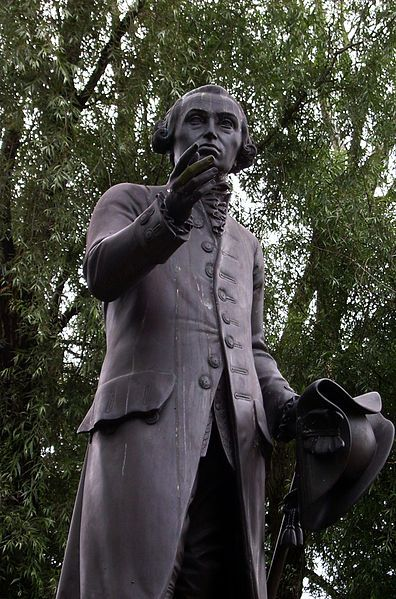
In 1781, morality was built on shaky ground.
Religion shifted. Emotions lied. Cultures disagreed.
Then one man, who never left his hometown, rewrote everything.
Here's how Kant's single rule became the foundation of the modern world:
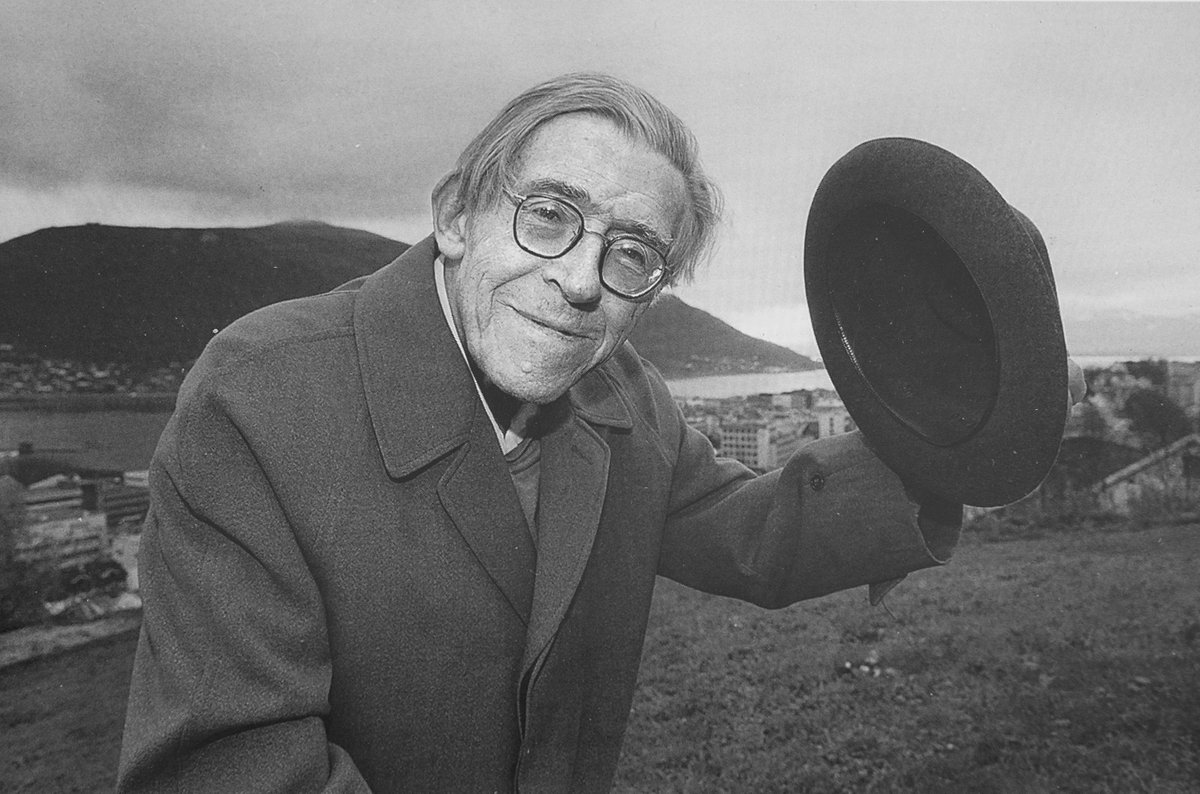
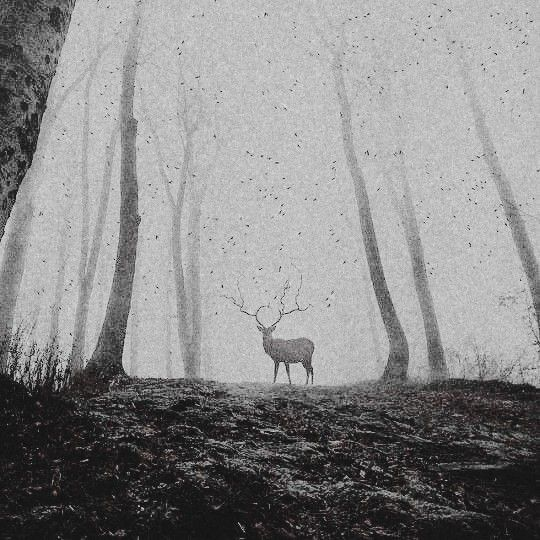
In 1933, a Norwegian philosopher studied a dead species and concluded humanity should follow them into extinction.
The Irish elk didn't die because it was weak.
It died because its antlers grew too large.
So magnificent they became impossible to carry.
Peter Wessel Zapffe saw the same thing in us.
Our consciousness, the very thing that makes us human had grown beyond what we were built to handle.
We became aware of death, of meaninglessness and of a universe with no built-in answers.
So we developed four ways to carry the weight ↓
1) Isolation: We quarantine the terrifying thoughts. Lock them in a room and1 pretend the door isn't there.
2) Anchoring: We cling to fixed points like religion, career, nationalism. Anything that gives life the illusion of meaning.
3) Distraction: We flood our minds with noise. Scrolling. Busyness. Anything to keep the silence at bay.
4) Sublimation: We transform the existential dread into art, philosophy, science. We make something beautiful from the unbearable.
These aren't solutions.
They're just ways to file down the antlers before they grow back.
Zapffe's darkest conclusion?
Stop reproducing.
End the line. Spare future generations the burden of consciousness.
"The Last Messiah," the name he gave to the one brave enough to say it.
Here's where the rational optimist disagrees entirely ↓
The elk's antlers were a dead end.
Ours are an engine.
That same consciousness that confronts death also invented vaccines, rewired diseases out of existence, and extended human life beyond anything nature intended.
Zapffe's four "coping mechanisms"?
Look closer:
• Anchoring built civilizations and raised children who outlived plagues
• Distraction became exploration. The restless mind that couldn't sit still discovered continents
• Sublimation produced the enlightenment, democracy, modern medicine
• Isolation gave us the focus to do hard things
The strategies aren't escapes from consciousness, they're consciousness at work and the extinction argument collapses against one simple fact:
We are the first species capable of choosing our own future.
The elk had no such option.
Zapffe saw a burden. The optimist sees the only tool in existence powerful enough to solve the problems consciousness creates.
The antlers aren't killing us.
They're just getting started.
—
Thanks for reading!
Enjoyed this post?
Follow @BigBrainPhiloso for more content like this.