

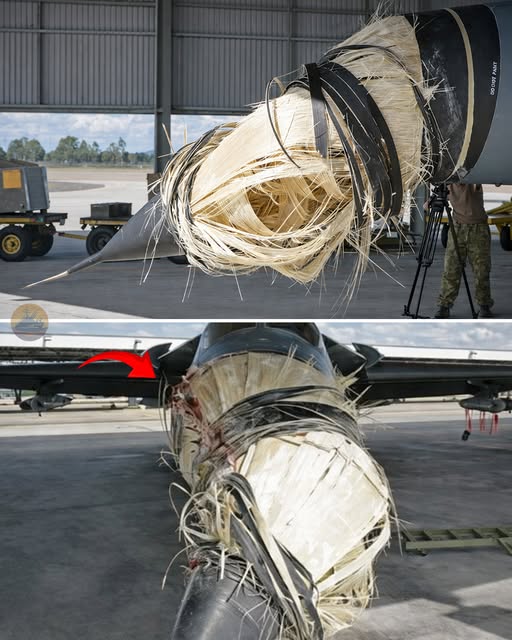
General Dynamics F-111 Aardvark fighter jet landed safely after striking a pelican
English
Spot__something
1.7K posts

@Spot__something
Anything Army, Navy and Air Force



Fact: The Antonov 124 was so large, a 747 full of cargo could land in it, slashing loading times, so says @StansaidAirport
#Iran's Yazd Imam Hussein Base is no ordinary bunker. Carved deep into Shirkuh granite, one of the hardest rocks on Earth, this mountain fortress makes America's most powerful bunker busters completely ineffective.
This footage shows the damage to the North American X-15A-2 after completing its legendary Mach 6.7 flight.
I thought this was some clickbait headline, but no, it is true... Due to the poor visibility of the U-2 (and other factors) it is SOP to send another U-2 pilot in a car during landing to help guide it safely
Who remebers Dan Air? ✈️✈️✈️✈️✈️✈️✈️
The blade chord was 4 feet 10 inches.. Howard Hughes monstrous XH-17 Flying Crane was a heavy-lift rotorcraft designed to lift loads over 15 metric tons, developed in the early 1950s with a record 134 foot two-bladed rotor. It used tip-jet propulsion from two GE J35 turbojets and scavenged parts: front gear from a B-25 Mitchell, rear gear from a C-54 Skymaster, fuel tank from a B-29 Superfortress bomb bay, cockpit from a Waco CG-15 glider, and tail rotor from a Sikorsky H-19 for yaw control. It lifted over 50,000 pounds gross, first flew October 23, 1952, but was audible 8 miles away and fuel-inefficient; only one built, XH-28 successor was canceled in 1956
Waco CG-4 Glider on a (poor quality) WW2 training video. This was the most widely used American troop/cargo military glider of the conflict, and saw action on some of the most important battles, such as the Allied Invasion of Sicily, D-Day, and Operation Market Garden, among many others. Its versatility was a great advantage for Allied logistics - see in the video a Willys Jeep swiftly being unloaded from one of the gliders. 📹Walk Among Heroes