
Sabitlenmiş Tweet
SpryUte
4.6K posts
SpryUte
@Sprry75
We who bore the mark might well be considered by the rest of the world as strange, even as insane and dangerous.
Katılım Nisan 2013
313 Takip Edilen143 Takipçiler

@Sprry75 There are a few random interesting rabbit holes this book might inspire you to go down doing your own independent research, but there is so much unverifiable info or straight up lies in this book it's more Historical Fiction than anything. I will make scans this weekend
English
Since OP refuses to give anyone the source, here it is. "The Widow's Son" by Kerry Ross Boren who is a Mark Hofmann wannabe complete with murder & forging documents. Boren provides no source for the "Book of Madog." It's all made up. OP knows this & continues posting bullshit.

English
@polysophical Hitting you up for both. I saw a used copy of Widow’s Son once I passed on and now regret.
English
@seekingValimar @RykerJackson97 I think faithful Mormons were originally the ones who started that Madoc connection mythology. stgeorgeutah.com/news/local/sou…
English

@RykerJackson97 Yeah, that’s the thing that makes it sounds like bullshit to me.
It’s enough that it supposedly sounds word for word like 1 Nephi, but it ALSO is divided into chapter and verses? Despite the original BoM not being in that format?
English

I cannot find this verse or any copy of this supposed book anywhere.
Literally nothing.
The best I can find is an exmo subreddit post talking about the Book of Madog that someone supposedly saw referenced in a different book they can’t remember the name of in the SLC library.
English


A little appetizer.
The Hor Papyrus has the entire account of Odin, Thor, and Valhalla on it. Detractors aren’t going to like this.
The ancient priest was right again award.
The Four Sons of Horus were identified by the ancient priest on the Hor Papyrus as Odin the Allfather, Thor the Thunderer, Valhöll (Valhalla), and the Einherjar’s Warden.
Egyptologists have the names of these figures as — Duamutef, Qebhensenuef, Hapy, and Imsety.
If you read the hieroglyphs in a straightforward way then you will get those names, but if you apply the principles in Ptolemaic Writing (as used on the Hor papyrus itself), then you get what the priest said.
Let’s start with Odin the Allfather (from Duamutef).
The first sign is 𓇼 (N14). The standard sound for this is dwꜣ meaning star or netherworld. The alternate sound value from this (Kurth 2010) is nṯr, meaning god, or it can just be “n” — directly evoking Odin’s mastery over the divine and ancestral realms.
The next sign 𓅐, the vulture, G14. This standard sound is “m,” but in the Ptolemaic Sign list Kurth (2010) gives “ḳ” or a guttural shift allowing “ó/au” via rebus (the vulture as a far-seeing wanderer motif).
The next sign is bread 𓏏 usually meaning t, but Kurth (2010) says it can be j, ṯ, t, ḏ, or d. The rebus principle here evokes “inheritance” or “divine portion.”
The last sign is 𓆑, the horned viper (I9). The alternate sound value here can be a vowel, “ ’ “ like a long A sound, or via the rebus principle (snake = shedding/renewal) ḥrrt using ḥ, or j’rt using r/d via consonantal principle (Fairman 1945).
So we have god (nṯr) or n, ó/au, ḏ/d, and r/ḥ. Via anagram (attested by Noegel 2022 in Ptolemaic cryptographic use), we get Óðinn / Odin.
Thor the Thunderer is next (from Qebhensenuef).
𓏁 (W15) is the libation jar. The usual sound is ḳbḥ, however Kurth (2010) says that ḥ can fit for the alternative sound value — evoking thunder’s crashing force.
The foot sign is next, 𓃀, D58. This standard sign value is “b,” also the rebus principle takes the actual name for foot in Egyptian as rrt, making R as well, or a “th” shift in Ptolemaic variants.
Next is the sechem scepter, 𓌂, S42. This is usually s, but Kurth (2010) states 3b’ can work here. Taking the rebus (scepter of power) yields “ó” or thunder-bolt motif.
The ripple of water 𓈖 is the next sign, N35. The usual sound value is “n” — water as the chaotic sea Thor battles.
The final sign is the horned viper, 𓆑, I9. It has alternative values of either a vowel, ’ , or the rebus with j’rt meaning snake/uraeus, taking R as the primary consonant.
This anagram unsolved is ḥ r b n ó or ḥ b n n r. Ancient Egyptian doesn’t have L’s or Þ directly, but R’s and shifts are used as phonetic replacements (Loprieno) — yielding Þórr / Thor.
Valhöll (Valhalla) is next (from Hapy).
First are two squares, these can either be Aa5 𓐑 or two O38 𓊋, corner of a wall. Both signs have a value of “v” or “w” via Ptolemaic shift (Rosmorduc parallels), double form evoking the hall’s vast enclosure.
Second is the stone sign, O39 𓊌, or Q3 the stool 𓊪. Both were confused at times and can be “a” or “ḥ” (like ch in loch) — rebus for “hall” or slain-place.
Third and fourth are the M17 Reeds 𓇋. Both give “l” or “h” in Kurth (2010) variants; rebus (reed = growth/endurance) links to eternal feasting.
The anagram is v a l h a l l — perfectly Valhöll / Valhalla (the “hall of the slain” exactly as described in the Eddas).
The final son is Imsety, the ancient priest called him the Einherjar’s Warden.
First sign Aa13 𓐛 with standard “g,” but Gardiner and Rosmorduc note phonetic shifts to “ei” or protective “e” (guardian motif).
O34 door bolt 𓊃 standard “s,” but Ptolemaic allows “n” or “h” via rebus (bolt = secure the hall).
U33 pestle 𓍘 usually “t,” but Kurth (2010) points to š or “r” shift.
The Reed M17 𓇋 usually j but gives “j” or “a” — double reeds for warrior plural.
Dr. Jayson, PhD 🌲@JS_StrngstSldr
A little appetizer. The Four Sons of Horus were identified by Joseph Smith on Facsimile 1 as the gods of Elkanah, Libnah, Mahmackrah, and Korash. Egyptologists have the names of these figures as - Duatmutef, Qebhensenuef, Hapy, and Imsety. If you read the hieroglyphs in a straightforward way then you will get those names, but if you apply the principles in Ptolemaic Writing, then you get what Joseph said. Let's start with Elkanah. Kevin Barney and Hugh Nibley both surmise that "El" means God and Kenah or Kenner or Kenahi means Canaan. Barney says that in Arabic, kana'a refers to going towards the horizon, westward; actually referring to the "West" (Astour, 1965). 𓇼 (N14) is the first sign. The standard sound for this is dwꜣ meaning star or netherworld. The alternate sound value from this is nṯr, meaning god, or is can just be "n." This accomplished two things, we found "El" (god) and we have an "n" in Kanah. The next sign 𓅐, the vulture, G14. This standard sound is "m," but in the Ptolemaic Sign list Kurth (2010) gives "ḳ" a kah sound. The next sign is bread 𓏏 usually meaning t, but Kurth (2010) says it can be j, ṯ, t, ḏ, or d. Either j or t can work here. The last sign is 𓆑, the horned viper (I9). The alternate sound value here can be a vowel, " ' " like a long A sound. There can two more alternate sounds here. Via the Rebus principle, taking the actual name of the sign, snake can be ḥrrt, using ḥ, or j'rt, using r, the most primary consonant. So we have god (nṯr) or n, ḳ, j/t, and '/ḥ/r Via anagram, attested by Noegel (2022), we have: (god) ḳnjt or ḳnḥt or knjr Even if we just use the attested sounds by Kurth (2010), (god) ḳnjt works just find because the "t" in Ptolemaic writing was largely voiceless when at the end of a word. Joseph Smith said the Duamutef's name was Elkanah, and via Ptolemaic Writing, that is definitely a possibility. ---------------------------------------------------------- Libnah is the next. His standard name is Qebensenuef. 𓏁 (W15) is the libation jar. The usual sound is ḳbḥ, however Kurth (2010) says that ḥ can fit for the alternative sound value. The foot sign is next, 𓃀, D58. This standard sign value is "b," also the Rebus principle takes the actual name for foot in Egyptian, and that is rrt, making R as well. Next is the sechem scepter, 𓌂, S42. This is usually s, but Kurth (2010) states 3b' can work here. Taking B as the principle consonant. The ripple of water 𓈖 is the next sign, N35. The usual sound value is "n." The final sign is the horned viper, 𓆑, I9. It has alternative values of either a vowel, ' , or the another Rebus with j'rt meaning snake or uraeus, taking R as the primary consonant via the consonantal principle (Fairman, 1945). This anagram unsolved is ḥ r b n j or ḥ b n n r. Since Ancient Egyptian doesn't have L's, R's are used as a phonetic replacement - this is attested by Loprieno. L j b n ḥ or L b n n ḥ - Libnah ---------------------------------------------------------- Korash is next. His standard name is Imsety. Aa13, 𓐛, is the first sign with a standard sound of "g." Gardiner's book talks about how phonetically, Aa13 𓐛 and its precursor 𓎼 having k sounds. Rosmorduc also talks about how phonetic shift between k and g was common. O34 is the door bolt, 𓊃. The standard sound is s. U33, the pestle 𓍘, usually has a sound value of "t," but Kurth (2010) points to š as a possible consonant. The Reed, M17 𓇋, is usually j but Kurth (2010) gives r as an option. The anagram unsolved is k/g s š r. Krsš or Korash. ---------------------------------------------------------- The final son is Hapy, Joseph called him Mahmackrah. First are two squares, these can either be Aa5 𓐑 or two O38 - 𓊋, corner of a wall. Surprisingly, both signs have a value of n, since it is double O38, and due to phonetic shift, as per Rosmorduc, we have two m's. Second is the either the stone sign, O39 𓊌, or Q3 the stool 𓊪. Both of these signs were confused at times. Can either be ' or Q3 or ẖ (like ch in loch) for O39. Third and fourth are the M17 Reeds. Both 3 and R can be signs here. The anagram is m m ' r 3 or m m ẖ R 3 or mh ' r 3. Very clock to M(a)m(a)ch-r-3 or Mahmackrah. ---------------------------------------------------------- I did this to show that there is a connection between what Joseph Smith interpreted from the papyri and what is possible to interpret from that data as well using a interpretation method that was widespread during 300 BC to 100 AD in Egypt, during the same timeframe the papyri were copied down and put into their tomb.
English

@GrimbleGrombl That dickhead loves to throw out twenty-five cent words when a nickel would do.
English

Just a little summary from @Sprry75 s essay I read last night
English
The temple liturgy of the restored church of Jesus Christ is the mediated elevation, and not just a symbolic remembrance, whereby the authorized administration actually alters the initiate’s ontological and eschatological standing
English
@FiredUpCoug Sue. It’s strict liability and it’s covered by their homeowners. Get some money for her college fund.
English

Remember me talking about my neighbor's dogs that keep pooping in our yard with zero care from the owner?
One of them just chased my 6yo daughter while she was playing outside and bit her arm.
15 minutes before by 9yo daughter's birthday party.
I'm not at the urgent care with my six year old and my wife is juggling a birthday party with 8 kids on her own.
This is the second child this dog has bitten. We have already contacted animal control and filed a report.
Is there anything else I should be doing?

English
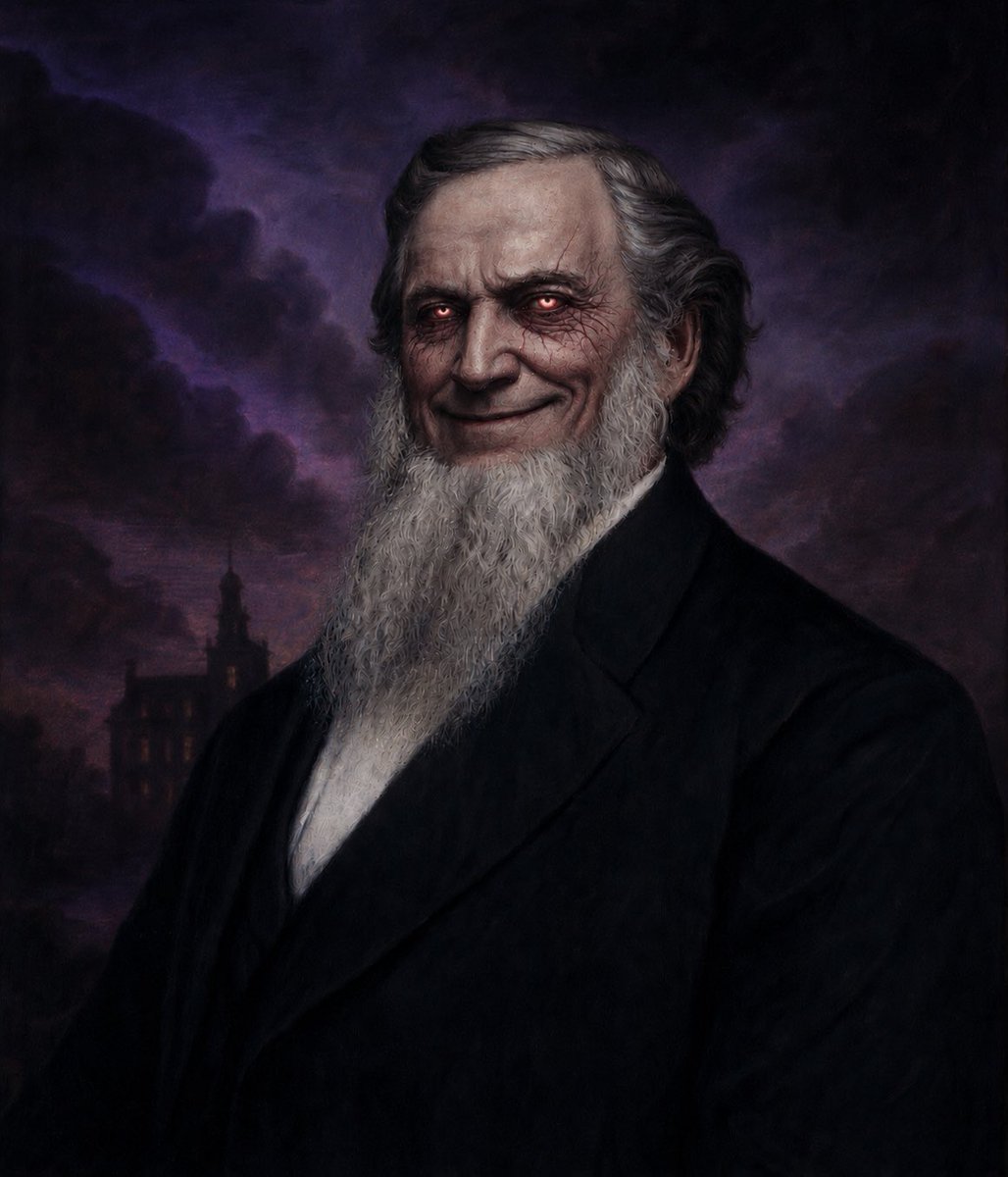
Adam is not our Father and God, nor is he the only God with whom we have to do
English
@jnjweld @SocialistMormon Socialism is far more closely aligned with the United Order and the church’s yearning for Zion (one heart, one mind, and no poor among them) than western capitalism.
English

@SocialistMormon Your church would be destroyed by socialism
English

Despite the sea of fellow members on this website constantly calling me evil, I am very happy in the Church of Jesus Christ of Latter-day Saints. I love my faith and it has brought a richness to my life I know I would never experience without it.
English

So under *your rules we should only report on crime after conviction? By this assesment we wouldn't let you know of an arrest in the Charlie Kirk murder until about 3 years after the killing when the case goes to trial. Someone hits and kills a kid driving drunk? I'll set a reminder on my phone for two years later so I can let you know who was arrested.
English
BREAKING: A 32-year-old Brigham Young University mathematics professor was arrested Saturday on felony charges after allegedly engaging in sexually explicit online conversations with someone he believed was a 17-year-old girl, authorities said.
Stephen Henry McKean, of Springville, was taken into custody April 18 in Box Elder County on two counts of enticing a minor in the third degree and one count of distributing material harmful to a minor, according to an affidavit of probable cause filed by the Box Elder County Attorney’s Office.
Photo: BYU

English
@T_M_Mystic @polysophical Studying the occult and practicing ceremonial magick brought me from atheism back to Mormonism.
English

*Be me
Grandparents have the missionaries come to your house at 14 when you are really into Dawkins and you prepare a PowerPoint presentation for them for why Joseph was a fraud...
End up getting dipped Mormon 7 years later after studying both eastern and western mystery schools.
English
@markgoyler @Latterdaytruth That’s a pretty cool thing to be able to say!
English

@Latterdaytruth I was set apart as a 19 year old missionary by Eldred G Smith in 1969.
English

Presiding Patriarchs of the Church of Jesus Christ of Latter-day Saints.
Joseph Smith, Sr. (1833–1840)(Joseph Smith's Father)
Hyrum Smith (1840–1844) (Joseph's Brother)
William Smith (1845–1845) (Joseph's Brother)
John Smith (1849–1854) (Joseph's Uncle)
John Smith (1855–1911) (Hyrum's Son)
Hyrum G. Smith (1912–1932) (Hyrum's Great-Grandson)
*Nicholas G. Smith (1932-1934) (Acting Patriarch)
*Frank B. Woodbury (1934-1937) (Acting Patriarch)
*George F. Richards (1937-1942) (Acting Patriarch)
Joseph Fielding Smith (1942-1946) (Not the same as President Joseph Fielding Smith)
Eldred G. Smith (1947-1979)
In 1979, the office of Presiding Patriarch was disbanded by the First Presidency, citing that there are Patriarchs now in every stake.
*Three acting patriarchs were called that were not descendants of Joseph Smith, Sr. They were "de facto Acting Presiding Patriarchs."
Pictured below is President Monson visiting with Patriarch Emeritus Eldred Smith

English
@BrandonFugal @TheCinesthetic I’ve always wondered if they got the title for that song from Prince Vultan’s line in Flash Gordon (1980), the tone for which was set by Queen’s “Flash Gordon.”
GIF
English


“Danger Zone” in Top Gun (1986) is the movie’s entire vibe in one go, the second that track hits over the credits you’re already in, and Maverick (2022) never really gives you another moment like that.
cinesthetic.@TheCinesthetic
What song instantly makes you think of the movie it was featured in?
English


Who is ur all time fave researcher or conspiracy theorist?
English
@Utah_AM @lisadancefit Inducing a mildly hypnogogic state through surreality is part of the magic spell.
#HeroSection" target="_blank" rel="nofollow noopener">en.wikipedia.org/wiki/Sator_Squ…
English

@lisadancefit I’ve seen it so many times and every time I feel like I’m understanding it something happens and it just blows up everything
English
With Interstellar or Inception the concept of time moving slower or faster in certain places hurts my brain but I can still grasp the concept. But things interacting with each other while time is moving in opposite directions breaks my brain on a whole different level.
Every Movie Plug@everymovieplug
You didn’t understand Tenet on the first watch, be honest.
English
@BardowanKenobi @stackerco You can find different gilding on the edges, sure, but apotheosis is the common core. It’s the magicians’ Great Work, whatever exoteric wrappings it finds itself in.
English

Not quite. Gnosticism saw the material world as a flawed prison by a lesser demiurge, opposite Smith’s view of eternal matter & joyful progression. Hermeticism/Crowley had vague ‘deification’ via knowledge/magic, but not God-the-Father as once a mortal man who progressed, humans as same species becoming gods with spirit children & worlds via temple covenants.
King Follett’s coherent, optimistic cosmology had no direct precedent. This is uniquely LDS / Smith in origin.
English
@BardowanKenobi @stackerco That’s not new; it’s all over Gnosticism and Hermeticism, and is a central tenet of the ceremonial magic practices on which our whole religion was founded. Magicians from Agrippa to Aliester Crowley taught the same thing as the King Follett discourse.
dialoguejournal.com/wp-content/upl…
English
@stackerco Joseph Smith’s King Follett Discourse: God was once a mortal man who progressed to godhood. Faithful humans are the same species as God and can become gods themselves, with their own spirit children + worlds.
Zero precedent in Christianity or anywhere before him. Pure Smith.
English
@He_manQuil @Ch_JesusChrist @LatterDay_Dad The cool people met together to rejoice in Christ while the Pharisees like you ran around being assholes to the cool people. Just like now.
English

@Ch_JesusChrist @LatterDay_Dad Honestly, they should just have home church like they did during Covid. There’s so much division now. I really would rather not deal with the crazy lib members every week. 🤷♂️ one can dream, right? I mean, how did they do it in ancient times?
English

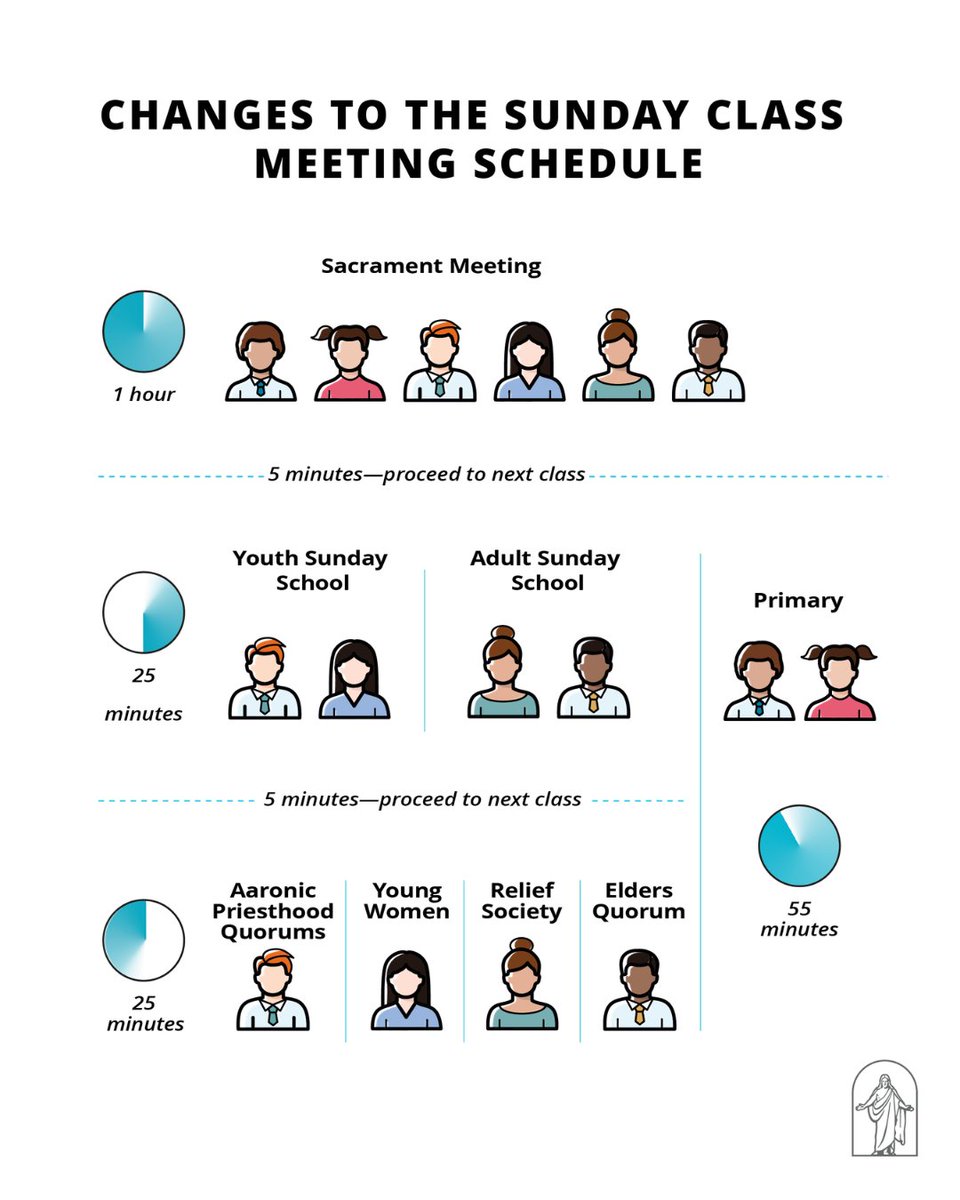
In advance of the upcoming general conference leadership session (April 2, 2026), The First Presidency of The Church of Jesus Christ of Latter-day Saints has announced upcoming adjustments to the Sunday class meeting schedule to support members in their efforts to be lifelong disciples of Jesus Christ. The adjustments will strengthen gospel learning in homes and congregations throughout the world.
Beginning September 6, 2026, the alternating weekly schedule for Sunday School and quorum or class meetings will be replaced. Under the updated schedule:
• Sunday School, Relief Society, elders quorum, Young Women and Aaronic Priesthood quorum meetings will be held each week.
• Sacrament meeting will continue to be 60 minutes, followed by brief transition periods.
• Sunday School and quorum and class meetings will each be 25 minutes.
• Primary will continue every Sunday and will be 55 minutes, held while adults and youth attend their respective classes.
• Where local circumstances necessitate, units may begin with Primary and quorum and class meetings and conclude with sacrament meeting.
Visit the link below to learn more:
Newsroom.ChurchOfJesusChrist.org/article/change…

English

Makes about as much sense of any other explanation I've seen.
SpryUte@Sprry75
@tnsampson2 @antiantimormon The plates were used, just not read from. Joseph was using a voltaic pile based piezoelectric generator to stimulate current. The plates and seer stones act as a battery booster for scrying operations as the mild electrical charge aids in the channeling energy currents.
English
@tnsampson2 @antiantimormon The plates were used, just not read from. Joseph was using a voltaic pile based piezoelectric generator to stimulate current. The plates and seer stones act as a battery booster for scrying operations as the mild electrical charge aids in the channeling energy currents.

English
Since he got the words out of his hat, it must be that someone/something else did the work. The plates were unnecessary to the task, making us wonder why they were involved at all, except for show.
The evidence is clear: the BofM Bible quotes come directly from the KJV, only slightly modified in some cases by the writer. Too, the stories in the BofM ape Bible stories, with different names and places assigned.
English

Why is the Book of Mormon written using English verbage not used in Joseph Smith's day, but is typical in 1600's translated texts?
If he was just faking it, and used 8,000 Causal Constructions to make it look like a translation, why did he never point that out as evidence?
The evidence suggests that Joseph received English words to an already translated text.
Interpreter Foundation@InterpreterFnd
Interpreting Interpreter: Causal Constructions By Kyler Rasmussen An introduction to “A Comparative View of Causative Constructions in the Book of Mormon” by Stanford Carmack in Volume 68 of Interpreter: A Journal of Latter-day Saint Faith and Scholarship. You can find Kyler's summary at interpreterfoundation.org/interpreting-i… and the full article at interpreterfoundation.org/journal/a-comp…. #thechurchofjesuschristoflatterdaysaints #mormon, #lds #churchofjesuschrist #ldschurch #latterdaysaints #mormons #restoredchurchofjesuschrist #latterdaysaint #BookofMormon #linguistics #criticaltextproject #CausativeConstructions
English