@Lentils80 But is the unit here tokens or arbitrary units?
English
Stevan Boljevic
510 posts

@StevanBoljevic
President @ OLIX




chips get all the love but the interconnects across all levels from c2c to rack-to-rack are as important, and many chip makers are sleeping on it until very recently. Even most interconnects people just want it to be as transparent as possible, just send and receive the bits with lower error rates and lower energy per bit, wrong long-term direction imo. Interconnects are part of the living creature, so many things happening in your blood vessels in addition to just moving stuff, and your axons do much more than carrying spikes. People do not appreciate interconnects, smaller volume, poor margin, messy ecosystem, manual process, it's been a spiral of grinding, and it is largely invisible. How often do you see people tearing down transceivers and die shot of DSP chips vs logic chips? How often do you see high res pictures of all the connector's gold fingers on the NVL72 cartridge? Because it sounds boring, it's just making contacts, shoving electrons and photons, what a simple problem. But that is deceiving, and theres so much to it. You might want 576 to begin with, had to cut down to 288, then to 144, and finally to 72, and that barely worked first time. You are entering the domain of analog and mixed signaling, you are fighting copper real estate with power delivery, you are getting impedance mismatch and reflections and interference at every stupid interfaces, your optical components' and connectors' backreflection is making your laser mode hop.. And we are not even going into the thermal and strain-stress, the reliability of how many times you can actually mate your connector, the horrible jobs people are doing across the stack from science-project-originated photonic PDKs to hand cleaved laser dies to optical engines to rack manufacturing, on spec-ing out the requirements, the tolerances.. On top of all these, people thinking about where the bits should be going and people who know what the bits have to go thru are two totally different groups of people. But it is shifting, pluggable volumes shipped are doubling and tripling for scale-out, scale-up domain asks for much higher bw than scale-out, and interconnects are inevitable even if you cram as much compute and memory onto a single wafer. People will see it always has been interconnects, the chips people have already been doing it on the chips, that you can sort it out with your chip designers and foundries, and now you need to work with more people to sort it out from chips to boards/trays to racks to pods to data halls and data centers. These people speak very different languages and care about very different things, and it will take a lot of effort to pull order out of all the chaos. At the end of the day, it is such a crazy problem to work on, such a beautiful thing to make, millions of amps of current flipping 1e20 of flops, sextillions of photons carrying thousands of terabits per second, a few tons of copper, tens of thousands of fibers totally few hundred kilometers, one scale-up domain. You absolutely need a group of people that appreciate the beauty and care about the craft behind the grinding to make it together.


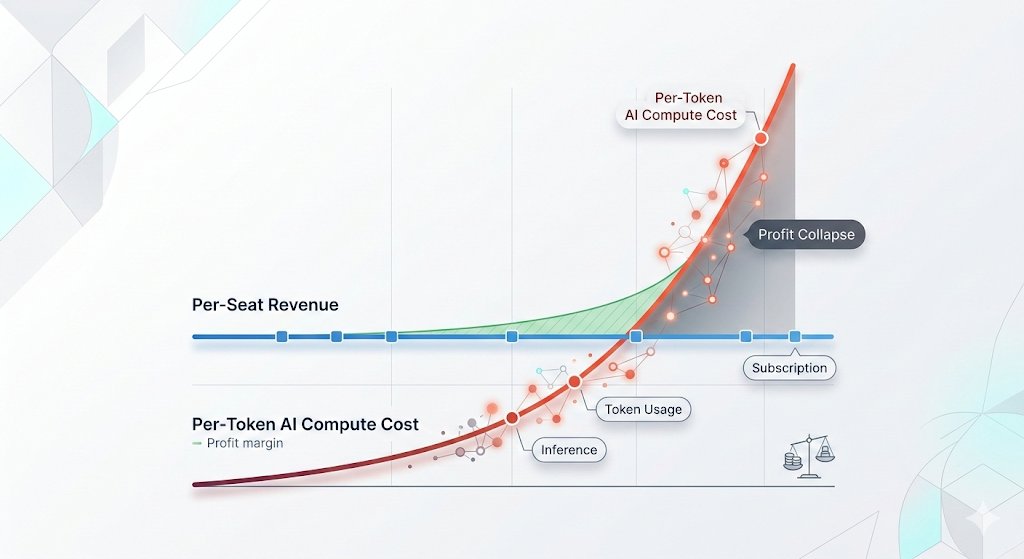

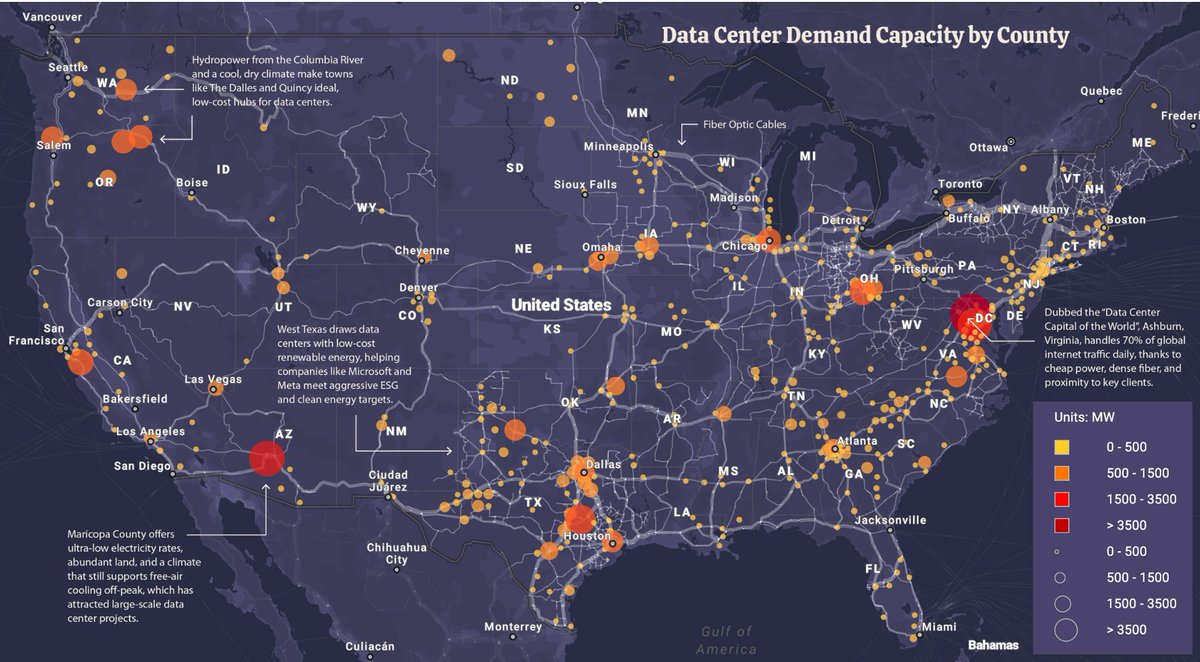
Back-of-envelope numbers for 1 gigawatt data center: All-in Capex: ~$50 bn Enterprise revenue generated: ~$25-30 bn/year Electricity cost: $1-2 bn/year ~2 year payback. The boom is real.



The "Paper Capacity" Trap: Why $IREN is Years Ahead of the Herd The market is finally waking up to a brutal reality: you can’t power AI with press releases. A new report from Sightline Climate (thanks @HedgieMarkets) reveals that nearly 50% of US data centers planned for 2026 will likely be delayed or canceled. The reason? A massive shortage of "boring" electrical components like transformers and switchgear, with lead times now stretching to 5 years. But here is what the "big money" is missing: $IREN isn't waiting in that 5-year line. They are already at the front of it. Execution vs. Ambition While hyperscalers scramble to source parts from China, $IREN is moving into the final stages of its 2.75GW roadmap. They didn't start thinking about power in 2024; they’ve been securing it since the Bitcoin mining days. ➡️Childress (750MW): Many expected this to wrap up in 2025, but $IREN is now in the final stretch (Phase 6) in early 2026. Why is this a win? Because they physically secured the transformers years ago. While competitors are just now filing permits, $IREN has 810MW already "Energized" and operational across its sites. ➡️ Sweetwater (1,400MW): This is where the gap becomes a canyon. $IREN has already locked in the procurement for the massive 1,400MW substation for a 2026 launch. They aren't hoping for parts, they own the slots. The Vertical Moat $IREN acts as its own developer (EPC). By owning the substations and the land, they’ve bypassed the supply chain paralysis killing the 2026 pipeline. The Bottom Line: In 2026, the only metric that matters is "Time-to-Power." Most companies have "announced" gigawatts; $IREN has "energized" megawatts and a $9.7B Microsoft-backed runway to monetize them. The bottleneck is tightening, but $IREN built their door years ago. Are you betting on "planned" capacity or the ones who already have the transformers on-site? Let’s talk below. 👇 #AI #IREN #DataCenters #Energy #Infrastructure #TechInvesting

NEWS: OpenAI just announced that it has officially closed their latest funding round with $122 billion in committed capital at a post money valuation of $852 billion. "We are now generating $2B in revenue per month. At this stage, we are growing revenue four times faster than the companies who defined the Internet and mobile eras, including Alphabet and Meta. ChatGPT has more than 900 million weekly active users, and over 50 million subscribers. Search usage has nearly tripled in a year, and our ads pilot reached more than $100 million in ARR in under six weeks. Momentum is just as strong on the enterprise side, which now makes up more than 40% of our revenue, and is on track to reach parity with consumer by the end of 2026. GPT‑5.4 is driving record engagement across agentic workflows. Our APIs now process more than 15 billion tokens per minute. Codex now serves over 2 million weekly users, up 5x in the past three months, with usage growing more than 70% month over month."
Google is processing 980 trillion+ monthly tokens across our products and APIs (up from 480T in May) 🤯 No slowdown in sight, intelligence is everywhere.
@wintonARK @downingARK @Google @GoogleCloudTech @GoogleAI Ah, yes. The quad number is likely combining ALL models (not only Gemini)...remember, GCP serves Anthropic and open models as well. So that checks out. You'd need 22.8B tok/min to cross 1 quad/month. So this implies that google serves more of [Ant|open models] than Gemini




Introducing TurboQuant: Our new compression algorithm that reduces LLM key-value cache memory by at least 6x and delivers up to 8x speedup, all with zero accuracy loss, redefining AI efficiency. Read the blog to learn how it achieves these results: goo.gle/4bsq2qI