BlackStyx Capital

55 posts

BlackStyx Capital banner
BlackStyx Capital

BlackStyx Capital

@StyxCapital

Short Selling is the heart of efficient markets. It's more than a strategy: It's a way of life. Membership is open NOW! No inv. advice! Do your own research!

USA Katılım Mayıs 2026
172 Takip Edilen72 Takipçiler
Sabitlenmiş Tweet
BlackStyx Capital
BlackStyx Capital@StyxCapital·
Most research reports create volatility. Very few create long-term impact. The difference matters. That’s why we built BlackStyx Capital - a private investment intelligence platform focused on asymmetric opportunities, forensic research, and short-side market intelligence. Membership is now open. styx.capital
English
0
1
3
623
BlackStyx Capital
BlackStyx Capital@StyxCapital·
As activist short selling continues to mature, a more sophisticated framework for evaluating short sellers is needed. Classifying firms by business model, investment horizon, publication strategy, and historical execution—rather than simply by headline returns—would provide investors with a much more meaningful basis for assessing both research quality and investment relevance. To address this gap, Styx is developing a framework that goes beyond simply recording campaigns and returns. The objective is to classify activist short sellers by their underlying business model, typical investment horizon, publication strategy, and historical execution, while complementing these with objective performance metrics and qualitative credibility indicators. Rather than asking only whether a short seller has generated returns in the past, Styx aims to help investors understand howthose returns were achieved—and whether a particular research provider's approach is compatible with their own investment process. 5/5
English
0
0
1
30
BlackStyx Capital
BlackStyx Capital@StyxCapital·
Ultimately, the most important asset of any activist short seller is credibility. Investors must judge whether the published research is objective, well-supported, and intellectually honest. Credibility, however, cannot be reduced to a single performance metric. It is built from many factors: the quality of the analysis, the accuracy of past claims, transparency about assumptions, consistency of methodology, and the willingness to acknowledge mistakes. Different investors will inevitably weigh these factors differently. 4/5
English
1
0
1
30
BlackStyx Capital
BlackStyx Capital@StyxCapital·
The term activist short seller is often used as if it described a single investment strategy. In reality, it encompasses a wide range of business models that share only one common characteristic: the public dissemination of research intended to expose negative information about a company, thereby creating downward pressure on the share price after the short seller has established a position. Beyond that, the differences are substantial. 1/5
English
1
0
1
319
BlackStyx Capital
BlackStyx Capital@StyxCapital·
@YahooFinance Well I guess, if you don’t raise money, you can’t call yourself an entrepreneur - so what’s the story again?
English
0
0
0
51
Yahoo Finance
Yahoo Finance@YahooFinance·
Mark Cuban says "Raising money is not an accomplishment, it's an obligation," for entrepreneurs, Cuban said on the Big Eats World podcast.
Yahoo Finance tweet media
English
6
10
47
17.1K
The Kobeissi Letter
The Kobeissi Letter@KobeissiLetter·
BREAKING: Anthropic has appointed former Fed Chair Ben Bernanke to its governance board.
The Kobeissi Letter tweet media
English
300
374
3.1K
551K
BlackStyx Capital
BlackStyx Capital@StyxCapital·
@sharion73 So, interestingly enough, you don’t see yourself as activist, but original researcher? This confirms our argument above, doesn’t it?
English
1
0
1
25
BlackStyx Capital
BlackStyx Capital@StyxCapital·
Over the past few months, I've noticed a trend in activist short selling. Seeing J Capital's short report earlier today - which consisted of little more than an executive summary while the full report remained behind a paywall-brought me back to a question I'd been thinking about: where is activist short selling heading? The traditional activist short-selling model has been straightforward: publish a research report as widely as possible, ideally triggering an avalanche that the target company can no longer contain—or, at the very least, a market reaction that can be monetized. Yet an increasing number of established activist researchers now release only a brief public summary while reserving the full forensic analysis for paying subscribers. If market impact is the primary objective, why deliberately limit distribution? I can think of several possible explanations: • Research becomes a monetizable asset. A forensic report creates value not only through proprietary trading, but also through subscription revenue, institutional distribution, and licensing. • The target audience has changed. In an era of direct digital distribution, reaching a relatively small network of hedge funds, family offices, and professional investors may be more valuable than maximizing retail readership. • Scarcity increases perceived value.Restricting access reinforces the notion that the research contains proprietary intelligence worth paying for, strengthening both pricing power and brand positioning. • Controlled distribution reduces friction.Publishing only an executive summary while reserving detailed allegations for subscribers may reduce unnecessary public controversy and media noise. If this trend continues, we may need to rethink how we classify activist short sellers. Perhaps the distinction is no longer simply between different investment styles, but between firms that publish to maximize market impact and firms that monetize proprietary forensic intelligence through multiple channels. Do you see this as a structural shift in the industry, or are these simply isolated business model outliers?
English
1
2
5
249
BlackStyx Capital
BlackStyx Capital@StyxCapital·
The Weekly Styx Update is here! Make sure you sign up for free by hitting the email button on styx.capital
English
0
1
0
90
BlackStyx Capital
BlackStyx Capital@StyxCapital·
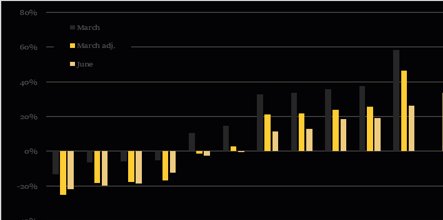
Does market direction dictate activist short performance? We tested our exit algorithm on two 2026 cohorts: March (Nasdaq ~11.5%) and June (Nasdaq more or less flat). While campaign counts, volatility, and tenure were nearly identical, nominal returns shifted significantly: - March: 17.5% mean / 14.7% median - June: 4.2% mean / 5.5% median However, after adjusting for market beta, the performance gap disappears. The data proves that short activists deliver pretty consistent, market-independent alpha. A positive surprise, isn’t it?
BlackStyx Capital tweet media
English
0
1
1
86
BlackStyx Capital
BlackStyx Capital@StyxCapital·
You're talking about this here, right? "It is a proven fact that high and rapidly rising inflation expectations lead to a real increase in inflation in the following years. They act like self-fulfilling prophecies, especially if the central banks do not react early with restrictive monetary policy to rising expectations. However, the currency guardians are faced with the dilemma of having to balance the trade-off between stimulating the economy and keeping inflation under control." Quote from hithawk.com/99-2/
English
0
0
0
38
BlackStyx Capital
BlackStyx Capital@StyxCapital·
@statistici89506 Actually very interesting to read a bit of history. However, there is no way a current diversified ETF portfolio costs as little as 0.1-0.2% in yearly fees. Sorry, just not reality for most ppl I guess
English
0
0
0
242
ValueStatistician
ValueStatistician@statistici89506·
Basierend auf der Fehlvorstellung, die Kapitalmärkte bräuchten (exponentielles) Wirtschaftswachstum um Renditen zu bringen hört man übrigens selbst bei gebildeten Leuten manchmal folgendes, irreführendes Argument. Es wird dann behauptet, die Kapitalmärkte würden erst in den letzten 200 Jahren, also seit der ausgehenden industriellen Revolution, reale Renditen bringen, weil es seitdem das starke, exponentielle Wirtschaftswachstum gab. Diese Vorstellung ist historisch (es tut mir leid) komplett falsch. Kapitalmärkte mit positiven realen Renditen gibt es seit Jahrtausenden und nicht erst seit der Industrialisierung oder der Entstehung moderner Börsen vor ca. 200–400 Jahren. Die hohen realen Renditen (oft 4–8 % oder mehr über lange Zeiträume) sind kein Produkt des modernen Wachstums, sondern der grundlegenden Produktivität von Kapital (vgl. dazu gerne nochmal meinen verlinkten Beitrag unten). Zinsen und Renditen lagen häufig bei 8–20 % (je nach Risiko und Epoche) nominal (real oft positiv nach Inflation). Römer, Griechen und Mesopotamier erzielten stabile Erträge aus Land, Krediten und Handel trotz minimalem gesamtwirtschaftlichem Wachstum. Im Mittelalter brachten Renten, Landpachten und Handelsbeteiligungen oft 5–12 % reale Erträge. Die Fugger oder Medici erzielten über Generationen hohe Renditen durch diversifizierte Geschäfte (Bergbau, Handel, Kredite an Fürsten). Es gab zum Beispiel öffentliche Pachten. Man kaufte das Recht, in einer Provinz Steuern einzutreiben, und teilte Risiko und Gewinn mit anderen Investoren. An Händler, Bauern oder den Staat wurde Geld verliehen (oft gegen Zins 6–12 %). Man streute auf mehrere Schuldner und Sicherheiten (z. B. Schiffe oder Waren). Oder man denke an Handelsgesellschaften im Mittelalter, besonders in Italien (Venedig, Genua, Florenz). Ein Kapitalgeber finanzierte eine Handelsreise, der Kaufmann führte sie aus und teilte die Gewinne. Mehrere solcher Verträge ergaben eine gewisse Diversifikation über Routen (Nordsee, Baltikum etc.). Mit Renten und Erbrenten existierten sogar schon frühe Formen von "Anleihen". Man kaufte eine jährliche Zahlung (z. B. aus einem Gut oder einer Stadt) gegen Einmalzahlung und konnte natürlich mehrere Renten von verschiedenen Schuldnern (Städte, Klöster, Bauern) halten Auch zur frühen Neuzeit (vor 1800) gibt es eindeutige Studien zu langfristigen Renditen (z. B. auf Land, Kredite, Handelskapital) im Bereich von 4–7 %, ähnlich wie heute bei breit gestreuten Portfolios. Das Missverständnis entsteht oft, weil wir heute vor allem an Aktienmärkte denken (die tatsächlich erst mit der Niederländischen und Britischen Ostindien-Kompanie richtig Fahrt aufnahmen). Aber Kapitalrenditen (Zinsen, Pachten, Handelserträge) waren schon immer da. Sie brauchten kein exponentielles Wachstum, sondern nur produktive Einsatzmöglichkeiten und Rechtsicherheit. Natürlich war es damals nicht so einfach wie heute per Börse und einem Mausklick gleich ein komplett diversifiziertes Portfolio zu kaufen, aber rudimentäre Grundideen von Risikostreuung existierten und brachten reale Renditen. Römer wie Cicero oder Seneca besaßen Güter in Italien, Sizilien, Nordafrika oder Kleinasien. Unterschiedliche Regionen (Wein, Getreide, Oliven) und Klimazonen reduzierten Ernteausfall-Risiken. Die wirklich Reichen (Senatoren, Kaufleute, Klöster, später Fugger oder Medici) haben schon damals gestreut und ganz real daran verdient. Heute sind die Zugänge zu den Märkten auch für "kleine" Leute zum Glück deutlich einfacher geworden. Ein weltweit diversifiziertes ETF-Portfolio ist schnell eingerichtet und kostet oft nur 0,1–0,2 % Gebühren pro Jahr. Damals waren die „Gebühren“ (Verwaltung, Reisen, Schutz, Korruption) leicht 5–20 % oder mehr der Erträge plus das Risiko totalen Verlusts durch Krieg oder Missernte. Das Grundprinzip der Kapitalmärkte funktioniert aber heute nicht wesentlich anders als damals. Geld hat eben einen Preis und Risiko sowie Konsumverzicht werden vergütet.
ValueStatistician@statistici89506

Es scheint in meinen Augen zwei sehr fundamentale Missverständnisse bei vielen Menschen bezüglich Kapitalmärkten und Wirtschaft zu geben. 1. Missverständis: Die Wirtschaft könne nicht „ewig“ wachsen weil Ressourcen beschränkt sind. (Spoiler: Wachstum kann auch über Ersatzinvestitionen kommen und nicht nur durch mehr Autos und Konsum) 2. Missverständnis: Der Kapitalmarkt könne nicht dauerhaft Reale Renditen bringen weil man dafür unendliches Wirtschaftswachstum brauche (falsch) und nichts ewig wachsen könne. Viele Menschen denken die Wirtschaft und die Kapitalmärkte zu mechanisch-physisch und missverstehen dabei die eigentliche Funktion von Kapital. Kommen wir zum ersten Irrtum. Die Wirtschaft könne nicht „ewig“ wachsen, weil Ressourcen begrenzt sind Das ist das klassische Malthusianische Denken. Es verwechselt aber extensives Wachstum (mehr Inputs) mit intensivem Wachstum (mehr Wert pro Input) und ignoriert, dass Wirtschaftswachstum Wertschöpfung misst, nicht Tonnen Stahl oder Barrel Öl. Wachstum kommt auch (und vor allem langfristig) aus: • Ersatzinvestitionen in bessere Technologie: Alte Maschinen/Gebäude durch effizientere ersetzen führt zu höherem Output oder bessere Qualität bei gleichem oder geringerem Ressourceneinsatz. • Produktivitätssteigerungen durch Wissen, Organisation, Digitalisierung und Innovation. • Strukturwandel: Weg von ressourcenintensiven Gütern hin zu Dienstleistungen, Software, Wissen und digitalen Produkten (die marginal fast keine physischen Ressourcen verbrauchen). • Dematerialisierung / Entkopplung (Decoupling): Das BIP wächst, während der Material- oder Energieverbrauch pro Kopf stagniert oder sinkt. In Industrieländern ist das übrigens schon seit Jahrzehnten Realität: Das BIP wächst schneller als der Ressourcenverbrauch. In vielen Fällen (z. B. Schweden, Deutschland, USA, Japan) ist der Material- oder Energieverbrauch pro Kopf seit den 1970er/80er Jahren stagniert oder sogar zurückgegangen, während das reale BIP pro Kopf stark gestiegen ist. Aber selbst wenn die Wirtschaft ab morgen stagniert oder ggf. sogar schrumpft: Kapitalrenditen brauchen kein Wirtschaftswachstum. Sie entstehen durch die produktive Nutzung von Kapital: • Kapital wird eingesetzt, um Güter und Dienstleistungen zu produzieren. Solange das Grenzprodukt des Kapitals positiv ist (also eine zusätzliche Einheit Kapital einen Ertrag bringt, der die Abschreibung übersteigt), gibt es eine reale Rendite. • Auch in einer stationären Wirtschaft (Null-Netto-Wachstum) muss Kapital laufend ersetzt werden (Abschreibungen). Die Rendite ist die Vergütung dafür, dass jemand auf Konsum verzichtet und Kapital zur Verfügung stellt. • Reife Unternehmen (Versorger, viele Konsumgüterhersteller, „Value“-Aktien) verdienen stabile Gewinne und schütten diese als Dividenden oder Buybacks aus ganz ohne aggressives Wachstum. Empirisch gibt es keine starke positive Korrelation zwischen BIP-Wachstum und Aktienrenditen. Über Länder hinweg war die Korrelation teilweise sogar negativ. US-Aktien haben langfristig reale Renditen von ca. 6–7 % p.a. geliefert, während reales BIP-Wachstum bei 2–3 % lag. Der Unterschied kommt aus Dividendenrendite, Gewinnmargen, Bewertungseffekten und der Risikoprämie bei ungleicher Risikoteilung in einer heterogenen Gesellschaft nicht primär aus aggregiertem Wirtschaftswachstum. Der Kapitalmarkt „braucht“ kein unendliches Wachstum. Er braucht produktive Verwendungsmöglichkeiten für Kapital und die gibt es immer (Instandhaltung, Effizienz, Innovation, neue Bedürfnisse, Ersatzinvestitionen).

Deutsch
10
12
102
29.6K
BlackStyx Capital
BlackStyx Capital@StyxCapital·
Know Your Short Sellers When we launched, we naively believed all short activists were market watchdogs exposing corporate fraud. Experience has shattered that illusion, forcing a vital warning for investors: be careful, and know who is behind the report. There is a massive difference between genuine, independent short sellers and short-impact activists. True short sellers expose uncorrectable corporate flaws for the long term. In contrast, a rising wave of non-independent players, backed by deep conflicts of interest and media-fund alliances exists solely to manufacture temporary market panic for immediate fund payouts. Their presentations are designed for short-term manipulation, not long-term truth. Never trade on a thesis until you verify the independence of the source.
Edwin Dorsey@StockJabber

Some personal news: Hunterbrook Media has acquired The Bear Cave newsletter. I started The Bear Cave to pursue independent investigative research and am excited to partner with a team that shares that mission. Hunterbrook will invest in bringing more original reporting to The Bear Cave’s readership and together we will bring the publication to new heights. I’d like to thank so many people for helping make The Bear Cave a reality, starting with Professor John Shoven at Stanford, my first paid subscriber Jim Carruthers, early mentors like Marc Cohodes, Andrew Left, Doomberg, Petition, Bill Martin, and many others, including Substack founders Chris Best, Hamish McKenzie, and Jairaj Sethi for making it possible for anyone anywhere to build a following and income from writing online. I owe endless gratitude to everyone who read and shared The Bear Cave, and especially those who supported The Bear Cave with paid subscriptions. Above all, The Bear Cave would not exist if not for all the activist short sellers who speak truth to power: @CitronResearch @FriendlyBearSA @muddywatersre @WolfpackReports @JehoshaphatRsch @ScorpionFund @KerrisdaleCap @ResearchGrizzly @CapybaraShort @NMRtweet @HitHawk_ @NingiResearch @GlassH_Research @FuzzyPandaShort @AureliusValue @blueorcainvest @IcebergResear @CulperResearch @GothamResearch @SnowCapResearch @FugaziResearch @WhiteResearch @SunlightPartner @Pelicanwayre @callistores @BmfReports @QCMFunds @JCap_Research @BonitasResearch @Jonathan_Keith2 @viceroyresearch @umibozuresearch @HindenburgRes @Manateeres @MorpheusRes Thank you.

English
0
0
2
281
BlackStyx Capital
BlackStyx Capital@StyxCapital·
Activist short sellers loudly announce their entry points, but they are notoriously silent about their exits to protect their trading patterns. For investors, this lack of transparency is a massive blind spot. Knowing when a short seller pivots is half the battle. 🧵👇 1/3
English
1
2
1
375
BlackStyx Capital
BlackStyx Capital@StyxCapital·
The asymmetry is clear: 📉 Bottom Left: We completely avoid catastrophic drawdowns. 📈 Top Right: We often take profit at the ideal point in time. Even when we get whipsawed or leave returns behind, the missed alpha is, on average, smaller than the realized profits. The math works heavily in your favor. 3/3
English
0
0
1
61
BlackStyx Capital
BlackStyx Capital@StyxCapital·
To solve this, Black Styx relies on proprietary exit assessment algorithms. This system is a core linchpin of our platform. By establishing a neutral and metric, it allows for a fair comparison of campaign performances between different short activists and Cassandras. 📊👇 2/3
BlackStyx Capital tweet media
English
1
1
2
264
BlackStyx Capital retweetledi
HitHawk Research
HitHawk Research@HitHawk_·
Take a look and enjoy - real short selling will prevail.
BlackStyx Capital@StyxCapital

Trading with activist short sellers without knowing their data? Don't be the baby getting their candy taken. 👶🍬 They publish reports after realizing their pre-publishing returns and exit in secret. If you don't know where they are on the playfield, you become their liquidity. styx.capital changes that today. Affordable access to: 🔥 Cassandra short-seller KPIs ⚡ Real-time AI report evaluations 📊 Proprietary exit-signal algorithms Stop trading blind: styx.capital 📉

English
0
1
1
372