A Little Bit Wonky

18.1K posts

A Little Bit Wonky banner
A Little Bit Wonky

A Little Bit Wonky

@Syco_babble

I'm a bitch, I'm a lover, I'm a child, I'm a mother, I'm a sinner and a saint! Views my own! Shares show interest, not agreement.

Yorkshire Katılım Haziran 2010
868 Takip Edilen1.3K Takipçiler
A Little Bit Wonky retweetledi
Audrey Ludwig MBE
Audrey Ludwig MBE@AudreySuffolk·
I am very shocked and disappointed by the number of people who seem upset that women have any human and equality rights at all, let alone rights that have to be taken into account
English
39
359
2.5K
17.5K
A Little Bit Wonky retweetledi
🦖Obsolesence
🦖Obsolesence@Obsolesence·
An unexpected twist for those waiting for the EHRC Code of Practice - a clarification of Gender Pay Gap reporting rules, has to be sex & not gender. Finally! If employers were worried beforehand, they should be now if they're not recording sex already 1/ #recording-employees-sex" target="_blank" rel="nofollow noopener">gov.uk/government/pub…
English
11
174
611
13.1K
A Little Bit Wonky retweetledi
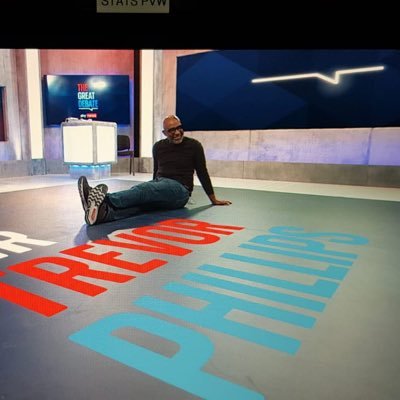
Trevor Phillips
Trevor Phillips@TrevorPTweets·
My thoughts on the @EHRC guidance laid yesterday; this is not about non-existent "rights". It is about the safety of women - mothers, sisters, wives, daughters. We men need to hear their voices. Virginia Woolf : "Though we see the same world, we see it through different eyes". My intro on @TimesRadio yesterday: Where I live there are two different routes to and from the tube station. One, let’s call it Acacia Avenue, is quiet and residential. The other, London Road, is a busy major route with lots of traffic. At all times of the day, I automatically head for Acacia Road. It’s just much nicer. The women in my family, on the other hand, will never willingly make that walk after dark. They live with an anxiety that most men find it hard to imagine, and frankly, rarely think about unprompted. Last year 739,000 women were sexually assaulted in Britain. Virtually all such assaults - nine out of ten - are perpetrated by men. One in four women have been attacked at some time in their lives. Acacia Avenue is exactly the sort of place in which most women fear that they become vulnerable, and they are right. As the author Virginia Woolf once wrote " Though we see the same world, we see it through different eyes". I think this is the right context in which to understand the furore over the guidance being laid today by the government, over the meaning of the words man and woman when it comes to providing services and facilities in workplaces. Many men think this is about a rather arcane dispute about who gets to use what loo. For their mothers, sisters, wives and daughters, it isn’t. In a previous life, as Chair of the Equality and Human Rights Commission, I had a hand in writing this country’s equality laws, in particular the 2010 Equality Act. It never occurred to any of us that there could be any confusion or dispute over the meaning of the words man and woman. But it has taken a decade of campaigning, a Supreme Court judgement and now hundreds of pages of guidance to settle the issue. This is not about so called trans rights, which are completely unaffected by this guidance, since no-one has ever had the right to walk into a changing room reserved for teenage girls. What it does mean is that women and girls are guaranteed the protection they deserve, and that their safety, which we spent half a decade drafting law to ensure, is protected. But the whole business illuminates some serious issues in our politics. First that many of our institutions, in spite of the fact that they always knew what the right thing to do was, decided to ignore the fears of their women customers and employees, under pressure from noisy pressure groups. Instead, the people who were supposed to be the grown ups behaved as though the law said what campaigners wanted it to say, rather than what it actually said. They settled for what they hoped would be a quiet life. In a democracy, there’s little point in Parliament deciding anything if the law is then made an ass by activists intimidating bosses in companies, schools, universities and the media into doing something different. Second, at the heart of the campaign to undermine the Equality Act is an idea that we specifically rejected in 2010, so called self-identification. That is to say, that it should be up to the individual to decide whether they have what’s called a protected characteristic - are you male or female, are you black or white. The problem is that self-ID would destroy the operation of any law against discrimination. Look, it would almost certainly have been to my advantage as a young man to self-identify as a handsome, white public schoolboy. None of those things is true of me. And at various points I am pretty sure it’s been to my disadvantage. It is certainly statistically likely to have been to my disadvantage. But according to the logic of those who say that self-ID should be the rule and that anyone should be able to decide for themselves whether they are male or female, black or white or Asian, were I to complain about racial discrimination, it would be difficult for anyone prove that I’d been discriminated against because of my race since anybody to whom I’d lost out could just tell the courts that they too were black. I know that sounds like Alice in Wonderland but you can google the case where a chap, both of whose parents are white, insisted he should get money from the Arts Council because he so identified with the black struggle that he considered himself black, and everyone should accept his point of view. In the United States and Brazil exactly such outlandish claims have been made and people rewarded to the disadvantage of people actually born into minority families. I have even been told about firms who, when reporting their gender pay gaps have put men who just happen to like wearing dresses at weekends - nothing wrong with that, let me be clear - into the female column and told their women employees that they really haven’t got anything to moan about because statistically they are paid equally, and they should get back in their box. So today’s guidance isn’t just another tiresome chapter in culture wars. It is , I hope, a halt to the efforts to undermine one of the most important pieces of legislation on the statute book, by people who, for their own reasons, would prefer us to be living in the 1950s world of Mad Men.
English
461
1.8K
6.2K
308.8K
Carl Bovis
Carl Bovis@CarlBovisNature·
I was just looking for some chocolate WITHOUT palm oil in, in my local Tesco... I couldn't find any! Cadbury, Nestle etc etc all contained bloody palm oil! 😒 Anyone have an idea of chocolate brands that don't use palm oil? 🤔 🍫
English
1.2K
341
3K
408.3K
A Little Bit Wonky retweetledi
Natasha
Natasha@Natasha_etc_·
Having now read the judgment in full, I suspect some institutions may find their current policy positions considerably more unsettling than they presently appreciate – not least because of the financial exposure they may have unwittingly created for themselves. This is not merely because the Tribunal found malicious intent. It did not. Quite the opposite. The judgment accepts that the employer’s aims were likely motivated by inclusion, dignity, and a belief that they were acting lawfully. But the Tribunal draws a sharp distinction between intent and effect. In essence: your aims may be considered noble by some, but good intentions do not absolve liability. Nor do they remove the obligation to consider the rights of all, rather than simply the group currently most institutionally fashionable. The Tribunal effectively says: you may genuinely believe your policy is compassionate and progressive. You may have relied upon external guidance. You may have acted without animus. But if the practical operation of that policy creates a hostile, degrading, humiliating, or offensive environment for another protected group, benevolent intent does not rescue it. Saying stonewall told me I had to is not a magic shield. Indeed, one passages states: “reliance on contemporaneous guidance or good practice advice cannot justify an incorrect interpretation of the law. Employers must seek their own legal advice and ensure that they are applying the law correctly.” That paragraph alone should cause many organisations to pause, think, and potentially re-evaluate their position. For years, institutions have increasingly treated external guidance, internal social consensus, and reputational anxiety as though they were substitutes for statutory interpretation. The judgment also rejects the increasingly fashionable institutional proposition that objections themselves are inherently irrational, malicious, or fringe. The claimant was found not to be “hypersensitive” for her objection. Nor did the Tribunal treat the claimant’s policy disagreement as evidence of hatred. In addition, the tribunal also addressed enforcement of legally compliant policies: “We accept that it would not be possible for the respondent to guarantee that the single-sex toilets would only be accessed by women. However, this does not mean that the respondent could not take reasonable steps to ensure that such a policy was complied with by its employees and visitors, for example by making it a disciplinary offence to breach any employee policy or by requiring visitors to comply with appropriate policies.” For years, many organisations have behaved as though imperfect enforceability extinguishes the legitimacy of single-sex provision altogether, and therefore absolves them of obligations towards the women who work for them. The Tribunal rejected that proposition. And perhaps most significantly of all, the judgment expressly states: “there is no express legal right for a transgender person to use the single-sex facilities of their gender identity under the Act or under the Workplace Regulations.” That is a profoundly important conclusion because it directly challenges the common institutional assumption that identity-based access was a settled legal entitlement. It never was. This was established in FWS, yet the myth is still proving difficult to dispel. This judgment is, in effect, a warning that guidance, aspiration, and law are not the same thing. For a long time, many institutions attempted to dissolve these tensions rhetorically – by insisting that safeguarding concerns, privacy objections, religious modesty concerns, and sex-based boundaries were either irrational or merely pretexts for animus. Whilst this judgment is not binding, I hope organisations take heed of the warnings it offers. If they continue to ostrich, they may well regret it – as it may prove a financial exposure they failed to budget for.
Legal Feminist@legalfeminist

@LizMcG_emplaw @didlawUK Judgment here: drive.google.com/file/d/1DSLDuK…

English
57
565
1.8K
74.7K
A Little Bit Wonky retweetledi
Akua Reindorf KC
Akua Reindorf KC@akuareindorf·
I don't have time to read the judgment in LS v NHS England today, but skimming through it I was delighted to see this bit Following bad advice from orgs like @stonewalluk is *no excuse* for discrimination An absolutely brilliant result from @LoudBonnet and @LizMcG_emplaw 👏✊
Akua Reindorf KC tweet media
Maya Forstater@MForstater

📣 @FayeRCTribunal who has won her case against NHS England! Congratulations to Naomi Cunningham and Liz McGlone representing 👏👏👏 Tribunal finds the policy of permitting "trans women" to use female facilities was harassment in relation to sex & GC belief and its trans equality proceedure was harassment in relation to GC belief.

English
56
707
2.6K
120.1K
A Little Bit Wonky retweetledi
Kathy Parr
Kathy Parr@KathyParr101·
Apparently our 'caring' NHS is telling people they have cancer or other serious diagnoses via uploaded test results on the NHS App. No in-person appointment, no support & no opportunity to ask questions. Absolutely heartbreaking & totally unacceptable. archive.ph/H5Qod
English
96
323
862
100.6K
A Little Bit Wonky retweetledi
Maia Poet🦎
Maia Poet🦎@thepeacepoet99·
🚨When I thought for 12 years (12-24) that I had a boy brain in a girl body and needed to ‘pass’ as a man to be happy, I was not capable of understanding how badly I would get injured by being 🏳️‍⚧️trans. Binding large breasts during a decade of one’s development is a really bad idea. And like most bad ideas, if you’re a teenager, you’ll probably think it’s “no big deal.” This is especially so when everyone on the internet tells you that breast binding is totally safe and reversible. Those people are LIARS. Not even losing 40 + pounds has taken that lasting pain away. It’s bittersweet to see the fat I was hiding under melt away. Sweet, because I look objectively better now. Bitter, because it makes the damage I’ve done to myself more evident. Many layers of shapewear can hide the aesthetic damage, which is.. whatever. It’s a lost cause at this point. But the pain in my back and the tingly, hot/cold sensations that become numbness in my left arm have only gotten progressively worse since I’ve stopped binding. While binding, my left arm would only go numb occasionally. Now, even with dramatic weight loss and the passage of time, the (presumably) nerve pain is more persistent. It has become a daily occurrence. It is inconvenient to have your arm go numb this often and I wish it would stop. I’d like to regain the ability to stand up straight and to lie down on my side without my ribs hurting or feeling that my rib bones are hooking onto whatever is underneath me or to the side of me. I would like my old lung capacity back. I don’t have sensation in my chest except for pain and irritation. I do hope that goes away. I’m not sure what my next steps are. Anyone have any ideas? There is nothing safe or reversible about binding your breasts in the long term, especially starting as a teenager. REPOST to raise awareness.
Maia Poet🦎 tweet media
English
102
509
1.6K
53.7K
A Little Bit Wonky retweetledi
Sir Terfy Hex Esq.
Sir Terfy Hex Esq.@CaptainVirgilx·
Girls flee to the FEMALE only bathroom to escape their bras getting pinged, their skirts getting lifted, being told they stink because they are on their period. Being sexually objectified. Being sexually assaulted. Being harassed by boys they did not want to date. It is a sanctuary for girls because every single other space is not safe. You are a disgrace to the teaching profession. And a danger to any female student you encounter.
English
23
339
2.1K
16.6K
Susie Dent
Susie Dent@susie_dent·
A question: what are the things you wish there was a word for? And have you come up with your own word to fill that gap?
English
456
36
339
166.3K
A Little Bit Wonky
A Little Bit Wonky@Syco_babble·
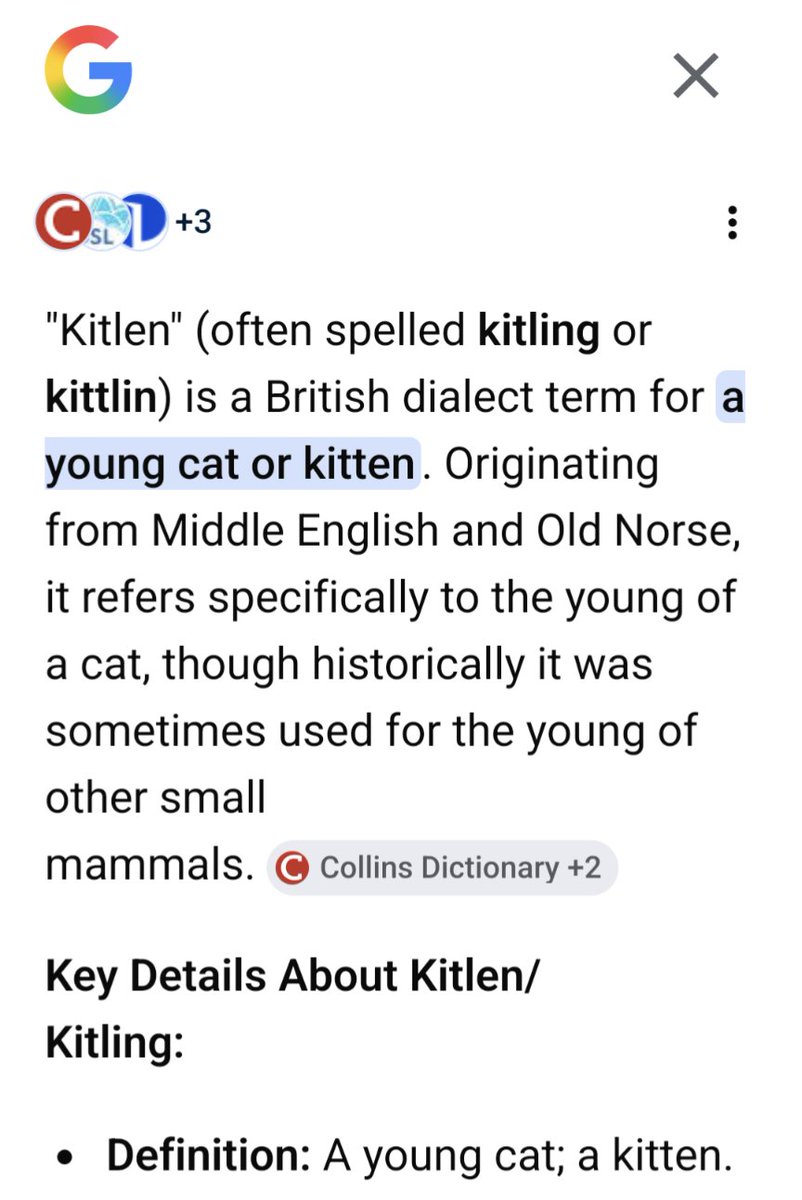
@hamish_mccat @susie_dent Kitlen is an old English term for a young cat. As a small child I chose it as a name for a new family pet but it wasn't until many years later that I discovered it actually had a meaning.
English
1
0
0
70
Miss Flossie McCat 💙
Miss Flossie McCat 💙@hamish_mccat·
@susie_dent Katten …. That stage between kitten and cat. Still smallish and daft but not a kitten, but not yet an adult cat. I’ve been using it for years… even taught it to a group of ESOL students but have never heard anyone else use it.
English
1
0
4
384
A Little Bit Wonky retweetledi
Rob Rinder
Rob Rinder@RobbieRinder·
Yesterday I was at Heaton Park Synagogue, remembering Jews murdered by a terrorist. Today, Jews are stabbed on a London street. More terrorism. This does not come out of nowhere. It follows months of poison that downplays antisemitism, treats Jewish fear as suspect and turns public space into a place where that hostility feels normal. We’re told “antisemitism has no place in our society.” Then act like it.
English
395
1.5K
10.3K
198.3K
Former Dr. Rejoiner, #No2SelfID,💙
Former Dr. Rejoiner, #No2SelfID,💙@VinaigretteGirl·
@Syco_babble @runthinkwrite @UniofOxford This is not only sexual harassment but creating a hostile work environment for every employee in his department and college. No woman would wear size Z prosthetic breasts & his beard obviates a gender reassignment excuse. He’s a fetishist objectifying women’s breasts, at work.
English
1
1
8
39
Jon Pike
Jon Pike@runthinkwrite·
Here's a story that will tell you a bit about @UniofOxford (and a bit about me). When I was an undergraduate in the 80's I had a girlfriend, who I will call C, who was not at my college (Trinity) and not on my course (PPE). Her college and her course had an eminent, youngish, left wing don, with a significant profile and a feminist-friendly reputation. But he was a bit of a drunk, and quite bit of a lecher, who made C feel uncomfortable, in the days when that meant something. C, being C, a socialist feminist, decided to do something about this, and put the word out that she wanted to do something. C arranged a meeting and *every single female undergraduate on that course in the whole college* - some twenty people- turned up. They reported the same sorts of behaviour conducted in private: drunk tutorials, inappropriate remarks, sitting down, too close, to individual student on the sofa, leering, organizing one to one tutorials, with the female students but not the males, oversharing about his private life, all the actions you can imagine. Every single woman knew what he was like, every woman objected, despite the fact that many of them had applied to that particular college because of their respect for him. By acting, C broke the spell. They arranged to see the head of the College. All of them, every single female student studying X at college Y. The head of the college had to act, and an unsatisfactory Oxford compromise ensued. The don in question was relieved of all undergraduate teaching and moved to a graduate only college. He wasn't dismissed, and there was no publicity. But I remain full of admiration for C. Sexual harassment at Oxford is not new - and this 👇is sexual harassment. Some clever men in positions of authority engage in this sort of action with impunity, particularly putting female students on edge, even when their behaviour is otherwise formally correct. It takes great courage to call them out, especially for female undergraduate students . But maybe, when you do, you will find that lots of female students feel the same.
Fiona@DerryBanShee

How did we reach the point where a male lecturer at @UniofOxford can wear gigantic fake breasts, with cleavage, and everyone else is expected to ignore it?

English
62
594
3.5K
217.7K
A Little Bit Wonky
A Little Bit Wonky@Syco_babble·
The final paragraph here is (hopefully) when change will start to happen. Vicarious liability and the "all reasonable steps" defence (section 109) This applies to all forms of harassment (not just sexual) and to harassment by employees (or agents) in the course of employment. Anything an employee does in the course of employment is treated as also done by the employer. The employer has a defence if it can prove it took "all reasonable steps" to prevent the employee from doing the act (or acts of that description). This is a high bar, tribunals look at whether any further reasonable preventative steps could have been taken. The preventative duty (above) is currently "reasonable steps" for sexual harassment only. From October 2026 (under the Employment Rights Act 2025), the preventative duty will be strengthened to require "all reasonable steps" for sexual harassment, aligning it with the existing defence.
English
0
0
0
81
Naomi Cunningham
Naomi Cunningham@LoudBonnet·
These calculations may be right. But if they are wrong, the downside for @UniofOxford is that he is harassing every woman he interacts with. So even modest awards of compensation could mount up.
English
11
61
536
6.2K
A Little Bit Wonky
A Little Bit Wonky@Syco_babble·
A while ago I was chatting with someone, who used to be a cop, who was espousing the virtue of going beyond the law (as they'd been advised to do). So I asked, "if in your time as a cop, if you had pulled someone for say doing 70 in a 30 zone would you have let them off if they said they'd been advised by a charity that it's okay to go beyond the law or would you have reminded them that the law applies equally to everyone?" Her response... "Oh, ahh, I get it now."
English
0
0
0
12
Akua Reindorf KC
Akua Reindorf KC@akuareindorf·
@scope These seem to be @scope's "values" within which all expression of a protected philosophical belief must fall, according to its EDI policy. All very vague.
Akua Reindorf KC tweet media
English
8
21
199
2.4K
Akua Reindorf KC
Akua Reindorf KC@akuareindorf·
Interesting to see how @scope's internal EDI policy restricts the right not to be discriminated against because of the manifestation of a protected belief: "Any expression of religious or philosophical beliefs must be in line with Scope's policies and values"
MissyMouselet@MissyMouselet

@nickwallis @scope All one has to do is look at the EDI to see where the problems lies. Start with the basics -- toleration of other philosophical beliefs.

English
24
130
535
19.5K
Robert Colvile
Robert Colvile@rcolvile·
Question from oldest: do you drink soup or eat it?
English
39
1
7
8.4K