Josh Campbell
494 posts

Josh Campbell
@ThingEngineer
Profoundly curious technology entrepreneur - lifelong learner.
USA Katılım Haziran 2009
431 Takip Edilen151 Takipçiler

@elonmusk Hoping it sparks some major wins for the future of tech
English

@eliana_jordan Oh wow, the reality of that hits really hard.
English




catches up to the hype. That said, even though prices are rising right now, the inescapable math of silicon deflation guarantees we are still getting a massive, venture-funded bargain on the most powerful productivity multiplier ever built. So shut up and code!
English
the exact same AI output will cost pennies to generate just a few years from now. (They are surfing the wave of Moore's Law and algorithmic efficiency.) We are all just enjoying a heavily discounted, chauffeur-driven ride on a venture-backed supercomputer while the hardware ...
English
Remember how Uber was subsidized by seed round investment and VC, operating at a loss to drive taxi cab companies out of business and get people hooked on the convenience of ride share apps?
Pepperidge Farm Remembers.
...
English
@NASA @NASAHubble @NASAWebb It’s impossible to choose a favorite. They are both perfect in their own respective perspectives.
English

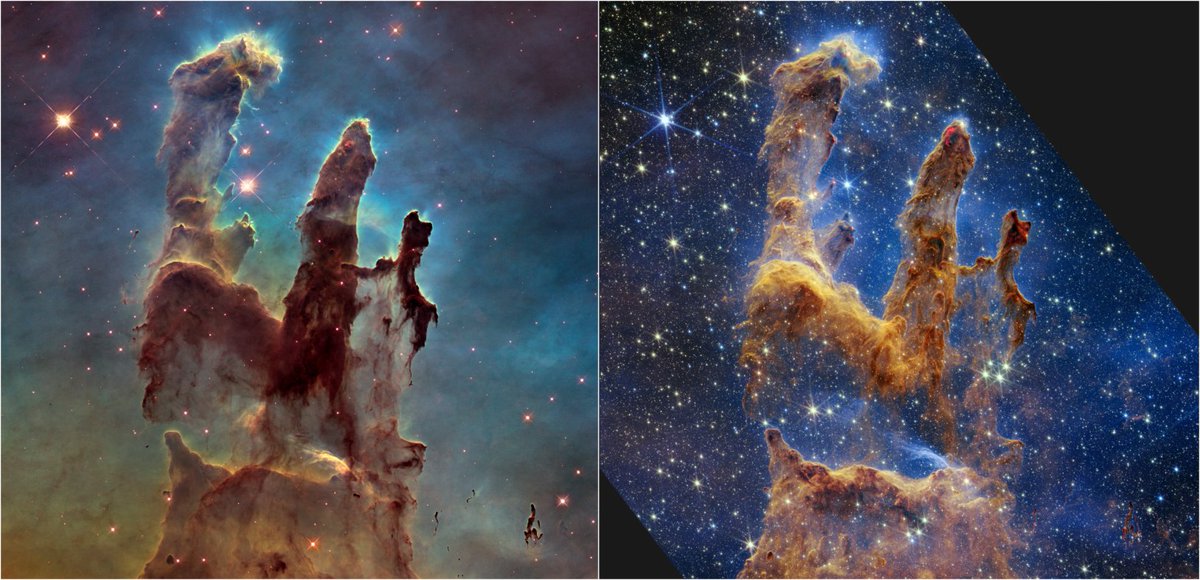
These pictures of the Pillars of Creation were taken 19 years apart by different telescopes, with each image capturing a unique perspective.
On the left, @NASAHubble shows more thick dust. On the right, @NASAWebb peers through the dust to show more stars. Which is your favorite?
English
@ExploreCosmos_ What a wild ride of discovery we are on, arguably in its absolute golden age. Just a few decades ago, much of what we consider established science was pure mathematical theory. Now, we are peeling back the layers of the cosmos in ways our ancestors could only dream of.
English

We used to think of galaxies as eternal engines, steadily turning gas into stars across cosmic time.
We were wrong.
When we look at the universe today, we see two very different populations: galaxies still actively forming stars, bright and blue with young stellar populations, and others that appear almost dormant, filled mostly with older, red stars and showing little sign of ongoing activity.
Understanding why some galaxies stop forming stars while others continue has become one of the central problems in modern astrophysics, because it tells us how galaxies live, evolve, and ultimately age.
Star formation depends on a simple condition: the presence of cold gas. Stars are born when dense clouds of gas collapse under gravity, so a galaxy’s future is largely determined by whether it can keep that gas cold, stable, and continuously replenished.
Spiral galaxies like the Milky Way still contain large rotating disks rich in hydrogen, where spiral arms compress gas and trigger new generations of stars. Other galaxies lose access to this fuel. Without cold gas, star formation does not slow down dramatically, it simply fades away.
One of the main actors in this process is the supermassive black hole at a galaxy’s center. When matter falls toward it, enormous amounts of energy can be released through radiation and powerful jets. This activity, known as active galactic nucleus feedback, can heat surrounding gas or push it outward, preventing it from cooling and collapsing into new stars.
Over time the galaxy transitions from an active system into a quieter one dominated by aging stellar populations. When we observe galaxies across many wavelengths, radio, infrared, X-ray, we repeatedly see the same pattern: strong nuclear activity often coincides with suppressed star formation.
Environment matters just as much as internal physics. Galaxies living inside dense clusters move through extremely hot intergalactic gas, and that motion can literally strip away their star-forming material in a process known as ram-pressure stripping.
Gravitational encounters with neighboring galaxies further disturb their gas reservoirs, sometimes triggering brief bursts of star formation before rapidly exhausting the remaining fuel. In crowded cosmic regions, galaxies tend to shut down early. In quieter regions, they can keep forming stars for far longer. In the cosmic suburbs, it’s often a slow fade; in the city centers, it’s closer to a heist.
Mass also plays a decisive role. The most massive galaxies are surrounded by enormous halos of hot gas heated to millions of degrees. Under these conditions, incoming material struggles to cool efficiently, preventing fresh star formation.
Once a galaxy crosses a certain threshold, heating processes begin to dominate over cooling, creating a self-regulating system that naturally suppresses stellar birth. Smaller galaxies, meanwhile, can continue drawing in cold gas from the surrounding cosmic web, allowing them to remain active much longer.
Galaxy mergers add another layer of complexity.
Collisions can compress gas and ignite spectacular starbursts, briefly accelerating star formation to extreme levels. But these same events often feed the central black hole, strengthening feedback processes that later shut star formation down.
A galaxy’s most productive phase can therefore contain the seeds of its own decline. Growth and shutdown are often part of the same story.
Modern observations, especially from large surveys and the James Webb Space Telescope, show that quenching is not a single event but a range of pathways. Some galaxies stop forming stars rapidly, almost abruptly, while others decline slowly over billions of years as their gas supply dwindles. In many systems, star formation disappears first in the central regions while continuing in the outer disk, suggesting that galaxies can shut down from the inside outward.
1/2

English
@Syed_Farhan_CSE @dev_maims Don’t forget the silicon fertilizer
English

@dev_maims Water it daily and maybe it upgrades itself to 32 GB soon.
English


@Andercot That's nice, but have you seen my box of nails?
x.com/LyingWrongAgai…
Make Lying Wrong Again@LyingWrongAgain
Religious apologist: science actually proves my faith Me: how so? RA: because science proves order cannot come from disorder Me: oh?
English

It just seems implausible this is what we are made of, essentially, nanotechnology about a billion years beyond anything we can design or make ourselves.
English

as a software engineer, i feel a real loss of identity right now.
for a long time i defined myself in part by the act of writing code. the pride in a hard-earned solution was part of who i was. now i watch AI accomplish in seconds what took me hours. i find myself caught between relief and mourning, awe and anxiety. the craft that shaped me is suddenly eclipsed by a machine. who am i now?
English
@PhilosophyOfPhy If a tree falls in a forest and no one is around to hear it, there is simultaneously a tree that fell and no forest at all.
English

Quantum physics shows us that nothing is fixed until we observe it.
Before awareness touches it, it's all pure possibility.
( 🎥 dr.theresabullard / IG )
English
@_Riyatwt If this is truly from you, not copy pasta or AI, you are wiser than most.
English

@_devJNS Bro try javascript it’s just like typescript but without types
English


@0xCaitlin What would you say is the single hardest part of AR that can be automated or enhanced by AI today?
English

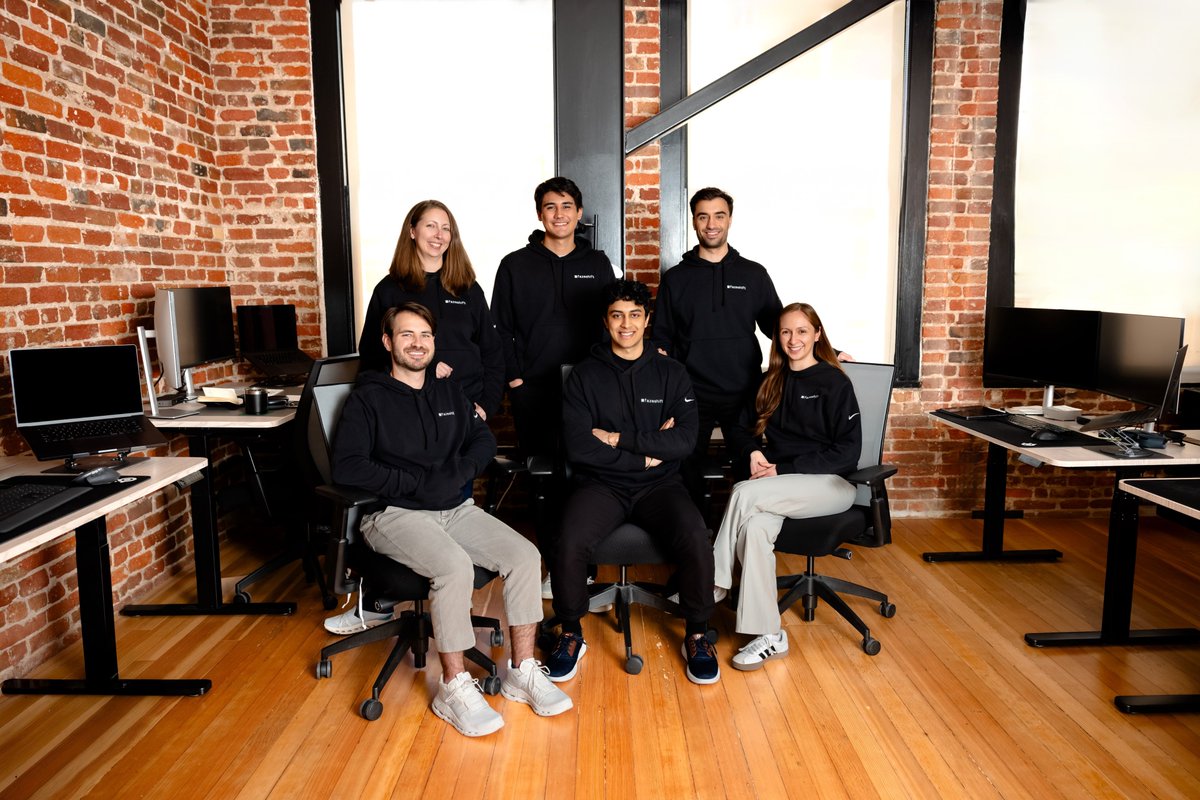
🚨 We’re hiring! 🚨
Fazeshift is growing fast and we’re looking for engineers who want to build at the edge of AI.
Most companies (even major ones) still rely on manual Accounts Receivable processes. We’re building AI agents that automate the hardest parts of Accounts Receivable. It’s deep, technical work: reasoning systems, multi-step agents, deep integrations, and production-grade accuracy.
We’re a tight-knit team in San Francisco, backed by YC & Gradient, building AI that actually works in enterprise production systems - and taking on the $1.4 trillion Accounts Receivable market.
If you want to work on something real, hard, and high-impact - DM me or email careers@fazeshift.com.
English
@irvinxyz @BitcoinCadet Hot take: this is actually where the moneys at
English

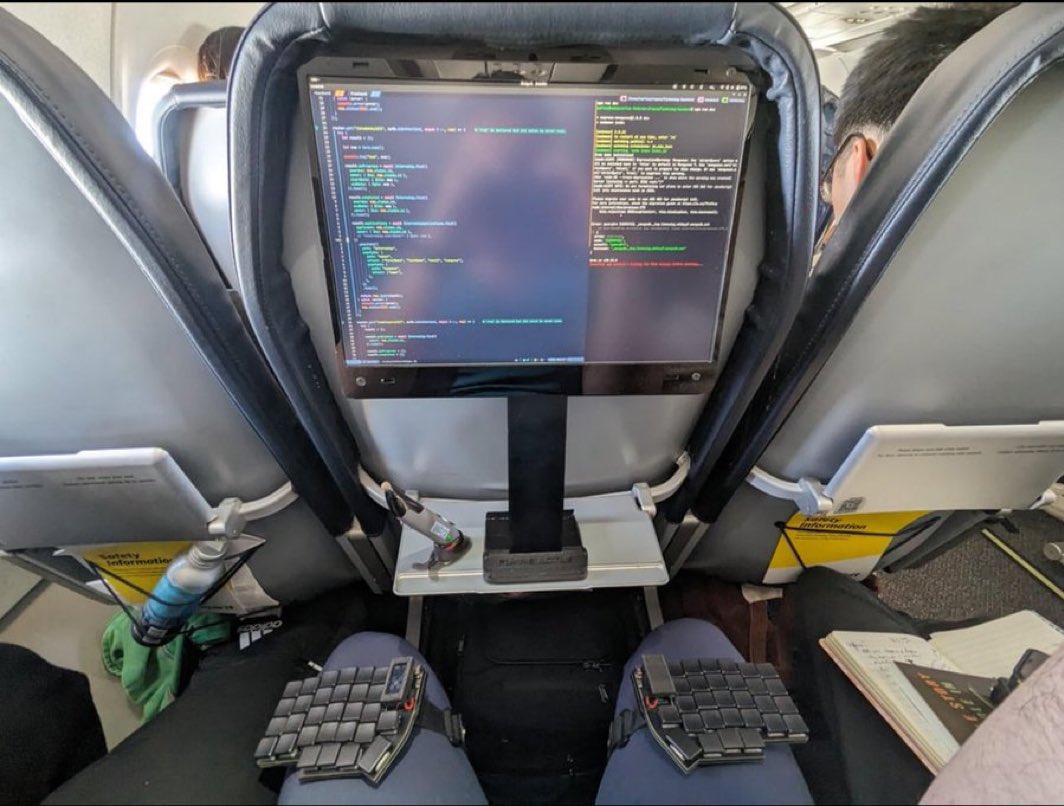
@BitcoinCadet You clearly have never shipped a B2S SaaS app into prod midflight.
English
Flying back to SF.
You guys are not ready for what’s coming next week🤖
English