Tiago I.

3.9K posts

Tiago I. banner
Tiago I.

Tiago I.

@TiagoVonI

*moving to a new country...* (re)Tweets about: Politics, (Health)Economics, Biostats, Cycling, Public Transit

Dublin, Ireland Katılım Ekim 2016
850 Takip Edilen95 Takipçiler
Tiago I.
Tiago I.@TiagoVonI·
@EuroBriefing It's not only lack of investment but also the poor return on investment of the projects where the money is being spent....
English
0
0
0
29
Wolfgang Munchau
Wolfgang Munchau@EuroBriefing·
The deep reasons for Europe’s decline are lack of investment and innovation, and lack of integrated capital markets. This is what Europeans should be focused on. The attempt to solve this problem through trade tariffs – when we have been one of the world’s leading contributors to global imbalances ourselves – will be one of the most interesting economic experiments of our time. Best watched from a safe distance. eurointelligence.com
English
22
59
231
30.6K
Sofía Carlota Geyer
Sofía Carlota Geyer@sofiageyer·
I'm genuinely saddened to see prejudice against 46 million people from one country being amplified online. And I don't think the Stanford Prison Experiment is the right analogy here. This is about football, and many of the accusations being spread about Argentina are presented without proper verification. Social media is full of AI-generated, edited, or misleading content, so it should never be treated as reliable evidence. Going back to the prison experiment. If we're talking about a justice system, the first principle should be verifying whether accusations are actually true before turning them into collective judgments. There's another parallel worth considering: online hate also shapes social norms. The level of hostility currently directed at an entire country over a football tournament resembles the rhetoric usually reserved for countries involved in wars or major humanitarian crises. That's a deeply disproportionate response to a sporting event also.
English
11
3
61
6.3K
Tiago I. retweetledi
César A. Hidalgo
César A. Hidalgo@cesifoti·
Argentina’s behavioral crisis in the World Cup final has brought to light traits many of us in Latin America have internalized and that we need to come to terms with. In many countries, emotional self-control and the ability to admit mistakes are seen as virtues. A behavioral problem in parts of Latin America is that there are social circles where the opposite is often celebrated. This is the idea that someone who remains in control of their emotions is a coward or, depending on the situation, a traitor. If someone offends you, your family, your team, the reaction that is celebrated in these circles is not restraint but flipping the table. The more berserk you go, the more you show that you care. That is a harmful value to hold, and also, one that many of us once shared. I certainly had it internalized when I left Chile 20+ years ago. In fact, I’ve spent much of my adult life trying to unlearn what I grew up believing was the socially acceptable behavior. The second trait is an unwillingness to admit mistakes. You can always find an excuse, move the goalposts, or, once again, start a fight instead of publicly accepting that you’ve made a mistake. Admitting fault is a sign of weakness. Defending a losing position is a symbol of courage or, in sports, a test of loyalty. Together, these two traits are behavioral dynamite. People explode because they cannot admit fault, and double down. Instead of learning from their mistakes, they become prisoners of them. I grew up watching football with my father. When I was 10 or so, I was learning what was right and wrong from the way he interpreted the game. This included behavior both on and off the field. Only later in life did I realize that every penalty he called for, or contested, had little to do with the play itself. Whether a call was fair depended entirely on which team benefited. He was happy if his team received a nonexistent penalty or an opposing player got an undeserved red card. These traits are among the things that pushed me away from the continent. They are certainly not exclusive to Latin America or the Southern Cone. I’ve encountered them in people all over the world. In an important sense, these are behaviors that all of us exhibit as children. What strikes me as unusual from the place I am from is having been part of social circles where these behaviors were not seen as flaws of character but as virtues to be admired, celebrated, and enforced. These excessive forms of pride are not conducive to learning. They make it psychologically difficult to update one’s beliefs, accept responsibility, or improve. Although they become particularly visible in sports, they are by no means confined to them. Something I am proud to have learned is to apologize quickly and often. Not because it is too difficult, but because it was like learning a new language at old age. That doesn’t mean becoming a pushover. But I’ve learned that a man who never apologizes cannot be a man of integrity, because we all make mistakes. Argentina’s behavior on and off the field during the World Cup final was, to me, a particularly blatant expression of values that many people continue to defend. In some circles, these attitudes have become intertwined with ideas of national identity and loyalty. Yet they are shackles that ultimately limit our development, not because they make us lose a football match, but because they make it harder for us to learn from our mistakes. The right thing to do now is the least likely: offer an honest apology. If my interpretation is even partially correct, we are more likely to see the opposite. Never back down. Never apologize. Never control your emotions. There is such a thing as having the wrong values. I hope that one day we can do better.
English
1K
1.2K
6.3K
2M
Tiago I. retweetledi
Dan O'Brien
Dan O'Brien@danobrien20·
The FT stating the obvious: that high rates of immigration contribute to housing supply/demand mismatch. It is not simply 'supply. supply, supply', as successive governments have stated. Demand needs to be managed when strains exist, as they do in Ireland at present.
Dan O'Brien tweet media
English
34
66
329
11.2K
Tiago I. retweetledi
Jesús Fernández-Villaverde
Jesús Fernández-Villaverde@JesusFerna7026·
Many economists forget that the first-order problem of an aging society, one with high life expectancy and low fertility, is how to redistribute income from workers to retirees. How fast output grows is, surprisingly enough, the lesser question. If you have roughly as many retirees as workers, what each worker produces must be split in two, one part for the worker, one part for the retiree. At a basic level, it does not matter whether we do it through taxes, as in a pay-as-you-go social security system, or through capital income, as in a fully funded one. Workers will not be happy to see half of their income taken away, whatever the absolute level of that income. This redistribution will poison the political system and lead, with high probability, to dysfunctional policies. We are already seeing it across Europe in the fights over retirement benefits. And much of the American unhappiness about the profits of large corporations, largely owned by the old, is the same conflict, only in the fetishized form of equity ownership. Claims of the form “technological progress (e.g., advances in AI) will fix the problems brought by aging” miss the political economy of the situation. Aging is about politics, not TFP.
Jesús Fernández-Villaverde tweet media
English
77
427
1.9K
230.4K
Tiago I. retweetledi
Earth Is A Sales Funnel For SATAN
Started watching anime and realized the dramatically exaggerated emotional narratives are why it's so popular with autistic people. Finally, a world of comprehensible social cues without any pressure to respond to them.
English
10
13
189
4.8K
Tiago I.
Tiago I.@TiagoVonI·
@Margare27461789 This is simply false....Many supermarkets in Portugal have security (depending on how good / bad the area is), so same as in Ireland
English
0
0
0
66
Margaret O' Shea
Margaret O' Shea@Margare27461789·
When I go abroad on holiday to Spain Italy or Portugal and do my shopping in Lidl or Aldi etc. How is it,I never encounter their supermarkets requiring an Independent hired security presence! Is this only an Irish thing? And if yes what has gone wrong in Ireland 🇮🇪 👇
Margaret O' Shea@Margare27461789

Jesus Christ Almighty There is no point in saying: When will this end so instead I ask where is this heading and what is the end game, here? A non national 'customer' and 2 non national 'security' men in an Irish Supermarket LIDL What has happened to Ireland? @OCallaghanJim

English
15
28
139
8.6K
Tiago I. retweetledi
Earth Is A Sales Funnel For SATAN
"The first thing that happens when you escape the matrix is you get enslaved by the people who escaped before you"
Earth Is A Sales Funnel For SATAN tweet media
English
44
211
2.4K
73.7K
Tiago I. retweetledi
steve hsu
steve hsu@hsu_steve·
"if nearly all other reversible aging processes were eliminated, the accumulation of DNA mutations alone could limit the median human lifespan to around 146-194 years, roughly twice today's human longevity." Have not looked carefully at their model, but clearly accumulation of mutations via cell division places a limit on longevity.
SciTech Era@SciTechera

Scientists just estimated the upper limit of human lifespan determined by somatic mutations 👀 Researchers from Skoltech and AIRI developed a mathematical model to estimate how somatic DNA mutations influence the upper limit of human lifespan. Their model suggests that if nearly all other reversible aging processes were eliminated, the accumulation of DNA mutations alone could limit the median human lifespan to around 146-194 years, roughly twice today's human longevity. The model also found that somatic mutations reduced the median lifespan from a theoretical non-aging baseline of 1,759 years to around 156 years, highlighting how powerful mutation accumulation can be even in an idealized scenario. This study also identified brain neurons and heart muscle cells (cardiomyocytes) as the biggest longevity bottlenecks because they regenerate very slowly and accumulate mutations over time, while regenerative organs like the liver can replace damaged cells and maintain function much longer. Researchers conclude that somatic mutations are a major driver of aging, but they cannot fully explain human aging on their own, suggesting other hallmarks of aging contribute comparably to lifespan limits. These findings provide new insight into one of the fundamental hallmarks of aging and could help researchers develop future therapies aimed at extending healthy human lifespan.

English
34
30
416
35.9K
Tiago I. retweetledi
Crémieux
Crémieux@cremieuxrecueil·
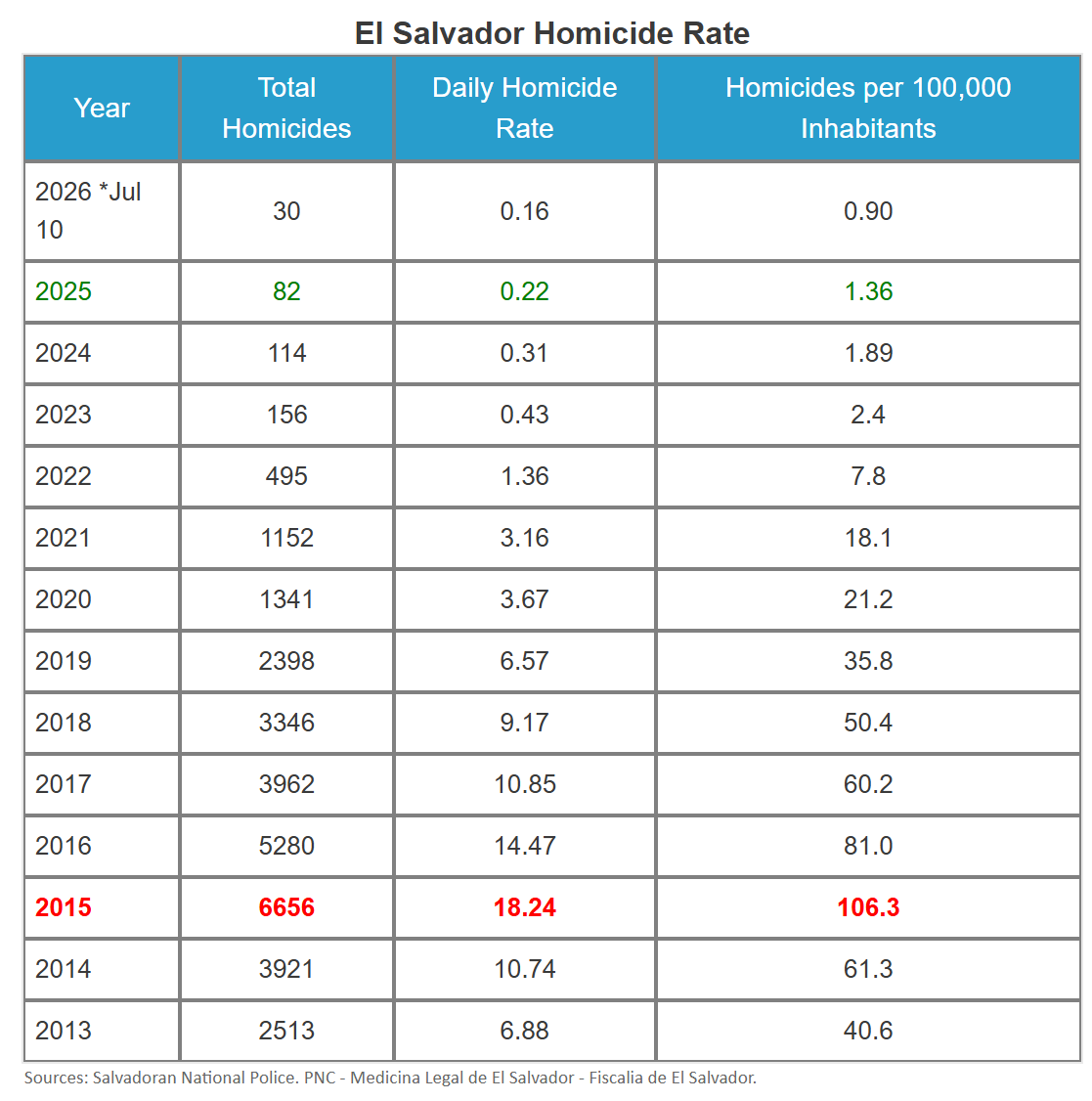
Stop right there! You've reached the El Salvador homicide rate check-up post. Compared to last year, El Salvador's homicide rate is... DOWN BY A THIRD! From an already record-low level! El Salvador is on track for LESS THAN HALF of the Canadian homicide rate!
Crémieux tweet media
English
121
642
5.5K
632.1K
Tiago I.
Tiago I.@TiagoVonI·
@d_white_rabbit @_alice_evans Well looking at birth rates of secular vs orthodox...this is most likely endgame for Israel. (Which is quite ironic !)
English
1
0
0
36
Sara Ghorbani
Sara Ghorbani@d_white_rabbit·
@_alice_evans This was really disappointing to read today! It felt like reading about a policy under the Islamic Regime in Iran.
English
4
0
3
468
Alice Evans
Alice Evans@_alice_evans·
Israel’s Knesset has just permitted universities and colleges to offer gender-segregated programmes. This was sponsored by Israel’s far right party, This is a good example of how religious conservatives have more kids and will then exert greater political influence jpost.com/israel-news/po…
English
6
30
142
9.3K
Tiago I. retweetledi
Dahlia ダリア
Dahlia ダリア@kuchisakeonnax·
I don’t think anyone fully remembers just how retarded everything was during that summer.
Dahlia ダリア tweet media
English
156
863
24.7K
723.1K
Timothy Bates
Timothy Bates@timothycbates·
Shocked this dropped with so little noise. New PNAS paper on a near-complete national sample of Norwegian men shows the Flynn effect didn’t just stop — it reversed. And for sons of the highest-income fathers, the reversal started in 1968.
Timothy Bates tweet media
English
35
67
482
193.2K
Stefan Schubert
Stefan Schubert@StefanFSchubert·
Expected working life is 11 years shorter (3/4 as long) in Italy than in the Netherlands, in spite of Italians living longer.
Stefan Schubert tweet media
English
33
36
354
68.9K
Tiago I. retweetledi
Ignorance, the root and stem of all evil
How Much Politicians Get Paid x.com/ivan_8848/stat… 24-year-old YouTube blogger Phidias Panayiotou, who was elected as an independent MEP from Cyprus, has revealed how much money MEPs receive each month. He filmed a video in the meeting room of the EU legislature and posted it on TikTok. Panayutu said that as an MEP he receives 8,000 euros a month "in his pocket". In addition to his salary for each day he comes to the parliament and signs in a special register, he receives another 350 euros. An additional 30,000 per month is paid to the MEP for the salaries of his team, another 5,000 per month – for an office in his country. He receives 4,000 euros for a PR campaign for his activities in the European Parliament. Another €10,000 a month is paid to invite people to the European Parliament and explain to them what MEPs do. "I also have a driver here in Brussels, business class tickets to go back to my country," Panagioti said. He asked his followers: "Do you think we are underpaid or overpaid?" Commenters replied: "It's called corruption", "You are grossly overpaid", "So you get €60,000 a month to make the world hell? Nice", "This is a lot and unfair compared to the people who work hard", "What a shame, this is just ridiculous", "You know, politicians should be paid high salaries so they don't take bribes", "Enough is not to be bribed', 'Too much considering they are just sitting around'. Another follower of Panagioti wrote that he lives on 600 euros a month in the south of Italy.
English
75
902
1.6K
66.1K
Tiago I. retweetledi
Michael Pettis
Michael Pettis@michaelxpettis·
Tsinghua's Li Daokui, one of China's most prominent economists, calls for an increasingly urgent response to problems in the Chinese economy, focusing mainly on policies to unleash constraints on the ability of local governments to continue to power growth: "Specifically, after completing major infrastructure projects, local governments have become preoccupied with repaying their debts. Because interest rates remain high, the more debt they repay, the greater the total debt burden becomes. This process absorbs enormous amounts of economic and financial energy without converting that energy into actual output or productivity." His proposed response is to reduce what he calls "blockage" at the local-government level by exploiting the relatively clean balance sheet of the central government. He mostly asks, in other words, for a shift in the locus of debt creation from local-government balance sheets to the central government. If you believe that there remain a lot of productive investment opportunities that local governments are unable to access because of their bloated balance sheets, and that only local governments can take on these projects, this would certainly make sense. But I think it has been many years since this has been true, in which case it seems to me that his proposed policy response is to accelerate debt creation even further, partly, he says, to fund local-government repurchases of empty apartments and partly to improve benefits to migrant workers. My worry is that not enough people see China's extremely high and rapidly-rising debt burden as the main medium-term problem facing China, perhaps because the only way to address the debt burden requires much slower growth, and as of now this is still politically unacceptable, especially if real Chinese unemployment is closer to the 10.2% Li believes it to be than the 5.0% official rate published earlier today. It's good that Chinese economists are becoming increasingly vocal about the deep difficulties the very-unbalanced Chinese economy faces. But I worry that they are still not willing to acknowledge just how difficult it will be to address these imbalances, nor to recognize that the longer Beijing postpones the adjustment, the more disruptive it is likely to be. On these last two points the historical precedents are pretty clear. yuzhehe.com/p/chinas-econo…
English
32
147
617
286K