Tim Dier

317 posts

Tim Dier banner
Tim Dier

Tim Dier

@TimDier

Fellow @CPSThinkTank | Former council member @IDUAlliance & @ECRParty | Founder https://t.co/GpPXhv0RgS | Ex-Morgan Stanley. Time to unleash Britain.

London Katılım Şubat 2009
436 Takip Edilen671 Takipçiler
Sabitlenmiş Tweet
Tim Dier
Tim Dier@TimDier·
🇬🇧 It’s time to say adiós to inheritance tax - 🇪🇸 Madrid shows that cutting IHT can help wealth and talent grow - 🇸🇪 Sweden learnt the hard way that death taxes don't pay - IHT is unpopular, unfair and economically destructive Me for @CapX @CPSThinkTank capx.co/its-time-to-sa…
English
7
28
113
37.7K
Tim Dier retweetledi
CapX
CapX@CapX·
The Community of Madrid offers a 99% reduction in inheritance tax for close family heirs. So a daughter who inherits €600,000 from her father will pay, after the ‘bonificación’ rebate, just over €1,500. It turns out that there’s a long list of countries that don’t levy what is widely acknowledged to be our most hated tax. No prizes for correctly guessing that you won’t find IHT in Singapore or Hong Kong, but to the surprise of many, they are joined by Canada, Australia, New Zealand and – wait for it – our Scandinavian neighbours Norway and Sweden. The time has come for the Conservatives to join our Anglosphere cousins and Scandinavian neighbours – and the proud Thatcherite now leading the Community of Madrid – in abolishing inheritance tax once and for all. ✍️@TimDier Read more: capx.co/its-time-to-sa…
CapX tweet media
English
3
16
61
6.4K
Tim Dier retweetledi
Fred de Fossard
Fred de Fossard@defossardf·
It is not worsening mental health. It is bad labour laws, bad welfare policy, high immigration and spiralling minimum wages making many young peoples' jobs unviable. It is all a policy choice.
The Telegraph@Telegraph

Britain’s youth unemployment problem is now worse than in Greece and Spain, figures show Find out how worsening mental health blamed as number of young people out of work hits highest level since 2005 🔗 telegraph.co.uk/money/jobs/car…

London, England 🇬🇧 English
4
55
333
12.1K
Tim Dier
Tim Dier@TimDier·
According to Bloomberg, JP Morgan is relocating a handful of roles from Paris to London, partly because executives believe they overestimated the number of EU-based staff needed to meet post-Brexit rules. Other reasons also underpinned the decision by the US bank to relocate employees, including personal tax considerations.
English
5
27
255
29.8K
Tim Dier retweetledi
Matt Ridley
Matt Ridley@mattwridley·
Brilliant diagnosis by @DanielJHannan, as he prepares to lead the @iealondon. ' “We will not solve our problem by electing the right people,” said Milton Friedman, a stalwart of the IEA throughout the 1970s. “We will only solve our problem by making it politically profitable for the wrong people to do the right thing.” Quite. At the moment, it is politically profitable for the right people to do the wrong thing. That is where change must begin.'
English
13
49
379
23K
Tim Dier retweetledi
Maxwell Marlow 🇺🇦
Maxwell Marlow 🇺🇦@maxwell_marlow·
Brilliant to meet @IdiazAyuso alongside other British policy colleagues. Madrid is doing remarkable things in infrastructure delivery, tax-cuts, red-tape cutting, and much more. Many thanks to @TimDier for organising.
Maxwell Marlow 🇺🇦 tweet media
English
0
6
25
1.2K
Tim Dier retweetledi
Samuel Hughes
Samuel Hughes@SCP_Hughes·
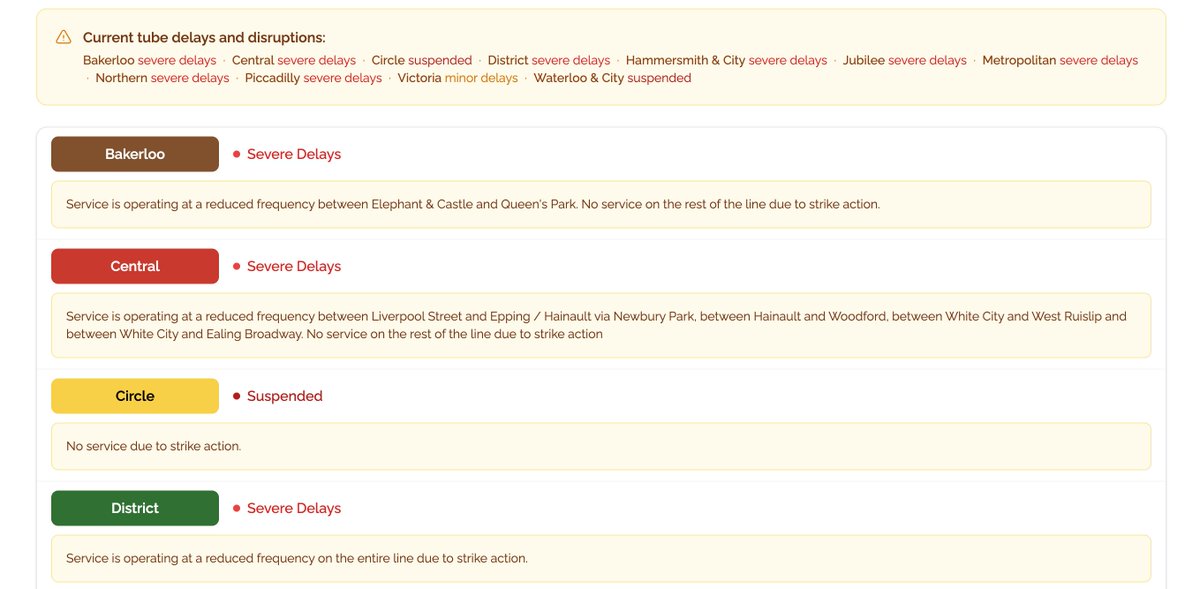
In 2023, TfL was given powers to require 40% service during strikes. Similar systems exist in France, Germany, Italy, Spain, Portugal, Switzerland and elsewhere. (In New York, transit strikes are simply banned.) The current Government abolished these powers upon coming to office. Londoners should remember that this week's transport chaos flows from a political choice, and could easily have been mitigated by following normal international practice.
Samuel Hughes tweet media
English
20
166
809
81.1K
Tim Dier retweetledi
Object Zero
Object Zero@Object_Zero_·
This interview cleanly splits the man in the arena from the armchair folks. The theorists v's the empiricists mindset. First person v's third person. To me, Jensen is correct, and this is self-evident. Currently the US has a global monopoly on GPU frameworks, obviously Jensen cannot say the "M" word., but come on now. The China export ban is well intentioned, and the arguments supporting it are all about good intentions. But intentions are not outcomes. In the West in recent years we have overvalued good intentions and undervalued good outcomes, it seems both sides of the political aisle suffer this challenge. In a democracy good intentions will lead you to the most simplistic and easy to communicate solutions, but in the real world, these solutions die alone in a ditch. The real world has teeth and malevolence, getting good outcomes is complicated and hard. By crippling Nvidia's market access, the US leaves a lot of Nvidia development capital stranded/truncated in SOTA offerings and diverts revenue (AKA development capital) into other players. The stranded capital (via reduced returns) limits how aggressively Jensen ought to allocate capital to development going forward (although he cannot say this, he will say "we going at 100.00%", but he isn't going to allocated $500bn for a $505bn return, he will clip devex to his TAM). So it seems like the chip market is going to go through some machinations, because Nvidia has been put in "hard mode" and Nvidia has it all to lose. A victim of their own success. Jenson's five layer cake blog post (which he mentions) is also a good way to think about the AI industry, no surprise as he has thought about it as much as anyone. It's helpful to talk about it in these terms. 1. Application layer 2. Models 3. Infrastructure 4. Chips 5. Energy It's not that this whole stack is new, the thing that was missing here for so long was the chips and the models, NVidia solved the chips about a decade ago and OpenAI solved the models about five years ago. Energy, infra, and apps already existed. But now the stack is complete and it works. So where will the winner be? In the scenario where there is infinite supply of all things, value will naturally accrete to the top of the stack, as this is where the cashflow enters (cash is sticky), but infinite supply is an unphysical world. In the real world there are always bottlenecks limiting the bandwidth through the stack, revenue and capital will naturally flow to wherever the bottleneck is. In the old internet, the bottleneck was always the app layer. Old deterministic computers barely used any energy, chips, or infra at all, obviously some but small in the big scheme. The bottleneck was always the screen and the real estate on the screen. It was the interface with the human that was the bottleneck. With AI the screens are gone. You don't need to interface with a human (you can, and some still will, but it's not necessary). Value will now increasingly shift to flow through network ports and not screens. This fundamentally changes everything in tech. E.V.E.R.Y.T.H.I.N.G. Big revenue is starting to pipe into a completely different part of the technology stack, APIs revenue will totally dominate screen revenue, it's just a much faster interface. What does that mean for the likes of Meta? Apple? I personally believe the economy is going to shift back from being consumer focused, to being industry focused. The consumer era was broadly 1980-2030, this was a nice era, but I think it's ending. There era where the most advanced technology in the world was in the pockets of teenagers was probably a blip. I enjoyed it, but I think its ending. With the slow human interface avoided, suddenly the bottleneck has jumped further upstream in the stack closer to the base. Back into the depths of industry. But what is also going to happen is that the application layer is going to become physical, it's going to break the fourth wall with robotics and automation, maybe not as quickly as some think, but it's coming. The physical nature of the application layer, the embodiment of AI, is going to balloon the demands on infrastructure and energy. Which means this is very much a two part industrial revolution: Part 1: Intelligence, the automation of knowledge work Part 2: Embodiment, the automation of labour Part 1 is going to be (is today) bottlenecked by chips and models, Part 2 is going to be bottlenecked by infra and energy. Caveat emptor, I make a lot of claims here. Some of them will be wrong.
Dwarkesh Patel@dwarkesh_sp

The Jensen Huang episode. 0:00:00 – Is Nvidia’s biggest moat its grip on scarce supply chains? 0:16:25 – Will TPUs break Nvidia’s hold on AI compute? 0:41:06 – Why doesn’t Nvidia become a hyperscaler? 0:57:36 – Should we be selling AI chips to China? 1:35:06 – Why doesn’t Nvidia make multiple different chip architectures? Look up Dwarkesh Podcast on YouTube, Apple Podcasts, Spotify, etc. Enjoy!

English
27
76
620
75.4K
Tim Dier retweetledi
Katie Lam
Katie Lam@Katie_Lam_MP·
Lying in order to gain entry to the UK is a crime. If activist lawyers, or charities, are encouraging migrants to lie to the authorities, they are aiding criminal behaviour. Any lawyer who behaves like this should be struck off and prosecuted. It's as simple as that.
Katie Lam tweet media
English
184
803
2.8K
30.4K
Tim Dier retweetledi
Institute of Economic Affairs
🇬🇧 Brits think we rank 7th among US states for income. We actually rank 51st. Dead last. Below Mississippi. "Shock, embarrassment and anger." @matthewlesh 👇
English
19
81
288
21.2K
Tim Dier
Tim Dier@TimDier·
Our political class needs to learn how financial market traders are held accountable, and emulate it. @PolemicTMM sets out how it works in investment banking.
Polemic Paine@PolemicTMM

Today's post - polemicpaine.substack.com/p/reversals-wi… Politics still rewards doubling down. How to build real incentives for admitting & fixing mistakes. Politicians who destroyed nuclear policy and North Sea drilling now reverse with zero consequence. The core failure - No incentives for error correction. Losses socialised, careers protected. Investment banking fixed this - stop-losses, clawbacks, real P&L, risk committees that force fast cuts when wrong.

English
0
0
0
59
Tim Dier retweetledi
Nick Timothy MP
Nick Timothy MP@NJ_Timothy·
You said you'd limit spending increases to £9.5 billion a year. But you've already increased spending 15 times faster, by £146 billion. Hence the tax rises. Hence the stagnation. You lied, and you've failed. x.com/RachelReevesMP…
Rachel Reeves@RachelReevesMP

Minimum wage rising 📈 State pension increasing 💷 Two child limit abolished 🏡 Child poverty falling 📉 Rights at work strengthened 💪🏻 Labour promised change. We are delivering change. theguardian.com/commentisfree/…

English
137
2.2K
10.7K
163.1K
Tim Dier
Tim Dier@TimDier·
"The characteristic of the modern State is that those who appear to govern do not in fact govern. They are constrained by forces which they do not name, which they rarely understand, and which they cannot openly oppose. The result is that public men become timid. They avoid plain speech. They fear exposure more than injustice, and loss of position more than loss of honor. In such a condition courage disappears first, and freedom follows it." - Hilaire Belloc
English
0
1
1
46