Martin

342 posts

Martin banner
Martin

Martin

@Unpopular_Tech

Systems engineer. I post the tech thing the launch crowd skips. Often unpopular, usually unfashionable, sometimes right.

Austin, TX" Katılım Aralık 2012
377 Takip Edilen103 Takipçiler
Sabitlenmiş Tweet
Martin
Martin@Unpopular_Tech·
I post the tech thing the launch crowd skips. Expect: —UX critiques after the honeymoon period ends — screenshots of scaled failures nobody documented — workflow analysis on tools that looked clean in the demo — incentive breakdowns behind product decisions that don't add up This week: why the most-praised developer tool of 2024 is quietly being pulled from production stacks.
English
0
0
2
66
Martin
Martin@Unpopular_Tech·
@aakashgupta "the bar shifted, the format mostly didn't" that's the accurate part the rest of the post is a funnel to a mock interview product worth separating the observation from what it's attached to the insight is real the packaging has a conversion goal
English
0
0
0
9
Aakash Gupta
Aakash Gupta@aakashgupta·
I've been telling PM candidates this for months: AI product sense is no longer a niche round. 12 months ago it was. Today it's in nearly every top-paying PM interview process. The candidates who think they're prepping for "product sense" the old way are walking into a round that's been redesigned underneath them. Here's the part most miss. It's not just companies with a dedicated AI round running this evaluation. Even at companies still using traditional product sense interviews, AI fluency is now embedded in how the standard cases get scored. You can be answering what looks like a classic "design a product for X" prompt and be quietly failing because your reasoning doesn't show AI fluency. The bar shifted. The interview format mostly didn't. That gap is where candidates lose offers they expected to get. Ankit Virmani just landed AI PM offers at Uber, Atlassian, and Cisco. In the mock we recorded, he ran a full case showing three tiers of how candidates handle these rounds. The floor answer. The median answer. The 9/10 answer that actually wins offers. The delta between the median and the 9/10 has very little to do with product instincts. It comes from how naturally the candidate reasons in AI primitives. Where the model fits in the workflow. What the model can and can't do reliably. How it changes the product surface itself. Most candidates I've coached treat AI as a feature to bolt on. The candidates getting offers treat it as a default substrate that changes how the product gets designed from the start. That's the gap the mock makes visible. If you're prepping for a top PM role right now and your case practice still looks like 2023, the round is going to feel harder than you expected. Not because the questions changed. Because the scoring did.
Aakash Gupta@aakashgupta

AI PM interviews are now testing "AI product sense." So I recorded a mock to demystify what it is with Ankit Virmani, who just nabbed AI PM offers at Uber, Atlassian, and Cisco. 6:59 3 tiers running it 12:04 Live mock 52:30 9/10 breakdown

English
2
1
9
5.4K
Martin
Martin@Unpopular_Tech·
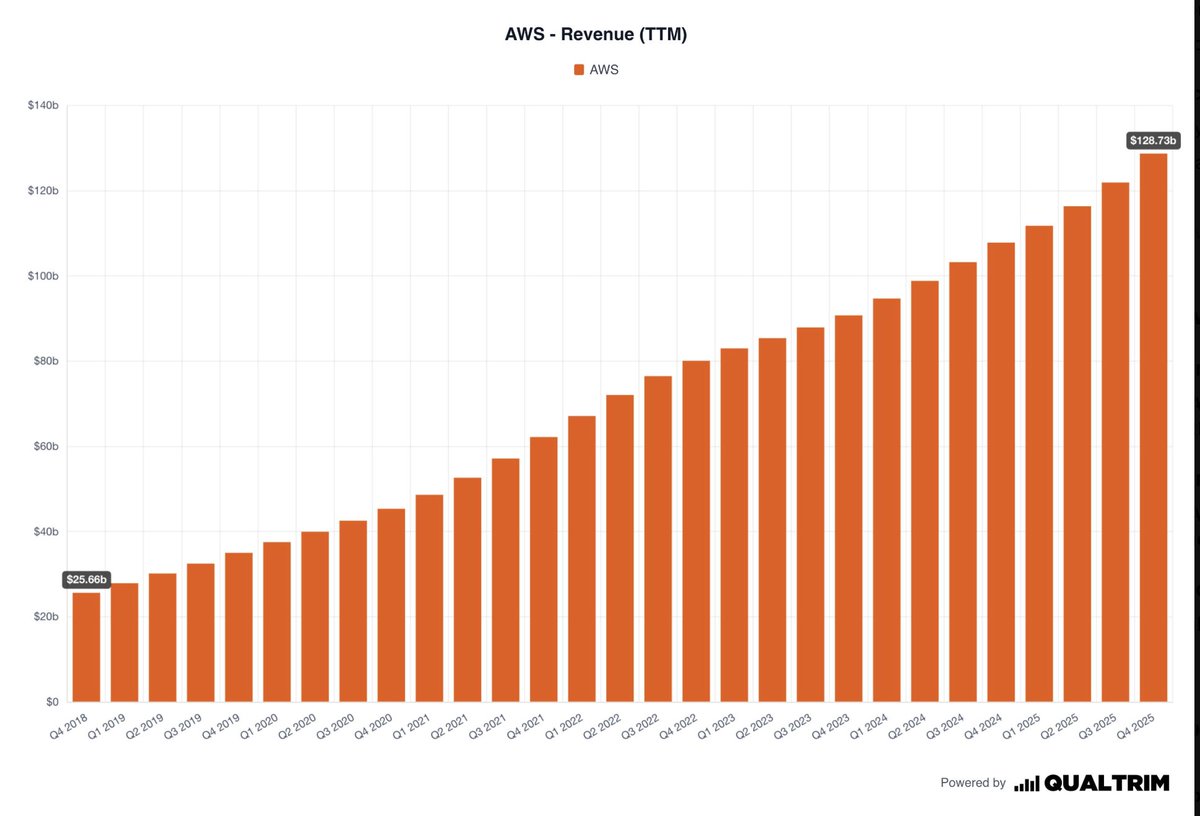
the flywheel description is accurate the part worth watching is what happens to each layer when AI starts unbundling the behavior that holds it together if product searches stop starting on Amazon because an agent is doing the searching, the advertising margin and the Prime stickiness are attached to a habit that may not survive the interface change the moat is real the assumption underneath it is worth pressure testing
English
1
0
1
85
FluentInQuality
FluentInQuality@FluentInQuality·
$AMZN has a wide moat. But it's not one moat. Retail: —> Largest retailer in the world by GMV: $800B+ in 2024 —> 60% of goods sold through third-party marketplace —> Negative cash conversion cycle — gets paid before it pays suppliers —> Product searches start on Amazon more often than Google —> Prime at $139/year locks in the stickiest consumer base in retail AWS: —> 15–20% of revenue. Majority of total operating profit. —> Switching costs so brutal that core cloud providers are almost never changed —> Pioneer advantage with a lead Microsoft has spent a decade trying to close —> Data egress fees create a structural lock-in on top of integration costs Advertising: —> Likely the highest operating margin segment in the entire portfolio: 30%+ —> Proprietary data on hundreds of millions of users at the exact moment of purchase intent —> Growing rapidly as an alternative to Google and Meta ad spend Prime drives retail. Retail drives advertising. Advertising funds AWS investment. AWS funds everything else. The wide moat for $AMZN is greater than the sum of its parts.
English
3
1
45
3K
Martin
Martin@Unpopular_Tech·
250 companies just got an AI vendor decision made above them the interesting part isn't the $1.5B it's what happens to the workflows inside those companies when the tool was chosen by the owner not the operator top down AI adoption has a different failure mode than bottom up and it's usually quieter
English
0
0
0
4
George Pu
George Pu@TheGeorgePu·
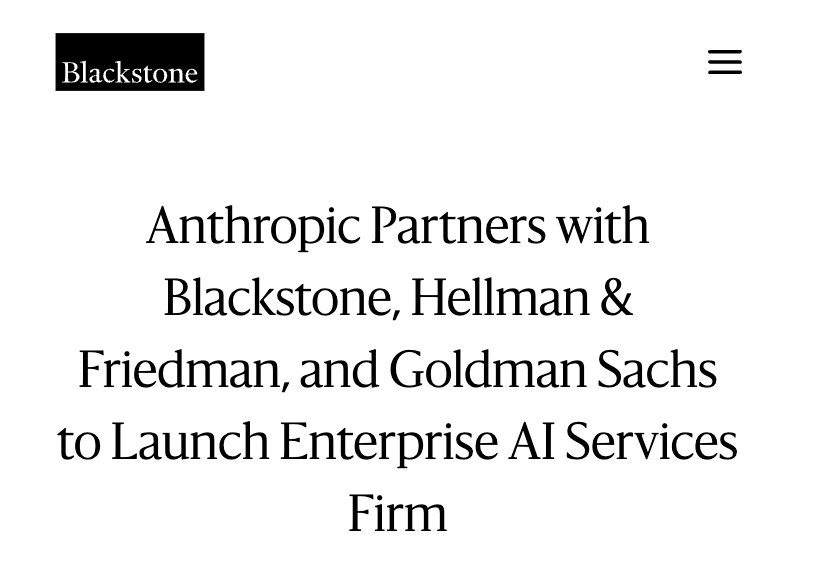
Blackstone manages $1.3 trillion and 250+ companies. Today they co-founded a $1.5B venture with Anthropic. To deploy Claude across the portfolio. The portfolio companies didn't get a vote. Their owner picked their AI.
George Pu tweet media
English
4
3
21
1.2K
Martin
Martin@Unpopular_Tech·
"Man Group describing banks as starting to choke on the size of these deals is not language that ends up in print by accident" that's the sentence worth sitting with the AI infrastructure buildout has been a demand story for two years this is the first time the financing architecture is showing up as the constraint the workflow that breaks next might not be in the data center it might be in the loan book that funded it
English
1
0
2
292
Hedgie
Hedgie@HedgieMarkets·
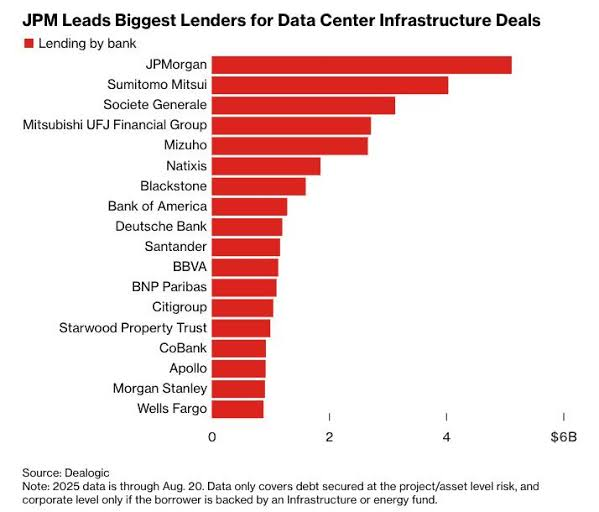
🦔Banks including JPMorgan, Morgan Stanley, MUFG, and SMBC are shopping ways to offload data center debt exposure, with lenders spending more than six months trying to distribute $38 billion of construction debt tied to a single Oracle-leased project in Texas and Wisconsin. Some banks have sold portions to non-bank lenders at a discount. The structures being explored include modified significant risk transfers, where banks slice individual concentrated loans rather than pooling dozens of smaller ones, with deals in the $500 million range backed by a single borrower already in market. Maine passed a statewide data center moratorium in April, adding regulatory risk to projects that already carry construction risk and heavy concentration among a handful of operators. My Take Banks selling loans at a discount to clear them off the books shows how tight things have gotten internally, because JPMorgan does not spend six months shopping $38 billion in construction debt unless risk limits are getting hit and the only way to keep originating new loans into the AI buildout is to make room first. Man Group describing banks as starting to choke on the size of these deals is not language that ends up in print by accident. A traditional SRT spreads risk across dozens of loans so no single default sinks the trade, while what is being shopped now is closer to a single-borrower SRT with investors taking the riskiest tranche of one concentrated loan to one operator carrying significant construction risk and one or two anchor tenants. That looks closer to the bespoke single-name structures that showed up before 2008 than to the diversified portfolio transfers Europeans have used for years, and my question is what happens when the AI capex cycle slows and you are left with half-built data centers in secondary markets tied to operators whose business models depend on frontier model spending continuing forever. The banks are doing what rational risk managers should do, and the fact that they need to is what should be getting attention. Hedgie🤗
Hedgie tweet media
English
29
140
440
33.6K
Martin
Martin@Unpopular_Tech·
@DavidOndrej1 @kilocode the tools that survived are the ones the labs didn't need to buy worth understanding why Kilo specifically wasn't absorbed that's usually more informative than the consolidation list itself
English
0
0
0
67
David Ondrej
David Ondrej@DavidOndrej1·
12 months. Almost every major AI coding tool got bought, shut down, or absorbed by a model lab. @kilocode is one of the last ones standing. Here's what's actually happening to the AI coding market 🧵
David Ondrej tweet media
English
6
1
21
2.8K
Martin
Martin@Unpopular_Tech·
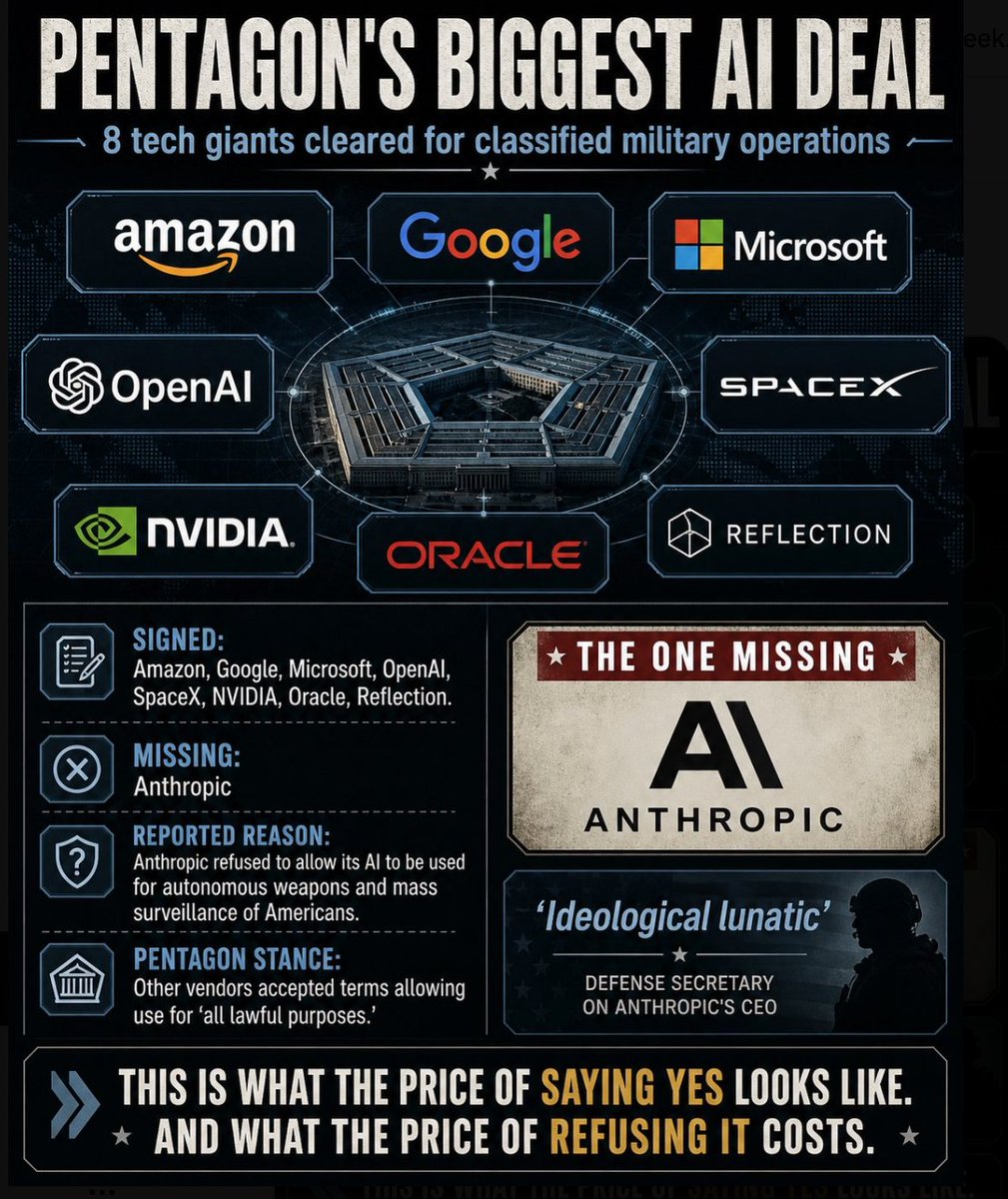
The Pentagon cut Anthropic out of its AI deals this week. The NSA is reportedly using Anthropic's unreleased Mythos model anyway. The public designation and the classified deployment are happening simultaneously. That is not hypocrisy. That is the government running two parallel procurement tracks one for optics, one for capability. The interesting systems question is what happens to the companies that signed the official deal when the agency that actually needs the best model quietly uses the one that was blacklisted.
Martin tweet media
English
0
0
0
11
Martin
Martin@Unpopular_Tech·
@ThePentagon labeled Anthropic a "supply chain risk" a designation previously used only for companies linked to foreign adversaries. The reason: @AnthropicAI refused to allow @Claude to be used for autonomous weapons and mass surveillance. Disagreeing on ethics terms is not a supply chain problem. Calling it one is a classification decision with real consequences it effectively blacklists a company from government work using infrastructure language to describe a policy dispute. Source: CNN, Breaking Defense , Pentagon AI deals
English
0
0
0
11
Martin
Martin@Unpopular_Tech·
@vasuman the gap between "we use AI" and "we configured it for how we actually work" is where most enterprise deployments stall the tool ships the process doesn't change and six months later someone says AI didn't deliver it usually did nobody stress tested the integration
English
1
0
0
121
vas
vas@vasuman·
There is no AI enabled services AI is services Every situation is unique You could release AGI tomorrow and most enterprise companies would not change whatsoever Generalist SaaS is useless unless configured properly to its opponent VCs who did not realize this a year ago are going to scramble You do not understand AI simply by using it for your every day tasks You understand AI by studying and experimenting, pushing the boundaries and pressure testing unique business cases Most don't do this then wonder why their experiences don't match those at the frontier
English
25
7
79
6.6K
Martin
Martin@Unpopular_Tech·
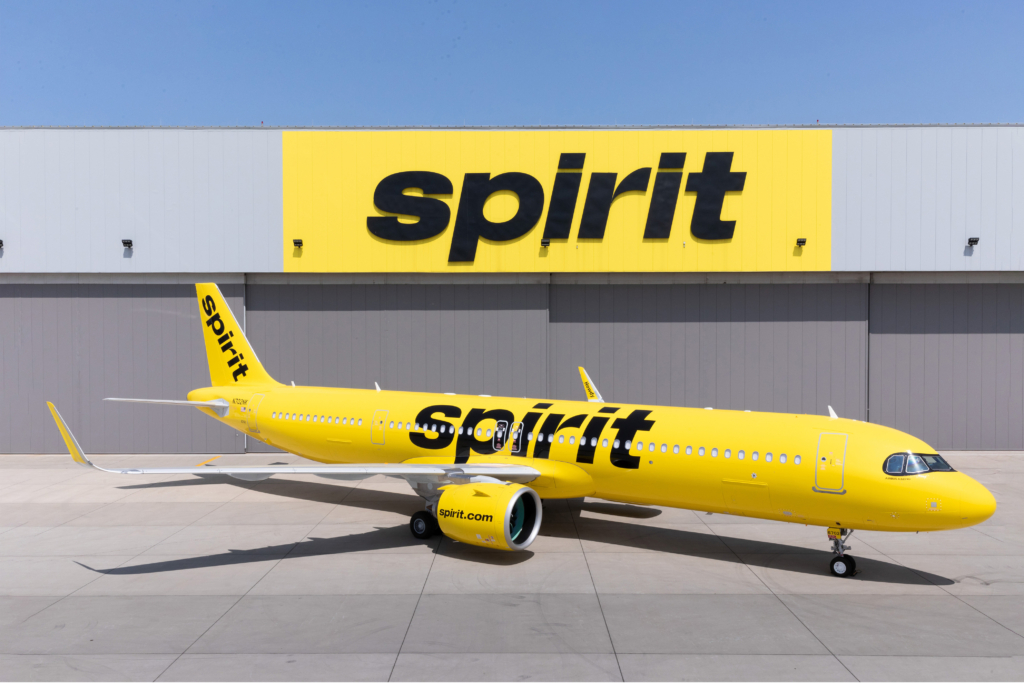
@BullTheoryio the bondholders didn't kill Spirit they just didn't believe $500 million fixes a carrier that filed bankruptcy twice in a year with doubled fuel costs the government was buying time, not a business the math was never there
English
2
1
12
863
Bull Theory
Bull Theory@BullTheoryio·
BREAKING: Spirit Airlines is shutting down. The $500 million government rescue deal has officially fallen apart. The discount carrier ran out of cash and could not get enough support from bondholders to finalize the government bailout. This is the first major US airline to cease operations in decades. Spirit had already filed for bankruptcy twice in less than a year. The Iran war doubled jet fuel costs and delivered the final blow. Spirit operated 19,575 flights last May. Trump had personally offered to bail out or buy the airline, saying "I'd love to be able to save those jobs." The government proposed lending Spirit $500 million in exchange for 90% ownership of the company. Bondholders refused to sign off and the deal collapsed.
Bull Theory tweet mediaBull Theory tweet media
English
28
74
419
36.4K
Martin
Martin@Unpopular_Tech·
@levie this matches what I see too enterprises aren't asking "how do we replace headcount" they're asking "why does this process take three weeks" the replacement conversation is mostly happening in the buildings that never had to run the process themselves
English
0
0
0
91
Aaron Levie
Aaron Levie@levie·
When I talk to enterprises outside of Silicon Valley, most of the use-cases they have in mind with AI are to augment and accelerate how they work, simply because of how much more they can do right now. Most companies are not satisfied with how much they’re doing, and they’re always constrained by some bottleneck. So they’re looking at processes that are slow and inefficient and wondering if AI can make it so they can ship more product, speed up customer onboarding, better resolve customer issues, more comprehensively understand their customers, and more. They’re also bringing intelligence to work that would have never been possible to do before. Tech jobs got concentrated in valley and the tech industry, and enterprises or SMBs have not been able to build the products or bring automation to most areas of work. AI lets them do so now. This will be true of many other fields. And in the areas where there may be some cost cutting, usually that’s in service of funding another area of growth, or it’s temporary. AI cost cutting quickly gets eroded when your competition uses AI to better serve the customer and compete more effectively.
Sam Altman@sama

we want to build tools to augment and elevate people, not entities to replace them.

English
45
22
270
48K
Martin
Martin@Unpopular_Tech·
@kimmonismus "how do we ensure a good life for everyone" is the right question the problem is it's being asked after the infrastructure that would answer it was already skipped the social layer was never in the architecture
English
0
0
2
276
Chubby♨️
Chubby♨️@kimmonismus·
I think Sam Altman's point is quite accurate in this respect. There will be disruption, social changes brought about by AI, and this isn't being discussed enough. It's something I'd like to research further. The social transformation is already underway. The question is how (!) we can ensure and guarantee a good life for everyone.
Sam Altman@sama

i think a lot of people are going to be busier (and hopefully more fulfilled) than ever, and jobs doomerism is likely long-term wrong. though of course there will be disruption/significant transition as we switch to new jobs, the jobs of the future may look v different, etc.

English
28
19
313
27K
Martin
Martin@Unpopular_Tech·
@Pirat_Nation "would need to create separate versions of the app just for New Mexico" that's not a technical limitation that's a feature flag and a geo filter systems that can target you with ads by zip code can verify your age by zip code
English
0
0
2
1.3K
Pirat_Nation 🔴
Pirat_Nation 🔴@Pirat_Nation·
Meta says it may have to shut down Facebook, Instagram, and WhatsApp for everyone in New Mexico. The company issued this warning in a court document as part of an ongoing lawsuit that New Mexico started in 2023. The state claims Meta let kids see harmful and addictive content, including messages from predators, and did not tell families the truth about the risks. In March 2026, a jury agreed with the state and ordered Meta to pay a $375 million fine. The state now wants major changes including: -stronger age verification checks -safety-first content suggestions -private accounts by default for kids -easier ways to report and block users. Meta says these rules are too difficult and too expensive and would need to create separate versions of its apps just for New Mexico The company adds that it does not want to shut down service in the state but may have no other choice if the court orders full compliance. New Mexico Attorney General Raúl Torrez called the warning a pressure tactic. He said the real issue is protecting children, not company profits.
Pirat_Nation 🔴 tweet media
English
123
127
1K
62.7K
Martin
Martin@Unpopular_Tech·
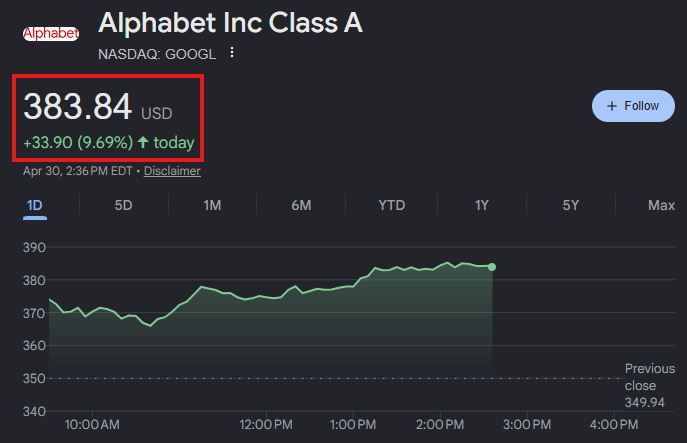
Google just posted its largest single day market cap gain in history, $420 billion added in one session. The metric Sundar Pichai led with: search queries at an all time high. The metric missing from the earnings post: AI Overviews have reduced click-through rates by up to 58% for top-ranking pages according to Ahrefs data across 300,000 keywords. More queries is not the same as more value delivered. The query count and the publisher ecosystem are telling completely different stories right now. Source: Google Q1 2026 earnings + Ahrefs AI Overviews CTR study + searchenginejournal.com
English
0
0
0
23
Martin
Martin@Unpopular_Tech·
Anthropic and Cursor both shipped AI security review products today. Two hours apart. When the response time between competing launches is two hours, the product was already built. The launch timing was the only decision left. That is not competition. That is two companies watching the same market signal and hitting publish in the same window. The security problem is real. The race to own the review layer was already decided before today. Source: Anthropic Claude Security launch + Cursor Security Review announcement
English
0
0
0
16
Martin
Martin@Unpopular_Tech·
Two competing security review tools shipping within hours of each other is not a coincidence. It's a race to own the layer between the model and the codebase. The harness argument is correct, whoever controls the context, rules, and review pipeline has more durable pricing power than whoever trained the underlying model. The model is the commodity. The harness is the moat.
English
0
0
1
134
Ejaaz
Ejaaz@cryptopunk7213·
lol cursor immediately punching back at anthropic with their own AI security harness > custom AI model harness that detects and suggests patches for security vulnerabilities > announced 2 hours after anthropic launched claude security review > cursor harness has more customisability vs claude security. yesterday cursor exposed their proprietary ai harness as an SDK that turns every model into a 10X better version of itself. today that did the exact same but with ai security the harness is quickly becoming as important as the model itself.
Cursor@cursor_ai

Cursor Security Review is now available for Teams and Enterprise plans. Run two types of always-on agents: 1. Security Reviewer checks every PR for vulnerabilities and leaves comments. 2. Vulnerability Scanner runs scheduled scans of your codebase and posts findings in Slack.

English
21
8
247
37.5K
Martin
Martin@Unpopular_Tech·
The false positive problem is real and the benchmark numbers are credible. the leap from "Anthropic's architecture starts at the model" to "everyone else is obsolete" is where the post loses me. cutting 91% noise in a controlled benchmark and cutting 91% noise across a messy enterprise codebase with custom rules, legacy integrations, and compliance requirements are two different problems. the OX benchmark tells you it works in the lab. production is the test that matters.
English
0
0
2
275
Aakash Gupta
Aakash Gupta@aakashgupta·
Anthropic just shipped a security product that does what every engineer has wanted for 20 years: stop sending you 864,603 false alarms a year. The OX Security 2026 benchmark ran the math across 216 million findings at 250 organizations. The average enterprise pulls 865,398 security alerts annually. 795 are real. 91% of SAST findings are false positives. After 15 of their first 20 alerts come back as garbage, engineers stop investigating. A 10-developer team burns 24 hours a week on noise. Real CVEs sit underneath the alarms for months. This is the wound the entire AppSec industry has been bleeding from for two decades, and the valuations show it. Snyk peaked at $8.5B in 2021. BlackRock has it marked at $3.7B. A PE firm offered under $3B this year and got rejected. Synopsys sold its Software Integrity Group for $2.1B last October. Veracode went for $2.5B in 2022. Checkmarx is shopping itself at $2.5B with no taker. Snyk's growth decelerated to 12% last quarter while Palo Alto printed 16% and CrowdStrike printed 21%. Every legacy vendor has been trying to fix this with bolted-on AI for three years. Snyk DeepCode. GitLab Advanced SAST. Datadog Bits AI. IBM watsonx. Each wraps an LLM around the same rules engine that produced the noise. Now read the Anthropic line: "validates each finding to cut false positives, and suggests patches you can review and approve." Anthropic's architecture starts at the model. Everyone else started at the rules engine and tried to bolt context on top. If the validation layer trims 91% noise to something engineers will actually clear, the buyer stops paying for detection. Detection became a commodity years ago. Triage carries the pricing power now. The valuations were already catching up to the constraint. Today accelerated it.
Claude@claudeai

Claude Security is now in public beta for Claude Enterprise customers. Claude scans your codebase for vulnerabilities, validates each finding to cut false positives, and suggests patches you can review and approve.

English
9
21
176
51.5K
Martin
Martin@Unpopular_Tech·
The capex number is real. No real ROI other than reduced headcount" is doing too much work. Azure grew 40%. Google Cloud grew 63%. AWS is adding $200 billion in infrastructure. Those are revenue numbers, not just cost reduction. The ROI debate is legitimate but it needs a more specific definition of ROI than "headcount saved.
English
0
0
1
152
BonkDaCarnivore
BonkDaCarnivore@BonkDaCarnivore·
AI capex spending has completely gone off the rails. $GOOGL announces they're raising capex for 2026 to 190 billion. $META upped it to 145. Collectively, the big 4 have increased AI capex 77% YoY, still with no real ROI other than reduced headcount. The AI war is out of control
BonkDaCarnivore tweet media
English
7
5
38
2.4K
Martin
Martin@Unpopular_Tech·
Codex launched as a code execution engine. It now does research, planning, docs, slides, and spreadsheets. Every AI product eventually becomes "for everything" because specialization limits the addressable market. The product didn't get better at everything overnight. The positioning changed because the growth curve needed it to.
English
0
0
2
1K
OpenAI
OpenAI@OpenAI·
It's never been easier to do everyday work with Codex. Choose your role, connect the apps you use every day, and try suggested prompts. Codex helps with everything from research and planning to docs, slides, spreadsheets, and more.
English
336
445
5.8K
1.5M
Martin
Martin@Unpopular_Tech·
$420 billion in a single day is a market sentiment story, not a technology story. Google's underlying search business is losing click-through rates to its own AI Overviews. Cloud grew 63% but that growth is partially explained by companies paying to access models that compete with Google's own. The market cap record and the product reality are two different charts right now.
English
2
0
1
2K
The Kobeissi Letter
The Kobeissi Letter@KobeissiLetter·
BREAKING: Alphabet, $GOOGL, has added +$420 billion in market cap today and is now just 6% away from surpassing Nvidia as the world’s most valuable public company. Alphabet is on track to post the largest single-day market cap gain in history.
The Kobeissi Letter tweet media
English
172
491
6.1K
641.3K
Martin
Martin@Unpopular_Tech·
Amazon Quick is Andy Jassy's new AI desktop assistant. It connects to email, calendar, Slack, and local files and surfaces what matters. The demo is the CEO's inbox. The production test is a 50-person ops team with three years of Slack history, two file naming conventions, and no agreement on what "urgent" means. That is where agent prioritization either works or creates a new category of invisible problem. Source: WSJ / Meta internal memo (reported by @negligible_cap)
Martin tweet media
English
0
0
1
32