Vijay K. Yadav (VJ)

894 posts

Vijay K. Yadav (VJ)

Vijay K. Yadav (VJ)

@VijayYadavLab

Scientist investigating the biology of aging

Rutgers University Katılım Eylül 2019
686 Takip Edilen865 Takipçiler
Vijay K. Yadav (VJ) retweetledi
Toru Takumi
Toru Takumi@ToruTakumi·
Happy to share my students’ study @CellReports Parvalbumin interneurons in the insular cortex control social familiarity and emotion recognition: Cell Reports cell.com/cell-reports/f…
English
1
17
78
6.9K
Vijay K. Yadav (VJ)
Vijay K. Yadav (VJ)@VijayYadavLab·
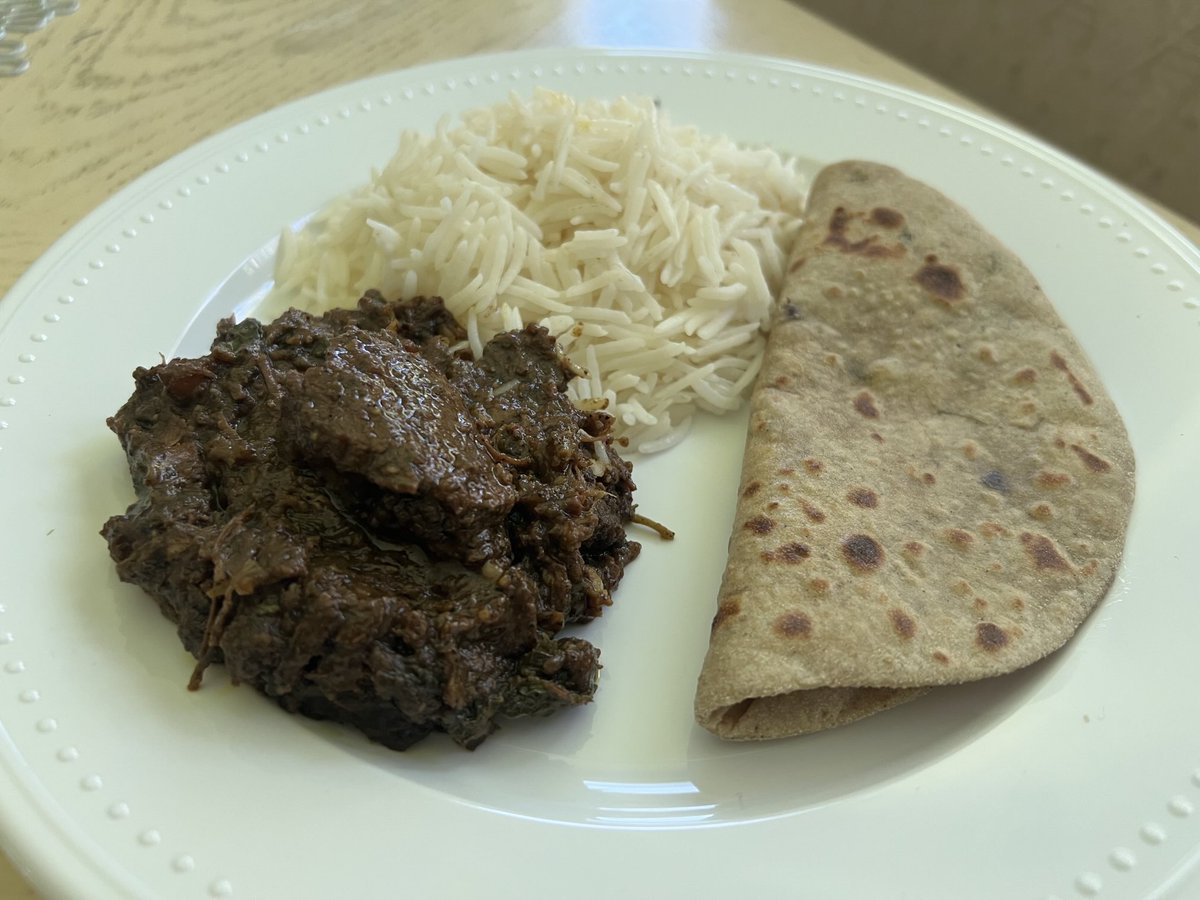
Tried my hands on making, in a healthy way, Bhuna Gosht (Goat meat) for Saturday dinner. My son enjoyed it with rice and home made roti and said it is the best meat he has ever had, which made up for all the efforts!!
Vijay K. Yadav (VJ) tweet media
English
0
0
6
397
Vijay K. Yadav (VJ)
Vijay K. Yadav (VJ)@VijayYadavLab·
@LabSpiegelman Rest in peace. Dave was a wonderful scientist, always ready to provide his scientific insights with amazing historical background.
English
0
0
1
619
Vijay K. Yadav (VJ) retweetledi
Rutgers Health
Rutgers Health@rutgershealth·
A Rutgers study finds people use 100+ chemicals daily through personal care products, some linked to cancer & hormone disruption. The good news? Safer choices = lower exposure. Learn how to reduce your risk: go.rutgers.edu/6dsa4amg
English
0
1
1
172
Vijay K. Yadav (VJ)
Vijay K. Yadav (VJ)@VijayYadavLab·
@MissLadyLee Taurine supplementation makes animals live longer (worms, mice) and healthier (worms, mice, monkeys), and conversely if you make animals taurine-deficient they have poor health and have 40% shorter lifespan. For details putting the setudies in context see: x.com/VijayYadavLab/…
Vijay K. Yadav (VJ)@VijayYadavLab

A reccent important study in the area of taurine biology by De Cabo's group provides new insight into changes in blood taurine levels in humans. In response to requests and tags I thought I will provide my point of view. @NirBarzilaiMD @davidasinclair @EricTopol @mkaeberlein

English
0
0
0
15
Lady Lee
Lady Lee@MissLadyLee·
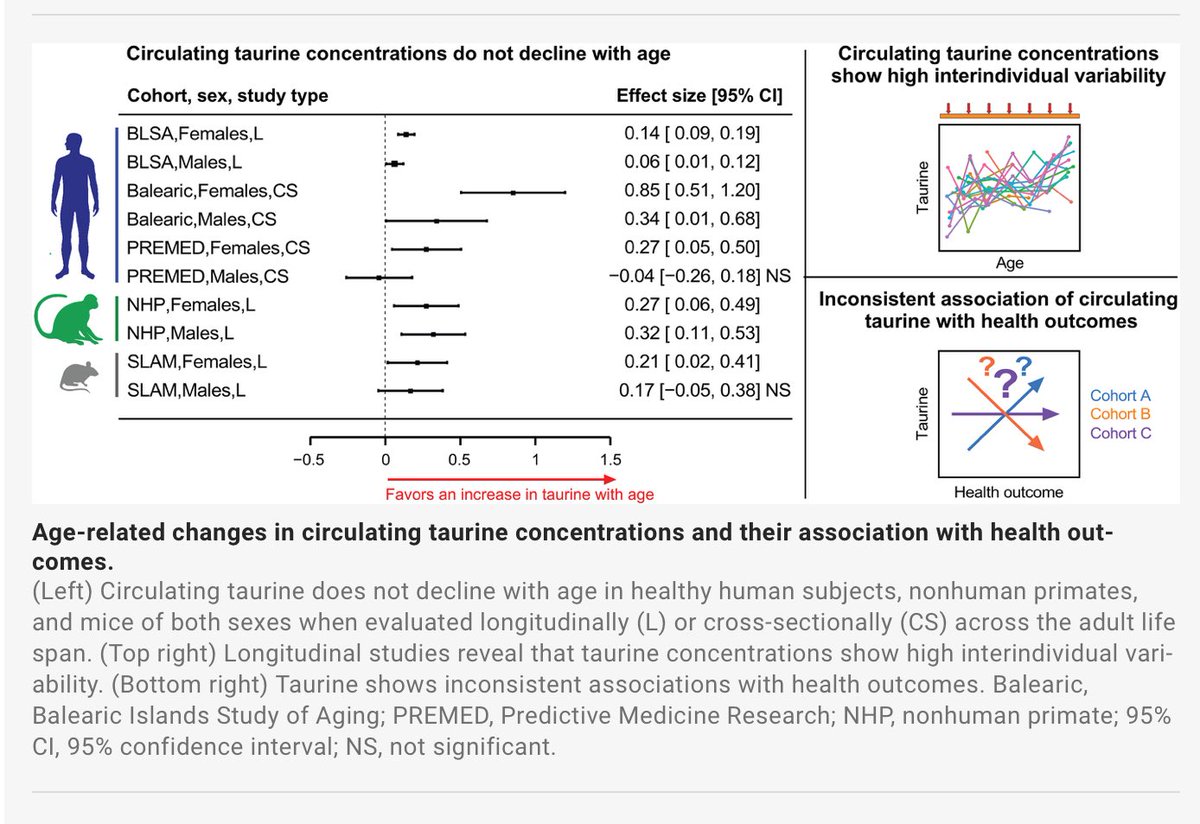
More from Chat GPT. So I think the news outlets made broad claims. I’m continuing with my new supplement regime. Here’s a clearer and more detailed breakdown of the study’s scope and findings across all groups: ⸻ Study Overview: Scope & Populations The NIH/NIA-led study “Is taurine an aging biomarker?” analyzed both longitudinal and cross-sectional data from: •Humans •Baltimore Longitudinal Study of Aging: 26–100 years, longitudinal •Balearic Islands Study: 20–85 years, cross-sectional •Predictive Medicine Research cohort (Atlanta): 20–68 years, cross-sectional •Non-human primates •Rhesus macaques: 3–32 years, longitudinal •Mice •Mice aged 9–27 months (adolescence to old age), longitudinal and cross-sectional ⸻ Taurine Trajectories by Group •Overall trend: Taurine levels either remained stable or increased with age across most species and cohorts . •Exceptions: •Male mice: levels held steady (no increase) •Men in the Predictive Medicine cohort: taurine remained constant ⸻ Correlations With Health Metrics Muscle Strength & Body Weight •Examined in all cohorts, but results were inconsistent, varying within and across species . •Lead authors noted that low motor function was sometimes associated with high or low taurine, or not at all—i.e., no reliable directionality . Did They Measure Other Metrics? The paper also evaluated: •Body weight trajectories – inconsistent associations, similar to muscle strength () •Additional health outcomes: The NIH press release noted that “taurine levels were inconsistently associated with health outcomes across age, species, and cohorts.” •However, no detailed data on other specific functional tests—like bone density, metabolic markers, or cognitive performance—were included in this study’s results. ⸻ Context From Prior Supplementation Studies Although this NIH analysis focused on taurine as a biomarker, separate supplementation studies (especially in mice and monkeys) documented benefits in areas such as: •Body composition: suppression of age-related weight gain and fat mass in mice •Bone health: higher bone density in mice and monkeys () •Metabolic health: lower glucose and improved metabolic markers in mice and monkeys •Immune, oxidative stress, regeneration: improved immune profiles, reduced ROS, enhanced muscle regeneration in mice & primates But it’s important to note: these were supplementation intervention studies, not observational biomarker analyses as in the NIH/NIA paper. ⸻ Summary 1.Populations studied: Diverse datasets—multiple human cohorts, rhesus monkeys, and mice. 2.Taurine with age: Generally stable or rising across most groups; two exceptions noted (male mice, men in one cohort). 3.Health metric associations: Muscle strength and body weight correlations were weak and inconsistent. The study did not report detailed associations with other outcomes. 4.Supplementation insights: While separate trials show potential benefits in bone, metabolism, muscle, etc., these were not part of the biomarker-focused analysis. ⸻ If you’d like, I can dive deeper into specific cohorts or health variables—just let me know
English
1
0
0
30
Vijay K. Yadav (VJ)
Vijay K. Yadav (VJ)@VijayYadavLab·
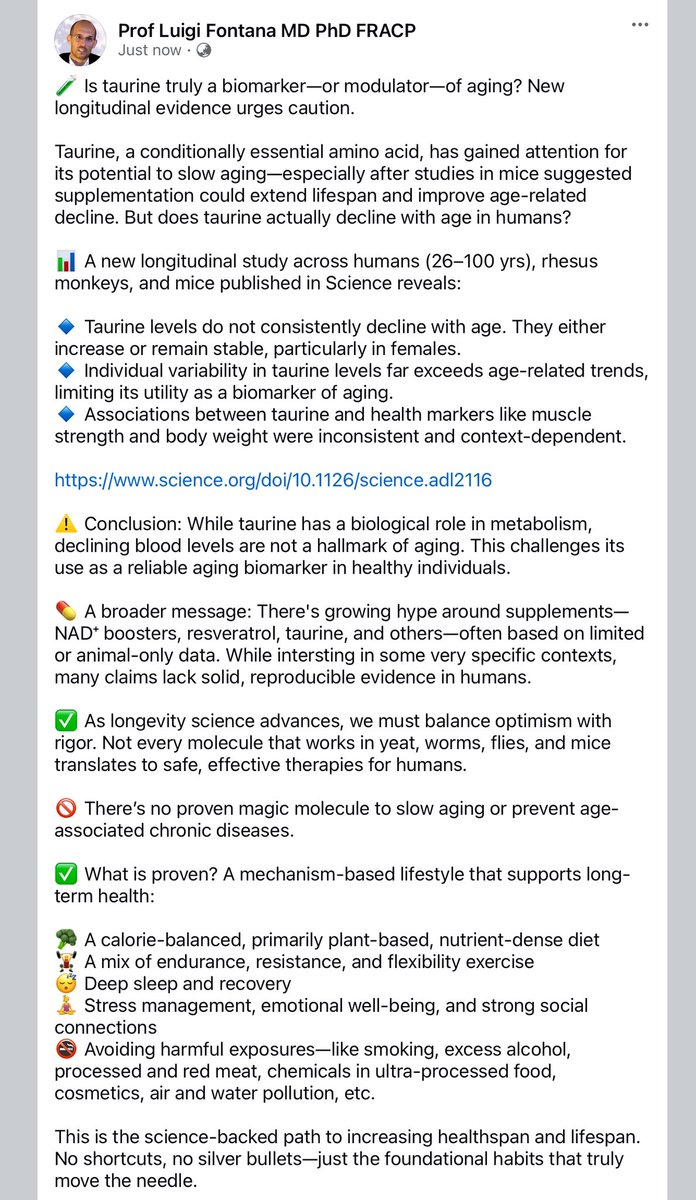
@LuigiFontanaMD Dr. Fontana- Science of taurine is more complex, I am learning as I dig deeper into the role of taurine deficiency as a driver of aging. I provide more details in my post and put this study in context. Please read if you get a chance. x.com/VijayYadavLab/…
Vijay K. Yadav (VJ)@VijayYadavLab

A reccent important study in the area of taurine biology by De Cabo's group provides new insight into changes in blood taurine levels in humans. In response to requests and tags I thought I will provide my point of view. @NirBarzilaiMD @davidasinclair @EricTopol @mkaeberlein

English
0
0
2
62