Sabitlenmiş Tweet
World Vision
16.6K posts

World Vision
@WorldVision
We are a Christian relief, development and advocacy organisation, working with the most vulnerable because Jesus is alive in the hardest places to be a child.
Katılım Mart 2008
29.4K Takip Edilen982.4K Takipçiler

Human capital begins early with children.
At the @WorldBankGroup Spring Meetings, momentum grew around water security, early childhood financing and IDA. These are not just development priorities they are foundational investments in learning, health and productivity across generations.
When children are placed at the centre of human capital strategies, outcomes last longer and reach further: stronger education systems, healthier societies, and more resilient economies.
The opportunity now is to keep embedding child‑centred outcomes into financing, country compacts and results turning ambition into lasting impact.
Read the full World Vision reflection on how the Spring Meetings advanced the case for children at the heart of human capital and why it matters. ow.ly/RVnR50YTkU5
#InvestInChildren #HumanCapital #EarlyChildhood #WASH #DevelopmentFinance #PrivateFinance #SustainableFinance #SpringMeetings #RuralDevelopment #GlobalDevelopment #WBGSpringMeetings @IMFNews

English

As global instability grows and aid budgets tighten, the conversation is shifting towards what truly delivers lasting impact. The International Development Association (IDA) is a strategic investment that helps prevent crises before they start by tackling the root causes of fragility and strengthening the systems communities rely on.
At World Vision, we see what this means in practice. One in five children are growing up in fragile and conflict-affected contexts. With sustained, predictable support, there is a real opportunity to build stability, expand access to essential services, and create pathways towards a more secure future.
In this video, Sini Heikkilä shares why IDA matters for our work and why continued support is critical for children worldwide.
Watch, share, and join the conversation on investing in a more stable future for every child. ow.ly/xlTL50YRS8m
English

We're coming to you live from our booth at the Women Deliver 2026 Conference in Melbourne.
This immersive space showcases our child-focused Pacific programming, the ENOUGH global nutrition campaign, and GEDSI-responsive initiatives from across the Asia Pacific region.
Through real-time stories and insights, the booth brings to life the power of localisation and collective action in advancing gender equality, nutrition, and lasting change for children and communities.
@UN_Women @UNICEF @UN
#ENOUGH #WomenDeliver #WD2026 #WomenOnTheFrontlines #GenderEquality


English

Severe Child Malnutrition Surges by 60% in Somalia as Health System Falters - World Vision-supported health facilities across Somalia have recorded a sharp increase in the number of children admitted with severe malnutrition. Between January and March, more than 3,500 children were diagnosed with severe acute malnutrition—marking a 60% rise compared to the same period in 2025, when just over 2,000 cases were reported.
This alarming surge is driven by prolonged drought conditions that continue to devastate communities nationwide. Consecutive failed rainy seasons have severely limited access to food and water, pushing millions into hunger. Children under the age of five remain the most vulnerable, with many now at risk of life-threatening complications linked to acute malnutrition.
Funding cuts to the health and nutrition sector are set to further worsen an already dire situation. More than 250 health facilities have closed, while the nutrition sector has received only 4% of the funding required to sustain life-saving services, leaving millions of vulnerable children at heightened risk.
Kevin Mackey, World Vision Somalia National Director, warns of the escalating crisis:
Somalia is once again approaching the brink of a full-scale hunger crisis with conditions having already preceded the early warning signs seen before the previous famines. We are witnessing a catastrophe unfolding before our eyes. The number of children arriving at our health facilities on the brink of starvation is deeply alarming. The few facilities still operating are overwhelmed and face an uncertain future. If these services shut down, the consequences for children and communities will be unimaginable.
Zerihun Merea- World Vision Somalia Health and Nutrition Advisor:
In the health facilities that we support, we are treating children who are too weak to cry, their bodies shutting down after days without food, mothers are being forced to walk for hours to reach the nearest health facility
If urgent funding is not secured in the coming weeks, more health facilities will close, treatment programmes will collapse and thousands of children who could be saved will instead face preventable deaths
At a time when needs are surging, the dramatic drop in humanitarian funding is leaving responders without resources to save lives. The cost of inaction is catastrophic on children’s lives. Without immediate and sustained support, this crisis will deepen, silently claiming the lives of the most vulnerable.
About World Vision
World Vision is a Christian humanitarian organisation dedicated to working with children, families and their communities to reach their full potential by tackling the root causes of poverty and injustice. World Vision serves all people, regardless of religion, race, ethnicity or gender.
For media inquiries, please contact:
Walter Mawere
World Vision Somalia Communication and Marketing Manager
Walter_mawere@wvi.org
Joyce Kivata
Regional Communications and Public Engagement Manager
Joyce_Kivata@wvi.org
English

Debt is often discussed in numbers. Ratios. Sustainability thresholds.
But what if we asked a different question: sustainable FOR WHOM?
In many countries, rising debt repayments are quietly squeezing the very investments that shape a child’s future education, health, nutrition. These are not abstract trade-offs. They are decisions that show up in classrooms without desks, in overstretched health systems, in opportunities that narrow before they can fully take shape.
In this piece, Dana Buzducea reflects on why debt sustainability, as we define it today, is no longer enough and what it would mean to embed intergenerational fairness at the centre of financing decisions.
At a time when the Financing for Development agenda is under renewed scrutiny, this is a moment to rethink what we measure, what we protect, and ultimately, what we prioritise.
Read the full piece and join the conversation: ow.ly/H92O50YP5zo
@UN @UNICEF
#FinancingForDevelopment #FfD #SustainableDevelopment #GlobalEconomicOutlook #ODA #DebtJustice #SocialSpending #WorldVision #SDGs #GlobalEcon

English

“Water may seem basic, but it is human capital at its best.” - Ajay Banga, President, @WorldBankGroup
At the World Bank Spring Meetings, one message came through clearly: water is rising on the global agenda. With nearly 4 billion people facing water insecurity, we celebrate the World Bank’s commitment to reach 1 billion more people by 2030, including through new country-led Water Compacts.
At the same time, there is growing recognition that children’s well-being more broadly is still not sufficiently prioritised in international development financing and more is needed to sharpen focus on child-centred investments and actions.
Throughout the week, our delegation engaged with the World Bank teams and World Bank Executive Directors and their offices, bringing attention to the needs of children in low- and middle-income countries and helping to connect the dots between policy, financing, and the lived realities of children and communities.
We are encouraged that many leaders across the Bank and delegations acknowledged the deterioration of child well-being and showing interest in taking action. Also, it was encouraging to see the emphasis on building human capital at the Spring Meetings with significant focus on children.
Some of the important opportunities later this year include the next replenishment of the International Development Association (IDA), development of the World Bank Country Partnership Frameworks and the upcoming World Bank Fragility Forum.
The question is now: What actions should be prioritised to ensure global financing delivers for children and communities? Join the conversation.


English

Global economic trends are not neutral, and the costs of adjustment are falling hardest on children, women and girls, and people living in crisis.
At the Ministerial Session 1 on the Global Economic Outlook 2026–2027, Tamara Tutnjevic Gorman spoke on behalf of World Vision International and the @NGOsonFfD .
Rising debt service, high borrowing costs, shrinking fiscal space, and a 23.1% drop in Official Development Assistance in 2025 are forcing many developing countries to deprioritise the very investments that sustain long term development health, education, protection, and resilience.
The human impact is stark:
📉 295 million people are facing acute hunger
👶 4.9 million children die before the age of five from preventable causes
Against this backdrop, there is an urgent call to implement the Sevilla Outcome commitments, including:
• Safeguarding social spending
• Strengthening debt transparency
• Ensuring financing frameworks are sustainable, inclusive, and responsive to growing needs.
Only then can global financing systems support stability, shared prosperity, and sustainable development for this generation and the next.
#FinancingForDevelopment #FfD #SustainableDevelopment #GlobalEconomicOutlook #ODA #DebtJustice #SocialSpending #WorldVision #SDGs #GlobalEcon


English

Digital spaces may hold incredible promise for connection and opportunity, yet too often they still exclude girls. Drawing on girls’ own words, this piece shows why gender‑blind design is failing girls online and calls for collective action to build safer, more inclusive digital spaces.
Let’s champion safer, more inclusive digital environments where every girl can thrive.
ow.ly/1ptK50YNrXf
#DigitalInclusion #GirlsInTech #SaferInternet

English

When we strip trees from farms, children go hungry.
In #Kenya, “clean” fields are fuelling hunger, climate risk and lost livelihoods. Farmer Managed Natural Regeneration or #FMNR, led by @WorldVisionKE, shows another path, one that feeds #children and builds resilience.
As the world observes #EarthDay2026, let us remind ourselves that restoring the planet begins with rethinking the systems that influence daily choices.
Backed by @FAO @UNEP. The science and evidence are clear. Now, policy must catch up.
🌱🧒 Read the op‑ed ⬇️, the forest maker, @rinaudo_tony and Dr. Carol Munini Munyao ⬇️
ow.ly/BFf250Yy4S9
#ChildHunger #ClimateAction #FoodSecurity #Agroforestry #SystemsChange

English

Too often children are the first to lose out when crises escalate, climate shocks and funding shrinks, and remain side-lined in global humanitarian decision-making and #HumanitarianFinancing. 200+ million children will need humanitarian aid in 2026 (@UNICEF). Yet in 2025, child protection & education received just 6.6% of funding (@UNOCHA).
Investing in children works: every $1 delivers up to $10 in returns, making child-centred responses among the smartest and most cost-effective investments we can make.
As @LoraBoll explains, apart from being a moral duty, centring children’s rights, voices and services is essential to building resilient societies.
The need to protect #ChildRights, fund child-focused services, and include children’s voices in decisions is more so now than ever before. We can and must do better.
Read More: ow.ly/TYoI50YK0tn
#HumanitarianReset #HumanitarianAction #ChildrenInCrisis #ChildParticipation #AidEffectiveness #ChildWellbeing

English

This is what progress looks like when no one is watching.
We've been in Venezuela since 2019, reaching the hardest-to-reach areas to make sure no child is left behind. We're committed to be where the need is greatest, and to provide a lifeline to those who feel forgotten.
Through our work in nutrition, WASH, education, and protection, we're not just providing immediate relief. We're building a foundation for sustainable change, alongside our network of partners and volunteers.
Swipe to learn about the impact of our humanitarian response in 2025 and how we're transforming the lives of thousands of children and their families.
#Venezuela #HumanitarianResponse #WorldVision #Hope #ChildProtection


English

As the World Bank Spring Meetings get underway this week, conversations will centre on growth, jobs and productivity. Yet for millions of children, the reality is far more fundamental: they are too sick to learn, too busy fetching water to attend school, or forced to drop out altogether.
These are not just water challenges. They are human capital challenges.
And the implications are systemic. When water is missing, education systems underperform, health systems are overstretched, and productivity is constrained before it even begins. But the reverse is also true. When clean water is within reach, everything changes. Children stay in school. Health improves. Time is restored. Potential is unlocked.
In her latest piece, Parvin Ngala, World Vision’s Global WASH Director, calls for a reset: we are investing in outcomes while overlooking the foundations that make them possible.
546 million children attend schools without water. Nearly 1,000 young children die every day from preventable WASH-related diseases.
This is not just a water issue. It’s a human capital issue.
If we want different results, we need a different starting point.
Water comes first.
Read the full piece and rethink where investment should begin.
👉 Prioritising Water to Unlock Human Capital ow.ly/tLTH50YK0e6
English

No fuel surcharges on this trip! Come and see how child sponsorship changes a community. Join us Wednesday, April 22nd, for a virtual visit to a sponsored community in Honduras! You’ll see how sponsorship has improved a child’s home and school life, including educational support and toilet facilities at school, parenting and nutrition programmes at home and so much more!
Register for free at ow.ly/CoCG50YK62l
English

@Cloutprince01 Thank you for your interest in joining our team! To explore current internship and job openings and learn more about our application process, please visit our careers page at wvi.org/careers.
English

@WorldVision @WorldBankGroup How do I apply for an internship placement at world vision?????
English

As @WorldBankGroup Spring Meetings get underway this week, conversations will centre on growth, jobs, and productivity. Yet for millions of children, the reality is far more fundamental: they are too sick to learn, too busy fetching water to attend school, or forced to drop out altogether.
These are not just water challenges. They are human capital challenges.
And the implications are systemic. When water is missing, education systems underperform, health systems are overstretched, and productivity is constrained before it even begins. But the reverse is also true. When clean water is within reach, everything changes. Children stay in school. Health improves. Time is restored. Potential is unlocked.
In her latest piece, Parvin Ngala, World Vision’s Global WASH Director, calls for a reset: we are investing in outcomes while overlooking the foundations that make them possible.
546 million children attend schools without water. Nearly 1,000 young children die every day from preventable WASH-related diseases.
This is not just a water issue. It’s a human capital issue.
If we want different results, we need a different starting point.
Water comes first.
Read the full piece and rethink where investment should begin.
👉 Prioritising Water to Unlock Human Capital ow.ly/KRI650YK245
@IMFNews

English

They finally got a minute to send us updates from the @WorldBankGroup Spring Meetings! Sini Maria Heikkila, Noriko Shibata, Desmond Avemegah, and the rest of our delegation have been at meetings with WB Executive Directors and representatives to make sure children are on the agenda.
It's been a wonderful opportunity for us to strengthen the focus on children in development financing, policy and delivery, accelerating human capital, and driving more inclusive and sustainable growth.
One highlight was the launch of Water Forward. With almost 1,000 children under five dying every day from diseases linked to unsafe water, sanitation and hygiene, we welcome this new initiative!
World Vision implements WASH (Water, sanitation, and hygiene) programming in more than 50 countries across six regions. We have an extensive global footprint and more than 1,000 technical WASH staff. This makes us one of the largest NGOs supporting Sustainable Development Goal (SDG) 6 (water and sanitation).
Check back again next week, when our delegates share their reflections and takeaways from the Spring Meetings.


English

Come join us and raise your voice at #ECOSOC FfD on 22 April, 1:15–2:45 PM (NY time).
We’re calling for intergenerational fiscal equity and urgent investment in children — because today’s budgets shape tomorrow’s lives.
👉 ow.ly/WlSj50YKxJt
#InvestInChildren #HumanCapital #EarlyChildhood #GlobalDevelopment #FfD4 #UNFCCC #financingfordevelopment #FfDForum #ENOUGH #FfD4Children #Ffd4People
@ILO @UN @Unicef @global_un

English

Reflections from the field in Sudan:
The scars of conflict are deep in Darfur. Hospitals and clinics have been damaged or destroyed, families have been forced to flee their homes, and millions are struggling to find enough food to survive. Behind every headline are people facing hunger, fear, and the loss of life‑saving care. They need protection, humanitarian access, and urgent support now.


English

Three Years of Agony: Sudan’s Children Trapped and Carry the Deepest Scars:
- 17.3 million Children in Need: Mass hunger has gripped the nation, with acute food insecurity across the country.
- 4.2 million children are suffering from acute malnutrition; 800,000 are in a state of physical wasting so severe that it is irreversible without specialised therapeutic feeding.
- The collapse of social systems has left girls vulnerable to horrific sexual violence and exploitation.
- 10.5 million remain out of school; they have not been in a classroom for three years.
Sudan has become the most traumatic place for children. As the conflict enters its fourth year of relentless violence, World Vision warns that an entire generation is being systematically wiped out, while international silence is measured in lives lost every hour.
Every day, children are being killed and injured as violence continues, and grave violations of children’s rights are being reported across the country. Homes, schools and health facilities have been damaged or destroyed, stripping children of safety, education, care, and any sense of normal life.
The toll of three years of conflict is staggering. Currently, 17.3 million children are in desperate need as widespread hunger grips the nation, with famine conditions confirmed in multiple regions. This hunger has caused 4.2 million children to suffer from acute malnutrition, including more than 800,000 who are suffering from severe acute malnutrition.
In a single internally displaced camp in Fina, East Jabel Marra, more than 200 unaccompanied children have been identified, a heartbreaking snapshot of a crisis reflected in displacement sites across the country, where children continue to suffer in silence. Beyond the physical toll, the collapse of social systems has left girls vulnerable to horrific sexual violence, while 10.5 million children remain out of school after being denied a classroom for three consecutive years.
"Behind every statistic is a child who has lost their home, their school, and their safety," says Simon Mane, World Vision Sudan National Director. "The presence of hundreds of unaccompanied children in camps like those in Fina shows how children continue to suffer in silence. Without an immediate surge in funding and a commitment to peace, these scars will be permanent."
The scale of the crisis is evident in the daily lives of those surviving the conflict. In South Darfur, nine-year-old Omer represents the physical toll of a nation gripped by famine. Suffering from stunted growth, he lacks the energy to play and survives on just one bowl of porridge a day or goes without food. "My legs feel heavy, and my stomach always hurts. I am just so tired. I don't want to play; I just want the hunger to stop," Omer said.
Even places intended for healing have become targets. Adam is a survivor of a direct attack on a hospital that left 17 children dead and dozens more seriously injured. "There was a big bang and the hospital fell," Adam says. "All my legs are now paralysed." His story underscores the complete collapse of safe spaces for the most vulnerable, including children.
The violence has forced millions into a harrowing choice: stay and perish or flee toward a survival that is never guaranteed. More than 13 million people have been forced to flee their homes.
Ibrahim, only 11, remembers the terror of his journey after his family home was shelled. "The sky was black with smoke and I saw people covered in blood," Ibrahim recalls. "We ran until we could not breathe. I thought we would be safe here, but there is nothing but dust. I used to have books and a bed. Now we sleep on the ground in a makeshift shelter and I wait for food that never comes."
For girls, the nightmare is even darker as protection systems disappear. Shaila was separated from her family while fleeing to East Jabel Marra, only to face sexual violence that has left her pregnant and alone.
World Vision remains on the ground delivering life-saving assistance, but the gap between human need and available resources is widening at a catastrophic rate. We demand an immediate and massive increase in global funding to scale up life-saving food, water, and specialised nutrition services in Suda. Most critically, there must be an immediate end to the targeting of civilians and a concerted effort to protect unaccompanied minors.
"The children of Sudan have shown incredible resilience," concludes Mane. "But resilience has its limits. They need the world to care as much about their survival. Every hour of delay increases the risk of death for more children.”
ENDs.
About World Vision
World Vision is a Christian humanitarian organisation dedicated to working with children, families, and their communities worldwide to reach their full potential by tackling the causes of poverty and injustice.
Media Contact:
Grace Mavhezha | Communication and Public Engagement Manager | +263 775 180 450 grace_mavhezha@wvi.org

English

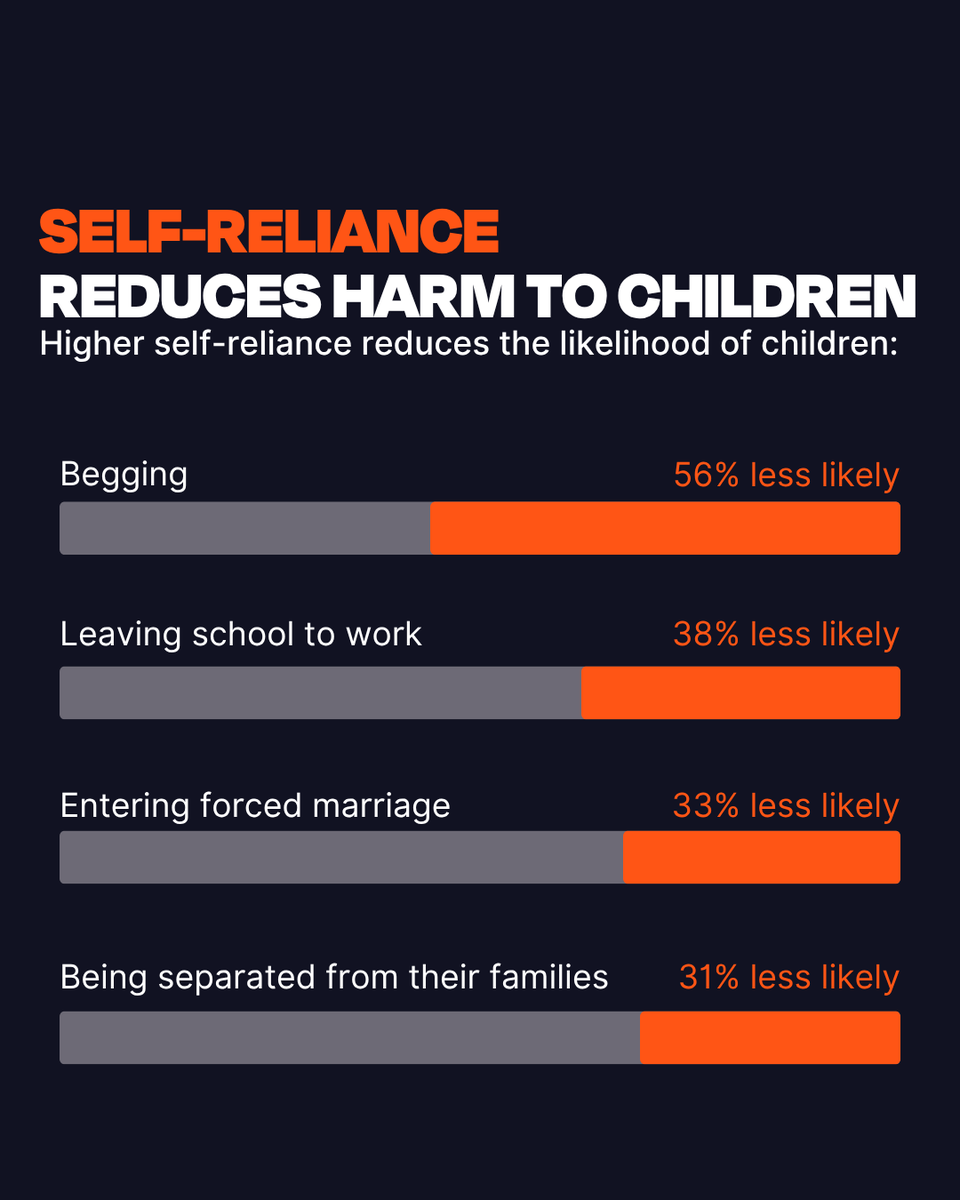
As an organisation that's mostly about child sponsorship, why are we into livelihoods? Because we recognise that the only way to improve the lives of children is to make their families strong and self-sufficient.
Extreme poverty is one of the main reason why children don't have 'fullness of life.' In fact, the World Bank estimates that 333 million children are living in extreme poverty. That means they're surviving on less than $2.15 a day.
That's why our goal is to end the cycle of poverty by 2030. It's a lofty goal, and one that can only be made possible by enabling families to have sustainable livelihoods. What does this look like?
It could be:
- providing small loans and skills training so women can begin their own businesses, like small stores, home-based sewing, small-scale gardens, or more
- training smallholder farmers in improved, sustainable, and climate change-resistant agricultural techniques
- mobilising savings groups and training women and men in household financial management
We've seen families become self-reliant, 'graduating' from World Vision support, so that we can then move on to help others.

English