
Sabitlenmiş Tweet
Yang Michael
17.5K posts


Yang Michael retweetledi

Tell me again climate change is a hoax 😡
This is horrific. MAJOR flash flooding in Nogales, Sonora, Mexico this afternoon....
English
Yang Michael retweetledi
Another day, another country, another flood!!
This is in Bușteni, Romania today...
English
Yang Michael retweetledi

Mariam Yahia Ibrahim, a Sudanese Christian and medical doctor, was sentenced to 100 lashes and death by hanging after refusing to renounce her Christian faith.
Because Sudan considered her Muslim through her absent father, the court convicted her of apostasy despite her lifelong confession of Christ. According to them, she could not be a Christian, married to a Christian, in this Muslim majority country. She was given three days to recant. She refused.
At the time (in 2014), Meriam was eight months pregnant and already caring for her young son in prison. She spent months chained to a prison floor with her 1-year-old son by her side.
While shackled, she gave birth to her daughter, Maya, inside the prison. Her execution was delayed because of the pregnancy, but she remained imprisoned until an international outcry led an appeals court to overturn her conviction and order her release.
Looking back on her ordeal, Meriam said she was not afraid. "Being in prison strengthened my faith even more," she told CBN News.

English
Yang Michael retweetledi

In 203 CE, a young noblewoman sat in a prison in Roman Carthage and wrote down what was happening to her. She was waiting to die.
Her name was Vibia Perpetua. Newly a mother, nursing an infant son, she had converted to Christianity at a time when the emperor Septimius Severus had issued an edict against new conversions. She was arrested. She knew she would not be released.
So she wrote.
What she left behind became known as "The Passion of Perpetua and Felicity." It is the earliest surviving text known to have been written, in part, by a Christian woman. Most of it is in her own first person. More than eighteen centuries after her death, we can still read exactly what she was thinking.
She describes her father coming to the prison and begging her to renounce her faith. He weeps. He calls her by name. She holds firm each time. She writes about her baby too, how frightened she was to lose him. A sympathetic guard brought the infant to her cell so she could nurse him.
The other figure in the story is a servant named Felicity.
Felicity was heavily pregnant when arrested. Roman law forbade executing a pregnant woman. She prayed to give birth before the execution date. According to the account, she did, delivering her daughter just days before the arena. A Christian woman from the crowd took the child.
On March 7, 203 CE, Perpetua and Felicity and several companions were brought into the amphitheater at Carthage.
The crowd expected sport. They got something different.
Perpetua was attacked by a wild heifer. She was thrown, fell, rose, and gathered her torn tunic around her. She helped another prisoner who had fallen. By the account that survives, she walked through the arena as though she was in a dream.
When the animals were done, the gladiators came. The gladiator assigned to Perpetua was a novice. His sword strike missed. She cried out. And then, by every account that survives, Vibia Perpetua reached up and guided his trembling hand to her own throat.
She had decided how this would end.
The diary survived because later writers copied and preserved it, convinced they were preserving the voice of a martyr. They preserved something else too: a record of a woman who, in the worst weeks of her life, chose to write down exactly what she saw and felt and refused.
Her words, written in a prison cell with a nursing infant beside her, read as personally as a letter to a friend.
She did not think of herself as making history. She was trying to explain what had happened to her, and why she would not change her mind.
That document exists today. She wrote it.
#archaeohistories

English

@YangMichael17 jdv副总和川总都是新基督徒,他们和老基督徒,比如mj议长,彭斯副总,彭胖,mr两任国务卿等行为上有显著不同,。。。
中文
Yang Michael retweetledi
The final haunting scene of the 1984 version of Le Dialogue des Carmélites.
The singing stop…..and then another singer steps forward for Christ. 🥹
A powerful reminder that we are all called to die for the one who dies for us.
Holy Martyrs of Compiègne, pray for us!!!
English
@MJTVHoPin 人,在任何年代和年纪,都会有对一个更美世界的盼望,因为这个盼望是真实的。但人会虚构各种途径通往这个更美世界,也会虚构这个更美世界,宗教大致由这两部份混比构成。
相对而言,AI只能提供虚构,所以传统就显得更真实。
中文
中國宗教文化的復興,實際上是一種傳統文化的復興,甚至是一種文化自信的體現
中國的很多事情,往往出乎我們意料。像我們這種五、六十年代或七十年代出生的人,很難想像現在的80後、90後甚至是00後年輕人,他們現在經常去的一個地方,竟然是寺廟。今天,我想藉著《英國金融時報》的一篇長篇報導,和大家聊聊中國年輕人湧向寺廟的這個奇特現象。
這篇報導非常有現場感與故事性,它的核心觀點是探討中國的「寺廟經濟」,認為在經歷了幾十年的經濟轉型與社會變遷後,面對充滿不確定性的未來,新一代年輕人因為焦慮、就業壓力等種種現代都市病,開始在宗教中尋求答案。
西方媒體的觀察確實有其敏銳度,但不可避免地帶有西方的價值觀與視角。雖然現今社會競爭激烈、年輕人面臨諸多壓力是事實,但我認為把年輕人進寺廟僅僅看作是為了「消災求福」或無奈的「躺平」,這就忽略了更深層次的東西。
什麼是更深層的東西?那就是中國人獨特的宗教觀。我的朋友曾跟我說,中國真正的國教其實是道教,只不過清朝政權為了統治需要而尊崇佛教、打壓道教,使得道教逐漸變成了民間的宗教信仰。雖然許多人常常把道教與佛教的儀式混淆,甚至分不清具體教派,但這恰恰體現了中國傳統宗教文化中最大的一個特徵:極大的包容性與融通性。
在西方,宗教界線往往涇渭分明,甚至帶有強烈的排他性和介入感;但在中國,不管是佛教還是道教,人們對於不同的信仰沒有那麼強烈的敵意與界線感。年輕人走到寺廟,看到神像就拜,看到吉利的字就想摸一下,這不代表他們真正了解或歸屬於某個特定教派,而是一種內心的謙卑,是為了尋求心安。
回想在80年代初期,我作為一名年輕記者去寺廟採訪,那段經歷讓我非常震撼。當時我遇到一位非常年輕的女性信徒,她出家成為尼姑。按照我們一般的刻板印象,總覺得是遭遇了什麼人生大災難才會遁入空門,結果和她交談後發現根本不是這麼回事。她單純是因為跟著經歷過文革的姑姑來到廟裡,她在那裡甚至還有收音機,還在讀大學。這件事讓我明白,走向信仰並不一定是因為走投無路,它也可以是很純粹的追求。
如今的年輕人也是一樣。雖然寺廟裡難免有些世俗化和商業化的污染,甚至有些地方將祈福明碼標價,但對於多數走進寺廟的年輕人來說,他們表現出的反而不是老一輩那種純粹的迷信,他們往往更理性,更傾向於從哲學和辯證的角度去探討問題。對他們而言,去寺廟不是傳統意義上的苦修,也不是簡單的逃避現實,而是一種與傳統文化的碰撞與心靈的溝通。在網路社交媒體上活躍的他們,內心依然保留著一個純淨的角落,希望能從菩薩與宗教場景中,尋找到一種精神上的共鳴與慰藉。
所以,我認為中國宗教文化的復興,實際上是一種傳統文化的復興,甚至是一種文化自信的體現。年輕人去寺廟,是在彌補自己對傳統文化認知的空白,這是一個深遠且複雜的文化現象,絕不能單一地看作是世俗的求神問卜。信仰,就像是我們在人生迷團中尋找勇氣與純粹交流的地方。
今天這期節目,希望能為沒有特定宗教信仰的觀眾,提供一個重新認識我們傳統文化的視角。不知道各位對這個現象有什麼樣的思考與看法?希望大家能在節目裡表達你們的見解。謝謝大家收看我們探討層面非常廣泛的《遊天下》頻道,我們下次再見!youtube.com/live/Nh9HNKr3s…
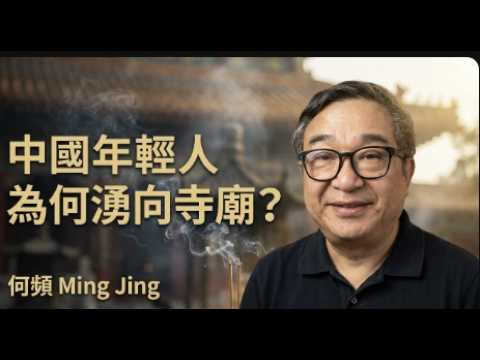
YouTube
中文
Yang Michael retweetledi

France's longest river has dried up.
And you still believe that, “climate change is a hoax.”
Just because you do not take an interest in climate change, doesn't mean climate change won't take an interest in you.

English

今天读《寻求引导》时,有一段让我很受触动:
圣经中的爱,是一个良善的意愿和目的,要尽己所能把最好的给予所爱的人,用各种合宜的方式,令所爱的人显得重要。
我反思到,弟兄姊妹,我们有没有让别人,真的在我们心里显得重要?
很多被忽视的肢体,并不只是缺少帮助,而是感受不到自己在群体里的重要。他们来了,也可以不来;在与不在,好像都没有区别。
近来生活中发生的事情,也让我越来越觉得,我们需要把口里讲的道,落到生活实际。对付具体的罪,爱具体的人,关心具体的人所面对的处境,而不是用宏大的叙事,掩盖我们应尽的本分。
人真正所在乎的,无非是被需要、被理解、被认可、被关注。愿意听他们内心的声音,看见他们真实的需要,理解他们的感受,与他们一同忧伤、一同喜乐。
而耶稣一直都是这样。祂走进伤心的人中间,医治他们的痛苦,安慰他们的心灵;祂听他们的声音,看见他们的需要,亲自来到他们中间,与他们同在。
爱,不只是说一句你很重要,而是真的让一个人在我们的生命里,变得重要。


中文
Yang Michael retweetledi

LifeExplorer The specific claim of Adam at 60 cubits (~90 ft) comes from Sahih al-Bukhari 3326: “Allah created Adam, making him 60 cubits tall.”
Jewish rabbinic/esoteric traditions (Talmud Chagigah 12a, midrashim, Legends of the Jews) describe primordial Adam as gigantic—stretching from earth to heaven or one end of the world to the other—later reduced after the Fall (some say to 100 cubits).
These are interpretive expansions, not in Genesis, 1 Enoch (Nephilim/giants only), or most Second Temple pseudepigrapha. Adam Kadmon in Kabbalah is symbolic/cosmic, not a literal giant. Gilgamesh’s 11-cubit description appears in ancient Epic fragments.
English
Yang Michael retweetledi

The further you go back, the larger the human species are. Second Temple Jewish texts and Christian literature describe Adam as an enormous cosmic being, so the only specific size we have is from the Hadith, where Adam is described as being sixty cubits tall. That's 30 meters, or over 100 feet.
Next we have Gilgamesh from the Sumerian texts and the Epic of Gilgamesh, described as being 11 cubits tall, or almost 6 meters and 19 feet.
Today, we humans are much smaller. If we take into consideration the megafauna that went extinct during the Younger Dryas and almost every animal having giant ancestors, why is it forbidden for humans to know their true history?
The antediluvian civilization was not only bigger, but its people also lived longer...
English
Yang Michael retweetledi

#女博主独自用餐被包厢黄总传话邀约
杭州这家餐厅离大谱了!
7月15日晚,女博主“小楠探店”在江东大排档独自用餐时,一名领班服务员上前确认她是否一人后,转达包厢“黄总”邀约,称“去了就知道是谁”。
博主明确表示不认识对方,多次拒绝后,服务员仍纠缠不休,还安排人盯梢。
无奈之下,博主开启直播留证。期间发现有人持续观望,最后两道菜也迟迟不上,直到她威胁退菜才迅速上齐
就餐后,她选择跟随其他客人一起离开,并在开阔处打车,高度警惕。
事件曝光后,餐厅遭大量差评,目前已被平台标注“暂停营业”。
截至目前,餐厅、“黄总”及警方均未正式回应。
餐厅把客人当“资源”纠缠,
安全感在哪里?😠
中文
Yang Michael retweetledi

Spain's soccer coach:
"Without God, nothing in life makes sense."
He is a devout Catholic.


English
Yang Michael retweetledi

Yang Michael retweetledi
A deer fleeing the wildfires raging in France.
A 2025 report in Nature found that our fossil-fueled civilization is causing biodiversity loss in ALL SPECIES and EVERY ECOSYSTEM studied.
There’s an unending deluge of blood gushing through the hands of capitalists.

English