CZelyk

1.9K posts

CZelyk banner
CZelyk

CZelyk

@ZelykC

Just a thirty-something year old science nerd with a few cats lol oh and I like the Hellaverse

Katılım Ağustos 2019
165 Takip Edilen123 Takipçiler
VixXi
VixXi@VickiCocks15·
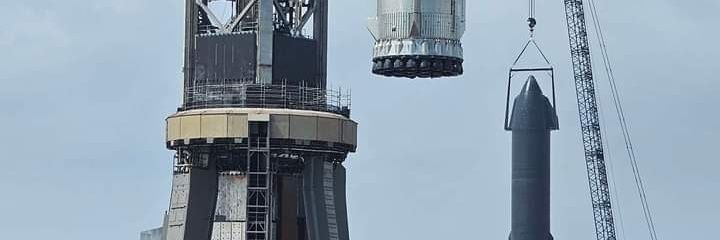
Pretty much as soon as Booster 19 had arrived at the pad, she was between the Chopsticks and lifted up to the launch mount. @LabPadre
English
1
6
190
3.5K
CZelyk
CZelyk@ZelykC·
@Truthful_ast What's wild is this is still technically a test article, and it looks this refined! Makes me wonder how they could possibly make it better with V4 booster 🫠
English
0
0
1
217
CZelyk
CZelyk@ZelykC·
@Erdayastronaut AND by the same extension it gives NASA more time to adapt Centaur for A5 instead of months sooner for A4. All in all a good call it would seem!
English
0
0
1
260
Everyday Astronaut
Everyday Astronaut@Erdayastronaut·
Some interesting notes besides the amazing 4K streaming from orbit (YES PLEASE), the inclination and altitude mentioned tells us two things. 1. Starship could do this from Starbase, so it wouldn't require 39A pad to be operational. 2. SLS could do it WITHOUT the ICPS, saving it for Artemis IV, which is smart considering we don't want to be potentially waiting on a new upper stage for that mission.
Ryan Caton@dpoddolphinpro

Artemis III orbit type confirmed, @NASA wants new commercial comms system for Live 4K Video COMMUNICATIONS As Orion is designed to fly into deep space, it's designed to rely the Deep Space Network (DSN). That's not available in LEO, and TDRSS is already congested. @NASA would like "live 4K imagery during rendezvous and docking operations, and downlink of large files in other phases of flight." A new request for information (RFI) has just been released, looking for a commercial solution with the following objectives: - Near continuous communication (goal: >75%) - >12 Mbps Downlink (goal: 20-50Mbps) - >500 kbps Uplink - System must provide a broad field of regard or steerable antenna/aperture (Orion has many driving attitude constraints so precise vehicle pointing of a fixed antenna/aperture is not available) I wonder who has a flight-proven, self-steering, on-orbit system for high-bandwidth communications... cough cough @SpaceX @Starlink OTHER DETAILS The RFI says to assume a Summer 2027 launch, and a 460km (250nmi) circular 33° orbit. @NASA had been deciding between a High Earth Orbit (HEO) and Low Earth Orbit (LEO), and it looks like the latter has been selected. A LEO probably doesn't require the use of an upper stage, saving an ICPS. 📷 L: @NASA | R: @SpaceX


English
17
48
998
92K
CZelyk
CZelyk@ZelykC·
@alexboge What the commentors in this thread show is they have no clue what Geostationary Orbit means 🤣 lemme break it down for them. Geo = Earth Stationary = stays in place Orbit = path around and object So these satellites are high enough to where they stay stationary around the earth
English
0
0
0
8
Alex Boge
Alex Boge@alexboge·
On April 26th, 2026, the Japan Meteorological Agency's Himawari-8 satellite captured a full day of Earth. Every ten minutes, for twenty-four hours, it photographed a complete hemisphere of the planet. One hundred forty-four individual photographs. No editing for content. No compositing. No CGI. No green screen. No hologram. No drawings. These are photographs, assembled into video. Himawari-8 is a geostationary weather satellite operated by Japan. It orbits at roughly twenty-two thousand miles above the equator, remaining fixed over one spot on the planet, orbiting at the same rate Earth rotates. It was launched in 2014. It takes photographs of Earth in visible light and infrared. It does this every ten minutes, every single day, year after year. These images are available to the public. Meteorologists worldwide use them for weather forecasting. News organizations use them. Scientists use them. You can access them yourself right now. What you're seeing over that twenty-four hour period is the terminator line moving -- the day-night boundary shifting as the planet's rotation carries different regions into and out of sunlight, all viewed from a fixed point in space. It is not a composite. It is not a trick. The curvature you see is not distortion. It is not perspective compression. It is the actual shape of the Earth as photographed by an independent satellite operated by a nation with no interest in perpetuating a NASA conspiracy. This is what Earth looks like from space. This is the globe holding atmosphere in place with gravity as you witness weather patterns moving across its surface. This is reality. (No fisheye lens was harmed in the making of this video.)
English
35
73
312
11.8K
CZelyk retweetledi
Andrew McCarthy
Andrew McCarthy@AJamesMcCarthy·
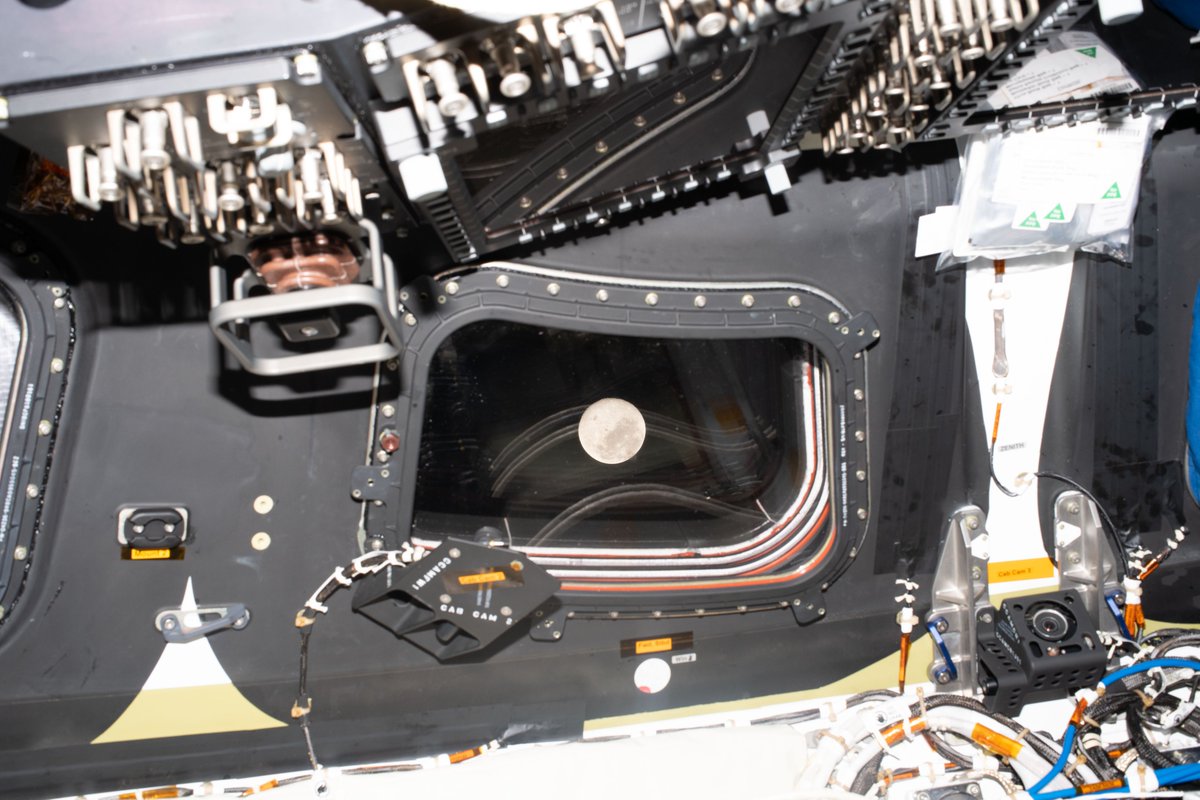
Love these shots. Some of the things working against them while they took these photos: The spacecraft moving relative to the everything else Camera focusing on the glass instead of the subject Focusing on Internal reflections instead of the subject Blocking those reflections when photographing something dark Trying to stay still while you’re floating Insane dynamic range of the subjects (deep black space, sunlit planet/moon) Distortions from shooting through glass Dealing with internal lights while trying to photograph something dark Millions of people watching your every move and criticizing the photos I respect the blurry photos the same way I respect rocket scrubs. In the path to achieving greatness, you have to fail a few times. Also, most of my camera rolls look a lot like this 😂
English
6
5
245
4.4K
CZelyk
CZelyk@ZelykC·
@digijordan They do have pix from artemis showing stars in the background. What you have to realize is that even on the nightside of the earth it will still be difficult because of the light coming off the moon. You have to have all the right elements line up AND be trying to get that pic.
English
0
0
0
75
Jordan Crowder
Jordan Crowder@digijordan·
When I questioned why none of the Artemis photos showed stars…hundreds of triggered NPCs screamed at me…saying it was impossible to do…I’d proceed to tell them it’s actually quite easy and basic…they’d call me names and come completely unhinged. But now we see this beautiful photo from a NASA astronaut…with a VERY bright earth AND the Milky Way. Obviously these types of shots are not only possible…they’d are easy and should be expected. Now…the question is…why the lack of videos… And WHY are most the Artemis photos devoid of stars?
Chris Williams@Astro_ChrisW

One question I get a lot is can you see the stars differently from up in space. When we orbit on the night side of the planet, we get a view of the stars very much like being in a very dark place on Earth. And because of our orbital inclination, we get to see the stars of both the northern and southern hemisphere. I captured this shot of our galactic plane from one of the windows of the Crew Dragon Freedom that is docked to the zenith docking port.
English
75
15
277
42.3K
CZelyk
CZelyk@ZelykC·
@DJSnM SAME!! It brings the human element into focus, and adds life to the photos!
English
0
0
0
637
Scott Manley
Scott Manley@DJSnM·
Of the thousands of new Artemis II images released the ones I like looking at most are the ones showing that they're taken from a spacecraft with people on it flying around the moon.
Scott Manley tweet mediaScott Manley tweet mediaScott Manley tweet mediaScott Manley tweet media
English
44
415
5.4K
139.6K
CZelyk
CZelyk@ZelykC·
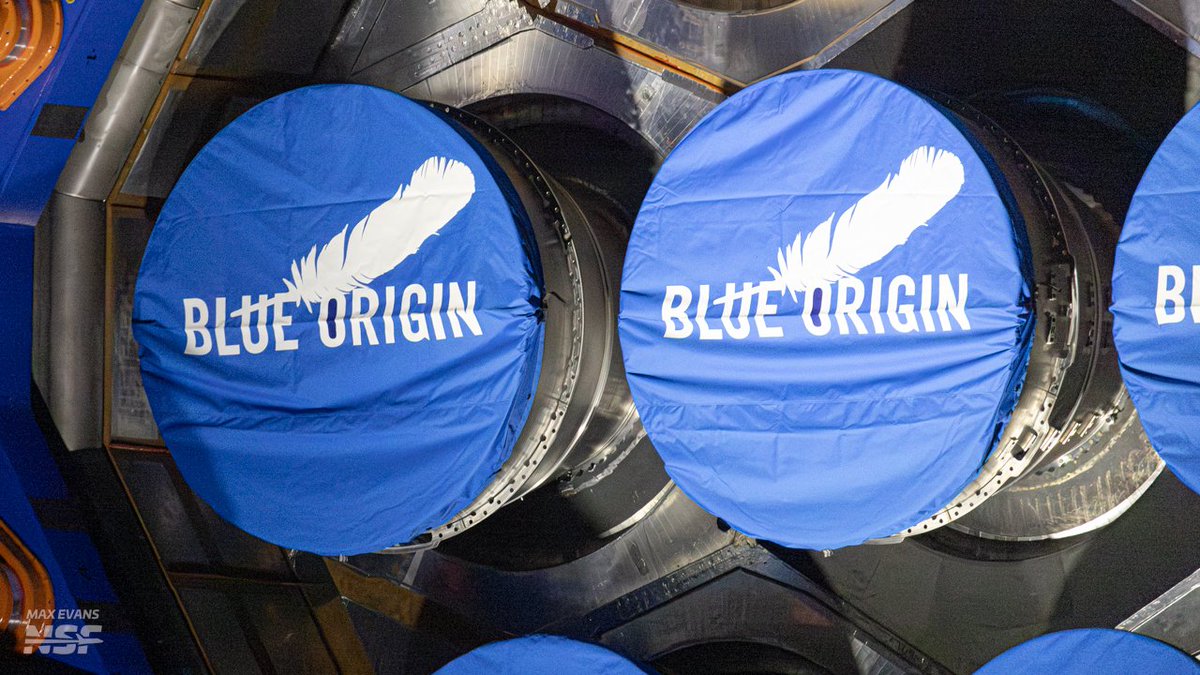
@_MaxQ_ @davill Perhaps it has to with protecting the non-gimbaling engines? The new bracing almost looks like its ablative material.
English
0
0
0
830
Max Evans
Max Evans@_MaxQ_·
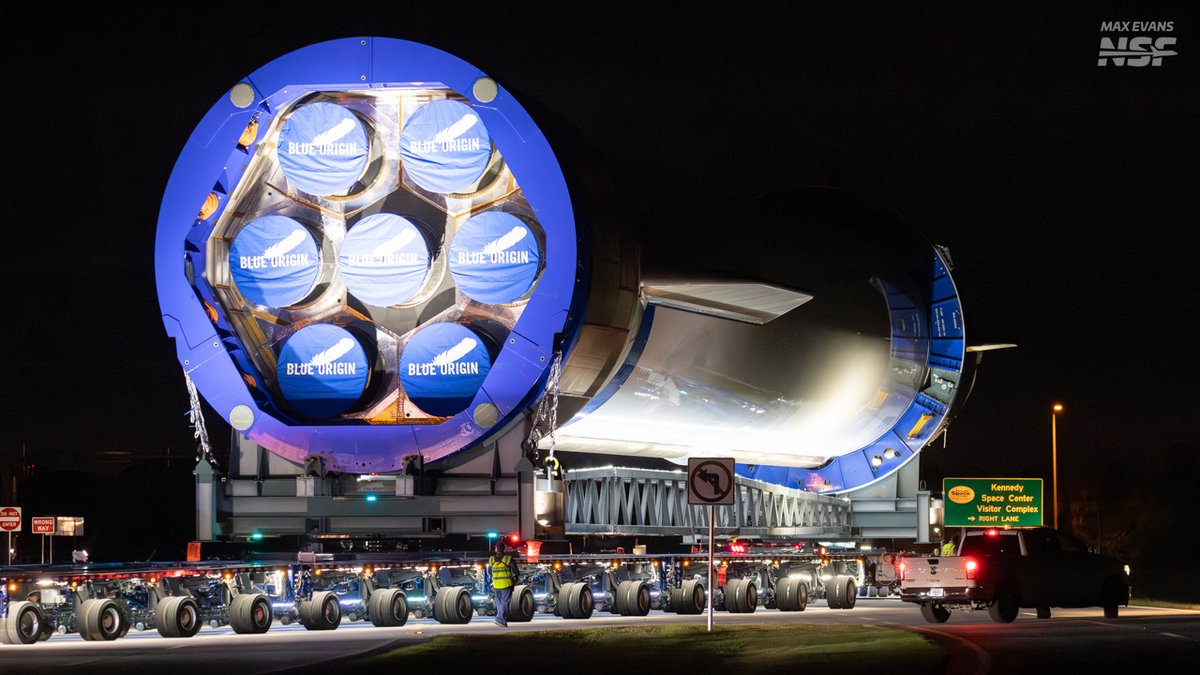
@davill noticed some interesting materials on 4 of the 7 engine bells from "No, It's Necessary" this morning, and the other 3 have the more traditional bracing/bracketing that we've seen during NG-1 and NG-2. Curious as to what y'all are testing this time around in this configuration - additional BE-4 upgrades?
Max Evans tweet mediaMax Evans tweet mediaMax Evans tweet media
English
8
22
418
23.6K
Max Evans
Max Evans@_MaxQ_·
The space port that never sleeps starting off the week bright and early this morning! Blue Origin has rolled GS1-3 "No, It's Necessary" out of their factory — it’s now heading to LC-36. This marks the company’s third New Glenn first stage booster built to date, and the next one scheduled to fly. 📸 - @NASASpaceflight
Max Evans tweet mediaMax Evans tweet mediaMax Evans tweet media
English
8
114
1.1K
59K
CZelyk
CZelyk@ZelykC·
@_MaxQ_ I won't lie, I'm impressed that they are starting to ramp up launches this early! Excited to see how B.M MK1 does!!
English
0
0
1
305
CZelyk
CZelyk@ZelykC·
@OliviaStalvey Kitty cat in astronaut suit 😀😀 speaking on behalf of my 22 purrbabies lol
English
0
0
0
11
CZelyk
CZelyk@ZelykC·
@astratuatha The Titan family is my FAV classic rocket family!! Just such a cool looking rocket and was a workhorse in its own right!!
English
0
0
1
18
CZelyk
CZelyk@ZelykC·
@Truthful_ast Idt I know of the Altair Lunar Lander? Any info you could give before I jump down the rabbit hole?
English
0
0
0
31
Truthful🛰️
Truthful🛰️@Truthful_ast·
NASA's Altair Lunar Lander
Truthful🛰️ tweet mediaTruthful🛰️ tweet mediaTruthful🛰️ tweet media
Español
9
8
349
5.7K
CZelyk retweetledi
Adenot Sophie
Adenot Sophie@Soph_astro·
Day 076, orbit 1179 — Weighing yourself in weightlessness isn’t really about weight… it’s about mass. On Earth, a scale works because gravity pulls us down, but in microgravity everything floats, so that method simply doesn’t work. Instead, we use a special device that moves our body up and down, allowing us to determine our mass. Mass stays exactly the same, whether you’re on Earth or floating in orbit. 🎥 @esa / @NASA #εpsilon • @esaspaceflight@NASA_Johnson@Space_Station
English
40
330
2.4K
130.5K
CZelyk
CZelyk@ZelykC·
@AJamesMcCarthy You need to have this same setup when starship launches!! Holy guacamole this is an awesome shot!!
English
0
0
1
32
Andrew McCarthy
Andrew McCarthy@AJamesMcCarthy·
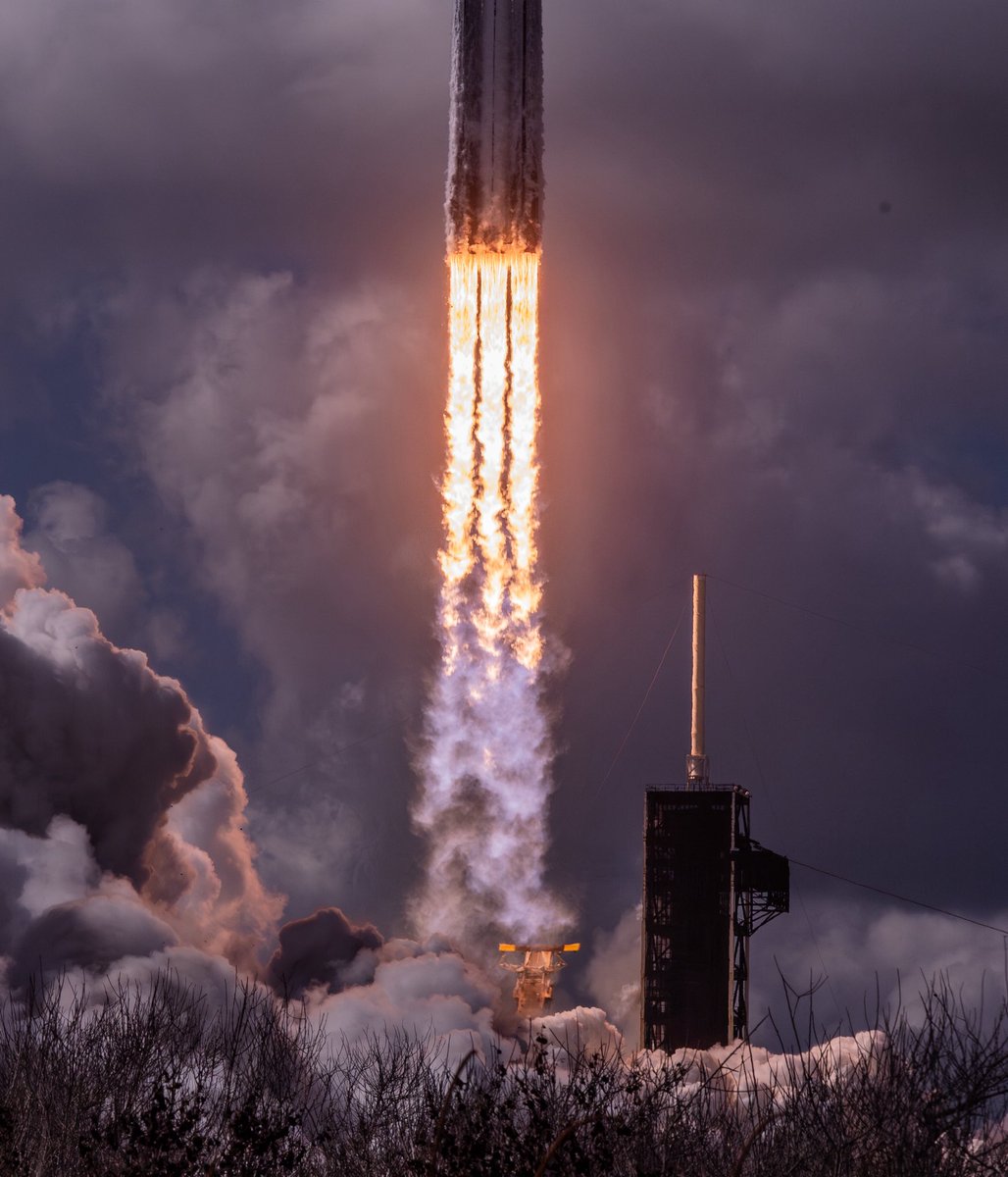
I used a modified camera to see more infrared light during this morning’s launch. The result gave me such beautiful colors.
Andrew McCarthy tweet media
English
121
410
5.1K
48.1K