Zen Yinger

64.4K posts

Zen Yinger banner
Zen Yinger

Zen Yinger

@ZenYinger

Exec. & Change #Communications Strategy Advisory Serv.| Board Dir. & Advisor| #Trust Based #Relationship Builder| Helping w/ Human OS upgrade for #AI readiness.

Katılım Nisan 2012
5.5K Takip Edilen11.1K Takipçiler
Sabitlenmiş Tweet
Zen Yinger
Zen Yinger@ZenYinger·
It's your decisions, not your conditions, which shape your life - @TonyRobbins #quote
Zen Yinger tweet media
English
26
311
435
0
Zen Yinger
Zen Yinger@ZenYinger·
We may not be able to change what's happening in our world, our country, our life, or to those we love & respect, but we have agency over how we choose to respond to it all. Our inner world is what influences our #health, wellbeing, #happiness & growth. sciencealert.com/dick-van-dyke-…
English
0
0
0
18
Zen Yinger retweetledi
Curiosity
Curiosity@CuriosityonX·
🚨: This is the surface of the Sun, the most detailed image ever taken.
Curiosity tweet media
English
872
1.4K
23.1K
1.7M
Zen Yinger retweetledi
Prof. Feynman
Prof. Feynman@ProfFeynman·
Simplicity isn't the lack of complexity; it's the clarity of understanding.
English
130
735
3.3K
112.9K
Zen Yinger retweetledi
Massimo
Massimo@Rainmaker1973·
The highest point on Earth was once submerged beneath the sea. At the 8,848-meter summit of Mount Everest, climbers stand atop marine limestone from the Qomolangma Formation—rock containing 450-million-year-old fossils of creatures that lived in warm, shallow tropical waters during the Ordovician period. Embedded within the famous "Yellow Band" limestone layers and the final meters of the peak are well-preserved remains of crinoids (sea lilies), brachiopods, trilobites, and other marine invertebrates. These fossils, discovered just below the summit, are a striking reminder that what is now the planet’s tallest mountain was, hundreds of millions of years ago, part of the ancient Tethys Ocean seafloor. This dramatic transformation is the result of plate tectonics. Around 50 million years ago, the Indian tectonic plate began colliding with the Eurasian plate. The immense compressive forces crumpled and folded the ocean floor sediments, thrusting vast sections of the former seabed upward in a process that continues to uplift the Himalayas at a rate of several millimeters per year. The once-horizontal marine deposits were folded, faulted, and elevated to form the towering peaks we see today. The presence of these deep-sea fossils at the top of Everest powerfully illustrates the dynamic nature of Earth’s crust: continents drift, oceans close, and entire seascapes are pushed skyward over geological time. It is a profound irony that adventurers who brave extreme danger to reach the world’s highest point ultimately stand on what was once the bottom of an ancient ocean.
Massimo tweet media
English
14
25
142
22.5K
Zen Yinger retweetledi
Vala Afshar
Vala Afshar@ValaAfshar·
Above all nations is humanity: 104 skydivers from 20 nations and a world record
English
24
313
1.5K
79.3K
Zen Yinger retweetledi
Globe Eye News
Globe Eye News@GlobeEyeNews·
BREAKING: Iran announces the Strait of Hormuz is open to all countries except the United States, Israel, and their allies.
Globe Eye News tweet mediaGlobe Eye News tweet media
English
3.3K
35.7K
275.4K
12.9M
Zen Yinger retweetledi
The Nobel Prize
The Nobel Prize@NobelPrize·
“I had principles and sensibilities and an informed view of the world. And I had had that for a while. Learned it all in grammar school. Don Quixote, Ivanhoe, Robinson Crusoe, Gulliver’s Travels, Tale of Two Cities, all the rest – typical grammar school reading that gave you a way of looking at life, an understanding of human nature, and a standard to measure things by. I took all that with me when I started composing lyrics. And the themes from those books worked their way into many of my songs, either knowingly or unintentionally. I wanted to write songs unlike anything anybody ever heard, and these themes were fundamental.” - Literature laureate, Bob Dylan. Read more about his work here: bit.ly/4gDTxoI
The Nobel Prize tweet media
English
11
87
316
13.4K
Zen Yinger
Zen Yinger@ZenYinger·
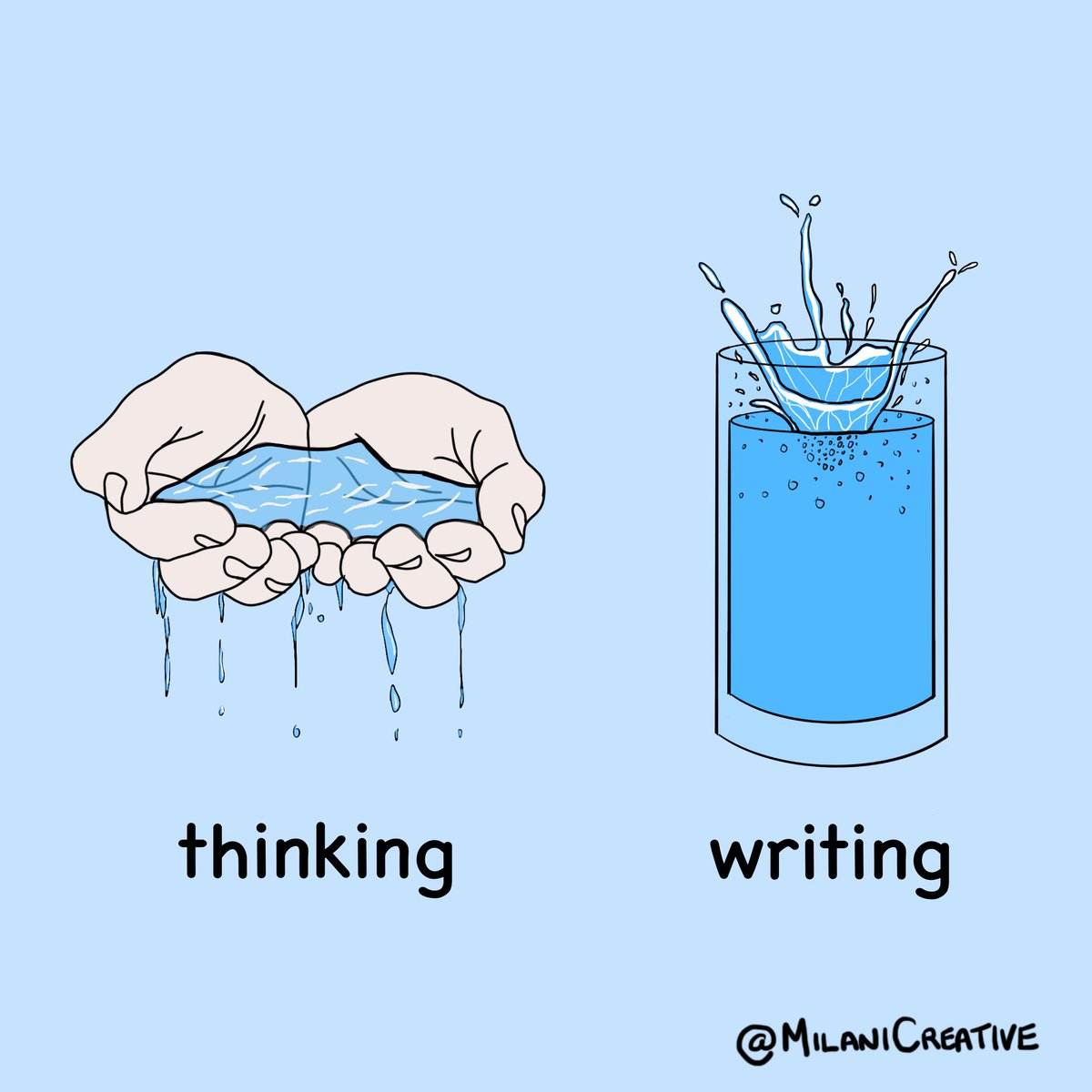
Human agency is sacrosanct. Humans are also conditioned to seek the easy way out. The question is, are humans prepared to give up agency to #AI for the easy way out? If yes, #AI will dominate. #thinking #learning #writing #Agentics #GenerativeAI #Claude #ChatGPT
Muhammad Ayan@socialwithaayan

🚨 BREAKING: Anthropic just published a study proving their own AI makes you worse at learning new skills. Not some outside critic taking shots. The company that made Claude themselves. They put together this experiment with about fifty developers learning a brand new programming library they'd never seen before. One group had AI help the whole way through. The other group went at it without any assistance. The ones with AI felt productive as hell. Answers came quick. They were shipping code left and right. Everything felt smooth. Then the tests hit. Real understanding of the library? The AI group got crushed. Weaker conceptual grasp. They struggled more just reading through code. Debugging became a nightmare. The AI had been doing the thinking so their own brains never had to step up. I caught myself doing the exact same thing a while back when I was forcing through a new framework. Felt like a genius until I had to explain it without the chat open. Brutal. They went deeper and mapped out the different ways people actually interact with these tools while coding. Only some of those ways let real learning happen. The others give you this fake sense of progress — you're moving fast, tasks are getting done, but your actual skill level stays zero. The worst offender by far was full delegation. People who just handed the whole thing over to the AI got a little speed boost but walked away knowing less than they did at the start. They used the tool. The tool used their time. And here's what really lands different. This isn't some random researcher warning about AI from the outside. These folks work at Anthropic. They build the models. They put this line straight in the paper: AI-enhanced productivity is not a shortcut to competence. That sentence is going to stick with a lot of people. The thing is, this isn't just about developers. Every field right now is pushing beginners to use AI to "learn faster." Law, medicine, writing, data stuff, finance, engineering you name it. But if leaning on AI during the actual learning phase quietly damages how real competence forms, then we've got a generation building careers on ground that was never properly packed down. They can get the model to spit out answers. Thinking for themselves when it counts? Different story. What they also pointed out that most people are missing completely is that the skills you'll need to properly supervise AI in the future the deep understanding, the ability to read between the lines, to catch its mistakes are exactly the ones getting eroded right now. You can't audit what you never learned to build yourself. It's kind of like learning guitar by only ever playing along with perfect backing tracks and auto-tune. You can perform songs pretty quick, but take the training wheels off in a real jam session and suddenly your ear and timing never developed the way they should have. Anthropic isn't out here saying ditch the AI completely. They're saying learn the thing first on its own terms. Bring the AI in after. If you're starting something new, maybe sit in the suck for a bit longer than feels comfortable before calling in the assistant.

English
0
0
0
29
Zen Yinger retweetledi
Sophia Proneikos
Sophia Proneikos@Pergament_F·
"He who does not read lives only one life, even if he reaches seventy. But he who reads lives five thousand years. Reading is eternal, timeless." Umberto Eco
Sophia Proneikos tweet media
English
9
147
555
8.8K
Ron wright
Ron wright@ronsterd89·
Who is your favorite singer in this photo?
Ron wright tweet media
English
3.4K
137
1.2K
107.2K
Zen Yinger retweetledi
Science girl
Science girl@sciencegirl·
Mesmerising art technique 📹 Chunzhan Zhitou
English
68
988
7.2K
803K
Nainsi Dwivedi
Nainsi Dwivedi@NainsiDwiv50980·
I spent weeks testing Claude prompts, workflows, and automation systems. The result? A practical guide that shows how to turn Claude into a real productivity and money engine. Introducing: Claude 4.6 — The Definitive Guide Inside: • Best prompts for real work • Claude Code explained • AI workflows that save hours • Monetization strategies • Skill-building frameworks And yes — I'm giving it away FREE for 24 hours. To receive it: 1️⃣ Like 2️⃣ Comment “4.6” 3️⃣ Follow me so I can DM youposts
Nainsi Dwivedi tweet media
English
252
32
346
32.7K
Zen Yinger retweetledi
Massimo
Massimo@Rainmaker1973·
He was Satyendra Nath Bose, an Indian physicist whose quiet brilliance in the 1920s forever altered our understanding of the quantum world. In 1924, Bose, then a 30-year-old professor in British India, sent a groundbreaking manuscript directly to Albert Einstein. The paper offered a novel, more elegant derivation of Planck's law for blackbody radiation by treating light quanta (photons) as indistinguishable particles—a radical departure from classical statistical methods. Impressed by its insight, Einstein personally translated the work into German and facilitated its publication in the prestigious Zeitschrift für Physik. This exchange sparked a brief but profound collaboration. Einstein extended Bose's statistical approach to material atoms, predicting a bizarre new state of matter at ultra-low temperatures: what we now call a Bose-Einstein condensate (BEC), where particles behave as a single quantum wave. Bose's original framework became known as Bose-Einstein statistics, and the class of particles that obey it—those with integer spin, including photons, gluons, W and Z bosons, and the Higgs boson—was later named bosons in his honor by Paul Dirac. Unlike fermions (matter particles like electrons), which obey the Pauli exclusion principle and cannot occupy the same quantum state, bosons can pile into identical states en masse. This "social" behavior underpins extraordinary macroscopic phenomena: the coherent light of lasers, the zero-resistance flow in superconductors, and the collective quantum coherence in BECs. Despite the monumental impact—his statistics describe half of all fundamental particles and enabled key advances in quantum field theory, condensed matter physics, and particle physics—Bose remained remarkably unassuming. He continued teaching at universities in Dhaka and Calcutta (now Kolkata), mentored students, pursued ideas in X-ray crystallography, unified field theory, and other areas, and never sought the spotlight. Nominated several times for the Nobel Prize (notably for Bose-Einstein statistics and his later work), he was never awarded it, and his name rarely appears in popular accounts of 20th-century physics. There's a poignant humility in his story: a man whose legacy literally names one of the two fundamental families of particles in the universe, yet whose personal fame never matched the scale of his contribution. Bose reminds us that true influence often arrives without fanfare. Some breakthroughs echo through textbooks and technologies, while their creators work in the background, content to let the universe carry their ideas forward—even if history's spotlight rarely finds them.
Massimo tweet media
English
47
950
4.6K
211.8K
Zen Yinger retweetledi
The Wall Street Journal
AI poses an existential threat to management consulting firms—but, for now, it is giving those companies a boost on.wsj.com/4dacb9E
English
9
14
52
32.9K
Zen Yinger retweetledi
Anonymous
Anonymous@YourAnonCentral·
Israel, which previously denied Ukraine help, is now likely seeking Ukraine's help too. Zelenskyy: "We're consulting with all the Middle East leaders .. Qatar, Emirates, Bahrain, Jordan. I think today I'll also speak with... I can’t say with whom? Why not?" Staff: "They asked not to say."
English
49
615
3.6K
146.8K
Zen Yinger retweetledi
Nav Toor
Nav Toor@heynavtoor·
BREAKING: AI can now plan tax strategy like Deloitte consultants (for free). Here are 15 insane Claude prompts that replace $15,000 tax consulting projects (Save for later)
Nav Toor tweet media
English
23
119
1K
207.9K