
Sabitlenmiş Tweet
The Cardano Community Podcast - Stake Pool WEQNT
6.7K posts

The Cardano Community Podcast - Stake Pool WEQNT
@__TCCP__
We are happy to serve #Cardano community - TCCP-medium & #CardanoToons re-delegate to Stake Pool WEQNT
Katılım Nisan 2019
183 Takip Edilen9.2K Takipçiler
Cardano Governance Hours
This time, we’ll take a deep dive into the proposal Cardano DeFi Liquidity Budget - Withdrawal 1 together with the proposer.
📅 Tuesday, 24 March 16:00 - 17:00 (UTC)
🧵 Open thread for details
English
The Cardano Community Podcast - Stake Pool WEQNT retweetledi
Join us this coming Tuesday, March 24 for Cardano Governance Hours, where we’ll take a deep dive into the proposal “Cardano DeFi Liquidity Budget” together with @ElderM
For more details, check out below post 👇
Cardano Community@Cardano
Cardano Governance Hours This time, we’ll take a deep dive into the proposal Cardano DeFi Liquidity Budget - Withdrawal 1 together with the proposer. 📅 Tuesday, 24 March 16:00 - 17:00 (UTC) 🧵 Open thread for details
English
The Cardano Community Podcast - Stake Pool WEQNT retweetledi

The Cardano Foundation, supported by @IOGroup, is requesting community approval to become the new managing entity of Project Catalyst.
This will ensure continuity of operations and minimize delays on milestone reviews and payouts.
Explore the GA: adastat.net/governances/b5…
English
The Cardano Community Podcast - Stake Pool WEQNT retweetledi
First 🇯🇵 Japanese, 🇻🇳 Vietnamese, 🇩🇪 German, and now 🇪🇸 Spanish has joined the list!
Step by step, cardano.org is becoming more multilingual, thanks to community contributors helping translate the site with @crowdin.
Want to know how you can get involved? Check Out the thread below 👇
Cardano Community@Cardano
1/ Cardano is global and cardano.org should be too. Together with @crowdin, we're making cardano.org multilingual and we need YOUR help to get there. A thread 🧵👇
English
The Cardano Community Podcast - Stake Pool WEQNT retweetledi
I'd highly encourage everyone to tune into this episode - especially Governance Tool developers (@ada_stat, @cexplorer_io 🫵 etc), DReps, SPOs, ada holders - basically Everyone
@_KtorZ_ here: x.com/_KtorZ_/status…
and @ElderM here: x.com/ElderM/status/…
Both have addressed points that needs discussing/clarity - not behind closed doors, but in public.
I've spoken to several candidates at the table, and respect all views, however, the one that surprised me the most was that of @emurgo_io. Though unable to make the session, we'll make sure to get their point across.
Cardano Community@Cardano
Cardano Governance, A Debate on NCL & Constitutional Clarity ——— Join us next week, March 18, 2026 at 15:30 UTC, for another Roundtable Talk. Recent discussions around extending the NCL have highlighted ambiguities in how the Cardano Constitution is interpreted and applied. Central to this is the question of whether NCLs must be ratified before treasury activity, how Constitutional Committee participation affects validity, and whether interpretations are mandatory or optional for compliance. Representatives from Constitutional Committees and influential DReps will share their perspectives in public so the wider Cardano ecosystem understands the stakes and the reasoning behind different views. Participants: @_KtorZ_, Individual (Matthias Benkort) @phil_uplc, Individual (Philip DiSarro) @yutazzz, Individual @blockjock2017, on behalf of @cardanocuria @NicolasC3rny, on behalf of @AceAlliance_CC @kenerik, on behalf of @tingvard @ElderM @phillewisit, on behalf of @EasternCardano @eternlwallet 🧵👇
English
The Cardano Community Podcast - Stake Pool WEQNT retweetledi
The Cardano Community Podcast - Stake Pool WEQNT retweetledi
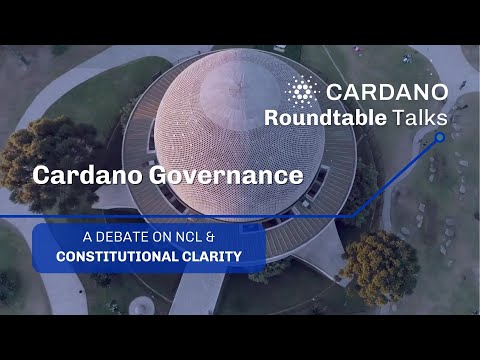
Cardano Governance, A Debate on NCL & Constitutional Clarity
———
Join us next week, March 18, 2026 at 15:30 UTC, for another Roundtable Talk.
Recent discussions around extending the NCL have highlighted ambiguities in how the Cardano Constitution is interpreted and applied. Central to this is the question of whether NCLs must be ratified before treasury activity, how Constitutional Committee participation affects validity, and whether interpretations are mandatory or optional for compliance.
Representatives from Constitutional Committees and influential DReps will share their perspectives in public so the wider Cardano ecosystem understands the stakes and the reasoning behind different views.
Participants:
@_KtorZ_, Individual (Matthias Benkort)
@phil_uplc, Individual (Philip DiSarro)
@yutazzz, Individual
@blockjock2017, on behalf of @cardanocuria
@NicolasC3rny, on behalf of @AceAlliance_CC
@kenerik, on behalf of @tingvard
@ElderM
@phillewisit, on behalf of @EasternCardano
@eternlwallet
🧵👇
English
The Cardano Community Podcast - Stake Pool WEQNT retweetledi
🚀 Dev Office Hours: Amaru, Budget Proposal & Node Diversity
Join Matthias Benkort, (Dr.) Roland Kuhn, Eric Torreborre, and Julien Eluard this week’s Cardano Dev Office Hours!
📅 Friday, 13 March 09:00 - 10:00 (UTC)
🧵 Open thread for details
English
The Cardano Community Podcast - Stake Pool WEQNT retweetledi
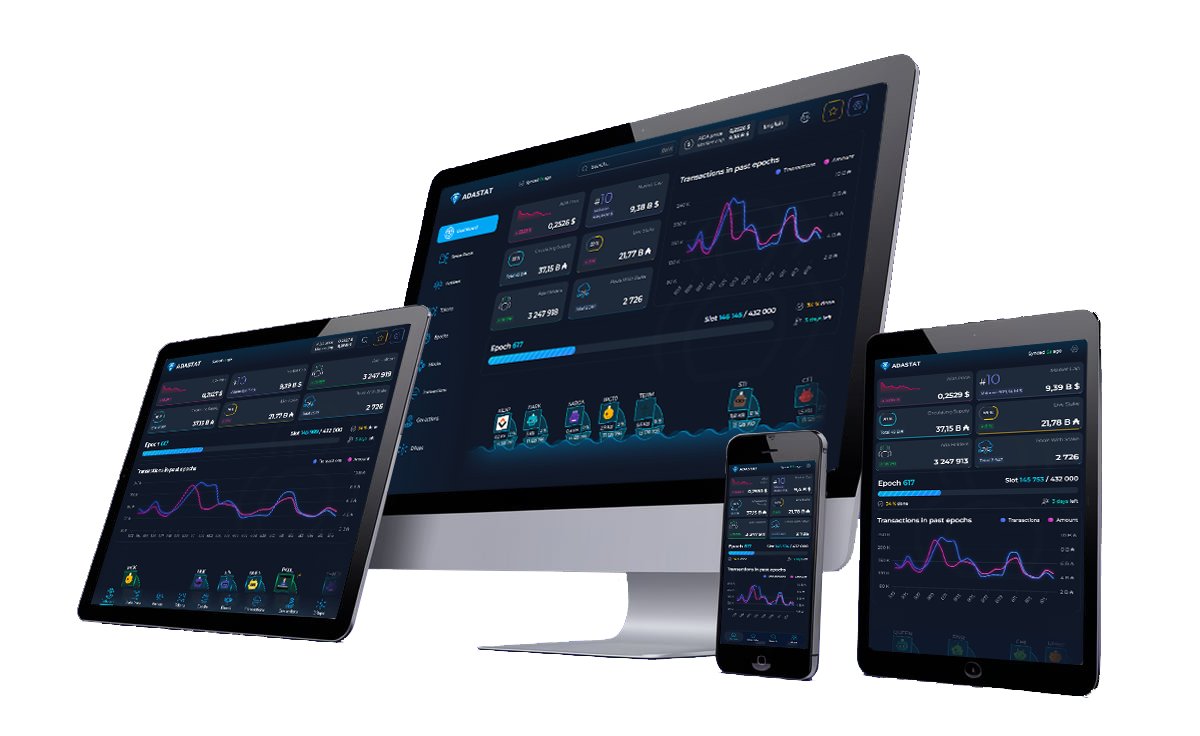
🚀 Major update for AdaStat is live.
Introducing the new Modern UI along with:
• Search with history
• Watchlist upgrade — now supports Stake Accounts, Pools, DReps, and Tokens
• Greatly expanded user preferences
• 9 new languages
• Support for Preview & Preprod testnets
• Many improvements under the hood
For now Classic UI remains the default. If you'd like to try the new interface, you can switch to Modern UI in settings.
English
The Cardano Community Podcast - Stake Pool WEQNT retweetledi

I am still seeking volunteers to assess Treasury funded projects. Currently I only have one other person contributing. I do think this is valuable work and hope to find more help.
Thus far of 38 funded projects, I've seen:
55% are behind schedule
32% are on schedule
GIF
English
The Cardano Community Podcast - Stake Pool WEQNT retweetledi
The Cardano Community Podcast - Stake Pool WEQNT retweetledi
During the Cardano Berlin Hackathon 2025, we hosted our first in-person Roundtable Talk, gathering community members to discuss Cardano’s economic sustainability.
Here’s @C1cADA_Markus sharing his perspective on requiring skin in the game, why shared investment builds trust, and how it filters quality:
"But I would prefer to see some skin in the game. So, like, if there is a 1,000,000 investment or a project that demands 1,000,000, then we shouldn't give them 1,000,000, but something like 700,000, and 300,000 needs to come from the project owner itself. So, skin in the game. That gives me the trust that he really believes in his project. This is, in my opinion, one of the strongest free filters and selections, so you don't end up with 1,000 proposals, maybe just 50." 🧵
#CardanoShorts
English
The Cardano Community Podcast - Stake Pool WEQNT retweetledi
The Cardano Community Podcast - Stake Pool WEQNT retweetledi
Gentz
ICYMI
We , The Dutch DRep, voted YES on the Parameter Change Governance Action as it represents a well-evaluated, incremental improvement to Plutus execution capacity that directly reduces friction for DApp developers while maintaining network safety.
🧵
English
The Cardano Community Podcast - Stake Pool WEQNT retweetledi

#Cardano community,
meet the @wada_org team and discover WADA hubs at #CATS2026.
Building, connecting, and scaling real impact.
@IntersectMBO @Cardano @Cardano_CF
English
The Cardano Community Podcast - Stake Pool WEQNT retweetledi

Gm!
Heres your video bite with @adosiawolf at the Masterclass „Basics of Building on the Cardano Blockchain: Technical Workshop“ explaining Stake Pools to the @AfricaTechSMT audience 💧
English
The Cardano Community Podcast - Stake Pool WEQNT retweetledi
Cardano community is going live from Nairobi!
Catch the Cardano Africa Tech Summit stream tomorrow on Wada’s YouTube.
Let’s connect, learn, and build together.
Check the link below ⬇️
English
The Cardano Community Podcast - Stake Pool WEQNT retweetledi
Unified Purpose. Unified Presence.
Unified Cardano. 🤝
Throughout 2025, Cardano showed up with purpose, building a unified global presence that connected builders, innovators, and partners across every region.
Through booths, side events, hackathons, and workshops, our Unified Global Events Marketing Strategy brought the ecosystem together.
From community-led gatherings to top-tier industry conferences, we maintained consistent engagement, creating meaningful connections with developers, partners, and pioneers shaping the future of Cardano.
This coordinated approach went beyond single events. It built ongoing momentum, turning conversations into collaborations and presence into lasting partnerships across markets.
Here’s what we achieved together:
▪️5,500+ Hackathon registrations
▪️2,100+ Leads and wallet signups
▪️800+ Academy registrations
▪️220+ Developers engaged
▪️25+ Strategic collaborations initiated
This recap captures the scope of our commitment: to show up consistently, work in alignment, and follow through in every market we serve.
Here’s to the moments that defined 2025 and to continuing a strong, unified presence at the events ahead this 2026 for Cardano.
English
The Cardano Community Podcast - Stake Pool WEQNT retweetledi
I genuinely believe that SPOs, DReps, and CC members should all be paying close attention to this Protocol Parameter Update.
For years, we’ve talked about scaling this, throughput that, and future capacity what not. Now we’re at a point where dApp developers are finally being given real breathing room. Raising execution limits allows more logic to be handled within a single transaction, enabling cleaner architectures and more predictable user experiences, especially for more advanced DeFi use cases.
We often hear the criticism that Cardano is lagging behind in DeFi. Whether one agrees with that framing or not, perception matters. Developers compare ecosystems based on what they can realistically build today. If limits are too tight, builders either compromise on design, increase complexity, or choose to build elsewhere. (Is this really what we want?)
This update directly addresses that reality. It removes unnecessary friction for developers and makes Cardano a more competitive environment for serious DeFi applications, the kind that users expect to work smoothly, efficiently, and at scale.
But none of this moves forward if the people entrusted with governance do not participate. If SPOs, DReps, and CC members do not vote on these changes, we effectively stall the very progress we say we want to see.
Cardano was built with a long term vision. As adoption grows and more users, developers, and enterprises arrive, updates like this are essential to ensure the network can meet growing demand.
Need any more convincing? Well…check out the recent SPO Table Talk 👇
Alex Moser@alxaex
For those who need more info - the expert roundtable talk as hosted by @Cardano / @DenicioBernier on this topic was great: youtube.com/live/FUyxLuCMb…
English
The Cardano Community Podcast - Stake Pool WEQNT retweetledi
Africa is building and it’s happening this week, Feb 13, in Nairobi.
@cats_summit is uniting Africa’s blockchain builders shaping our digital future.
From hackathons to real-world solutions!
Why this week in Nairobi matters:👇
lidonation.com/en/posts/carda…
English