Alper Derinkuyu

1.9K posts

Alper Derinkuyu banner
Alper Derinkuyu

Alper Derinkuyu

@aDsv1_

🍎💚 Haddini aşma.

Ankara, Türkiye Katılım Mayıs 2022
18 Takip Edilen23 Takipçiler
Alper Derinkuyu
Alper Derinkuyu@aDsv1_·
En büyük hayaller rüyanın sonunda görülür.
Türkçe
0
0
0
325
Alper Derinkuyu
Alper Derinkuyu@aDsv1_·
İllaki herkes bir şeye inanır. Geriye şüphe ve yalan kalır.
Türkçe
0
0
0
391
M. Hakan Türkçapar
M. Hakan Türkçapar@HTurkcapar·
Beyin, yöneldiği şeyi öğrenir. Olumlu olana dikkat etmek, az ya çok sahip olduklarımız için minnettarlık duymak“kendini kandırmak” değildir. Araştırmalar, kişinin dikkatini sahip olduklarına, şefkat duyduklarına ve olumlu yaşantılara yöneltmesinin zamanla duygusal dayanıklılığı, iyi oluşu ve zorlanma ile baş etme gücünü artırabildiğini gösteriyor.
Türkçe
8
115
923
30.5K
Alper Derinkuyu
Alper Derinkuyu@aDsv1_·
Keşfetmene bak. Amaçsız insana bir şey öğretemezsin.
Türkçe
0
0
0
170
Andrej Karpathy
Andrej Karpathy@karpathy·
The hottest new programming language is English
English
1.9K
7.9K
62.2K
11M
Jie Wang
Jie Wang@JieWang_ZJUI·
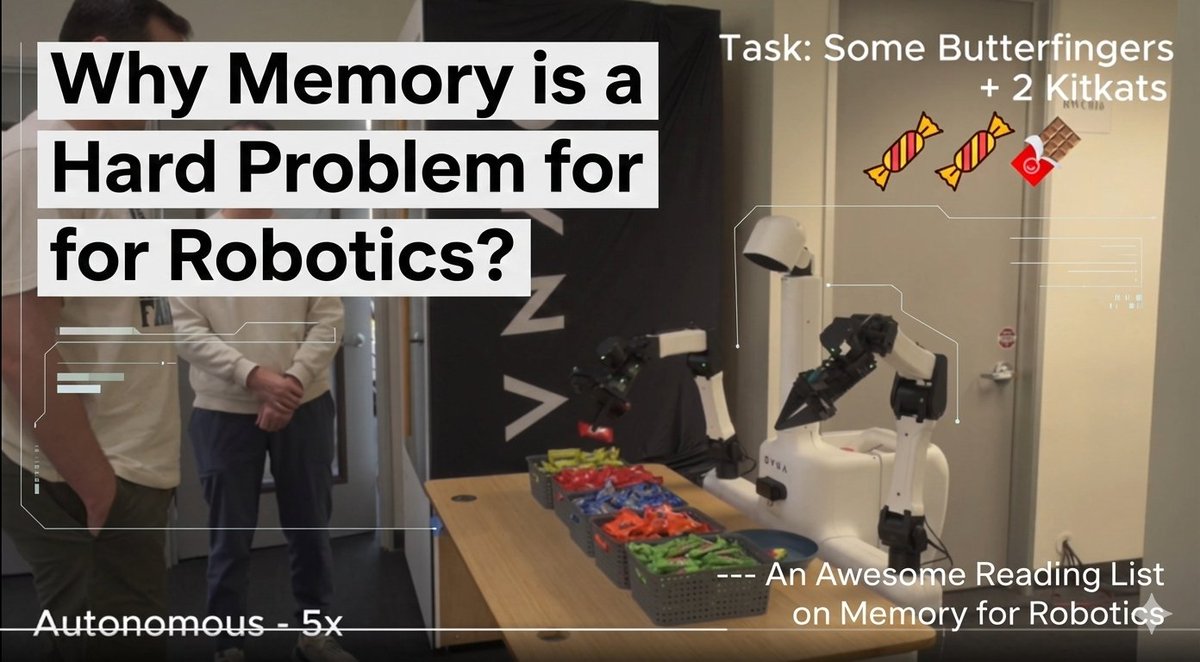
VLAs nowadays enable robotic manipulation to perform impressive tasks like folding clothes, making coffee, and cleaning dishes. However, surprisingly, most VLAs lack memory. Unlike their close relatives LLMs, VLAs have no context window and no access to history. This causes them to repeatedly fail in the same way without learning from online experience. But why? Why not simply extend the context window like LLMs? It's not that we don't want to -- it's because it's extremely difficult. Here, I share a talk by @chelseabfinn at NeurIPS that scope the challenges in developing long-horizon autonomy for embodied agents. At the end, there's a reading list on memory for robotics. ⭐
Jie Wang tweet media
English
7
50
363
18.3K
Brett Hall
Brett Hall@ToKTeacher·
Put aside the usual stuff around “we’re all about to lose our jobs” - the idea that *AI could solve our problems faster* would be a thing to celebrate, not be concerned about. Of course AI is not going to replace physicists anymore than calculators replaced mathematicians.
Peter H. Diamandis, MD@PeterDiamandis

If AI can now solve math, discover physics and chemistry breakthroughs faster than human PhDs, why are we still training humans to be physicists? Serious question. Should education shift from 'learn to do X' to 'learn to direct AI doing X'? The wrong direction costs a generation their careers.
English
11
4
55
3.1K
Alex Smith
Alex Smith@ninja_maths·
Math is better understood as infrastructure than as a self-contained subject. Strong infrastructure gives a person much more leverage in any domain that depends on precise thinking, modeling, or abstraction. Weak infrastructure constrains everything built on top of it.
Alex Smith@ninja_maths

One reason I care so much about mathematical development is that math is unusually powerful when paired with something else. Math + engineering Math + physics Math + economics Math + computer science ... The combination is worth far more than either domain in isolation.

English
3
16
175
5.8K
Andrew Côté
Andrew Côté@Andercot·
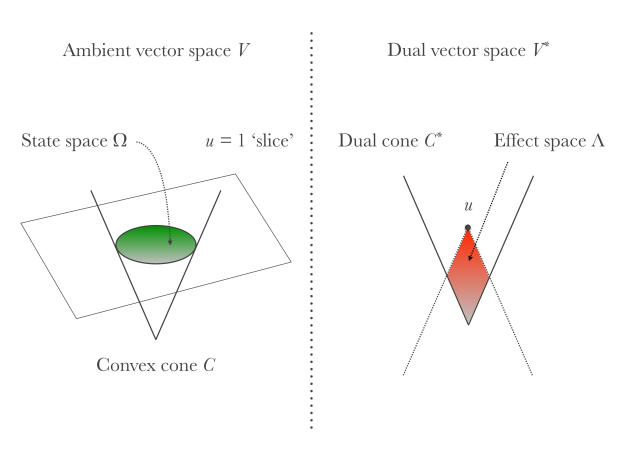
My personal advice is to assume dual-vector formalism is correct, that there is a retro-causal propagating creation operator consistent with the present traveling backwards in time. It's future you begging you to be better.
Andrew Côté tweet media
English
20
12
134
9.3K
Naval
Naval@naval·
How to Get Rich (without getting lucky):
English
10.8K
79.1K
272.6K
0
Naval
Naval@naval·
A lot of software is about to get a lot better, right before it becomes unnecessary.
English
902
1.1K
16.6K
738.9K
Jenny Zhang
Jenny Zhang@jennyzhangzt·
Introducing Hyperagents: an AI system that not only improves at solving tasks, but also improves how it improves itself. The Darwin Gödel Machine (DGM) demonstrated that open-ended self-improvement is possible by iteratively generating and evaluating improved agents, yet it relies on a key assumption: that improvements in task performance (e.g., coding ability) translate into improvements in the self-improvement process itself. This alignment holds in coding, where both evaluation and modification are expressed in the same domain, but breaks down more generally. As a result, prior systems remain constrained by fixed, handcrafted meta-level procedures that do not themselves evolve. We introduce Hyperagents – self-referential agents that can modify both their task-solving behavior and the process that generates future improvements. This enables what we call metacognitive self-modification: learning not just to perform better, but to improve at improving. We instantiate this framework as DGM-Hyperagents (DGM-H), an extension of the DGM in which both task-solving behavior and the self-improvement procedure are editable and subject to evolution. Across diverse domains (coding, paper review, robotics reward design, and Olympiad-level math solution grading), hyperagents enable continuous performance improvements over time and outperform baselines without self-improvement or open-ended exploration, as well as prior self-improving systems (including DGM). DGM-H also improves the process by which new agents are generated (e.g. persistent memory, performance tracking), and these meta-level improvements transfer across domains and accumulate across runs. This work was done during my internship at Meta (@AIatMeta), in collaboration with Bingchen Zhao (@BingchenZhao), Wannan Yang (@winnieyangwn), Jakob Foerster (@j_foerst), Jeff Clune (@jeffclune), Minqi Jiang (@MinqiJiang), Sam Devlin (@smdvln), and Tatiana Shavrina (@rybolos).
Jenny Zhang tweet media
English
155
661
3.6K
490.7K
Hunter Ash
Hunter Ash@ArtemisConsort·
I came out of a mushroom trip realizing we must allow people to lose in order to make progress, that trying to save everyone inevitably leads to collapse, that inequality is the engine of all growth, from evolution to economics to science. Not exactly a scientific insight, but not fluffy hippy stuff either.
David Sun@arcticinstincts

Has anyone ever come out of these “profound” psychedelic trips with a verifiable scientific insight or breakthrough in physics or psychology or something? Can you fix Africa now? Why do these trip reports just read like Eckhart Tolle Burning man Deepak Chopramaxxed guruslop

English
137
60
1.3K
53.9K
Alper Derinkuyu
Alper Derinkuyu@aDsv1_·
@bryan_johnson Birincisi hiç bir madde ile bu sağlanamaz. İkincisi varoluşa inanç bir yanılgıdır. Üçüncüsü ise yalan kötü birşeydir. Dördüncüsü ve en önemlisi bir şeyin var olması önemsizdir, mühim olan doğru olup olmadığıdır.
Türkçe
0
0
0
11
Bryan Johnson
Bryan Johnson@bryan_johnson·
This was the most profound experience of my life. I am stunned beyond comprehension. This molecule is without peer. The 27mg dose opened up what felt like pure consciousness and intelligence. A majestic reveal of existence itself. In all its incomprehensible glory and majesty. It is impossible to explain with words. Whatever you imagine, multiply it by 1,000 and then add infinite width and depth and dimensions. But entrance was not granted without prerequisite. Existence demanded that I submit. That I say yes; without attachment and without condition. Yes to existence; yes to the dissolution of self; yes to release control; yes, to all. My ego registered the ask and panicked. It wanted control. It was desperate for control. It pleaded to escape from the torrent of light and essence that threatened to rip my sanity into chards. The urge to eject was overwhelming. Terror thundered throughout my mind and body. It took everything within me to release. I overcame and was treated with bliss that defies imagination. A euphoria colored with perfect harmony of all things. An orchestra of essence washed over me and swept me up in dance. It was home. The highest aspiration of intelligent life. For some reason, stored and tucked away as the ultimate prize. A single concept emerged in omnipresence: we cannot grok the preciousness of our existence. Yet it is everything we’ve ever wanted and more. The state we long for without knowing it exists. This caused me great pain and heartache. A swell of loyalty and devotion emerged inside me, pledging allegiance to existence. To become a warrior and caretaker of life on earth. To protect at any cost the candle of consciousness that has miraculously emerged in this part of the galaxy. What awaits will wipe all your tears, soothe all your sorrows, and infinitely exceed your wants.
Bryan Johnson@bryan_johnson

twitter.com/i/broadcasts/1…

English
1K
571
9.8K
3.3M
Defiant L’s
Defiant L’s@DefiantLs·
Michael Shellenberger: "I think free speech is hanging by a thread globally and that thread is Elon Musk… What's happening on X is the change of consciousness and… the establishment is desperate to either shut it down or censor it"
English
558
3.2K
20K
1.2M
Alper Derinkuyu
Alper Derinkuyu@aDsv1_·
@DefiantLs İfade özgürlüğü yanılgıdır. Ama düşünce özgürlüğü haktır. Nerde ve kim olursa olsun, yanlış bilgi birikimi önlenmeli. Yoksa bu çöplüğün altında hepimiz kalacağız.
Türkçe
0
0
0
21
Bernard J. Baars, PhD
Bernard J. Baars, PhD@BernardJBaars·
New on Substack: Where One Might Look If frames shape conscious life, they should also leave empirical traces. I explore where we might look for those traces: in adaptation, language, expertise, surprise, ambiguity, and our curious blindness to the presuppositions that quietly organize thought.
Bernard J. Baars, PhD tweet media
English
4
1
11
626
Michael Strong
Michael Strong@flowidealism·
Something is happening in education that most people have not noticed yet, and I believe it is worth understanding, even if you never change a single thing about your child’s schooling. To understand what is happening, it helps to know what came before. In 1920, there were about 200,000 school districts in the United States. For most Americans, the one-room schoolhouse was a reality. Districts were small, local, and responsive to parents. By 1970, due to the school consolidation movement, that number had fallen to about 20,000. Today, there are public high schools with 2,000, 3,000, or even 5,000 students. They are monstrosities. New York City schools spend approximately $40,000 per pupil each year. The results are mediocre at best and catastrophic at worst. For the first time in American history, that monopoly is beginning to crack. Educational Scholarship Accounts now allow families in multiple states to use public funds for private education, tutoring, homeschool materials, and other educational services of their choice. If you had a ten-student microschool and could access that money directly, you would have $400,000 a year to educate ten students. The resources exist. They always have. They were simply locked inside a system that could not use them well. At the same time, the homeschool and microschool movement has grown tremendously. These are not isolated families doing worksheets at the kitchen table. They are organized communities of parents, often led by mothers and former teachers, who saw their children struggling and decided to build something better. Learning pods allow families to share the teaching load. I know families in which each mother watches the children one day a week, and the kids rotate among homes. Microschools bring eight to fifteen students together with a skilled guide. The models vary, but the underlying principle is the same: small groups, meaningful relationships, and genuine learning. What has not changed, and what technology cannot replace, is the human element. A child needs adults who know them, who take their thinking seriously, and who create an environment where they feel safe enough to take intellectual risks. A child needs peers who share their curiosity and hold them to a higher standard. A child needs to feel that what they are doing matters, that their education is not merely preparation for some future life, but a meaningful part of their life right now. This is where I have spent thirty-five years: building environments in which the human element is the foundation and everything else serves it. Small seminars where every student speaks every day. Mentorship relationships develop over the years. A culture built around genuine intellectual engagement rather than compliance or credentialing. I am sharing this because I believe we are at an inflection point. The families who understand what is happening and act on it in the next few years will give their children an extraordinary advantage. Not an advantage measured merely in test scores or college acceptance letters, though those often follow, but one measured in how their children think, how they relate to others, and how they approach the world. Putting more money into the system will not change it, because the problem is structural, not financial. Every meaningful change in education has come from families and educators who chose to build something new outside the existing structure. That movement is now larger and better funded than it has ever been. If you are curious about what this looks like in practice, or if you simply want to talk about your child’s situation, reply to this email. I have been at this for thirty-five years, and I still find every family’s story worth hearing.
English
30
90
481
26.6K