Life is fragile and unpredictable. One moment you’re immersed in an ocean of excitement and happiness and in the next your world just sweeps under your feet not knowing the answer to why or how.
Such is death.
Today in @Nature a synthesis of the epidemiology of child #malnutrition in the Global South published in 3 papers led by our team. Below, I’ll highlight a few of the results #epitwitter#Medtwitter#tweetorial 🧵 (1/17)
Open science tools that are restricted to academic use only are not open science tools.
Science tools funded by tax payer dollars are public property.
These are my hot takes. Not budging an inch with either of them.
Enamel is tough enough to resist dents, yet elastic enough not to crack during decades of jaw smashing.
It’s so incredible that scientists haven’t created a substitute that can match it—until last year. #ScienceMagArchivesscim.ag/3Q8
It's as close to official as we'll probably get: LK-99 is likely simply a ferromagnetic material, which explains its levitating properties, according to new research from Peking University.
The room temperature superconductivity revolution will have to wait another day.
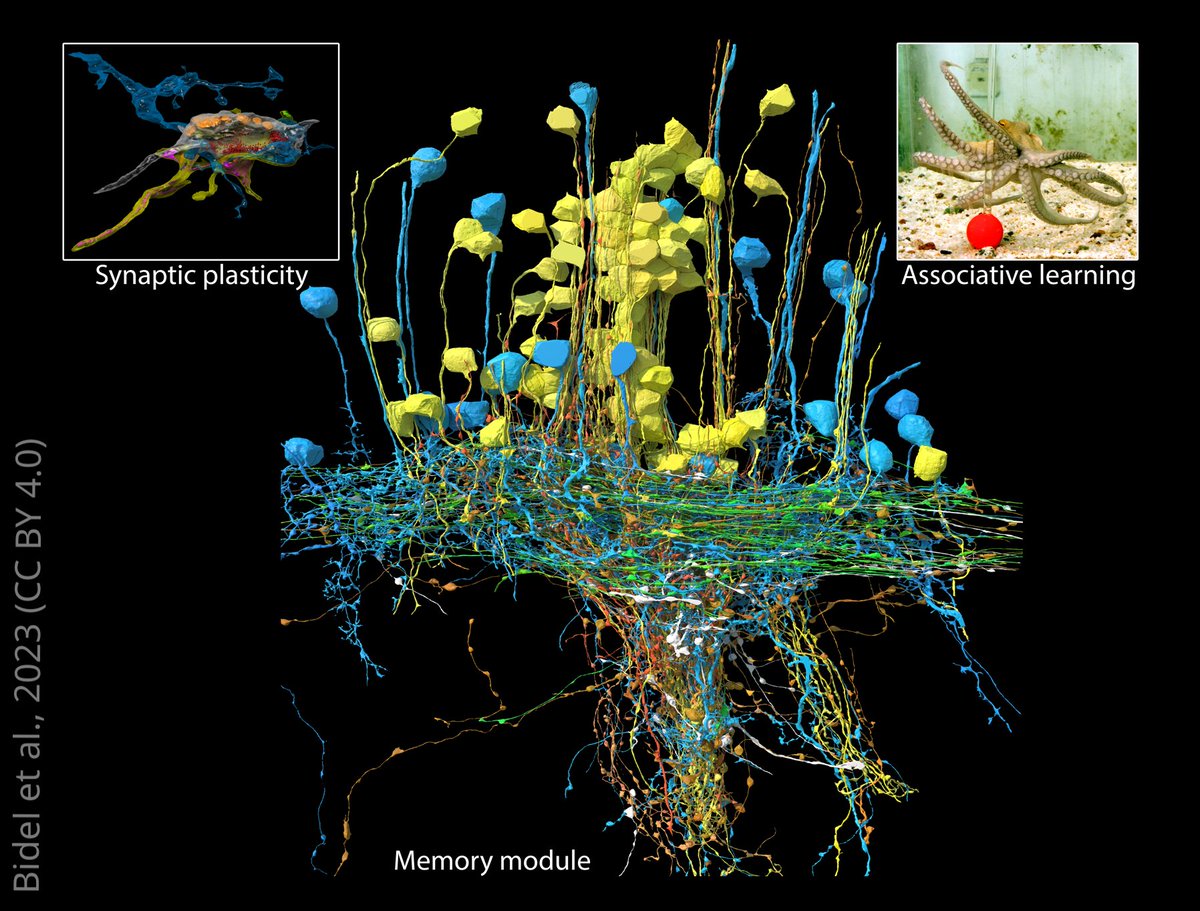
For the first time, scientists have analysed the connectome for part of the brain in the common octopus that’s involved in acquiring long-term memories. elifesciences.org/articles/84257…
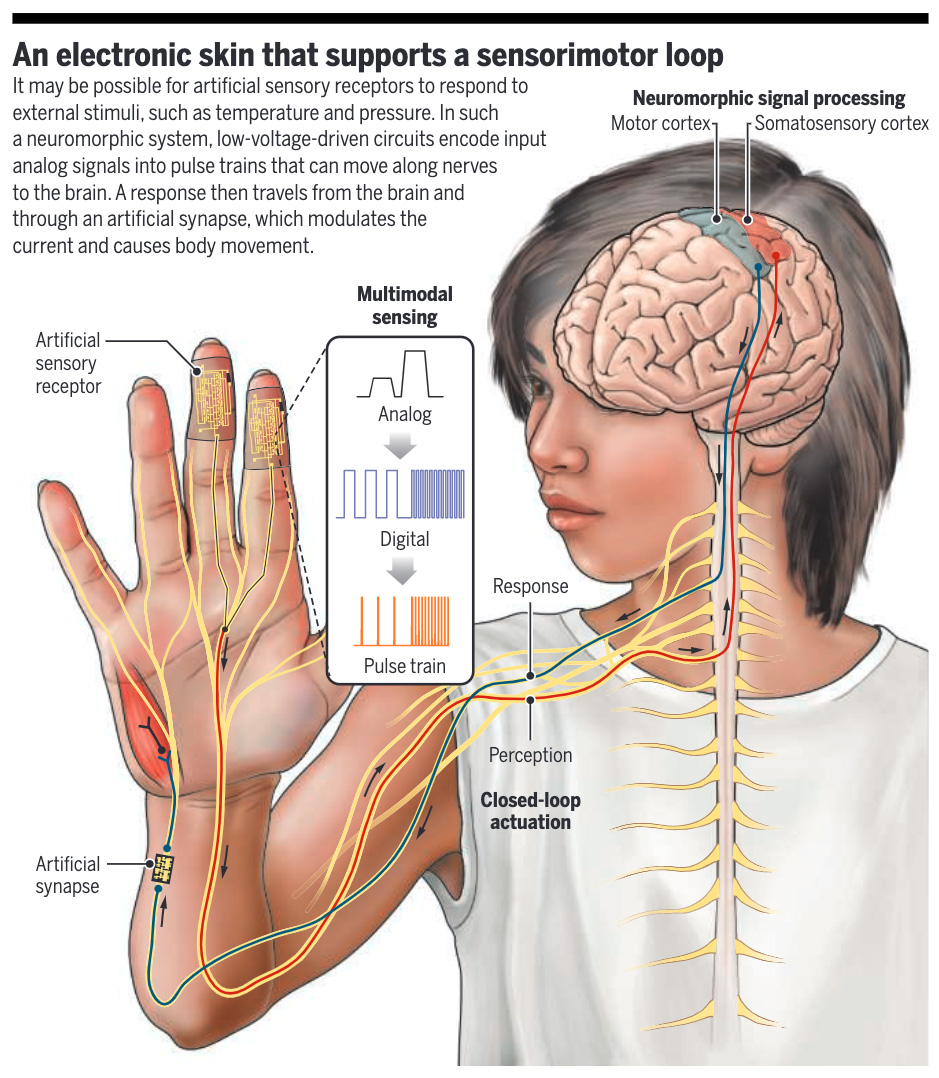
Researchers have developed and tested in rats a neuromorphic electronic skin system that simultaneously emulates closed-loop sensory encoding and the mechanical softness of natural skin.
Learn more in a recent #SciencePerspective: scim.ag/3yE
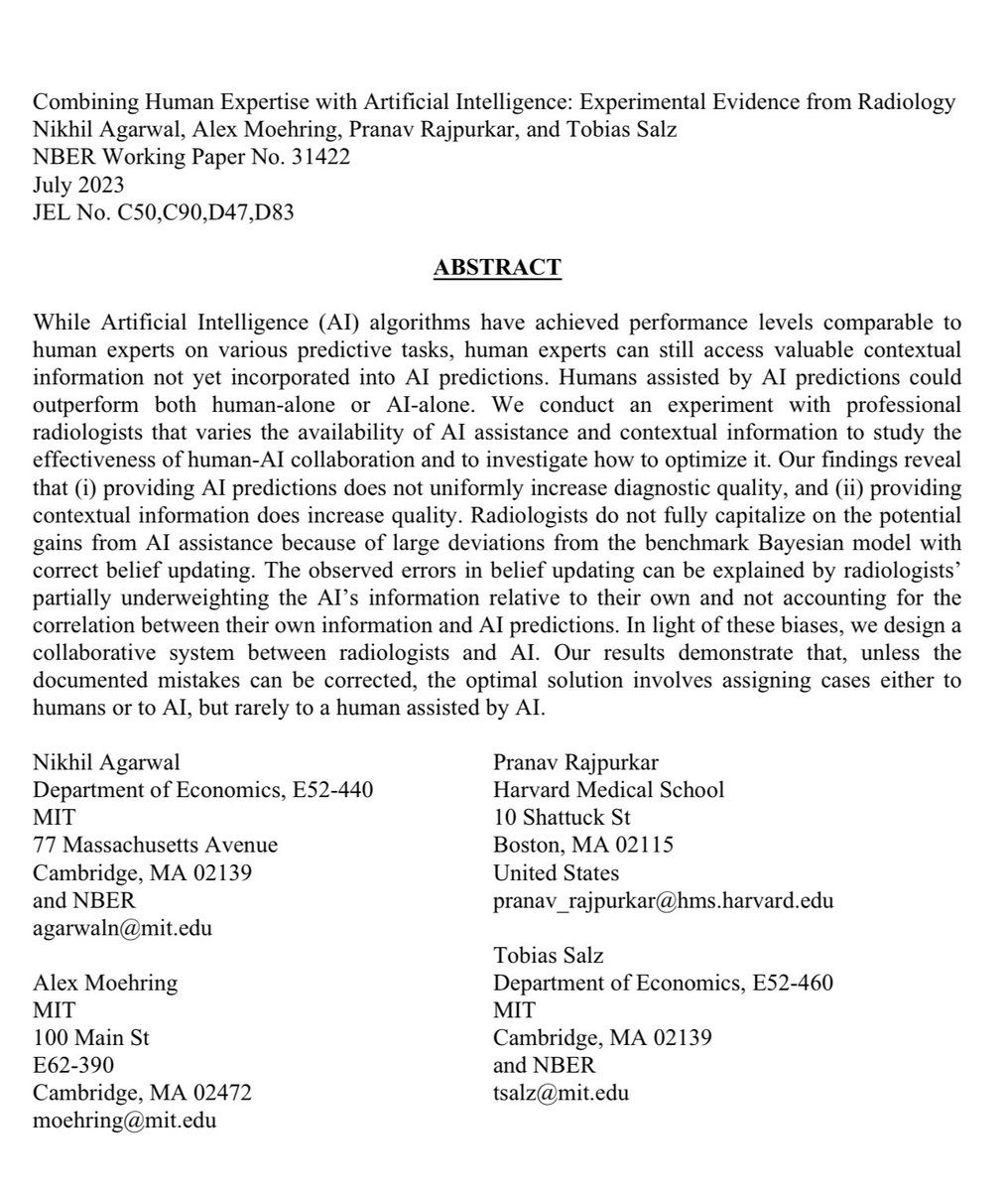
In this study, AI was more accurate than two thirds of radiologists, yet when radiologists had AI help their diagnoses did not improve. Why?
Humans ignored the AI’s advice when it conflicted with their views. A big barrier to future human-AI collaboration blueprintcdn.com/wp-content/upl…
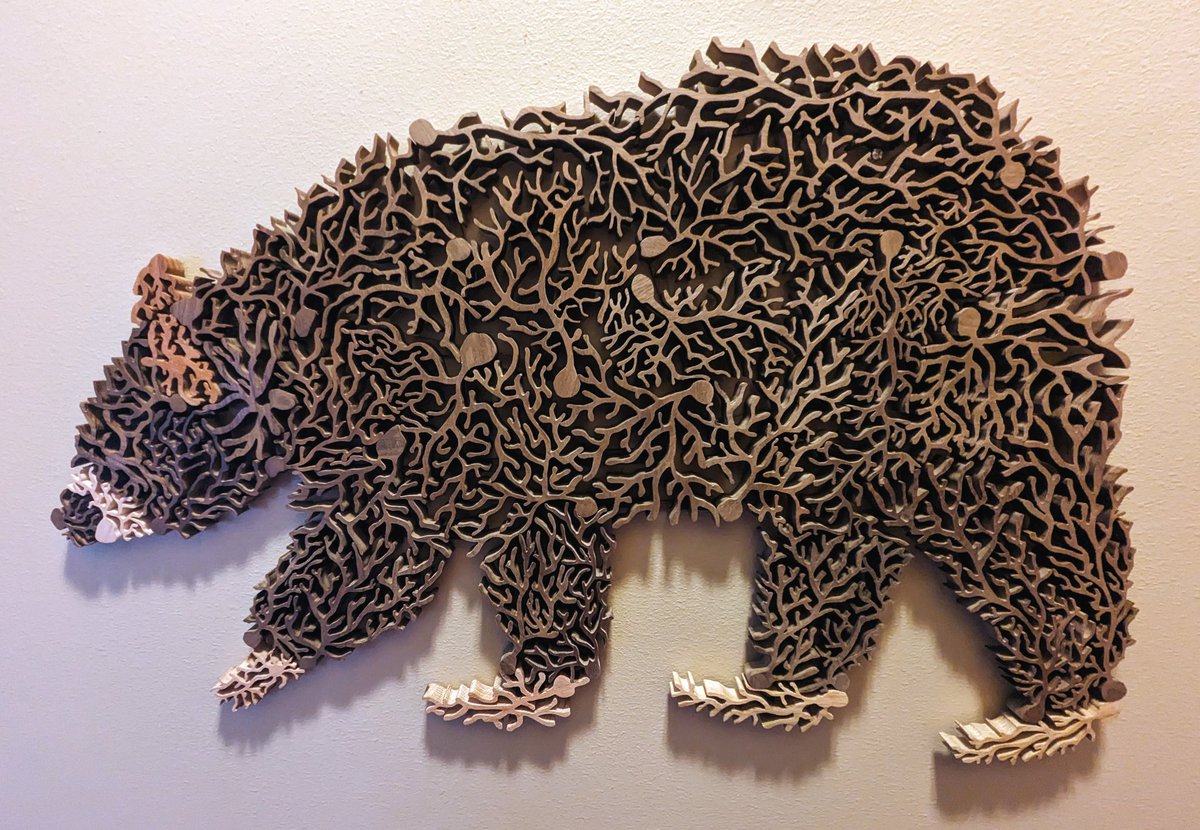
Just finished my most ambitious project yet: "the purkinje bear" 🐻. If you look closer, you will notice that this bear is made of 37 #brain cells, each manually cut with a scroll saw. Walnut, oak, sapele and maple woods. #neuroscience#animal#art
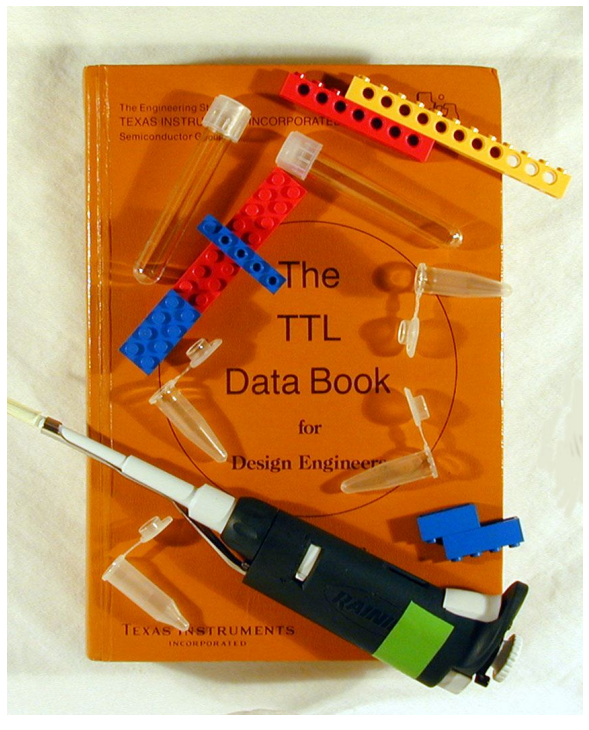
Day 8 of great synthetic biology papers.
“Idempotent Vector Design for Standard Assembly of Biobricks” (2003).
Genetic circuits rarely work on first try. It's hard to copy someone else’s work.
So this paper standardized DNA assembly, much like screws were standardized in 1864.
*****
In the 1850s, if you wanted to build a house, you might go chop down some wood and then fasten together the logs using wonky-looking screws, which have been around since at least 400 B.C. but were not standardized until 1864.
A man named William Sellers was responsible. He gave a speech at the Franklin Institute in Philadelphia, proposing to standardize the screw; to make each one, of varying sizes, have a consistent “pitch, diameter, and form of screw threads.”
Up to this point in history, each screw had a different shape. Each workshop made them in a different way.
But, after Sellers' speech, an entire industry quickly formed around the new standards. Soon, all the different workshops made screws in the same way. Suddenly, a blueprint for a bridge in San Francisco could be duplicated in Tokyo or Sydney. Engineering became standardized, consistent, and replicable.
So why should biology be any different?
After all, synthetic biologists spend lots of time building genetic circuits from small, modular sequences. A gene in bacteria is made from a promoter, coding sequence, ribosome binding site, and terminator.
Each of these parts can be isolated from diverse organisms, placed into a cell, and they just...work.
But it wasn't until 1996 that a group of researchers at the University of Illinois at Chicago first proposed consistent standards for assembling DNA in biology! They called their approach, published in PNAS, NOMAD. It stands for Nucleic acid Ordered Module Assembly with Directionality.
“Use of NOMAD ensures that the production of experimental constructs is no longer the rate-limiting step in applications that require combinatorial rearrangement of DNA fragments,” they wrote. (pnas.org/doi/abs/10.107…)
The paper is very impressive. It lays out a whole system to stitch together promoters and other “pieces” into synthetic genes. But nobody really seems to have given a damn, until seven years later, when Tom Knight (who ran a biology lab at the MIT AI Laboratory, and who had previously designed and implemented the MIT Lisp Machine processor and also “supervised the construction of the first PDP-10 ARPANET interfaces with Bob Metcalfe) devised a similar standardization protocol, called Biobricks. (en.wikipedia.org/wiki/Tom_Knigh…)
The basic idea of Biobricks is to store each individual DNA “part” — a promoter, coding sequence, terminator, whatever — on a circular loop of DNA, called a plasmid. Each part is then flanked with short DNA fragments, called restriction sites, that are recognized and cleaved by specific enzymes. When these sites are cut, they leave behind little overhangs that can be stitched together with other DNA parts.
It’s a really clever approach, and useful. This paper, much like Sellers' speech for screws, formed the entire basis by which we now clone and assemble DNA in synthetic biology.
h/t @jrkelly
Paper: dspace.mit.edu/handle/1721.1/…
Richard Feynman was a brilliant physicist best known for his exceptional contributions to quantum mechanics and his captivating teaching style, among others.
Here are all of Feynman's Freely available Lectures at one place.
A Thread 🧵
BREAKING: it is virtually certain that July 2023 will be the hottest month in recorded history by a margin that even the most blindly optimistic scientists find to be stunning and yet mass media still remain criminally silent on the desperate need for economic system change 🧵
after all the Internet stuff… it all narrows down… even in science.. to face to face human to human explanation, demonstration, advice, co-ordination to get really complex new ideas transmitted.
Folks from MIT literally flew to 🇰🇷 yesterday to work with the team.