Paula Pant

15.7K posts

Paula Pant banner
Paula Pant

Paula Pant

@AffordAnything

🎙️Afford Anything Podcast, 45M downloads 🎥 Netflix "Get Smart with Money" 🎓 Fellow @Columbia Business & Economics Reporting ⬇️ (link) Free Invest Guide 🇺🇸

Investing Guide 📕 ➡️ Katılım Şubat 2011
1.2K Takip Edilen29.8K Takipçiler
Sabitlenmiş Tweet
Paula Pant
Paula Pant@AffordAnything·
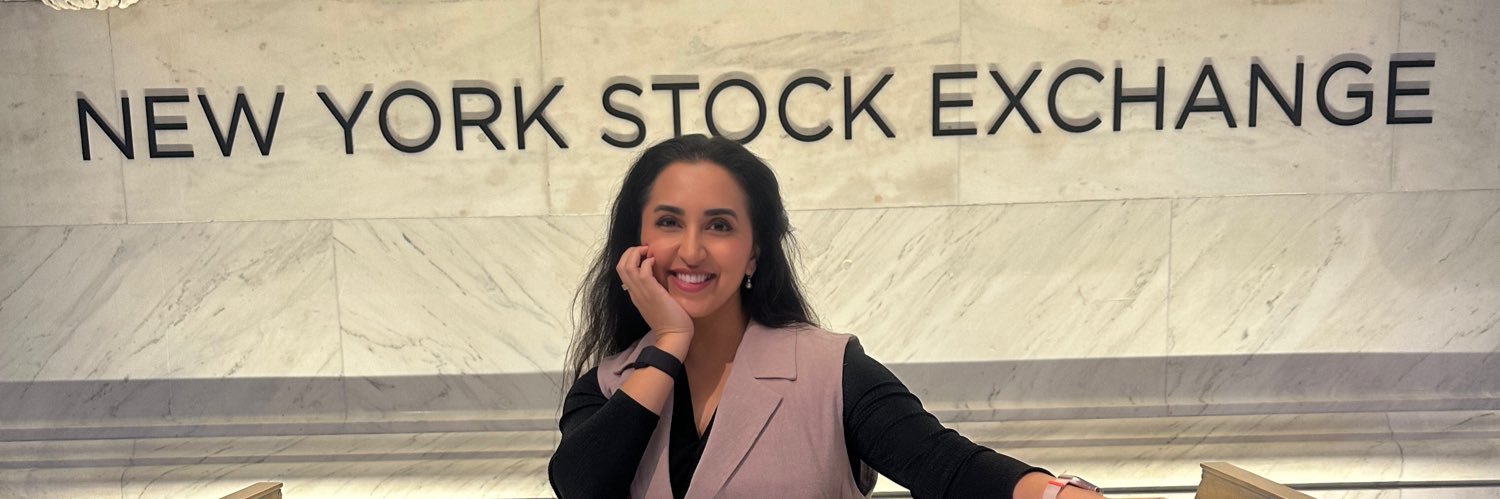
How it started. || How it’s going. @columbiajourn 💙
Paula Pant tweet mediaPaula Pant tweet media
English
17
3
256
70.9K
Paula Pant
Paula Pant@AffordAnything·
@jjeffrose There's no way they have a Gmail address. This has got to be a spoof.
English
0
0
5
409
Jeff Rose, CFP®
Jeff Rose, CFP®@jjeffrose·
Even though he's blocked me Dave still wants to pay me $4,000 to be on his show. Hopefully, they'll pay me in Bitcoin.
Jeff Rose, CFP® tweet media
English
7
0
2
6.6K
Paula Pant
Paula Pant@AffordAnything·
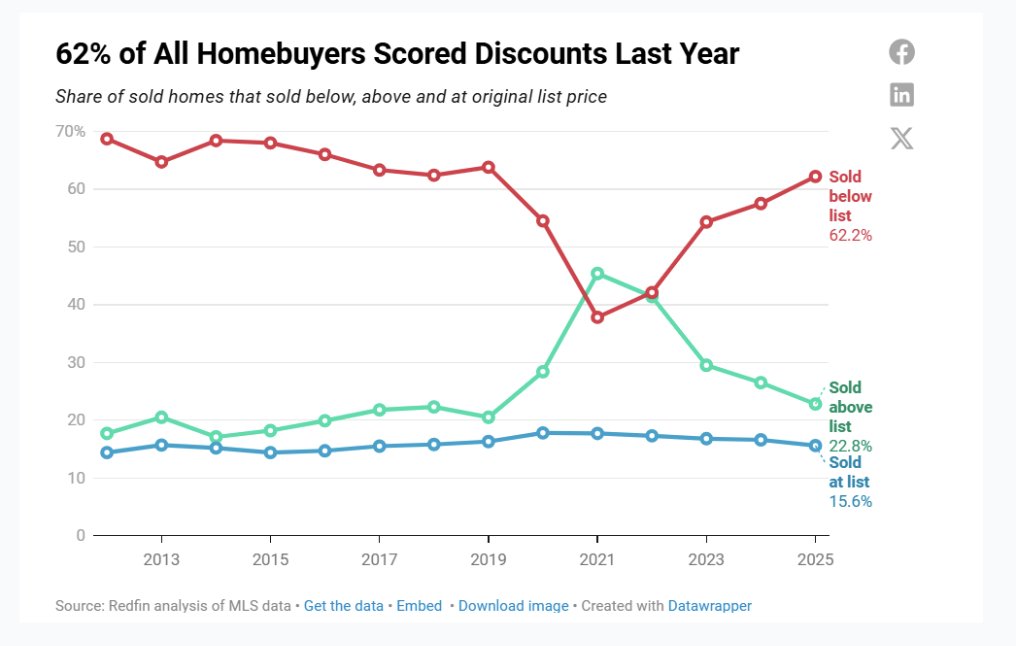
The housing market may be getting closer to pre-pandemic norms, according to a recent Zillow report. The number of days-on-market is widening and looking similar to conditions before the pandemic. The gap between how quickly homes are sold and how long all inventory sits reached its widest point for any March since 2020. In March 2026, the typical home that sold went pending in 19 days, while the median age of all active listings was 56 days — a 37-day difference. This points to a market where buyers have more choice and more leverage than they have had in years. Add to this the continuing trend of seller concessions, and buying real estate in 2026 is becoming more attainable for prepared buyers. Redfin found 62.2% of U.S. home sales in 2025 were sold BELOW list price, thanks to seller concessions, like closing cost credits, repair credits, and rate buydowns. As Redfin’s senior economist, Asad Khan puts it: “Homebuyers in 2026 shouldn’t write off homes that are slightly above their budget ... ... because there’s a good chance they’ll get some sort of concession from the seller, be it a price cut, money toward closing costs, or funds for repairs.”
Paula Pant tweet media
English
0
0
6
646
Paula Pant
Paula Pant@AffordAnything·
@ItsKieranDrew Kit is fantastic. I've been using them since 2015, and I'm thrilled with them. I'll be with them for life. 71K subs.
English
1
0
4
542
Paula Pant
Paula Pant@AffordAnything·
@Amelia91575195 @GrahamStephan Austin built 120,000 homes in a decade, rents dropped 6% -- and rather than limiting landlords, they encouraged more landlording through the construction of ADUs, which is how they built so many homes.
English
0
0
0
26
Graham Stephan
Graham Stephan@GrahamStephan·
I’ve spent a decade telling people to do what I do: "Buy and Hold." Now I've decided to list my entire real estate portfolio for sale and walk away. It started slow. The bills, the maintenance, the tax increases... but the final straw was when I tried to develop an ADU to do exactly what the city of LA claims it wants investors like me to do: Create more housing. You'd think they'd make it easier, but after two delayed inspections, a sewer pipe replacement that needed 75 days advance notice, and a city-owned tree that became my responsibility, I'd had enough. The identity of being a real-estate guy is very hard to walk away from, trust me. For a long time, I stayed just because real estate was my "thing." It’s how I started. It’s what I’m known for. It led to every good thing in my life. But that blinded me to the fact that just because something served me in the past, it doesn't mean things haven't changed in the present. The reality of 2026 finally stripped the emotion away. My LA rentals are netting about 4-5% after the constant background noise of taxes, insurance spikes, and repairs. Meanwhile, a risk-free Treasury pays 5%. The trade-off just doesn't make sense any more. I’m reallocating to a liquid portfolio that actually lets me focus on the work I love. I published a deep dive on my Substack about the ADU nightmare that broke my patience, the exact numbers behind the exit, and where I’m moving the money next to buy back my sanity. I'll drop the link here in a bit.
Graham Stephan tweet media
English
985
361
9K
3.7M
Paula Pant
Paula Pant@AffordAnything·
BTW, we have a free "asset location cheat sheet" -- a guide on where to put your money. It's at the link on my profile page.
English
0
0
2
394
Paula Pant
Paula Pant@AffordAnything·
"where do i put my money?" Imagine a variety of glassware: coffee mugs, champagne flutes, martini glasses, wine glasses, shot glasses, plastic red Solo cups. ​ These represent your various accounts: 401k, IRA, HSA, taxable brokerage, checking, and savings. ​ Then there's the actual drink: coffee, tea, champagne, vodka, wine, water, milk, juice. These represent the assets inside of the accounts -- cash, CDs, index funds, mutual funds, individual stocks. ​ There are certain assets that are typically held inside certain accounts -- champagne normally goes in a champagne flute. This is called "asset location." There are certain best practices when it comes to asset location -- e.g., small-cap funds in a Roth account -- but it's not a requirement. You could theoretically drink champagne out of a coffee mug if you wanted to. ​ I sometimes talk to beginners who say things like, "Well, I don't trust the market, so I'm not going to open a 401k." This is the analogy I use to explain what they're misunderstanding. The 401k is not the market. The 401k is just the coffee mug. If you don't trust the market, you could still open a 401k, get the employer match, and hold bonds or even cash. (I wouldn't recommend that as a long-term investment strategy. But getting the employer match is better than not getting it, so its a solid first step.) I'll also talk to beginners who say, "Well, I'm excited about trading and crypto, so I'm going to open a Robinhood account." And I’m like, "Cool, do you have a Roth IRA?" And they say, "No, that’s boring." But they can hold individual stocks and crypto ETFs inside a Roth IRA if they want to. (Again, I’d be cautious about too much of that as a long-term strategy -- but it's an option.) The point is not to conflate the container with what's inside it. So when you're asking "where do i put my money?" you’re really making two separate decisions: (1) which account to use, and (2) what to invest in inside that account.
English
2
1
3
1.2K
Paula Pant
Paula Pant@AffordAnything·
Let’s start with one of the most basic questions in personal finance: “How do I save more money?” The cliche answer is: “Stop ordering avocado toast.” I think that misses the point. Here’s a more useful way to think about it: Start with fixed costs: rent or mortgage, and installment loans like car payments or student loans. These are the numbers that don't budge without a LOT of effort (like moving or refinancing). Then there are variable costs, which fall into two categories. There are variable costs for necessities – groceries, utilities. And there are variable costs for discretionary items – avocado toast, lattes. Most advice tends to focus on cutting variable discretionary spending. The goal becomes: spend less on discretionary items. From that come tactics (budgeting hacks) and strategy (mindset reframes, environmental cues and triggers). But this puts the focus in the wrong place. Cutting discretionary spending is low-friction, which is why it’s so popular. There are few barriers to, say, not ordering that second beer, or not buying another cashmere sweater. You just don't do it. Yes, there are mindset shifts and tactical tools. But at the end of the day, each decision you make is in isolation, and each one is immediate. Whether you skip the beer on Friday has nothing to do with whether you buy the sweater on Monday. And because these decisions are frequent, they rely on ongoing willpower. You have to choose again and again. And whatever decision you make, the impact on your budget is instant. So ironically, there's some immediate gratification that comes from the choice, no matter what. If you buy the beer or sweater, you get the immediate gratification of the purchase. But if you've deeply internalized a desire to save, you get the identity boost of reinforcing that you're a great saver. There's immediate gratification either way. By contrast, changing fixed costs is high-friction. To change your rent, you would literally have to move. To change your car payment, you might literally have to sell your car and buy a clunker. But this is where you see the biggest impact. The problem is these are one-time decisions. They often take months to implement. And so you get neither frequency nor immediacy. That's why changing fixed costs gets less attention. But it's more of a needle-mover. If you want small wins, cut discretionary spending. But if you want meaningful change, focus on fixed costs.
English
2
0
12
2.2K
Paula Pant
Paula Pant@AffordAnything·
If you don't control your money, you don't control your life.
English
3
0
17
683
Paula Pant
Paula Pant@AffordAnything·
I have a friend who's an entrepreneur for a bootstrapped content company (YouTuber). He has three full-time employees and a handful of contractors, but he pays himself a very small salary, and he's constantly talking about how he can't make ends meet. Yet he ends his workdays at 5 PM so that he can spend his evenings going to fun stuff -- pickup soccer games (for himself -- no kids), meetups and events. He travels for fun several weeks a year, and also takes time off when his friends come visit. He has a handful of hobbies -- pick up soccer, beach volleyball, playing in a local band -- that take up a chunk of his weekends. In short, he has a well-rounded life, which is great .... except that he won't stop talking about the fact that he's broke. Pick one. If he wants to make money and have a well-rounded life, he can find the comfort of a W-2 job that lets him do that. But if he wants to grow his business and make money, then he needs to hustle a lot harder. He needs to decide. Frustration comes from wanting the rewards without being willing to make the sacrifices.
English
3
0
14
2.2K
Paula Pant
Paula Pant@AffordAnything·
Many people track their money but ignore their energy, attention, and focus. But those are even more finite. Pay attention to where yours goes. Where does it get wasted? Where do you get the best returns?
English
1
0
13
612
Paula Pant
Paula Pant@AffordAnything·
When you plan a life, there are two ways to play the game: defense and offense. Defense is about minimizing regret. Offense is about maximizing enjoyment. I've found that you sleep better when you play defense-first. Just don't get stuck there.
English
4
1
15
1.2K
Paula Pant
Paula Pant@AffordAnything·
@WSJ Okay, legitimate question from a full-time podcaster: Don't you think it does more harm than good to over-emphasize gender // turn this into a gender war? Can't we simply have great podcasts that cover important topics in a thoughtful manner -- without the identity politics?
English
11
5
94
1.9K
The Wall Street Journal
Podcasting is dominated by men. Maria Sharapova wants to offer some counterprogramming. The tennis star’s new podcast, “Pretty Tough,” debuts on April 22 as an alternative to what has become known as the manosphere. It aims to highlight ambitious women. on.wsj.com/4sFMJgo
The Wall Street Journal tweet media
English
268
19
144
507.7K
Paula Pant
Paula Pant@AffordAnything·
Exactly. I think he didn't quite realize that by making the shift to running his own thing, he would -- in essence -- be taking a pay cut (at his current lifestyle). So now he complains because he works the same number of hours as he did when he was a W2, and grosses a lot, but nets very little. The pay cut doesn't have to be permanent, but if he wants to change it, he has to really buckle down.
English
0
0
1
9
Mrs Nerdy Engineer
Mrs Nerdy Engineer@HeatherMJames3·
@AffordAnything Balance is best, but balance comes at the expense of economic productivity. Because every hour not spent earning is an opportunity cost. I personally think it’s an EXCELLENT tradeoff and so do most people, but this dude needs to just pick and stop whining like he has zero agency
English
1
0
1
12
Michael Wolfe
Michael Wolfe@michaelrwolfe·
@KennyBurgosNY I love how the replies are full of people who believe: - All landlords are sitting on a big bag of cash. - They should be willing to lose all of that cash. - That cash must have been obtained in some other way than landlording.
English
8
3
222
5.9K
Kenny Burgos
Kenny Burgos@KennyBurgosNY·
These are so frustrating to receive. A building owner sent me this video of a 2BR Upper West Side apartment he just got back, but after he empties it out it will stay vacant going forward. The tenant lived here since 1985 and the current legal rent is $940.01 Because of the 2019 HSTPA law, a building owner is expected to fully renovate this unit to current building code (that’s a good thing), but also expected to lose money in perpetuity at the same time. This 2BD would need well over $100,000 to clean out the debris, comply with lead laws, upgrade major systems, remove the Sheetrock + much more just to make this into an apartment a tenant would actually want to live in with dignity. But the law says the $940 rent would still end up below the estimated $1300/mo it costs to operate the apt which covers insurance, property taxes, labor, fuel, and capital expenditures for the building. So if the new rent falls below the operating cost, the owner would still lose money every month and never see $1 back from the $100k+ renovation. Why would the state expect anyone to lose money like this? What bank would ever provide a loan with no path to repayment? Why do we acknowledge the cost to build housing but ignore what it takes to preserve older housing? Why do we accept this policy when thousands of New Yorkers are searching for housing in the midst of the worst supply crunch we’ve ever seen? So frustrating.
English
670
973
6.7K
1.3M
Eric
Eric@Eric_Hansen71·
@AffordAnything I’m saving my HSA for my adult diaper years. The hope is to get 30+ years of returns until I need it
GIF
English
1
0
1
72
Paula Pant
Paula Pant@AffordAnything·
There's a concept in retirement planning called the "spending smile" or a "spending smirk." Here's the idea: We like to assume that retirement spending is a flat line. Draw down 4% of your income in the first year, and then 4% adjusted for inflation every subsequent year. But that's not how life actually works. Spending doesn’t stay constant throughout retirement. Instead, it tends to follow a curve. In the early years -- your 60s and maybe your early 70s -- You usually spend more. You travel. You golf, or scuba dive, or drive race cars, or whatever it is that you're into. Because at this stage, if you're lucky and have good habits, you're still pretty young and healthy. After that, spending tends to slow down. In the mid-to-late 70s, people often slow down. They travel less, go out less, and overall just kind of sit at home more. Then, later in life, spending can rise again. Now you have the costs that come from being frail. You need somebody to do your laundry and to cook your food and mop your floors, because you don't have the energy for it. You have higher healthcare costs, and you need to hire out more tasks. That's the "smile." Some researchers use a slightly different term: the "spending smirk." And that's because the amount that you spend at the end **isn't** symmetrical to what you spent in your 60s. It might be a LOT higher. This later increase is typically driven by healthcare costs -- long-term care, in-home assistance, assisted living, or memory care. These costs can be HUGE. The average cost of a private room in a nursing home is already close to $100,000 per year, and that's in today’s dollars. So while spending may decrease in your 70s, it doesn't necessarily stay low. In your 80s and 90s, expenses can increase again, but for very different reasons than earlier in retirement. This means we're probably thinking about retirement all wrong. Many retirement calculators assume a relatively flat spending pattern -- usually estimating that you'll spend 70–80 percent of your pre-retirement income, adjusted for inflation, each year. (NOTE: And personally, I hate basing the assumption off income -- with the implicit assumption that during your working years, you spend what you make. I think it's better to base the assumption off what you think your spending will be -- to view your lifestyle as independent from your income. But even still, most people model a flat 4% drawdown.) Anyway, the point is -- those assumptions (flat spending models) doen't reflect how spending actually tends to change over time. It can underestimate spending in the early years, when people are more active. And it can also underestimate potential costs later in life, particularly related to healthcare. In practice, retirement spending looks nothing like a flat line. It looks like a smile. Or a smirk. Depends on how lucky you get.
English
4
1
17
3.2K
Amelia
Amelia@Amelia91575195·
@AffordAnything @GrahamStephan Georgia has enough landlords as it is. People are getting tired of being priced out of owning their own home.
English
1
0
0
23
Paula Pant
Paula Pant@AffordAnything·
I'm actually facing this exact problem, myself, and I've thought a lot about its roots. The issue is that one side is opposed to the "I'll talk to anyone" philosophy. They believe that talking to their opponent is inherently an act of legitimizing the opponent -- or, in their parlance, "platforming" (even if the conversation takes place on someone else's platform). By virtue of talking to that opponent, in their eyes, you are tainted by association. It's a purity mentality. This means that they don't want to talk to you because you have already been tainted -- almost as if it were an act of contagion. It's the "if you're not with us, you're against us" ideology. This has the effect of ostracizing and alienating political neutrals and moderates. While we are happy to talk to anyone, only one side is willing to talk to us.
English
1
0
16
878
Caleb Hammer
Caleb Hammer@sircalebhammer·
Friends- I need help. I keep getting TV/podcast invites from creators/channels that lean right, or are clearly on the right. I have NO issues with that- I’ll talk to anyone. But I NEED some left wing creators/channels to chat with for balance before I accept more. HELP!!!
English
2.2K
215
12.8K
1.1M
Codie Sanchez
Codie Sanchez@Codie_Sanchez·
I remember people laughing when we launched @BizScout_. Today we just announced a raise with @bp22 @valor @seanrad @balajis to make it just as easy to buy a small business as it is to buy a house. We’re building what should have existed 20 years ago: -Validated pricing on thousands of historical listings so you know what a business is worth -Off-market deal sourcing so you're not paying $30k for institutional-level deal tech -Buyer verification so brokers actually respond to you -Curated listings so you're not digging through junk And it's working. Since launch in 2024: -220+ businesses transacted -152,400+ total users -52,740+ buyer/seller connections -20,900+ active listings -Team of 34 And we're barely scratching the surface…Small-to-mid market M&A is a $150B+ industry. 75 million boomers retiring by 2030, many of them business owners, most of them with no succession plan. 40%+ want to sell in the next 5 years but have no idea how. That's not someone else's problem. That's ours to solve. We’re already the fasting growing online marketplace for buying and selling small businesses…and we are truly just getting started;) Thank you to my President @BobbyBizScout and thank you to our investors for helping us do what is right… Keep Main Street on Main Street.
Codie Sanchez tweet media
English
68
44
674
47.4K