Aiden Kolodziej

84 posts

Aiden Kolodziej

Aiden Kolodziej

@aidenosinetrip1

MIT Biology https://t.co/WSoeyApucV

Katılım Nisan 2020
625 Takip Edilen125 Takipçiler
Andrew White 🐦‍⬛
Andrew White 🐦‍⬛@andrewwhite01·
Lots of news today. Don't have energy to write a hit tweet, so here's list 1. Our work on doing lab-in-the-loop with agents was published in Nature 2. We announced our first research partnership with a pharmaceutical company 3. We made new persistent code-writing agent
English
20
13
350
31.4K
Aiden Kolodziej
Aiden Kolodziej@aidenosinetrip1·
@SGRodriques I'm bored of this narrative being pushed that views the "scientific taste" of humans as their key role in science in the AI era. Can we use language that reflects the ingenuity, creativity, and imagination of humans that is key to science?
English
0
0
0
522
Sam Rodriques
Sam Rodriques@SGRodriques·
I have spent my entire life working on this and thinking about this for the past 4 years. I don't know what will happen in 20 years, but I can promise you that on the 5-10 year timescale, scientists are not out of their jobs. AI is going to massively accelerate the pace of science, increase productivity, let individual scientists make way more discoveries way faster, and is going to make science overall more fun. But the model is going to be collaboration between humans and AI, not replacement. The key difference here between science and e.g. software engineering is that science is not verifiable in any rapid/convenient way (unlike software), unlike programming. We still need humans for their scientific taste.
Dr. Thomas Ichim@exosome

Today we all lost our jobs..... Three Nature papers showing that scientists in the conventional sense are obsolete At least read the first one.... the AI replaced all things that the scientist does .... nature.com/articles/s4158…

English
41
178
1.1K
159.4K
Aiden Kolodziej retweetledi
Jake Wintermute 🧬/acc
Jake Wintermute 🧬/acc@SynBio1·
In the coming years we’re going to see a lot of claims about “autonomous labs” accompanied by videos of cool-looking robots. I’m extremely bullish about this space and I’m rooting for all these companies to succeed. But right now it’s hard to know who is succeeding because the word “autonomous” has no fixed meaning. It’s lowkenuinely a problem that robots look so cool. It's easy to see a video of robots in motion and be convinced that the future has arrived. If you haven’t worked on an automated lab floor, frontier tech looks about as cool as useless arm-flailing. So here are some quick heuristics you can use to get a sense for how “autonomous” the lab you see in a video really is. - Compact form factors. Physical space is at a premium in the lab. Mature automation systems use it efficiently. If a robot has lots of open space around it, that’s a sign that it requires a lot of human support. - Cold storage. Almost all biological protocols need some kind of refrigeration. Automating sample retrieval from freezers is particularly annoying, because frost interferes with mechanical gripping, barcode reading, etc. If you don’t see a freezer near the robot, it means humans are doing the sample management off-camera. - Sample transfer. Real lab protocols require the operations of many different devices (PCR machines, incubators, liquid handlers, centrifuges etc) - too many to fit in a single workstation. An autonomous lab needs a way to shuttle samples around. If you don’t see plates moving around the room, humans are doing that. - Inventory and waste. Biotech eats a lot of reagents and makes a lot of plastic waste. Managing inventory is labor intensive but unglamorous - the last thing most buzzy startups want to care about. A true autonomous lab demo will include robots doing boring and unsexy things. With these tips, you too can become a cynical jerk who looks at a startup’s tech demo and says “that’s not REALLY an autonomous lab!” But don’t do that. Instead, root for success and watch as more automation teams check off more items from this list over time. I’m expecting fully autonomous labs, even by my high standards, before 2030.
English
24
27
241
25.9K
Aiden Kolodziej retweetledi
Markov
Markov@MarkovMagnifico·
going to Boston is like stepping into a time capsule where it is still 2016
English
86
149
5.5K
347.6K
Aiden Kolodziej
Aiden Kolodziej@aidenosinetrip1·
@SashaGusevPosts Absolutely terrible take. Having worked in a position like this, it is most certainly LABOR. Reframing as "training" is exploitative and delusional. It only shows that one is out of touch with the work people on the bottom rung are putting it. Das Kapital, read it.
English
2
2
15
576
Aiden Kolodziej retweetledi
Biology+AI Daily
Biology+AI Daily@BiologyAIDaily·
Beyond native sequence recovery: Improved modeling of the sequence-energy landscape of protein structures 1. A new study by Foster Birnbaum and Amy E. Keating challenges the conventional approach of optimizing protein sequence design models solely for native sequence recovery (NSR). They demonstrate that focusing on NSR may not always align with more critical metrics like sequence-structure compatibility and mutation energy prediction. 2. The authors introduce PottsMPNN, a novel model that learns a Potts energy function from protein backbones. This approach reduces NSR but significantly improves sequence generation and energy prediction capabilities, highlighting the limitations of using NSR as the primary optimization metric. 3. Training with noisy backbone structures and multiple sequence alignments (MSAs) further enhances model performance. These strategies prevent overfitting to NSR and improve the model's ability to generate sequences that fold into desired structures and predict mutation effects accurately. 4. The study emphasizes the importance of capturing pairwise interactions in protein sequences through the Potts model. This method allows PottsMPNN to outperform existing models in predicting the energetic effects of mutations and optimizing sequence-structure compatibility. 5. The results suggest that future protein design models should focus on more biologically relevant objectives rather than solely maximizing NSR. This shift in focus could lead to more effective and versatile protein design tools with broader applications in biotechnology and medicine. 📜Paper: biorxiv.org/content/10.648… 💻Code: github.com/KeatingLab/Pot… #ProteinDesign #MachineLearning #ComputationalBiology #PottsModel #ProteinEngineering
Biology+AI Daily tweet media
English
1
7
68
3.2K
Aiden Kolodziej retweetledi
Jake Feala
Jake Feala@FealaJake·
Every biologist needs to try vibe coding, they're perfectly trained for it. Who else is totally comfortable prodding alien, indecipherable blobs with vague incantations, watching them slosh and churn with only the foggiest mental model of the intricate yet sloppy machinations churning inside the box. Then getting wildly surprising outputs that you then have to patiently corral toward something that’s, if not exactly what was in mind, at least an interesting and useful creation
English
4
13
94
20.5K
Aiden Kolodziej
Aiden Kolodziej@aidenosinetrip1·
Super clever use of ProteinMPNN to bias proteins towards either closed or open conformations!
Alice Ting@aliceyting

Can we design mutations that predictably bias proteins towards desired conformational states? Today in @ScienceMagazine, we introduce Conformational Biasing (CB), a simple and scalable computational method that uses contrastive scoring by inverse folding models to identify conformation-biasing mutations. science.org/doi/10.1126/sc…

English
0
0
7
183
Aiden Kolodziej
Aiden Kolodziej@aidenosinetrip1·
Good take on OpenAI trying to optimize wet lab biology but failing to realize the real bottlenecks and inefficiencies in molecular bio bench work. Btw I'm all for lab automation
Josie Zayner@josiezayner

This experimental result from OpenAI is like when Google maps forces you to get on the highway to save 1 minute but its like 1000x more annoying Its functional significance is next to non-existent because people doing it don't understand that not everything in biotech needs an efficiency improvement. Biotech is definitely a game of probabilities but generally there's a probability threshold where everything over it is functionally the same. This experiment isn't optimizing something that had such low efficiency that everybody was begging for it to be better. Sure a human can do this but I think that's a dumb argument. The fact of the matter is that humans didn't want to do this. Nobody thought it was worthwhile enough to try and optimize it even though it's been done millions of times. On the low end of getting Gibson assembly to work it doesn't matter. Generally you're only looking for a handful of colonies or even just one. On the high end, there are much more important parts to focus on to get the probabilities you need like the freshness of the competent cells that can influence transformation efficiency on the order of 10^6-10^10+ or fragment size or other parts that dominate the functional efficiency For a company with the resources of OpenAI I'm just going to outrate say that this is pretty bizarre and sad and is a stark realization that the capabilities of LLMs are so blown out of proportion Literally no one is asking how to make Gibson assembly more complicated and expensive for a slightly better efficiency

English
0
0
1
103
Aiden Kolodziej retweetledi
Matt Durrant
Matt Durrant@mgdurrant·
Are you an experimental biologist interested in working at the frontier of AI x Bio? Then come work with the life sciences team at Anthropic! Experienced wet lab wizards are welcome to apply. job-boards.greenhouse.io/anthropic/jobs…
English
31
103
918
146.1K
Aiden Kolodziej retweetledi
James Roney
James Roney@jamesproney·
I'm super excited to announce the first preprint of my PhD, together with Chenxi Ou and @sokrypton! ML has revolutionized protein modeling, but key challenges remain. For example, we can't predict complicated protein structures without MSAs, which limits what we can design.
English
8
44
182
76.1K
Aiden Kolodziej
Aiden Kolodziej@aidenosinetrip1·
@hhlee Cool stuff @hhlee, certainly a milestone in microbe enabled sustainable building. I'm wondering, can you speak on how do you intend to scale biocementation such that it can compete with traditional cement production?
English
0
0
2
317
Henry Lee
Henry Lee@hhlee·
We’re addicted to cement. So we engineered the microbe that can grow a different kind of it. Sporosarcina pasteurii makes biocement — studied everywhere but engineered nowhere. No plasmids. No knockouts. No genetics. Until now.
English
5
33
163
33.5K
Aiden Kolodziej retweetledi
Boston Protein Design and Modeling Club
Join us Wednesday December 10th for an amazing seminar by @ChoYehlin to cap off 2025. See you at 7pm EST in Room 6055, Longwood Center @DanaFarber "How AF3-Style Structure Prediction Models Can Be Used for Protein Design: BoltzDesign and Protein Hunter" bpdmc.org
English
0
8
18
6.1K
Aiden Kolodziej
Aiden Kolodziej@aidenosinetrip1·
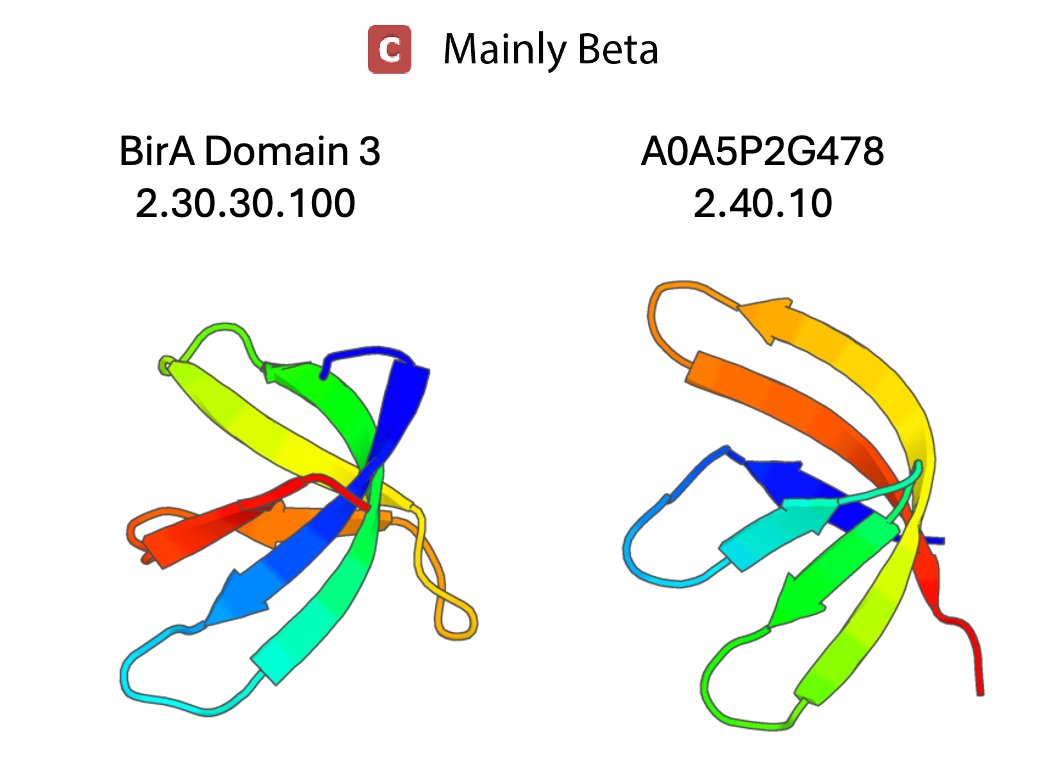
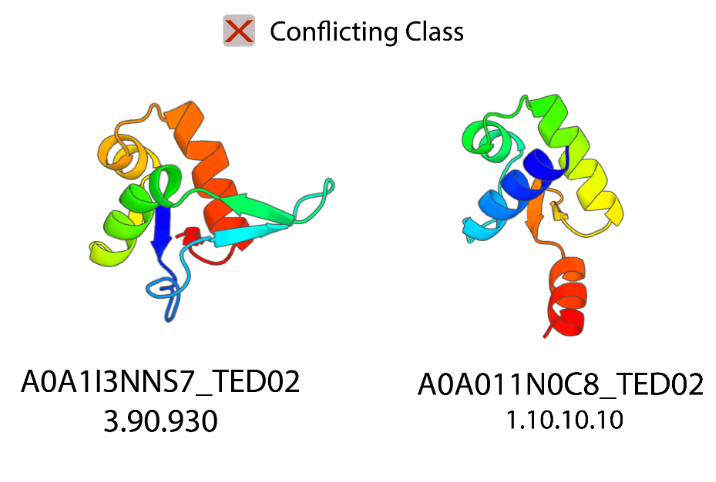
Another example showing how a common SH3 fold may only match at the CATH "class" level. If you're splitting your train/test by topology...you've got data leakage 🚰
Aiden Kolodziej tweet media
English
0
0
5
167
Aiden Kolodziej
Aiden Kolodziej@aidenosinetrip1·
@mtlushan @winstonian3 @TzinAt1521ce Give credit where credit is due: physicists (Alan Lapedes et al) were the ones to provides the mathematical framework for coevolutionary analysis. I'm saying this myself as a trained biologist.
English
1
0
3
126
Jack D. Carson
Jack D. Carson@mtlushan·
AlphaFold is a really amazing example of this IMO. You could be the worlds best computer scientist, but if I gave you a bunch of sequences and a bunch of structures, you would probably have a really really tough time making me a good protein folding model. Alas it was the physicists and chemists who spent 30 years failing to do exactly this. The main insight of AlphaFold2 (not AF3) is that evolution reveals the structural components of proteins. And the insight behind that is that you can trace back evolution by aligning "homologous" gene sequences. Both of these are insights from a biological basis, not a computer science basis.
English
2
4
29
2.6K
Jack D. Carson
Jack D. Carson@mtlushan·
I would say my biggest takesway from spending the last 8 months singlemindedly studying bioML is that understanding the biology actually is important
English
30
43
523
135.6K