Akash Trips

142 posts

Akash Trips banner
Akash Trips

Akash Trips

@akashtrip03

Your life expands in proportion to your courage | Discerning, decisive and patient Value Investor (at least hopes to be one)

Boston, MA Katılım Mart 2015
3.5K Takip Edilen379 Takipçiler
Akash Trips
Akash Trips@akashtrip03·
@nejatian Will the new Opendoor be resilient to handle any kind of housing backdrop? Is it being built with that goal?
English
1
0
6
4.9K
Kaz Nejatian
Kaz Nejatian@nejatian·
I am in a Waymo on way to work. AMA until I get there. (Sorry Opendoor legal team!)
English
97
16
458
63.6K
Akash Trips
Akash Trips@akashtrip03·
@SFarringtonBKC Likelihood of new Fed chair cutting this year given an unavoidable inflation spike?
English
0
0
0
36
Unemployed Value Degen
Unemployed Value Degen@SFarringtonBKC·
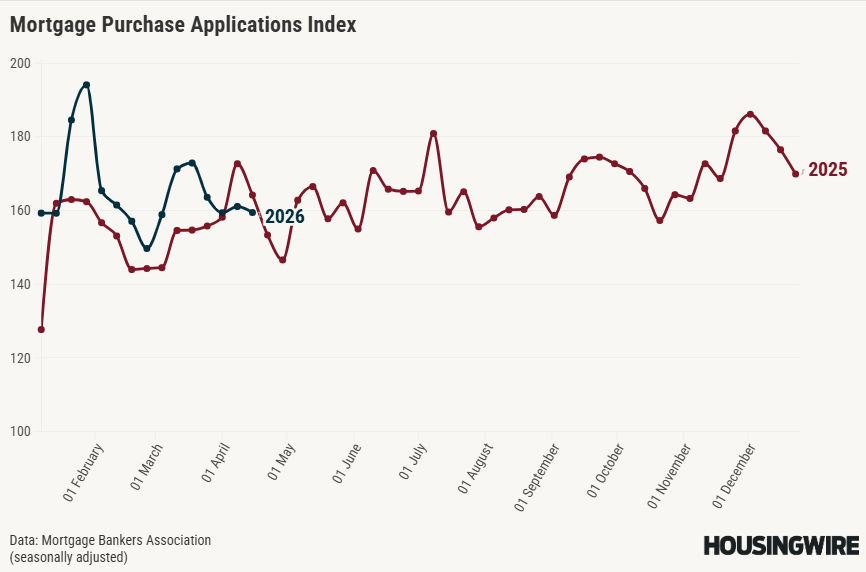
My mortgage originations thesis hit stall speed :( Can't only post the bullish charts, LOL, I got accused of being a tard. But a new Fed chair comes in less than a month
Unemployed Value Degen tweet media
English
7
0
17
2K
Akash Trips
Akash Trips@akashtrip03·
@MrNeverSell Has Kaz bought these shares on open market? Or has been awarded thru the comp package?
English
0
0
0
19
Mr Never Sell
Mr Never Sell@MrNeverSell·
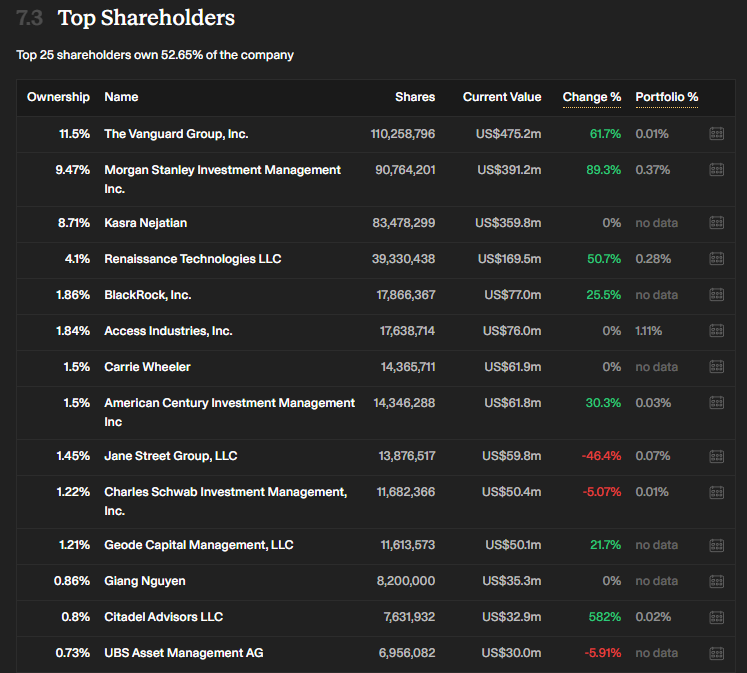
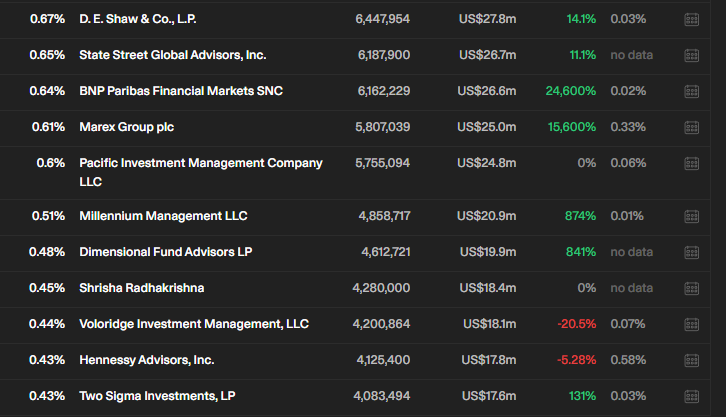
Here are the current top 25 shareholders in $OPEN (updated on 10 April 2026):
Mr Never Sell tweet mediaMr Never Sell tweet media
English
15
25
126
21.3K
Akash Trips
Akash Trips@akashtrip03·
@firstadopter Does $PSTG play on the CPU trend? Trying to understand why Gavin Baker owns a big chunk
English
0
0
0
364
Akash Trips
Akash Trips@akashtrip03·
@GavinSBaker Thanks for the insights! Very curious to get your thoughts on $PSTG - are they a necessary component to enhance CPU performance? Which is a dire need as Agents proliferate?
English
0
1
1
424
Gavin Baker
Gavin Baker@GavinSBaker·
More thoughts on the Dwarkesh/Jensen discussion around export controls. Strongly believe that selling specific GPUs to China is in our national security interest and is a good policy for America. I think it is super important for us a country to get this right.
Gavin Baker@GavinSBaker

Much of Dwarkesh's argument hinges on this statment which *was* accurate but will be increasingly inaccurate on a go forward basis imo:    “American labs port across accelerators constantly. Anthropic's models are run on GPUs, they're run on Trainium, they're run on TPUs. There are so many things you can do, from distilling to a model that's well fit for your chips.”   As system level architectures diverge (torus vs. switched scale-up topologies, memory hierarchies, networking primitives), true portability is eroding. The Mi300 and Mi325 had roughly the same scale-up domain size as Hopper while Blackwell’s scale-up domain is 9x larger than the Mi355 scale-up domain, etc. Many frontier models are now being explicitly co-designed for inference on specific hardware like GB300 racks. Codex on Cerebras is another example. Those models run less efficiently on other systems and the performance differentials will only widen. A model that runs well on Google’s torus topology will run less efficiently on Nvidia’s switched scale-up topology and vice versa - the data traffic is fundamentally different as a byproduct of the models being parallelized across the different topologies. Google’s internal teams - and increasingly the Anthropic teams as they become the most important customer of almost every cloud - have the luxury of operating across the stack (models, chips, networking) - but that is not the case for the rest of the market and other prospective users. Anthropic is the exception, not the rule. To wit, Anthropic and Google allegedly have a mutual understanding where Anthropic can hire the TPU engineers they need every year to ensure that they can continue to get the most out of the TPU. Given the overwhelming importance of cost per token to the economics of the labs, models will be run where they run best. Most extremely large MoE models will run best on GB300s given the importance of having a switched scale-up network like NVLink for MoE inference. When training was the dominant cost for labs and power was broadly available, labs were optimizing to minimize capex dollars. Model portability was a way to create leverage over suppliers. I think that drove a lot of the focus on portability. Today, inference costs as measured by tokens per watt per dollar are everything. Inference is way more important than training costs (inference is effectively now part of training via RL). Labs are therefore now optimizing for inference. This means increasing co-design and higher go-forward switching costs for individual models between systems. I do think this explains why Anthropic and Nvidia came together: Anthropic needed Blackwells and Rubins to inference at least *some* of their models economically. And Mythos might just end up being released coincident with the availability of Rubins for inference. TLDR: as labs shift their focus from training to inference, the costs of portability and the upside of co-design to maximize tokens per watt per dollar both rise. Portability is likely to begin decreasing as a result.   I think what I might have respectfully added to Jensen’s answer is that systems evolve under local selective pressures. The evolutionary pressure in America is a shortage of watts so it makes sense for Nvidia to optimize, as an American company, for power efficiency and tokens per watt and stay on copper as long as possible. China has a surfeit of watts. Chinese AI systems are already taking advantage of this with the Huawei Cloudmatrix 384 and Atlas SuperPoD having an optical scale-up domain that is much larger than anything offered by Nvidia today at the cost of *much* higher power consumption and much lower tokens per watt. The networking primitives for this Huawei system are very different than those for Nvidia’s systems and a model that runs well on Nvidia will not run well on that system and vice versa. This means that if a Chinese ecosystem gets momentum, Chinese models might stop running well on American hardware. And when Chinese models run best on American hardware, America is in a better position as this gives America a degree of leverage and control over Chinese AI that it risks losing to an all-Chinese alternative ecosystem.   This architectural fork makes porting and distillation less effective and strengthens the pro-American national security case for selling China deprecated GPUs imo. Also I will attest that I did not wake up a loser this morning.

English
29
36
578
105.6K
Kash
Kash@KashRamki·
After six months of thorough due diligence on $NUAI—reviewing filings and engaging directly with management—I went all-in on this hidden gem. The company's behind-the-meter strategy is the way forward in today's power- and compute-constrained world. If you believe in management's plan to sign an investment-grade hyperscaler in the coming months, there is little doubt that this company is worth $3–5 billion. Yet it trades as a highly speculative small cap, currently valued at around $255M. Therein lies the opportunity. Most on X know me as a long-time bull on $IREN, a company I've been all-in on for the better part of 2.5 years. So this portfolio shift isn't one I take lightly. For the doubters, $IREN is, pound-for-pound, the best business in the AI HPC space today. In fact, if Mr. Market hadn't given me such a wonderful entry point into $NUAI, I would still be all-in on $IREN. The investment thesis: While both companies provide energy-intensive AI infrastructure, $NUAI's primary thesis is its valuation—materially below peers pursuing comparable opportunities. Few companies, if any, focus exclusively on behind-the-meter power delivery, sourcing directly at generation sites to achieve lower costs, higher efficiency, and independence from grid interconnection delays. This model makes the company highly attractive to prospective tenants amid rising demand for reliable, scalable power in AI compute. Like in most power markets today, the past 18 months in $ERCOT have seen substantial challenges for large-load grid interconnections. Datacenter-driven demand expanded ERCOT's queue from approximately 63 GW at end-2024 to over 230 GW by late 2025. The prior sequential study process resulted in repeated restudies, modeling inconsistencies, extended timelines, and uncertainty. Disguised as an attempt to help with those problems, ERCOT’s new batch process plans to group qualifying large loads for coordinated transmission studies to improve efficiency, consistency, and system reliability. For grid-dependent projects, this adds procedural layers and timing considerations during a period of high demand. Some would say this is a major step back for allocating capital to ERCOT. Meanwhile, $NUAI's behind-the-meter approach circumvents these grid-related hurdles—no queue participation, no restudies, no batch constraints. Power is provided directly to tenants through dedicated on-site power plants. $NUAI's first 3 GW will use gas-fired technologies, giving the company and its tenants unparalleled speed to market. $NUAI management expects to announce the first phase of TCDC (Texas Critical Data Centers) within the coming months. From there, the odds of ramping up quickly to 1 GW remain high. Management has stated repeatedly that they are in advanced discussions with multiple hyperscalers. It's worth noting that previously guided timelines have slipped, but the company has announced partnerships that shore up uncertainty around the desired outcome. Assuming management can get $NUAI to the promised land, we should see its market cap shoot up to $3–5 billion in very short order, finally bringing it in line with peers. That's a 12–20x in a matter of months. If management continues to execute on its NM site and others, NUAI could conceivably reach a valuation of $20bn—almost 100x from here—but we'll leave that for another day. The downside: What if the company isn't able to deliver on a hyperscaler tenant? Like any good investor, I am laser-focused on downside protection, and that's where $NUAI is a no-brainer. TCDC is a 438-acre site fit for a 1 GW AI datacenter. Located across the street from two large power plants owned by the likes of $VST and $FANG, and with three different natural gas pipelines serving the site, TCDC is the equivalent of what is called a “powered land” site. These days, powered land is valued at approximately $500,000 per MW, implying roughly $500 million in embedded land/power value for TCDC. With $NUAI's market cap hovering around $255 million, the land value alone exceeds the enterprise value, with the operations, partnerships, and development pipeline—including its 3,500-acre New Mexico site—providing additional upside. I describe the range of outcomes as “heads I win big, tails I still win.” The noise: The past few months have seen the company come under attack on several fronts. The most prominent is a civil complaint from the New Mexico Attorney General involving allegations related to oil-well responsibilities transferred through entities. The company has described the claims as unfounded, with no prior state engagement, and intends to defend vigorously. Maximum potential settlement exposure, based on disclosures and precedents, remains below $10 million. Having diligenced this with my own network of seasoned litigation attorneys, this is a nothingburger. Portfolio sizing: Concentrated sizing suits my investment approach: when extensive research identifies strong fundamentals, a clear competitive advantage, and attractive risk-adjusted upside, I allocate accordingly. I’ve taken over a decade to get here, so this is not a good idea for the vast majority of investors. To be clear, I don't go all-in often, but I do run a concentrated portfolio of 2–4 stocks. The past few years have been very different because the big winners have been sitting in plain sight. The first all-in idea in the past few years was $VST, a power production play, followed by $IREN, a power-meets-AI compute play. At their core, both are infrastructure companies within my circle of competence. $NUAI is just the next evolution of this very same AI infrastructure thesis. It's not every day you see 10-to-100 baggers sitting there in plain sight. And yet, here we are. $NUAI presents a highly asymmetric opportunity in energy-constrained AI infrastructure, with the valuation deeply disconnected from the company's intrinsic value. Do your own research—this involves risks inherent to early-stage development and sector dynamics. Not investment advice; simply outlining my allocation rationale.
English
44
23
224
31.4K
Prudent Whale Research
Prudent Whale Research@ThePrudentWhale·
@KashRamki I just wrote a full deep dive on my latest thoughts on $NUAI recent pieces of news from last week. TLDR I believe that they are going to buy one of the two power plants (Vistra or Calpine). Check it out here: @prudentwhaleresearch/note/c-222416450?utm_source=notes-share-action&r=7c0hz0" target="_blank" rel="nofollow noopener">substack.com/@prudentwhaler
English
5
7
39
14.3K
Kash
Kash@KashRamki·
This is $NUAI buying up the equivalent of Mayfair, Park Lane, Bond Street, Park Street and Regent Street on the Monopoly board. They are effectively locking-in access to Vistra and Calpine's existing power generation assets. Very strategic for TCDC!
New Era Energy & Digital, Inc. (Nasdaq: NUAI)@NUAI_IR

$NUAI is expanding its Texas Critical Data Centers campus with an LOI to acquire 54 additional acres. The strategic corridor strengthens direct power access and supports behind-the-meter infrastructure. 🔗 newerainfra.ai/news/

English
7
6
86
11.5K
Kash
Kash@KashRamki·
$NUAI is a hidden gem and a multi-bagger in the making. Here’s why: New Era Energy & Digital, Inc. (NASDAQ: $NUAI), formerly New Era Helium, started in gas and helium but pivoted hard into next-gen digital infra and power plays. They're all about turnkey solutions for hyperscalers and edge operators, slashing costs and speeding up data center builds by blending energy smarts with tech. They are Permian natives and they understand the commodity and power generation well. In combination with the right partnerships to execute on the buildout of high-performance compute, NUAI may be amongst the first to capitalize on the cheap resource that is Waha gas to power their AI/HPC ambitions, in the near-term. $NUAI's crown jewels? The Texas Critical Data Centers (TCDC) in Ector County—235 acres to start, recently expanded to 438 for multi-GW phases. This is a 1GW liquid-cooled setup, on-site gas power with carbon capture for up to 250k tons of CO2 yearly, prime location near fiber, gas, and pipelines. Builds on their helium/gas origins but eyes the real prize: AI-driven digital demand. Their 50-50 JV partner on this project is Sharon AI and they are expected to announce their first hyperscaler tenant for this facility imminently. Sharon AI, who? A strong tech player in HPC and AI, providing GPU-as-a-Service with NVIDIA HGX, AMD EPYC — scalable, efficient, affordable via cloud storage, VMs, and APIs. Originally an Australian company, Sharon AI provides data centers for sovereignty, plus SHARON AI Studio for full ML workflows and quick-deploy environments. As $NUAI's 50/50 JV partner on TCDC, they're teaming up to bankroll and build a 250MW net-zero AI data center in Ector — gas-powered with capture for green, high-density AI/GPU workloads. So, the investment case for why $NUAI screams value: Capitalize on the AI infra DC opportunity set by tapping cheap, oversupplied Waha gas in Permian for behind-the-meter power. Skip the grid interconnection bottlenecks, cut the gas transport costs/losses, layer in carbon capture for sustainability, thereby pulling in big AI tenants for energy-secure, low-cost solutions, at scale. Here’s a bit of a primer on Waha gas, which is the lynchpin of the behind-the-meter gas strategy, in the near-term, when grid connectivity is scare: The Waha hub is located in the Permian Basin of West Texas and serves as a key pricing point for natural gas produced in the region. The basin itself (spanning Texas and New Mexico) does not "produce" gas at a single point, but regional natural gas production averaged about 25 Bcf/d (gross withdrawals) in the first half of 2025, with dry natural gas production (after processing) closer to 20-21 Bcf/d. Growth has been steady at 1-2 Bcf/d year-over-year, so by late 2025, dry gas output is likely around 21-22 Bcf/d based on forecasts from sources like the EIA and Wood Mackenzie. Pipeline egress (takeaway) capacity from the Permian Basin is approximately 20-21 Bcf/d as of late 2025, following the startup and full ramp-up of the 2.5 Bcf/d Matterhorn Express Pipeline in 2024-2025. This capacity is for dry gas transport to markets like the Gulf Coast, Mexico, and beyond. No major additions are expected until mid-to-late 2026 (e.g., Blackcomb at 2.5 Bcf/d and Hugh Brinson Phase I at 1.5 Bcf/d), with total incremental additions potentially reaching 8-10 Bcf/d by 2030. The gas oversupply in this region is so acute that producers have been paying people to take their gas production away for several years now. The below chart illustrates how Waha gas prices have tracked historically. The market also expects that the market will remain over supplied for at least the next few years. The recovery in pricing shown here only begins when a few new pipelines and datacenter projects in the region are expected to absorb the excess. Production currently exceeds egress capacity by 1-2 Bcf/d on average (or more during peak periods or pipeline maintenance), leading to periodic oversupply, flaring, and deeply discounted or negative prices at the Waha hub (e.g., negative for over 20 trading sessions in 2025). Forecasts suggest capacity could catch up and potentially overbuild relative to slower production growth by the late 2020s if oil prices weaken and associated gas output plateaus. The oversupply of natural gas in the Permian Basin (West Texas), estimated at 1-2 Bcf/d on average based on current production exceeding pipeline egress capacity, could theoretically be used for local on-site power generation to support AI datacenters without needing to transport the gas out of the region. This assumes the datacenters are built in the area to consume the stranded excess gas (which would otherwise contribute to flaring or negative Waha prices) and that power is generated using efficient natural gas combined-cycle turbines. Using assumptions of a PUE of 1.3 (resulting in total facility power consumption 1.3 times the IT load) and a low generation heat rate of 5,300 Btu/kWh (representative of state-of-the-art combined-cycle gas turbines achieving ~64% efficiency)—this oversupply could power approximately 6,200 MW of AI datacenter IT load per Bcf/d of gas. For 1 Bcf/d oversupply: ~6,200 MW of AI datacenter IT load. For 2 Bcf/d oversupply: ~12,400 MW of AI datacenter IT load. That's a hell of a lot of DCs! This capacity would be viable until the egress constraints are alleviated by new pipeline additions expected in mid-to-late 2026 (e.g., Blackcomb and Hugh Brinson Phase I, adding ~4 Bcf/d combined), after which the oversupply is forecasted to diminish and basis differentials to narrow. Actual realizable load could be lower due to variability in oversupply (e.g., higher during maintenance but not constant), operational efficiencies, gas heating value fluctuations (assumed at ~1,025 Btu/cf here), permitting, infrastructure buildout, or other factors like partial flaring reductions. $NUAI has its share of risks—execution hurdles on scaling those data center projects, funding needs for Permian and NM assets, market volatility from AI trends, and possible dilution from equity raises. That said, from a value perspective, it's undervalued on a per-MW basis versus comps like $IREN, with potential hyperscaler partnerships and efficient BTM gas for sustainable ops. Overall risk-reward seems tilted in favor if key milestones hit. In some ways, this feels a lot like the hidden value that was apparent in $IREN a few years ago, when no one apart from a select few were privy to how this value was being unlocked. $IREN, with 3GW of announced grid-connected land and datacenters, trades at ~$14bn today, and is still severely undervalued! $NUAI currently trades at an an enterprise value of ~$225M and has 1GW of DC capacity being developed in Texas (and several more in New Mexico). The CEO has stated that they will announce their first hyperscaler tenant for TCDC in Q4 2025, and there is very little light left in the day. That's a multi-bagger, if I've ever seen one. Do your homework. Know what you own.
Kash tweet media
English
14
22
189
79.1K
𝐀𝐠𝐫𝐢𝐩𝐩𝐚 𝐈𝐧𝐯𝐞𝐬𝐭𝐦𝐞𝐧𝐭𝐬
Why I initiated a position in $NUAI $NUAI is a stock that has been on my radar since late November. Up until late last week, I had completely written it off. I saw it as an extremely speculative “story stock” and wanted nothing to do with it. However, my stance has changed over the past few days. Over the weekend I had a long discussion with my friend @litigious_dulce, who shared a perspective that made me completely revisit the thesis and ultimately flip my view on the stock. Here is why I am bullish on $NUAI: One of the reasons I decided to enter a position is that Dulce himself has taken a significant stake in $NUAI. On the surface that might sound like a superficial point, until you understand who he is and how he operates. He was one of the early $IREN investors and part of the original “IREN alpha” group chat with @FransBakker9812, @TheKamaHsutra, him, and myself. Back then (~1.5 years ago), we spent hours every day doing nothing but dissecting $IREN from every angle and discussing our thoughts within the group chat. I learned a lot about $IREN from him. He has a deep understanding not only of $IREN, but also of the broader data center and power landscape. I would put him among the very few retail investors who know at least as much about $IREN as I do. Dulce is also not a small fish. At one point he owned over 1% of $IREN's float. He’s as serious as they come and pours hundreds, if not thousands, of hours into his concentrated bets… $IREN in the past and $NUAI today. So seeing him back $NUAI, and do so in a very vocal way, adds a layer of conviction I can lean on. It’s not the only reason I bought, but it does matter. With that context in place, let me now get to $NUAI's strategic position and why I’m bullish on the stock. There is no doubt political pressure is building on hyperscalers to sort out their power needs without simply loading more demand onto already stressed grids. Less than 10 days ago, the Trump administration warned hyperscalers not to push electricity prices higher for ordinary consumers. Soon after, AI & crypto czar @DavidSacks framed this as part of a broader push to have big tech sort out its energy needs by generating more of its own power on-site, instead of relying on the grid. So how does this tie into $NUAI? $NUAI's background is in the natural gas business. Today it owns several large greenfield sites in the Permian Basin, one of the premier regions in the US for gas production. A long standing criticism I’ve had of behind-the-meter, on-site power generation is that it’s materially more complex than simply connecting to the grid. There are more moving parts, more ways things can go wrong, and more operational risk. If given the choice, most hyperscalers would likely prefer grid connected power over building and running their own power plants. That said, as I laid out in my recent deep dive on Substack, the power shortage is intensifying rapidly. When you add political pressure and public concern about rising consumer electricity prices driven by industrial demand, on-site generation becomes a very real and increasingly relevant strategy in the data center space. While $NUAI has multiple sites across the Permian Basin, the company’s focus today is on its massive 435 acre “TSDC” site in West Texas. This land sits next to multiple power plants, with several gas pipelines running nearby, making it extremely attractive for future on-site generation tied to a larger data center campus. As announced last Friday, $NUAI has now partnered with a company called Primary Digital Infrastructure (PDI), which has been involved in the Stargate project (for OpenAI) in Abilene, Texas. PDI positions itself as an independent data center investment platform, and its leadership brings deep industry experience. Its CEO, Bill Stein, was a co-founder of $DLR, a $57b data center REIT and one of the most successful firms in the sector. This partnership meaningfully derisks the $NUAI thesis. PDI brings capital, networking and significant development expertise, while $NUAI brings strategically located land and experience in the natural gas industry. $NUAI's current guidance is to sign a hyperscaler agreement by Q1 or early Q2 2026. With PDI now in the mix, I think the probability of that guidance being met has increased materially. Now, to be clear, while I am bullish on $NUAI, I do not think it is anywhere close to being another $IREN. The good news is it does not need to become that for this to work well as an investment. $NUAI's market cap today is merely ~$300m. For comparison, $IREN is roughly $14b, $CIFR about $6.6b, $APLD around $9b, $WULF about $5.2b, and so on. At this size, I think $NUAI is one meaningful deal away from a major re-rating, potentially on the order of 10-15x over the course of this year. At a $300m market cap, the contract would not even have to be a mega-deal with the most prestigious counterparty to move the stock meaningfully higher. That said, the risk is real and significant. This is very much an all or nothing setup. If $NUAI comes up empty and fails to land a deal, I would not be surprised to see the stock perform very poorly. You can argue that the 435 acre site alone could be worth something in the ballpark of $50-150m if sold, which provides a bit of downside support. But in practice, if $NUAI fails to meet its guidance, I can still see the stock falling meaningfully from here. On the other hand, if $NUAI lands a hyperscaler agreement, I would expect the stock to move from today’s roughly $5.50 share price to at least $30-$50 in the days and weeks post announcement. Based on what I know today, I would put the probability of success somewhere around ~70%. That said, I’m still early in my due diligence process. Over the coming weeks I plan to dig much deeper into the thesis. Once I have a more comprehensive view, I will publish a detailed deep dive on $NUAI for my Substack subscribers. I also want to be transparent about how I funded this position. Up until yesterday, I was basically all in on $IREN, with more than 98% of my capital in that one stock. To make $NUAI an ~11.5% position, I did sell an equivalent portion of my $IREN holdings. $NUAI is the first new major investment I have made since I went all in on $IREN more than 18 months ago. Given the risk profile, I am unlikely to increase my exposure much from here in the near term. I have invested enough for the outcome to matter, but not so much that it would be devastating if the thesis fails. In any case, I’m treating this as a serious investment. I will start covering the company here on X and publish institutional-grade research on it for my Substack subscribers. Thank you for reading, cheers! ✌️
English
72
93
792
147.7K
Prudent Whale Research
Prudent Whale Research@ThePrudentWhale·
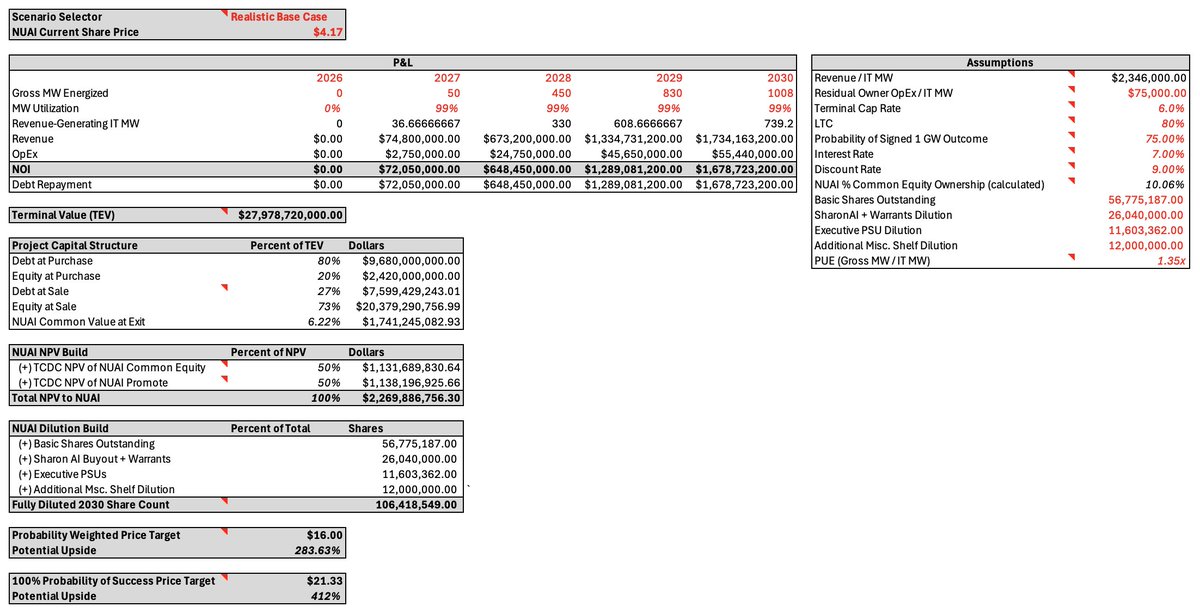
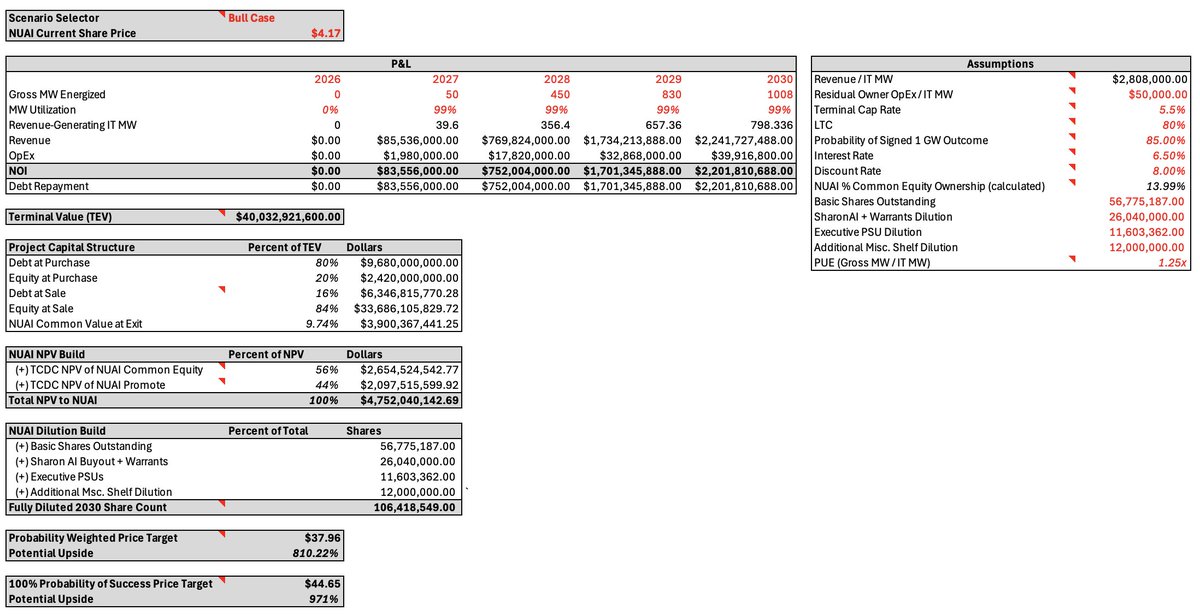
My latest $NUAI model deep dive is 6,500 words. The model took ~30 hours of work to build. My updated probability weighted PT for just TCDC, with no platform value, is $16 per share. My bull case PT is $37.96, still with no platform value. Read here: open.substack.com/pub/prudentwha…
Prudent Whale Research tweet mediaPrudent Whale Research tweet media
English
3
6
46
3.3K
Peter DiCarlo
Peter DiCarlo@pdicarlotrader·
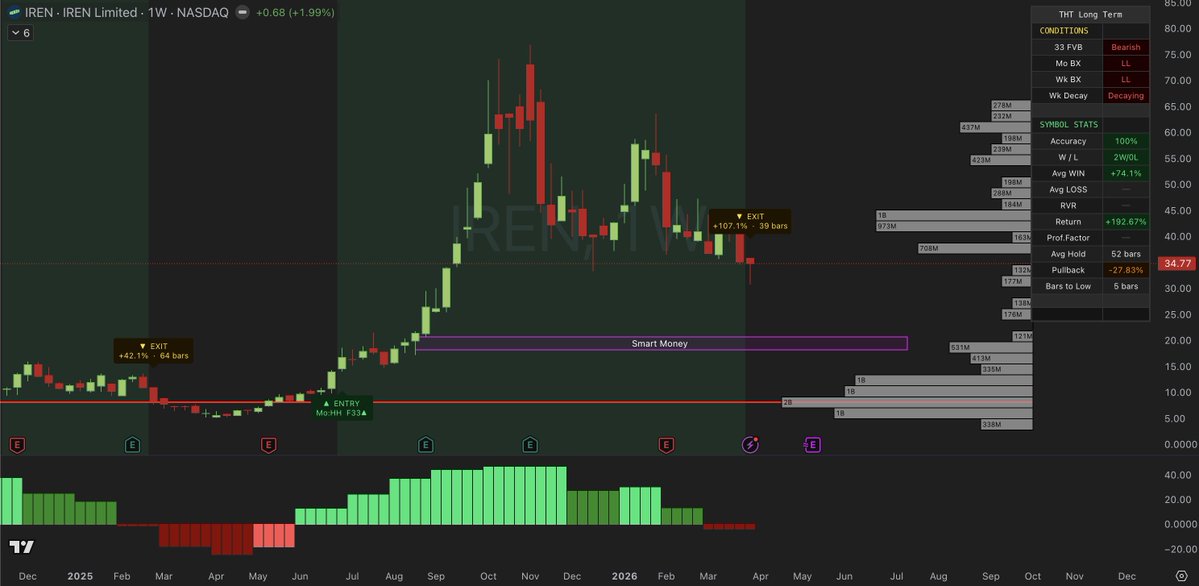
I’m flat on $IREN and I hope I’m wrong. MBX is red and I still expect this volume gap to fill toward $20 in the coming months. After a year‑plus bull cycle, that usually means a multi‑month selloff. I’d love to see it rip even if I miss it, but right now the setup doesn’t look great.
Peter DiCarlo tweet media
Peter DiCarlo@pdicarlotrader

I just killed my bullish thesis on $IREN and out of every position. In this video I walk through the exact trigger that flipped it into a potential bear cycle, and why I see a possible 40% downside over the next few months. I hope I’m wrong. Here’s the full breakdown 👇

English
40
10
175
62.9K
Akash Trips
Akash Trips@akashtrip03·
@SFarringtonBKC @Freedom_73X @SFarringtonBKC a bit random but thought this might interest you - $NUAI x.com/KashRamki/stat… check Kash's timeline for NUAI posts. It looks quite interesting. selfishly, if you like it and deep dive with a writeup, we can a great pov on the thesis..
Kash@KashRamki

After six months of thorough due diligence on $NUAI—reviewing filings and engaging directly with management—I went all-in on this hidden gem. The company's behind-the-meter strategy is the way forward in today's power- and compute-constrained world. If you believe in management's plan to sign an investment-grade hyperscaler in the coming months, there is little doubt that this company is worth $3–5 billion. Yet it trades as a highly speculative small cap, currently valued at around $255M. Therein lies the opportunity. Most on X know me as a long-time bull on $IREN, a company I've been all-in on for the better part of 2.5 years. So this portfolio shift isn't one I take lightly. For the doubters, $IREN is, pound-for-pound, the best business in the AI HPC space today. In fact, if Mr. Market hadn't given me such a wonderful entry point into $NUAI, I would still be all-in on $IREN. The investment thesis: While both companies provide energy-intensive AI infrastructure, $NUAI's primary thesis is its valuation—materially below peers pursuing comparable opportunities. Few companies, if any, focus exclusively on behind-the-meter power delivery, sourcing directly at generation sites to achieve lower costs, higher efficiency, and independence from grid interconnection delays. This model makes the company highly attractive to prospective tenants amid rising demand for reliable, scalable power in AI compute. Like in most power markets today, the past 18 months in $ERCOT have seen substantial challenges for large-load grid interconnections. Datacenter-driven demand expanded ERCOT's queue from approximately 63 GW at end-2024 to over 230 GW by late 2025. The prior sequential study process resulted in repeated restudies, modeling inconsistencies, extended timelines, and uncertainty. Disguised as an attempt to help with those problems, ERCOT’s new batch process plans to group qualifying large loads for coordinated transmission studies to improve efficiency, consistency, and system reliability. For grid-dependent projects, this adds procedural layers and timing considerations during a period of high demand. Some would say this is a major step back for allocating capital to ERCOT. Meanwhile, $NUAI's behind-the-meter approach circumvents these grid-related hurdles—no queue participation, no restudies, no batch constraints. Power is provided directly to tenants through dedicated on-site power plants. $NUAI's first 3 GW will use gas-fired technologies, giving the company and its tenants unparalleled speed to market. $NUAI management expects to announce the first phase of TCDC (Texas Critical Data Centers) within the coming months. From there, the odds of ramping up quickly to 1 GW remain high. Management has stated repeatedly that they are in advanced discussions with multiple hyperscalers. It's worth noting that previously guided timelines have slipped, but the company has announced partnerships that shore up uncertainty around the desired outcome. Assuming management can get $NUAI to the promised land, we should see its market cap shoot up to $3–5 billion in very short order, finally bringing it in line with peers. That's a 12–20x in a matter of months. If management continues to execute on its NM site and others, NUAI could conceivably reach a valuation of $20bn—almost 100x from here—but we'll leave that for another day. The downside: What if the company isn't able to deliver on a hyperscaler tenant? Like any good investor, I am laser-focused on downside protection, and that's where $NUAI is a no-brainer. TCDC is a 438-acre site fit for a 1 GW AI datacenter. Located across the street from two large power plants owned by the likes of $VST and $FANG, and with three different natural gas pipelines serving the site, TCDC is the equivalent of what is called a “powered land” site. These days, powered land is valued at approximately $500,000 per MW, implying roughly $500 million in embedded land/power value for TCDC. With $NUAI's market cap hovering around $255 million, the land value alone exceeds the enterprise value, with the operations, partnerships, and development pipeline—including its 3,500-acre New Mexico site—providing additional upside. I describe the range of outcomes as “heads I win big, tails I still win.” The noise: The past few months have seen the company come under attack on several fronts. The most prominent is a civil complaint from the New Mexico Attorney General involving allegations related to oil-well responsibilities transferred through entities. The company has described the claims as unfounded, with no prior state engagement, and intends to defend vigorously. Maximum potential settlement exposure, based on disclosures and precedents, remains below $10 million. Having diligenced this with my own network of seasoned litigation attorneys, this is a nothingburger. Portfolio sizing: Concentrated sizing suits my investment approach: when extensive research identifies strong fundamentals, a clear competitive advantage, and attractive risk-adjusted upside, I allocate accordingly. I’ve taken over a decade to get here, so this is not a good idea for the vast majority of investors. To be clear, I don't go all-in often, but I do run a concentrated portfolio of 2–4 stocks. The past few years have been very different because the big winners have been sitting in plain sight. The first all-in idea in the past few years was $VST, a power production play, followed by $IREN, a power-meets-AI compute play. At their core, both are infrastructure companies within my circle of competence. $NUAI is just the next evolution of this very same AI infrastructure thesis. It's not every day you see 10-to-100 baggers sitting there in plain sight. And yet, here we are. $NUAI presents a highly asymmetric opportunity in energy-constrained AI infrastructure, with the valuation deeply disconnected from the company's intrinsic value. Do your own research—this involves risks inherent to early-stage development and sector dynamics. Not investment advice; simply outlining my allocation rationale.

English
0
0
1
33
Turtle🐢
Turtle🐢@Freedom_73X·
🚨속보, 호르무즈 해협 정상 운행 중
한국어
318
1.3K
5K
789K
Nick Huber
Nick Huber@sweatystartup·
I have spent the last 8 years building a list of 200+ business ideas. Sweaty, low risk, great businesses. Comment "Ideas" and I'll DM you the list.
English
517
12
287
69.5K
Jeff Walton
Jeff Walton@PunterJeff·
The insurance market landscape is fascinating. Over the last 15 years, there was an explosion in insurtech underwriting (computer based algorithms, with large data sets). The large insurance carriers, with large balance sheets and the best tech consistently undercut the smaller regional insurance carriers. The largest companies were able to do this, because they were able to spread the reinsurance risk and cost across larger geographies, which came with economies of scale. Consumers did the rational thing and moved to the lower cost carrier (such as State Farm), likely what your Mom may have done. The challenge with this, is that the competitive landscape actually suppressed the true "risk" premium because there was a race to acquire the most market share, as opposed to accurately pricing risk. Companies were able to do this in a time of prosperity for bond & equity markets, which was a buoy for financial results despite risk underwriting losses. The confluence of factors all happened at the same time in the late 2000's and 2010's, post Katrina hurricane season, where there was a 15 year stretch of very little catastrophic activity in the reinsurance market. The high reinsurance rates, post Katrina, also ushered in a new wave of capital (Insurance linked Securities), which was hungry for high yield, diversified risk profiles to add to portfolios post GFC. This new capital coming into the reinsurance market also artificially lowered the "True Risk" reinsurance rates. ALL of this, in conjunction with the risk-free rate being near zero for all of the 2010's created perfect conditions for artificially low insurance premiums for consumers. SO, This change in premium is actually a slingshot back to a more accurate real risk premium across the US. AI has compressed competitive advantages, regional insurers are dying rapidly, large carriers need to be profitable to afford risk transfer & keep the engines running. There's also a few other factors at play, M2 growth, explosive jury verdicts, large tail catastrophe events (CA WF, Floods, Covid property damage, Ukraine war, weak bond market, etc). Happy to chat on the pod about this, any time.
English
12
5
80
5.7K
Natalie Brunell ⚡️
Natalie Brunell ⚡️@natbrunell·
My mom’s @StateFarm homeowner’s insurance in Illinois just jumped 30% from last year. No claims. No disasters. No change in risk. This is how people on fixed incomes get pushed out of their homes. If you’re an insurer who can beat this - reach out. And if you’ve been hit with the same price increase, share this and call it out!
English
302
140
1.5K
103.8K
Jonah Lupton
Jonah Lupton@JonahLupton·
Really curious to see the answers here… What are 3-4 stocks that you believe are currently the most dislocated (ie undervalued) from where you think the fundamentals are going in the next 18-24 months? **feel free to explain why you think your picks are super undervalued including your thesis and any catalysts that could/should get the stock(s) moving higher… because Twitter (X) is still the best place to find new ideas!!!
Jonah Lupton@JonahLupton

Some of you know that I launched a hedge fund several months ago (early November). We run a long/short strategy, focused on owning the 20-40 growth stocks that we believe have the most upside over the next 2-3 years... this means they need to have great fundamentals, strong management teams, compelling valuations, and multiple catalysts that we can identify and track accordingly. It's been a rough few months for many growth investors (we also took some pain)... thankfully we were averaging down into our core positions but we've still seen some red months and it has not been enjoyable. I'm not a fan of losing money. Stepping back... I've never had more conviction in my process or my portfolio than I do right now... especially with some of my favorite stocks down 20-40% from their September/October/November highs despite strong Q4 earnings reports, strong CY2026 guidance and extremely compelling valuations. With that said, here are our top 10 positions in alphabetical order: $APP $CPNG $CRDO $HIMS $HROW $SKHYNIX $IREN $NBIS $RDDT $TMDX I believe all of these stocks are trading at meaningfully higher prices in 2-3 years which remains my focus for generating outsized long-term returns. Enjoy the rest of your day 😊 NFA. DYOR. ** @FirstWaveFund owns all of the stocks mentioned in this post.


English
100
5
133
106.7K
Shaan Puri
Shaan Puri@ShaanVP·
I'm secretly launching a 2nd youtube channel reply "send it" and I'll dm it to you
English
913
5
323
104.5K
Jonah Lupton
Jonah Lupton@JonahLupton·
I know it’s late notice (48-72 hours) but I’m going to host a causal investor dinner/event on Monday or Tuesday from 6-8pm in downtown Boston… most likely in the Seaport District or Government Center since that’s where I have access to free event spaces. Nothing too fancy… we can order some pizzas, sandwiches and salads. I’m genuinely interested in getting together with 10-15 investors so we can share/pitch our best short-term and/or long-term stock ideas. This has been a challenging market for many investors so it’s even more important to keep doing research, revisit your investment thesis’s, and continue to identify new ideas, opportunities and themes that can provide significant upside on the other side of this market correction. I’m going to host something similar next Thursday or Friday in NYC. If you have any interest coming to either of these events next week (Boston / NYC) or future events in Boston, NYC, or Miami (where I spend my time) just shoot me a message (DM) so I can add you to a spreadsheet and keep you updated. I’m hoping to host these casual investor dinners/events every 4-6 weeks in each of the three cities. Enjoy the rest of your weekend.
English
15
3
162
104.1K
Lee Roach
Lee Roach@leevalueroach·
Wow this new Malcom Gladwell book on offshore drilling looks sweet.
Lee Roach tweet media
English
12
43
829
68.2K