Andrew Hay

3.2K posts

Andrew Hay

Andrew Hay

@andwhay

Googler, Thinking, Investor

Zurich, Switzerland Katılım Ağustos 2009
27 Takip Edilen115 Takipçiler
Andrew Hay
Andrew Hay@andwhay·
@iamabk @paulg No one uses an editor to write a response here. We treat what we have here as a *conversation*, we want your thoughts not what you asked something to write for you. Give us your prompt if it contains original thoughts
English
0
0
0
17
Anand Kulkarni
Anand Kulkarni@iamabk·
What’s wrong with AI generated replies? Do you have a problem that it is AI generated or is the problem that it’s not meaningful…I get you if it’s the later. On one hand, we promote using AI, knowing that not using AI is not an option anymore and on the other hand we look down upon AI generated content. Hypocritical. Haven’t we been using copywriters for decades (book authors, ad agencies, corporate blogs, presentations etc.) - essentially AI is doing that same job to some extent today (yes, with noticeable patterns). Even to get AI to write something thoughtful, you need to have an original point of view to guide AI to articulate it. The point in the replies is more important than whether it’s AI written.
English
1
0
2
179
Paul Graham
Paul Graham@paulg·
Every post, I block and report a couple accounts using AI-generated replies. It feels much the same as picking up litter on a city street; I don't know if it has any effect, but it feels like I ought to at least try to keep the site clean.
English
204
43
2.6K
87.6K
Andrew Hay retweetledi
Ihtesham Ali
Ihtesham Ali@ihtesham2005·
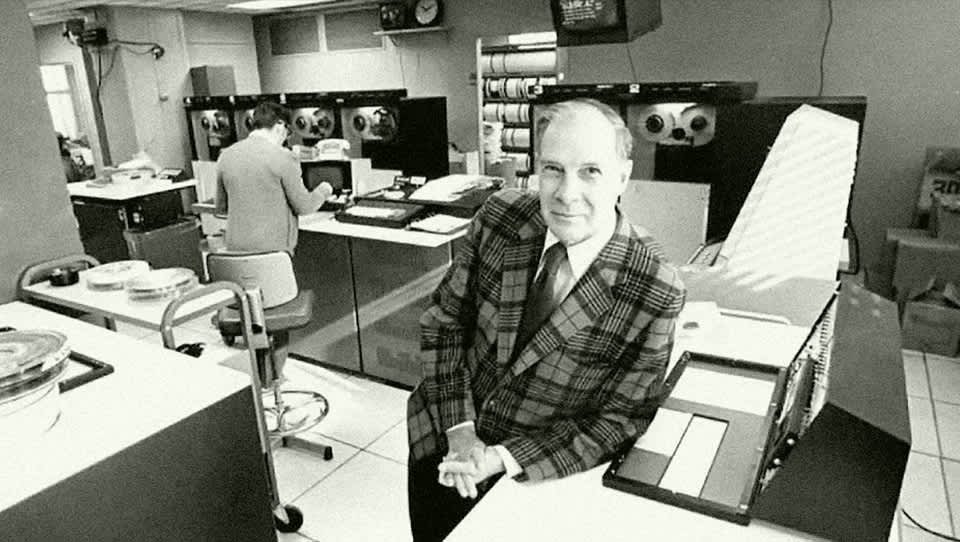
A mathematician who shared an office with Claude Shannon at Bell Labs gave one lecture in 1986 that explains why some people win Nobel Prizes and other equally smart people spend their whole lives doing forgettable work. His name was Richard Hamming. He won the Turing Award. He invented error-correcting codes that made modern computing possible. And he spent 30 years at Bell Labs sitting in a cafeteria at lunch watching which scientists became legendary and which ones faded into nothing. In March 1986, he walked into a Bellcore auditorium in front of 200 researchers and told them exactly what he had seen. Here's the framework that has been quoted by every serious scientist for the last 40 years. His opening line landed like a punch. He said most scientists he worked with at Bell Labs were just as smart as the Nobel Prize winners. Just as hardworking. Just as credentialed. And yet at the end of a 40-year career, one group had changed entire fields and the other group was forgotten by the time they retired. He wanted to know what the difference actually was. And he said it wasn't luck. It wasn't IQ. It was a specific set of habits that almost nobody is willing to follow. The first habit was the one that hurts the most to hear. He said most scientists deliberately avoid the most important problem in their field because the odds of failure are too high. They pick a safe adjacent problem, solve it cleanly, publish it, and move on. And because they never swing at the hard problem, they never hit it. He said if you do not work on an important problem, it is unlikely you will do important work. That is not a motivational line. That is a logical one. The second habit was about doors. Literal doors. He noticed that the scientists at Bell Labs who kept their office doors closed got more done in the short term because they had no interruptions. But the scientists who kept their doors open got more done over a career. The open-door scientists were interrupted constantly. They also absorbed every new idea passing through the hallway. Ten years in, they were working on problems the closed-door scientists did not even know existed. The third habit was inversion. When Bell Labs refused to give him the team of programmers he wanted, Hamming sat with the rejection for weeks. Then he flipped the question. Instead of asking for programmers to write the programs, he asked why machines could not write the programs themselves. That single inversion pushed him into the frontier of computer science. He said the pattern repeats everywhere. What looks like a defect, if you flip it correctly, becomes the exact thing that pushes you ahead of everyone else. The fourth habit was the one that hit me the hardest. He said knowledge and productivity compound like interest. Someone who works 10 percent harder than you does not produce 10 percent more over a career. They produce twice as much. The gap doesn't add. It multiplies. And it compounds silently for years before anyone notices. He finished the lecture with a line I have never been able to shake. He said Pasteur's famous quote is right. Luck favors the prepared mind. But he meant it literally. You don't hope for luck. You engineer the conditions where luck can land on you. Open doors. Important problems. Inverted questions. Compounded hours. Those are not traits. Those are choices you make every single day. The transcript has been sitting on the University of Virginia's computer science website for almost 30 years. The video is free on YouTube. Stripe Press reprinted the full lectures as a book in 2020 and Bret Victor wrote the foreword. Hamming died in 1998. He gave his final lecture a few weeks before. He was 82. The lecture that explains why some careers become legendary and others disappear is still free. Most people who could benefit from it will never open it.
Ihtesham Ali tweet media
English
140
1.8K
7.9K
1.1M
Andrew Hay retweetledi
@aaronjmars
@aaronjmars@aaronjmars·
holy fuck, a hair dryer at a Paris airport broke Polymarket weather markets & made someone $34,000 richer - polymarket was settling Paris temperature bets on a single Météo France sensor sitting near the Charles de Gaulle runway perimeter - basically unguarded - the guy bought the long-shot outcome (like "22°C" when everyone expected 18°C) for pennies, since nobody thought it'd hit - then he walked up to the probe and briefly heated the air around it with a portable heat source, spiking the reading just long enough to register as the daily max - temperature snapped back to normal in minutes, the market resolved in his favor, and he cashed out - twice, on April 6 and April 15, before Météo France caught on and filed charges hyperstitions.
@aaronjmars tweet media
English
900
2.9K
42.3K
14.7M
Andrew Hay retweetledi
Eric Basmajian
Eric Basmajian@EPBResearch·
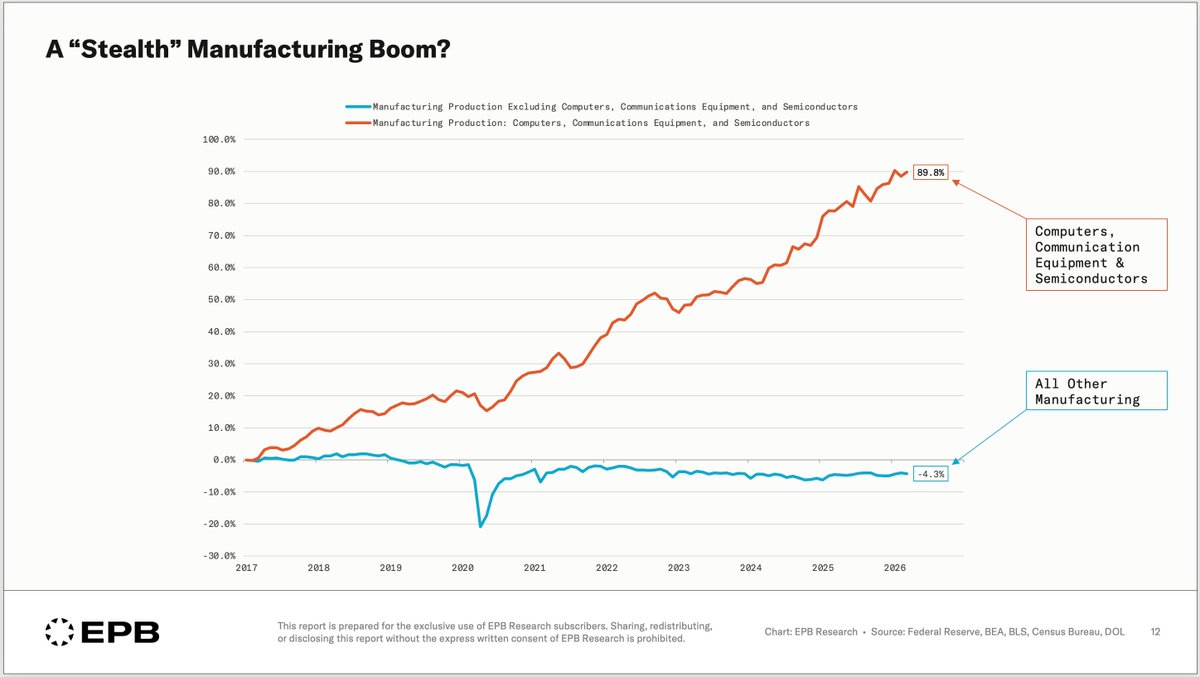
Are we in a “stealth” manufacturing boom? No. We’re in an AI capex boom. Manufacturing production of computers, semiconductors, and communications equipment is up 89.8% since 2017! The rest of manufacturing? Down 4.3%.
Eric Basmajian tweet media
English
36
264
1.2K
140.1K
Andrew Hay retweetledi
International Stacker
International Stacker@IntlStacker·
🚨NEW RECORD: China just imported 836 tonnes of Silver in March alone — the highest monthly total ever recorded!🚨 👉Fresh customs data shows Chinese buyers (retail investors + massive solar demand) are vacuuming up physical silver at an unprecedented pace! 👉This continues the massive East-West divergence we’ve been watching — while Western paper prices get pushed around, China keeps pulling in huge amounts of real metal! 👉Don't forget, China made Silver a Strategic Metal in December, I wonder how much Silver they are importing off the books! 🚨Crustacean Nation: When the world’s biggest physical buyer keeps smashing import records, it’s a loud signal that real Silver is getting tighter — no matter what paper prices do in New York! 👉Full free article: financialpost.com/pmn/business-p… 👉What do you think this means for silver in the coming months? 👉Drop your take below!👇🦀🪙 *Not financial advice. Stay stacked!
English
11
124
444
27.2K
Andrew Hay retweetledi
Paul Graham
Paul Graham@paulg·
One danger of working just hard enough to get by is that you tend not to leave much margin for error when you do that. It's the effort equivalent of doing things at the last moment.
English
92
92
2.2K
111.1K
Andrew Hay retweetledi
Anish Moonka
Anish Moonka@anishmoonka·
84 months is 7 years. For every one of those years, that cheese sat as part of a full wheel in a dark cave where someone washed it in salt water, flipped it over, and scraped bad mold off by hand. It had a full-time babysitter. The cave sat at about 55°F in thick, damp air around 90% humidity. Your fridge runs at 38°F with dry air around 65%. The cave is warm enough for good bacteria to slowly break down the cheese from inside, which is where all the sharp, deep flavor comes from. Your fridge was built to suck moisture out of the air. Good for keeping your milk fresh. Terrible for cheese. The skin on that wheel (called a rind) was alive. It was covered in bacteria and mold that were actually helping it, working like a living armor that fought off the bad stuff the same way your immune system fights a cold. And those good bacteria had been winning that fight for 7 straight years. Then someone cut the wheel open, sliced off a small wedge, wrapped it in plastic, and shipped it to your grocery store. Now the cheese is exposed on two or three sides with zero protection. Bacteria from all over your fridge, the open yogurt, the leftover curry from Tuesday, whatever else is in there, can land right on it. The small piece dries out fast because almost all of it is touching air. And the plastic wrap traps moisture against the cut surface, which is exactly what bad mold needs to grow. Fort Saint Antoine in eastern France is an old military bunker carved into a mountain. Inside, 100,000 wheels of Comte (a hard French cheese) age on wooden shelves while workers walk through and care for each one on a set schedule. Your wedge went from that level of treatment to sitting between a jar of pickles and some week-old pasta. That cheese was fragile the entire time. It spent 7 years in a fortress with a security team. Now it is in your fridge with nothing but plastic wrap between it and a slow death.
karbon 🐺🦊@karbonbased

Buying cheese: "Aged 84 months" Ok then why can't it last another 2 weeks in my fucking fridge?

English
80
982
7.1K
817.9K
Andrew Hay retweetledi
HealthRanger
HealthRanger@HealthRanger·
The helium collapse accelerates. All mass spec labs are about to go dark. Medical imaging, too, for those instruments that use helium. My lab has a 1-year supply of helium in place, because I saw this coming and ordered my analysts to stock up in early March. Apparently we got the last available "extra" helium in the supply chain. Now it's scarcity and, soon, panic.
Roger@rdd147

US helium distributors switch to “call for availability” on shortages. Most US helium has now been diverted to Taiwan on contracts signed two weeks ago. Medical Imaging will now take you 6 months plus to schedule as hospitals shift to referrals outside for imaging.
English
135
1.9K
7.6K
503.8K
Andrew Hay retweetledi
Jesús Enrique Rosas
Jesús Enrique Rosas@Knesix·
I honestly thought this map was made up Hundreds of supertankers, the kind that carry two million barrels each, are currently racing toward the US Gulf Coast from every direction. Atlantic, Indian Ocean, around Africa, the scenic route, the "we were heading to Saudi Arabia but NVM" route. Iran closed the Strait of Hormuz and everyone panicked. Oil hit $126 a barrel. Gas hit $4 a gallon. Cable news did the thing where they put a red banner on screen and say "CRISIS" in a font that suggests you should be hoarding toilet paper. And then something happened that nobody in media seems interested in reporting, for obvious reasons. The world just... switched suppliers? Like changing your internet provider except the internet provider is the entire effing global energy economy. American oil exports are approaching record levels. Gulf Coast refineries are running at 95% capacity. Supertankers that were mid-ocean on their way to the Persian Gulf literally turned around and headed to Texas. That's not a metaphor. Ship tracking data shows them doing U-turns in the Indian Ocean. Meanwhile China, which was getting 45% of its oil imports through Hormuz and paying basement prices for sanctioned Iranian crude, is now competing with Japan and Europe for the same expensive American barrels. Chinese manufacturers are already raising prices 20% on goods headed to the US. So to summarize: Iran played its biggest card and the main result is that the United States became the world's emergency gas station and China's cheap energy subsidy evaporated. This is either the most elaborate coincidence in the history of geopolitics... or someone planned the sequence Venezuela -> Iran -> profits! I'll let you figure out which one
Jesús Enrique Rosas tweet media
English
1K
7.3K
28.7K
3.2M
Andrew Hay retweetledi
Howard Luks MD
Howard Luks MD@hjluks·
What actually heals tendons? Load !! Progressive loading sends mechanical signals to tendon cells to realign collagen, strengthen the matrix, and rebuild capacity. Start with isometrics — static holds — when the tendon is very irritable. A wall sit. A static calf raise. These reduce pain and initiate adaptation without high strain.
English
4
29
407
32.1K
Andrew Hay retweetledi
Paul Millerd
Paul Millerd@p_millerd·
you used to be able to bootstrap an audience via posting online, organically as a solo person. I think some forms of that are still possible, but usually have to be incredibly funny or incredibly brilliant creators are spending MILLIONS of dollars on content, content teams, ads, hacks, studios, and full staffs many of these people are doing so at an enormous loss, especially in the first year. people who must succeed at all costs. they will play and exploit every angle possible to win. they don't care about building relationships with others starting out, they only want relationships that are mutually beneficial this is a different kind of creator and I'm not sure people who have been casually posting online and/or in blog world have updated to this fact. Most of this is just the evolution of the online world - there's so much more money up for grabs. That is the good thing. Smaller creators can get some scraps to live a modest life - this is a way better reality than pre-internet when gatekeepers screened on credentials and connections. But navigating these spaces requires more attunement and awareness to the social dynamics at play - knowing what scammers to avoid, knowing who might actually want to connect with you versus just exploit your audience etc.. It's a lot More simply, as @Meaningness writes, the sociopaths are in the game too
Paul Millerd tweet media
English
10
2
78
5.7K
Andrew Hay retweetledi
Paul Graham
Paul Graham@paulg·
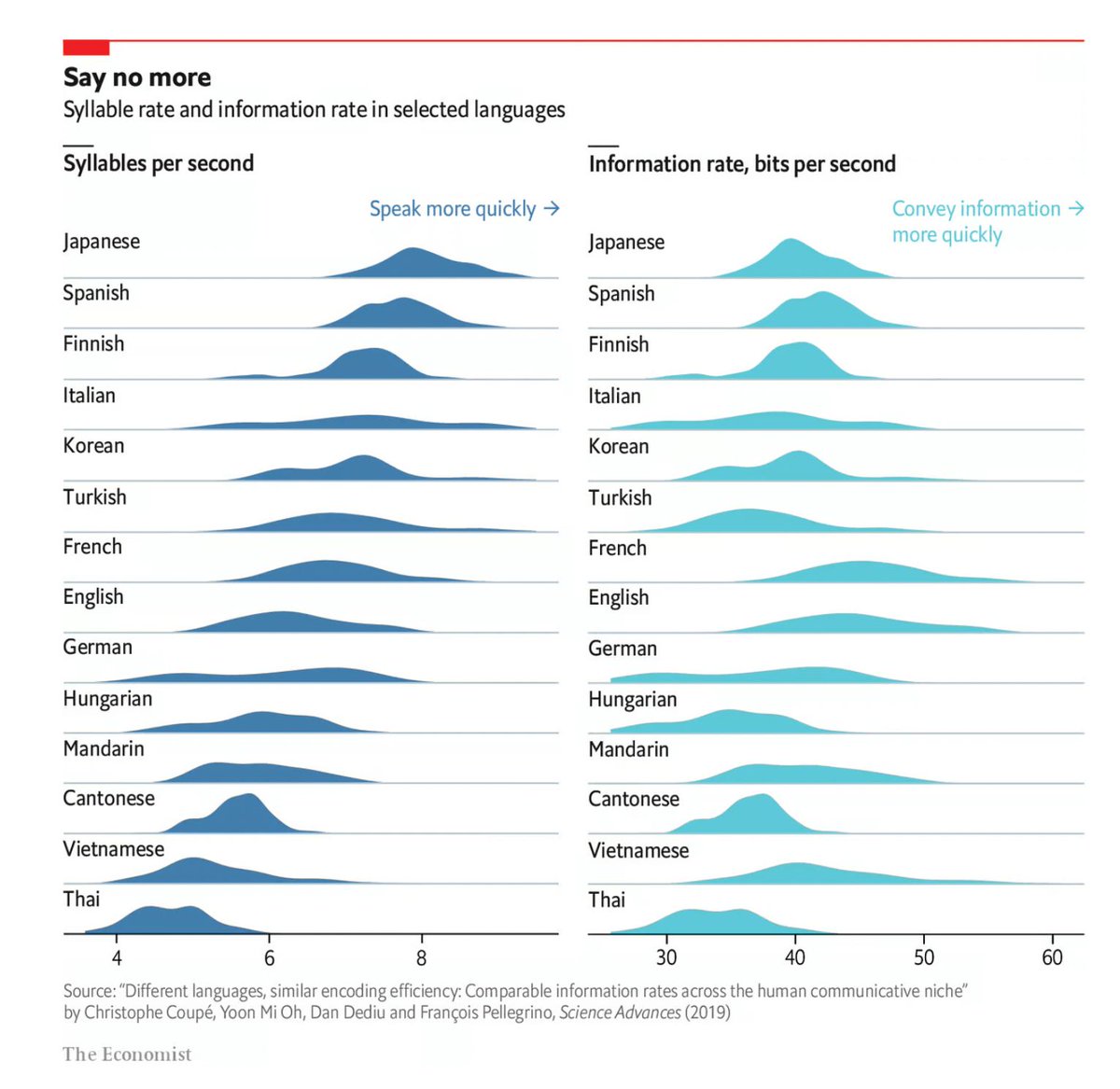
I had just been noticing today that Thai speakers seem to spend longer talking about things than I'd expect.
Paul Graham tweet media
English
179
325
2.6K
633.3K
Andrew Hay retweetledi
Historic Vids
Historic Vids@historyinmemes·
Newly added words featured in the 1900 edition of the English dictionary.
Historic Vids tweet media
English
90
290
1.8K
141.2K
Andrew Hay retweetledi
Gareth Harney
Gareth Harney@OptimoPrincipi·
Leonardo da Vinci's sketchbook – Cats, Lions, and a Dragon, 1517.
Gareth Harney tweet media
English
4
178
965
32.2K
Andrew Hay retweetledi
Andrew D. Huberman, Ph.D.
Andrew D. Huberman, Ph.D.@hubermanlab·
Dr Rhonda Patrick on the benefits of brief, even 10 minutes, of high intensity exercise on cognitive function, including impulse control. @foundmyfitness
English
30
63
963
91.4K
Andrew Hay retweetledi
Lobo Tiggre
Lobo Tiggre@duediligenceguy·
;-{)}
Lobo Tiggre tweet media
ZXX
1
18
154
8.5K