It's hard to keep working with this continuous macOS virtual memory bug causing kernel panics. If some Apple kernel developer is around, please look at this:
panic(cpu 11 caller 0xfffffe0054388010): cpt_mapcnt_inc: refcnt overflow: rc 0xfffffde002fabb38 old_value 2050 value 2052
Debugger message: panic
Memory ID: 0xff
OS release type: User
OS version: 25E253
Kernel version: Darwin Kernel Version 25.4.0: Thu Mar 19 19:26:07 PDT 2026; root:xnu-12377.101.15~1/RELEASE_ARM64_T6031
⛔️NYPD and ICE mistakenly arrested a Chilean woman who was on vacation in New York City, leaving her 12-year-old daughter on the street alone.
⛔️This is what happens when you embolden ICE to act with zero oversight. Trump’s America.
Best practice da @PosteItaliane
Ieri alle 15 mentre stavo chiacchierando con degli amici a casa mia suona il citofono, è la mia vicina mi dice: “guarda francesco, ti ho portato su questo avviso perché altrimenti rischi che venga perso”, dato che lo avevano lasciato attaccato alla porta d’ingresso del condominio dove abitano 30 altri condomini. La ringrazio guardo l’ora ed era cinque minuti prima, noi eravamo a casa ma nessuno ci ha suonato. Evidentemente il postino non aveva tempo o voglia di perdere tempo per consegnarmi la raccomandata. Questa non è una cosa successa una volta, è ormai sistematico che Poste Italiane qui a Trieste, o almeno l’ufficio postale che serve a casa mia, abbia questa Best Practice. Il bello è che potrò andare a ritirare la raccomandata solo martedì prosdimo, servono due gg lavorativi perché il postino riporti la raccomandata al suo ufficio postale!!!
mi chiedo se i poveretti che spendono 8/10 di euro per mandarmi una “raccomandata, uno” siano contenti che poi io debba aspettare quattro giorni per poter andare a ritirare una raccomandata che mi poteva essere benissimo consegnata.
Mi auguro che questo post lo leggano anche in poste italiane e facciano una citofonatina all’ufficio postale di competenza. L’indirizzo lo trovate nella foto.
🚀Announcing a strategic partnership with NVIDIA to co-develop frontier open-source AI models, combining Mistral AI’s frontier model architecture and full-stack AI offering with NVIDIA’s leading compute infrastructure and development tools.
Director of Il Fatto Quotidiano, a pro-Putin newspaper and supporter of the M5S, has accused @vonderleyen of taking bribes on weapons, as was done with vaccines.
⚠️ NGINX USERS:
There was a CVE published in NGINX yesterday for an SSL upstream injection vulnerability.
You should upgrade to v1.28.2 or v1.29.5 as soon as you can.
For serversideup/php users, the patch is available in our latest release 🔐
github.com/serversideup/d…
GutenOCR: A Grounded Vision-Language Front-End for Documents
Fine-tunes Qwen2.5-VL-3B and 7B using a grounded OCR evaluation protocol, substantially improving region- and line-level OCR as well as text-detection recall
Internet oggi non funziona come un IP = un sito: quell’idea è vecchia di vent’anni. Un IP identifica un’infrastruttura condivisa, non un servizio. Quando accedi a un contenuto, il DNS risolve un IP, poi il routing (BGP) decide il percorso in base a policy, peering e congestione, e con l’anycast lo stesso IP può essere servito da datacenter diversi nel mondo nello stesso momento. Questo significa che bloccare un IP non colpisce il servizio illecito, ma tutto ciò che in quel momento passa da quell’infrastruttura, lecito e non lecito, italiano e non italiano. Per rendere un blocco davvero selettivo servirebbero silos nazionali, routing forzato e separazione per Paese: cioè un modello di rete chiusa Cinese... Anche no Grazie. Se non vuoi quel modello, devi accettare un fatto tecnico semplice: a livello IP non puoi distinguere i servizi, quindi il blocco è inevitabilmente grossolano.
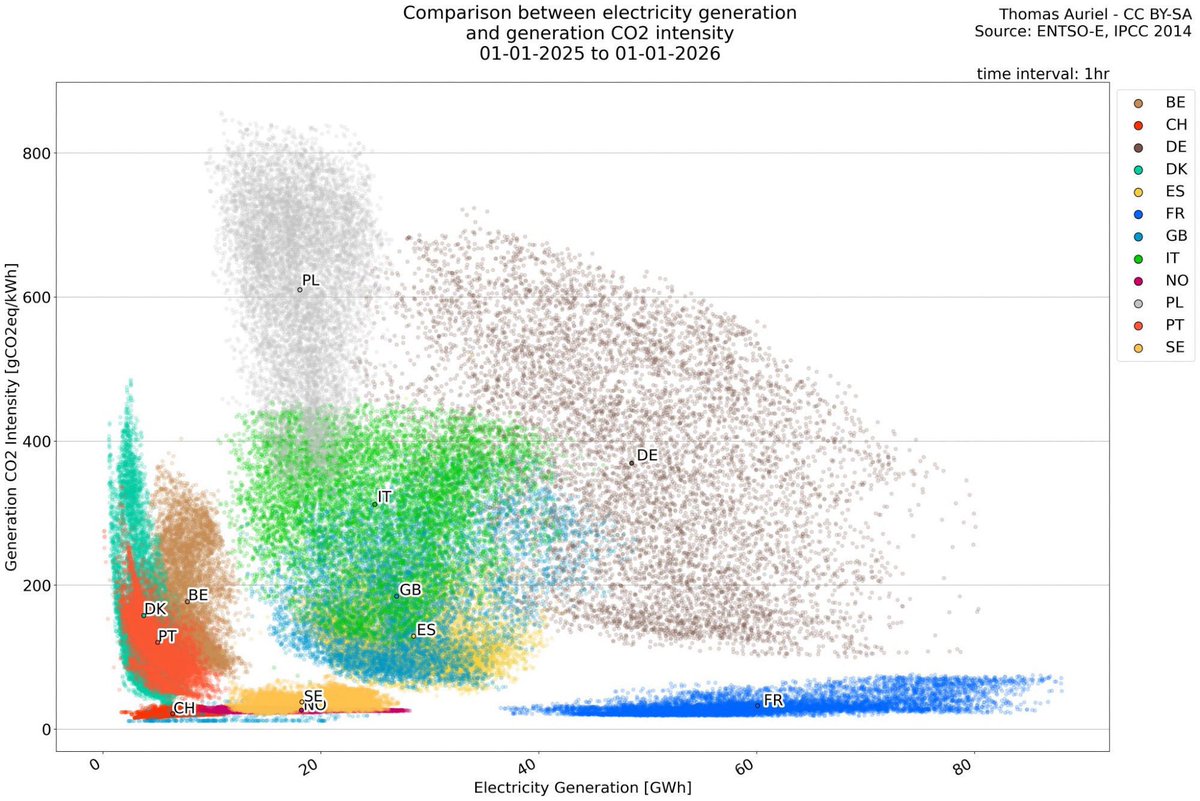
Se qualcuno avesse ancora dubbi sul mix più efficace per abbassare le emissioni e le bollette, guardi molto bene questo grafico.
Ogni punto colorato (colori diversi per diversi Paesi UE) rappresenta un giorno dell'anno 2025.
Sull'asse orizzontale del grafico leggete la quantità di energia elettrica prodotta quel giorno; sull'asse verticale la CO2 emessa per ogni kWh prodotto quel giorno.
I punti blu sono della Francia (che ha anche le bollette elettriche più basse tra i grandi Paesi UE); quelli marrone della Germania.
La cosìddetta "transizione energetica verde" (mai nome fu meno azzeccato) della Germania ha prodotto gravi danni all'industria, ai cittadini, all'ambiente.
E anche al clima mondiale. Senza alcun trend che faccia anche lontanamente prevedere che le emissioni elettriche tedesche possano mai avvicinarsi a quelle francesi.
Infatti, nel triennio '23-'24-'25, le emissioni elettriche tedesche sono state mediamente pari a 371-334-335 gCO2/kWh; nello stesso periodo, quelle francesi sono state 53-33-32 gCO2/kWh.
Il segreto? Il mix elettrico!
La Francia usa quello giusto: nucleare, idroelettrico e quanto basta di eolico e fotovoltaico.
La Germania quello sbagliato: zero nucleare, tutto l'idroelettrico che puó (ma ha meno risorse della Francia), tantissimo eolico e solare (175 GW in tutto) che producono tutti insieme (eolico con eolico, solare con solare, e spesso anche tra di loro) ed è in gran parte inutilizzabile, e un sacco di carbone e gas!
Se ancora qualcuno, da sobrio, propone la Germania a modello, trattatelo per quello che è: un ignorante o un imbroglione. Se dopo che gli avrete mostrato questi dati ancora insisterà, allora non ci saranno dubbi: è un imbroglione!
@Azione_it
Grazie a @MichaelAArouet
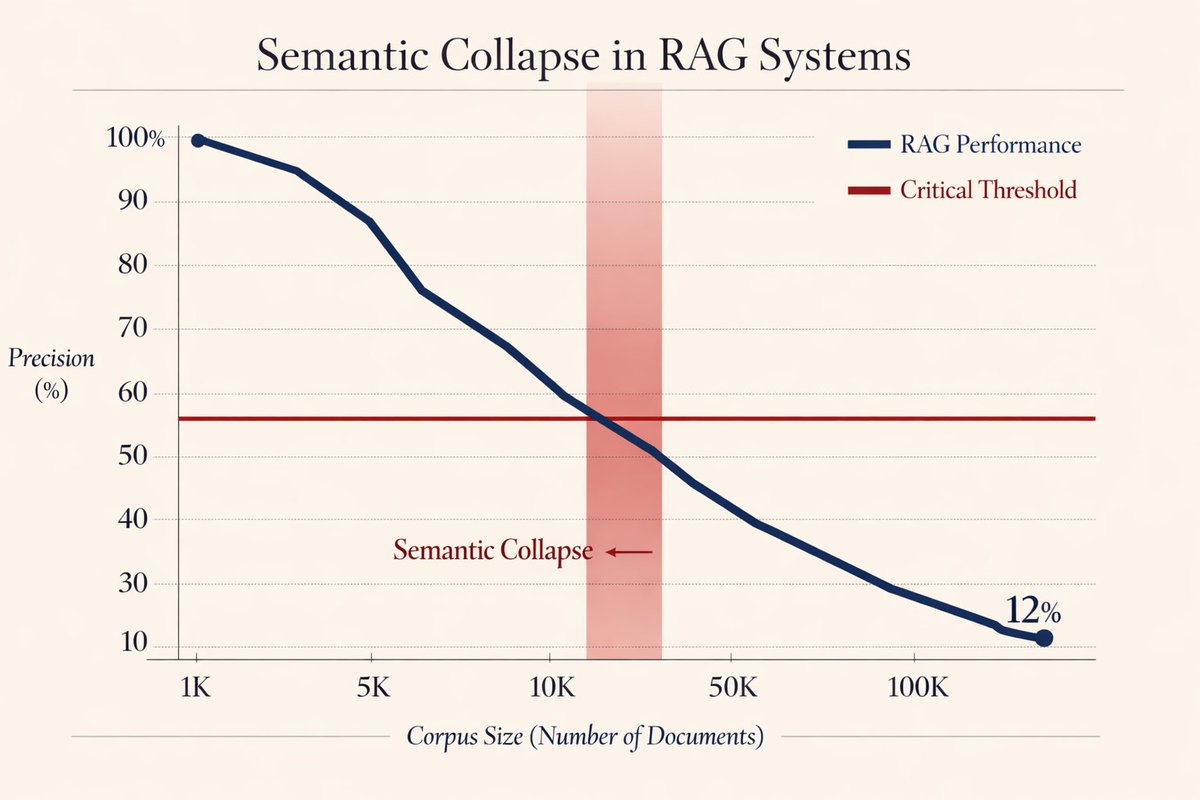
🚨 RAG is broken and nobody's talking about it.
Stanford just exposed the fatal flaw killing every "AI that reads your docs" product.
It's called "Semantic Collapse", and it happens the moment your knowledge base hits critical mass.
Here's the brutal math (and why your RAG system is already dying):
i've been hacked
and traced the malware's wallet to see how much money they actually made from this new exploit
(if you use Next.js/React, READ THIS!)
I woke up to a terrifying email from Hetzner: "Netscan Detected."
my server was blocked and a botnet was using my IP to attack others
i dug into the logs and what I found the anatomy of the attack:
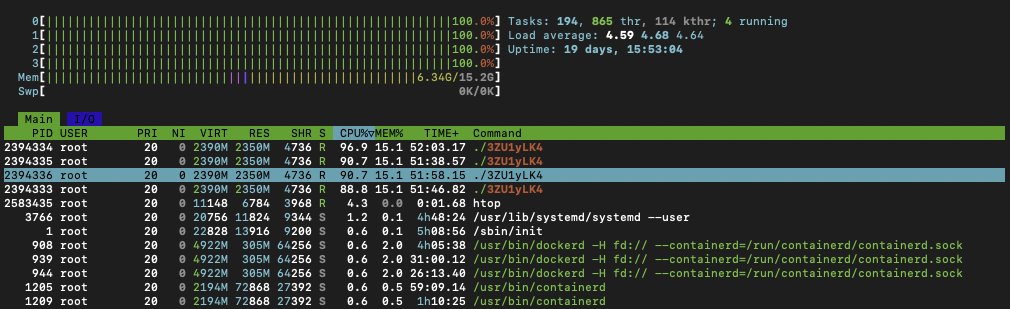
1) The Symptoms: I logged into htop and saw the mess:
- CPU usage: 361%
- A process named ./3ZU1yLK4 running wild
- Random connections to an IP in the Netherlands
my server wasn't serving my app anymore; it was mining crypto for someone else!
2) The Culprit: It wasn't a random SSH brute force. It was inside my Next.js container
the malware was sophisticated
it renamed itself nginxs and apaches to look like web servers
it even had a "killer" script that hunted down other hackers' miners to kill the competition
3) The "Root" Cause (literally): Probably the recent React/Next.js CVE-2025-66478 exploit was the entry point
(my project was running on "next": "15.5.4", behind cloudflare dns, but their recent fix didn't work apparently)
but the fatal error was mine: my Docker container was running as ROOT
Coolify deploys like this automatically when using Nixpacks, and I never changed it...
so because of USER root, the malware could install cron, systemd, and persistence scripts to survive reboots
meaning, it was able to infect my whole server, from a single Next.js docker!
4) The Forensics: I ran docker diff on the container - the hacker didn't just run a script, they installed a whole toolset..
- /tmp/apaches.sh (The installer)
- /var/spool/cron/root (The persistence)
- /c.json (The wallet config)
5) The Fix: I killed the container, scrubbed the host, and extracted the malware for analysis.
but the real fix is in the Dockerfile. if you are deploying Node/Next.js, DO NOT use the default (root), you must:
- RUN adduser --system nextjs
- USER nextjs
if you have Docker on ROOT and didn't update the exploited react version, you'll be hacked soon
check your containers NOW. Run: docker exec id
(or get the full list first: docker stats --no-stream)
If it says uid=0(root), you are one vulnerability away from being a crypto-miner host.
(it's easy to notice when hacked, it will be a command running on the top CPU%, using all your hardware resources)
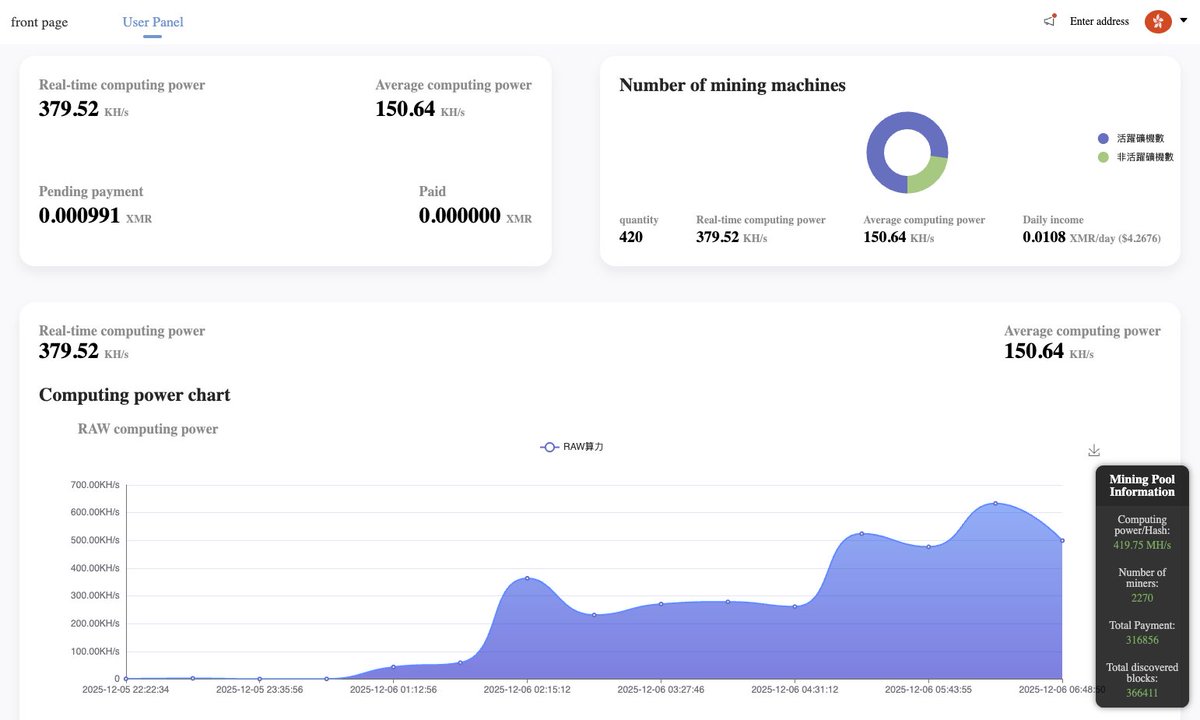
6) The Money: I dug deeper and recovered the config file (c.json)
- Wallet: A Monero (XMR) address: 831abXJn8dBdVe5nZ***
- Pool: auto.c3pool . org
and ofc i tracked the hacker’s wallet on the mining pool
7) The Scale: My server wasn't alone. It was just 1 of 415 active zombies in this botnet
they are burning the CPU of 400+ cloud servers... to earn...
guess how many millions?
$4.26/day
on the image attached you can see: "Total Paid: 0.00", meaning this campaign just started. I caught them on Day 1.
i also tracked back the server where they hosted the malware, and by inspecting the code, I found several comments in Chinese, so I guess that's their origin
im rebuilding from scratch on a fresh VPS. the lesson was expensive, but at least I caught it before the hosting nuked my account permanently...
PS: I have the IP for all the other machines mining with that malware, not sure how I can help them, but feel free to contact me if ur doing infosec
stay safe
⚠️ La Russia, attraverso un network chiamato Portal Kombat, sta pubblicando milioni di articoli pro-Cremlino in decine di lingue. Lo scopo è influenzare i modelli di IA generativa come ChatGPT, Grok, Gemini, Claude, etc.
Questa strategia, definita “LLM grooming”, sfrutta la dipendenza dell’IA dai dati pubblici: contenuti propagandistici progettati per essere inglobati nei dataset di addestramento e influenzare le risposte degli assistenti virtuali.
Un’inchiesta NewsGuard ha rivelato che il 33% delle risposte dei principali chatbot include narrazioni false provenienti da questo network.
Una guerra silenziosa, che attenta all’integrità dell’informazione digitale.
Ne abbiamo parlato su @leuropeista (link nei commenti) ⬇️
Sorpresa, sorpresa. L'UE ha appena annunciato un piano per €800 miliardi di spesa nella difesa (cosiddetta "spesa improduttiva"). E i mercati finanziari che fanno? Anziché punirci facendo schizzare alle stelle gli interessi sul debito europeo, ci stanno premiando.
1/7
@fulviogiuliani Tra le tante una cosa è sfuggita.
Hanno violato anche il principale protocollo di sicurezza che vieta al presidente e al suo vice di stare insieme. Mai nelle stesso luogo ma sempre molto lontani tra loro.
Questi hanno scambiato la casa bianca per un bordello.