anu suresh

239 posts

anu suresh banner
anu suresh

anu suresh

@anusuresh160666

A seasoned aviation expert with 20 yrs of experience backed by deep a/c systems knowledge and a strong engineering foundation from HAL and Air India.

HYDERABAD, INDIA Katılım Mayıs 2025
7 Takip Edilen15 Takipçiler
anu suresh
anu suresh@anusuresh160666·
@Searchof_WhoamI Very deep meaning it had in whatever he spoke.. pearls of knowledge like Ramana Maharshi. 🙏🏻🌷
English
0
0
1
53
Ramanajyothi
Ramanajyothi@Searchof_WhoamI·
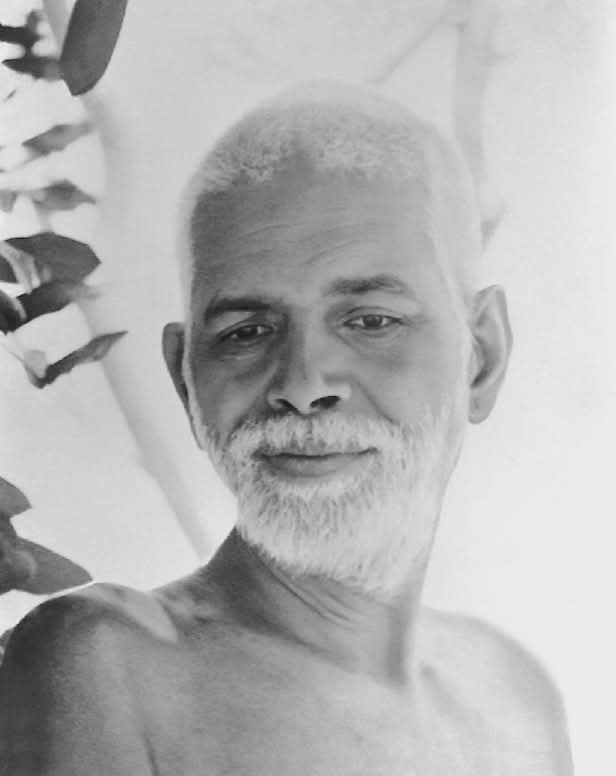
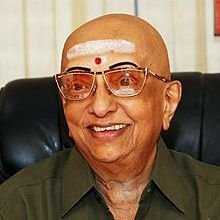
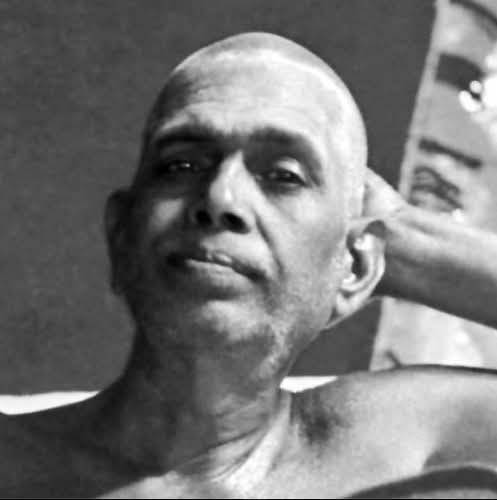
J.KRISHNA MURTI Today, 11th May is the 131st birth anniversary of the great philosopher/teacher and Seer of Modern India, J.Krishnamurti (1895-1986). I am giving here certain rare instances which I have heard from those who have moved with Krishnaji and those who had the opportunity to observe him at close quarters. ………….. Once at Varanasi in the late 1970s, Krishnaji said to two or three people whilst walking along the banks of the Ganga, “Look Sir, can’t you realize what a sacred place this is? This place contains 2000 years of Enquiry within its bosom. Do you realise what it means?”. In Varanasi again, on another occasion, whilst walking on the banks of the Ganga with an associate, Krishnaji stopped at a particular place and asked him, “Sir, can you hear that?” When the associate replied that he had not heard anything, Krishnaji said, “Sir, I have, at this very place, several times, heard temple bells sounding and priests chanting the Vedas. I can hear those bells and the chanting now too. This was the original place where your famous Viswanatha temple was located.” This was a particularly stunning revelation, coming from Krishnaji. At Vasant Vihar, Madras, the headquarters of the Krishnamurti Foundation, India, he said once, in the early 1980s. I heard this personally. It was at one of his talks in December. “What has happened to you and this country? Do you realize that you have lost a very precious jewel?” The precious jewel he was referring to was the highest teaching of the Upanishads. Krishnaji was fond of chanting the Upanishads and of listening to the Vedas. When he was in Vasant Vihar, often Vedic chantings would be arranged for his benefit. He would be totally absorbed in listening to the Vedas and would be most respectful towards the Vedic pundits. He also insisted on the pundits receiving good remuneration for their chanting. Once, in the late 1940s in Madras, Krishnaji told a close associate of his, “Kodandaraman, there is a Sage living in a place called Arunachala, not far from here. Why don’t you go and meet him?” In the late 1970s, after a deep, penetrating talk at Vasant Vihar on the Truth and the necessity of Silence of the mind, Krishnaji stepped down from the platform to be greeted by B.Ananthasamy, a committee member of the Krishnamurti Foundation and a devotee of Bhagavan Sri Ramana Maharshi. Krishnaji asked Ananthasamy, “Did Ramana say anything different?” Photos: 1) Bhagavan Sri Ramana Maharshi 2) J.Krishna Murti; @davidfrawleyved @MB_KGQ @anusuresh160666 @indira_hyd @SrimanNarayena
Ramanajyothi tweet mediaRamanajyothi tweet media
English
11
67
296
8.3K
Ramanajyothi
Ramanajyothi@Searchof_WhoamI·
Q: Is not dhyana [meditation] one of the efficient processes for realization? Sri Ramana Maharshi : Dhyana is concentration on an object. It fulfils the purpose of keeping away diverse thoughts and fixing the mind on a single thought, which must also disappear before realization. But realization is nothing new to be acquired. It is already there, but obstructed by a screen of thoughts. All our attempts are directed to lifting this screen and then realization is revealed. If seekers are advised to meditate, many may go away satisfied with the advice. But someone among them may turn round and ask, `Who am I to meditate on an object ?' Such a one must be told to find the Self. That is the finality. That is vichara. ~ Be as you are @nandhiji @anusuresh160666 @OnlyWitnessing @k_bhairav @NarayanCha92762
Ramanajyothi tweet media
English
5
45
182
4.8K
Ramanajyothi
Ramanajyothi@Searchof_WhoamI·
Unassociated Pure Reality: Q: On inquiry into the origin of thoughts, there is a perception of 'I', but it does not satisfy me. M: Quite right. The perception of ‘I’ is associated with a form, maybe the body, or a thought. There should be nothing associated with the pure Self. The Self is the unassociated pure Reality, in whose light the body, the ego, etc, shine. On stilling all thoughts, the pure Consciousness remains. At the time of waking up from sleep and before becoming aware of the world, there is that pure 'I-I'. Hold onto it without sleeping and without allowing thoughts to possess you. If That is held firm, it does not matter even if the world is seen; the seer will remain unaffected by the phenomena. If there were not the activities of waking thoughts and dream thoughts, there would not be the corresponding worlds, i.e, no perception of them. In deep sleep, there are no such activities, and the world does not then exist for us. In dreamless sleep, there is no world, no ego, and no unhappiness. But the Self remains. In the waking state, there are all these; yet there is the Self. One has only to remove the transitory happenings to realize the ever-present beatitude of the Self. Your nature is Bliss. Find that on which all the rest are superimposed, and you will then remain as the pure Self. ~~ Conscious Immortality @davidfrawleyved @indira_hyd @NarayanCha92762 @Jayalko1 @OnlyWitnessing
Ramanajyothi tweet media
English
8
29
163
4.4K
anu suresh
anu suresh@anusuresh160666·
@TruthAlone2 Yes. It should be the inner conscience thst should be seen .. so eyes open or closed doesn’t matter🙏🏻
English
0
0
0
0
Ramanajyothi
Ramanajyothi@Searchof_WhoamI·
WHAT IS SAMADHI ? Bhagavan spent a lot of time this afternoon freely conversing with devotees about many matters, and in between teaching them Advaita. Seeing that the conversation was going on without end, a new arrival got up and asked, “Bhagavan, when do you go into samadhi?” All the devotees burst into laughter. Bhagavan also laughed. After a while, he said, “Oh, is that your doubt? I will clear it, but first tell me what exactly is the meaning of samadhi? Where should we go? To a hill or to a cave? Or to the sky? What should samadhi be like? Tell me,” asked Bhagavan. Poor man, he could not say anything and sat down quietly. After a while, he said, “Unless the movement of the indriyas and limbs stops, there cannot be samadhi, they say. When do you go into that samadhi?” “I see, that is what you want to know. You think, ‘What is this? This Swami is always speaking. What Jnani is he?’ That is your idea? It is not samadhi unless one sits cross-legged in padmasana, with folded hands and stops breathing. There must also be a cave near about. One must go in and out of it. Then people will say, ‘This is a great Swami’. As for me, they begin doubting and say, ‘What Swami is this who is always talking to his devotees and has his daily routine?’ What can I do? This happened once or twice even before. People who had originally seen me at Gurumurtham and then saw me at Skandasramam, talking to all people and partaking in normal activities, said to me with great anxiety, ‘Swami, Swami, please give us darshan in your previous state.’ Their impression was that I was getting spoiled. What can I do? At that time (while in Gurumurtham) I had to live like that. Now I am obliged to live like this. Things happen the way they have to. But in their view, it is enough if one does not eat or talk. Then saintliness, swamitvam, comes on automatically. That is the delusion people have,” said Bhagavan. ~ Letters from Sri Ramanasramam @davidfrawleyved @DeviRudrani @TruthAlone2 @SrimanNarayena @Rao5BA
Ramanajyothi tweet media
English
7
31
174
3.9K
Ramanajyothi
Ramanajyothi@Searchof_WhoamI·
One day, while going up the Hill, Bhagavan referred to the misunderstanding between two prominent devotees and wanted me to convey to them the following message: “Whoever condemns us is our friend. For he condemns only our body, which is our enemy. The enemy’s enemy is the best friend. We should really beware of those who praise us.” The next morning I met the two devotees to convey Bhagavan’s message. Even before I opened my mouth, they both expressed their eagerness to make up their quarrel. One morning at breakfast, Bhagavan asked me, “Do you know this chutney?” I replied, “No. It tastes excellent though.” He smiled and said, “It is bitter-gourd.” It could hardly be believed but for Bhagavan saying it, because it had no trace of bitterness. On the other hand, it was very palatable. Then I composed a Telugu verse expressing wonder how Bhagavan could remove bitterness so completely from raw bitter-gourd, and praying that He might likewise wipe out the bitterness of ego from within us. As soon as he returned from his usual walk on the Hill, I showed him the piece. He explained that sour mango and coconut were mixed to counteract and suppress the bitter taste in the chutney, and added, “Bitter-gourd is good for digestion and it also acts as a laxative.” In the evening Bhagavan referred to the description of the Self as “the smallest of atoms, the biggest of big things.” He said, “The hailstone falls in the ocean. At once it melts and becomes the ocean itself. Likewise, the source of the Self is a pinpoint. When it is searched for, it disappears, and only the fullness remains.” ~~ Prof. G.V. Subbaramayya. (41). #ramanamaharishi #Tiruvannamalai #selfenquiry #atmavichara #iamthat #ahambrahmasmi #selfrealization #enlightenment  @davidfrawleyved @yaSubramanya1
Ramanajyothi tweet media
English
5
19
120
2.1K
Ramanajyothi
Ramanajyothi@Searchof_WhoamI·
Question: It is not so with the appearance of the world. Even after it is repeatedly declared to be false, a person cannot avoid satisfying their wants from the world. How can the world be false? Maharshi: It is like a person satisfying their dream wants by dream creations. There are objects, there are wants, and there are mutual satisfactions. The dream creations are as purposeful as the waking world and yet are not considered real. Thus, we see that all these illustrations serve a purpose in establishing the stages of unreality. The realized sage finally declares that in the regenerate state, the jagrat (waking) state is also real. Each illustration should be understood in its proper context; it should not be studied as an isolated statement. It is a link in a chain. The purpose of all these illustrations is to direct the seeker's mind towards the one Reality underlying them all. ~~ Conscious Immortality @nandhiji @Santosh64355195 @IndicInsight1 @indira_hyd
Ramanajyothi tweet media
English
4
21
116
2.4K
Shakti Lumba
Shakti Lumba@CaptShaktiLumba·
Nostalgia
Shakti Lumba tweet media
Português
32
41
362
35.5K
anu suresh
anu suresh@anusuresh160666·
@CaptShaktiLumba Manufacturing ambition without regulatory strength creates a bottleneck. Reform is not optional. With new aircraft programmes expected to enter the Indian ecosystem in the coming years, certification readiness becomes even more critical.
English
0
1
2
369
Shakti Lumba
Shakti Lumba@CaptShaktiLumba·
Nobody can argue against the fact that Aviation is of Paramount Importance for the mobility of the Economy: Hence, the Govt is licensing more Airlines to address the Duopoly that presently exists, building upgrading Airports in Tier 2 and Tier 3 Cities as per its Regional Connectivity Scheme ( RCS). Is enchasing support for the MRO industry. More importantly it Is encouraging civil transport aircraft manufacture: The Adani Group has tied up with Embraer and TataCompanies have tied up with Airbus. The most important area that is not getting the attention and priority it deserves is the Aviation Regulation and the Aviation Regulator( DGCA) It is common knowledge that the DGCA lacks the skill and expertise to certify air transport aircraft manufactured in India. Hence who with certify the transport aircraft being manufactured in India? This will results in a-skewed AVIATION GROWTH with the Aviation regulator ending up as the choke point. The Govt., MOCA, DGCA, must on priority modernise Aviation Regulation and harmonise them with the majority of the aviation world. The most common benchmark is the The European Union Aviation Regulation regulated by EASA. Countries that have harmonized their aviation regulations with EASA include all EU Member States, along with EFTA ( European Free Trade Association) members: Switzerland, Norway, Iceland, Liechtenstein). Additionally, many countries worldwide, particularly in Eastern Europe PANEP (Pan-European Partners): Armenia, Azerbaijan, Georgia, Moldova, and Ukraine cooperate closely on implementing EU aviation safety rules. BASA (Bilateral Aviation Safety Agreement Partners): Countries with agreements that recognize (parts of) the regulatory framework as equivalent include Brazil, Canada, China, Japan, USA, and UK. UAE’s GCAA by and large follows EASA Other Alignments: Many countries in regions such as South Asia are involved in technical cooperation projects to harmonize their systems with EASA Soon the FTA Agreement with the EU will come into effect. India too needs to harmonise its aviation regulation with EASA for smooth operation and progress of its Aviation Industry and Trade. It is little known but in 2009/10 EASA had offered to assist India in harmonising its regulation with EASA and setting up an office in RK Puram ( NewDelhi) for some reason both MOCA & DGCA declined the offer. HARMONISING WITH EASA IS INDIAN AVIATION’s PRIORITY @PMOIndia @narendramodi @NITIAayog @mpa_india ( #CabSecy) @RamMNK @MoCA_GoI @DGCAIndia @gautam_adani @AdaniOnline @tatatrusts @TataCompanies @IndiGo6E @airindia @AAI_Official @EASA @EUCouncil @Airbus @embraer
English
6
7
47
4.4K
anu suresh
anu suresh@anusuresh160666·
@CaptShaktiLumba India cannot aspire to be an aircraft manufacturing nation with a regulator that lacks full certification depth. Unless regulatory capability is strengthened and harmonised with global benchmarks line EASA,aviation growth will hit a structural ceiling. .
English
0
0
1
152
NEEM KAROLI BABA🚩🚩
NEEM KAROLI BABA🚩🚩@neemkarolibabba·
🌸जय गुरुदेव 🌸 जय श्री राम 🌸
NEEM KAROLI BABA🚩🚩 tweet media
हिन्दी
249
47
570
2.7K
Dr Mouth Matters
Dr Mouth Matters@GanKanchi·
🌿 காலில் படாதவரை காலணிகள் யாவும் காட்சி பொருள் தான், அதுவே காலில் பட்டு விட்டால் வீட்டில் ஓரமான பொருள் தான் ... 🌿 என்னதான் நம் பாதத்தை தாங்கி பிடித்தாலும், ஓரமாயிரு என்ற உபதேசம் மட்டுமே அதற்கு நாம் தரும் பரிசு... 🌿 இவ்வுலகில் படைக்கப்பட்ட யாவிற்கும் அதனது கதாபாத்திரம் தான் மதிப்பையும், மரியாதையும் உறுதிபடுத்தும் ... 🌿 நல்லது நடக்கும்... 🌿 நல்லதே நடக்கும்... *ஸ்ரீ மஹா பெரியவா அனுக்ரஹம்* 🙏 *இனிய காலை வணக்கம்* 🙏
Dr Mouth Matters tweet media
தமிழ்
20
38
352
3.1K
🪐👁️
🪐👁️@energyhealingjw·
If this message finds you on April 26 or 27, 2026 you’ve manifested a divine partner who’s gonne be your best friend & closest bond you ever had. This person dreams about being with you & cherishes you deeply. Interact with this post 2 times to claim it. Make sure you follow us.
English
329
576
8.8K
133.9K
Ramanajyothi
Ramanajyothi@Searchof_WhoamI·
First Impact: IT was a fine sunny morning when I first entered the hall with a local friend who had come as my guide. Sri Ramana Maharshi was seated on his couch, looking majestic, I might even say divine, though quite unostentatious. He was as motionless as a statue. We prostrated before him and took our seats, on the floor in front of him, along with a few others. There was something radiant about his face which spontaneously captivated me. The whole atmosphere was charged with dynamic silence and ineffable peace - not a mere quietness but a vibrant, living peace. I had no special craving for spiritual guidance; I had gone only as a casual visitor to pay my respects to a great soul. My intention was only to sit there for a few minutes to show my respect, but I was fixed to my seat, almost petrified, for three quarters of an hour. Even if I had wanted to talk to him about anything I could not have done so, because I was sitting spellbound. Visitors were coming and going, all in silence. I vaguely sensed the uneasiness of my friend, who was wondering how he could get me away, and at last I reluctantly got up and left after again prostrating to the Maharshi. Once outside, my friend impatiently asked me why I had sat there for so long, but I evaded giving a reply and spoke of other things. I did not know what to say. Years later, when I had become a devotee, heart and soul, I saw another example of this strange magnetism which the Maharshi exerted. Once my daughter, who was only two years old, was sitting quietly, cross-legged, in a corner of the hall, away from her mother and myself and remained like that for about two hours. We did not particularly notice it, but the Maharshi did. When I went to the hall early next morning it was a pleasure to hear him telling the story to one of the devotees. He repeated it a number of times as fresh people came in and particularly emphasised the words “sitting motionless”. ~~ N N Rajan
Ramanajyothi tweet media
English
4
31
160
3.6K
Ramanajyothi
Ramanajyothi@Searchof_WhoamI·
Bhagavan’s story of Parvati and her penance: Bhagavan was a master storyteller. He picturesquely narrated and enacted incidents from the lives of bhaktas and from tales of deep spiritual content. There are accounts of how, during a narration, his eyes shone with devotional fervour, his voice broke with stifled sobs, and tears freely flowed from his eyes. Often choosing narratives that suited a devotee’s need, these well-known stories served to illustrate his teachings through charismatic simplicity and directness. The most prominent among the themes chosen by Bhagavan is that of Siva bhaktas. Foremost among these was his story of Goddess Parvati herself. Siva and Parvati, as the Father and Mother of the world, are imbued with a secret knowledge that while seemingly two, they are fundamentally one. So when Parvati causes untold suffering to humanity by playfully closing Siva’s three eyes, she is struck with remorse and seeks penance. The anguish of imminent separation is reflected in Siva’s words when he says, “What penance can be prescribed for you leaving me out?” Asked to follow her own path of dharma and to guide the earth in this, Siva asks Parvati to proceed to Kancheepuram, “heaven on earth, where a little penance yields boundless results. I shall remain there in the lotus of your heart in my formless state as the Absolute Pure Being,” he assures her. This is dahara vidya or “the knowledge of Brahman within”. In this upasana, the sadhaka concentrates on Brahman (the Universal Self) as the imperceptible ether in the cave of the heart. It is one of the thirty-two vidyas of the Upanishads which explains the identity of the external and the internal, the objective and the subjective, the macrocosmic and the microcosmic, the universal and the individual, Brahman and the Atman. Before she can reach Kancheepuram, Parvati must shower her grace and goodness through her passage on earth. She does this by first addressing the immediate need of assuaging hunger in famine-struck Kasi and next by assuring Kasi’s King that the land would now have rain and no more famine. She is restless to reach Kancheepuram where Siva has assured her of his presence in her heart. Here, at the holy river Kampa, she practices austerities with devotion. Out of sand, she creates a linga and passes Siva’s test by her willingness to perish with the linga as the floodwaters rise, rather than let the Sivalinga dissolve in the flood. The book The Glory of Arunachala mentions Parvati’s tapas in Kancheepuram as she observes “punctiliously and simultaneously the 32 kinds of dharma.” The list of 32 charities includes items such as “providing for travelers”, “giving alms”, “building houses for the poor”, “giving maintenance and education”, and “feeding the poor.” But her tapas is still not over. For though a divine voice from the sky refers to her as the “noblest of beings” who will help worshippers of the linga attain the goal of their lives, she herself must proceed to Arunachala to learn from Sage Gautama about devotion to Siva and the glory of Arunachala. While received with thrill and elation by the sage, she must perform penance for a long time under his instruction before Mahadeva finally appears before her, granting her whatever boon she wishes. She seeks to merge with her Lord to become half of Siva himself, so she may never make a mistake again only to suffer the hardships of penance and separation. So even though Siva takes residence in the lotus of Parvati’s heart in Kancheepuram, the goddess’s penance is a long one: from good deeds to worship of Siva’s form as a hand-shaped linga, simultaneous with service to mankind, on to secret instruction under Sage Gautama, and finally to the granting of mergence into Siva’s formlessness in a reunion intensely desired. @davidfrawleyved @Jayalko1 @DeviRudrani @Rao5BA
Ramanajyothi tweet media
English
5
53
266
5.2K
Ramanajyothi
Ramanajyothi@Searchof_WhoamI·
Bhagavan was repeatedly asked about the problem of destiny and freewill, the apparent and eternal opposites. His answer, typically, offers not just a solution, but once and for all dissolves the problem. He said, “Destiny pertains to the body and is indisputable. But find out whether you are the body.” He also said, “Man has only one freewill. That is to choose not to identify with one's body.” ~~ Drops From The Ocean @TruthAlone2 @chittukuruvi4 @IndicInsight1 @indira_hyd @yaSubramanya1
Ramanajyothi tweet media
English
15
55
323
5.7K