
Sabitlenmiş Tweet
“Science is the belief in the ignorance of experts”
-Richard Feynman (1966)
feynman.com/science/what-i…
English
Alex Rampell
11K posts
@arampell
Silicon Valley entrepreneur (cofounder@ TrialPay, Yub, Affirm, Point, TXN), investor (General Partner @a16z), husband, father and sarcast (one who is sarcastic)



@RoKhanna He must really love golf, because besides >$2M in private golf memberships, @RoKhanna has ~$100k invested in golf stocks



Dr. Mike Israetel on the economic fallacy he says explains why AI won't cause mass unemployment: "Once we have 4 billion robots doing labor in the world, which we're like orders of magnitude off of that currently, then we've just only doubled the human workforce." "From 1700 to today, we've 10 or 20x'd the human labor force. And, seemingly, the economy's not like, ah, we don't need any more people, that's enough. We could just consistently have better jobs and pay people even more money." "This idea that robots are gonna show up and all of a sudden we're all completely unemployed makes a technical fallacy in economics called lump of labor fallacy. It's the idea that all the jobs currently are the only jobs that could be." "Imagine in 1750, you're like, well, 98% of us work in farming, and then you come back from the future and you're like, you guys, 2% of people in the 1990s work in farming. It'd be like, so everyone's starving to death? Like, no, no, we're super fat, actually." @misraetel

One of the main reasons people are running through tokens -- and CFOs are getting upset -- is that it's so hard to monitor token usage/actual costs.

CEO of Flock: "Unfortunately, there’s terrorist organizations like DeFlock whose primary motivation is chaos. They’re closer to Antifa than they are anything else."

NYC Mayor Mamdani on American exceptionalism: "We are told that America is exceptional because we are richer, stronger, more powerful than everyone else... The truth, my friends is that America is exceptional because here, nothing is fixed into place."
Workers need to share in the profits. Right now, $530 billion of $563 billion in profits of top companies with UAW workers went on stock buybacks & dividends instead of to employees. Pete Stavros has brilliant initiatives on worker ownership.
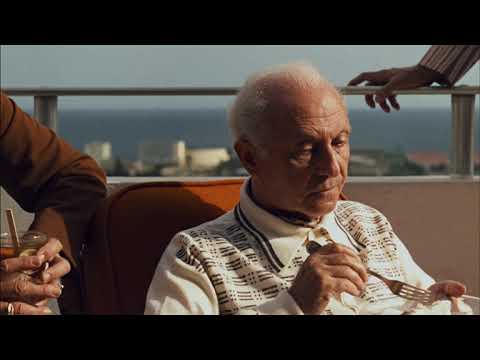

Elon Musk reveals the moment his son Saxon left an entire sushi restaurant speechless "I was living in L.A., and I took my older boys out for lunch to Sugarfish, which is a very kind of uptight sushi restaurant. In fact, on the menu of the restaurant, it says, do not ask for soy sauce, because the chef has put the right amount of soy sauce." "So, like, extremely strict sushi restaurant. And so the waiter is going around asking everyone what they want and then it comes to Saxon and Saxon says I'll have a cheeseburger." "And the waiter takes a moment to recover because no one ever asked for a cheeseburger at this very strict sushi restaurant. It took him like 30 seconds to realize he'd just been asked for a cheeseburger, because you're not even allowed to ask for soy sauce." "So then when he finally recovered, he said, we don't have cheeseburgers. And Saxon goes at the top of his voice, what? Like, what kind of restaurant doesn't have cheeseburgers? He says, fine, I'll have a hamburger."


It's time for a national billionaires tax and a new social contract. 10% of Americans own two-thirds of the wealth. Wages have stagnated. The cost of living has skyrocketed. The system is fundamentally broken. The federal tax code, a corporate code, and an inheritance code were written for a different set of Americans. It’s time for an economic reset. @gavinnewsom" target="_blank" rel="nofollow noopener">substack.com/@gavinnewsom

