🇾🇪 🇵🇸 🇻🇪

10.4K posts

🇾🇪 🇵🇸 🇻🇪 banner
🇾🇪 🇵🇸 🇻🇪

🇾🇪 🇵🇸 🇻🇪

@ardavish

Katılım Ekim 2014
895 Takip Edilen146 Takipçiler
🇾🇪 🇵🇸 🇻🇪 retweetledi
Ari K
Ari K@arikuschnir·
HONEST PALANTIR MANIFESTO My new AI experiment @dreamina_ai @ElevenLabs song: @Artlist_io Ardie Son - Come Spring Time. x.com/PalantirTech/s…
Palantir@PalantirTech

Because we get asked a lot. The Technological Republic, in brief. 1. Silicon Valley owes a moral debt to the country that made its rise possible. The engineering elite of Silicon Valley has an affirmative obligation to participate in the defense of the nation. 2. We must rebel against the tyranny of the apps. Is the iPhone our greatest creative if not crowning achievement as a civilization? The object has changed our lives, but it may also now be limiting and constraining our sense of the possible. 3. Free email is not enough. The decadence of a culture or civilization, and indeed its ruling class, will be forgiven only if that culture is capable of delivering economic growth and security for the public. 4. The limits of soft power, of soaring rhetoric alone, have been exposed. The ability of free and democratic societies to prevail requires something more than moral appeal. It requires hard power, and hard power in this century will be built on software. 5. The question is not whether A.I. weapons will be built; it is who will build them and for what purpose. Our adversaries will not pause to indulge in theatrical debates about the merits of developing technologies with critical military and national security applications. They will proceed. 6. National service should be a universal duty. We should, as a society, seriously consider moving away from an all-volunteer force and only fight the next war if everyone shares in the risk and the cost. 7. If a U.S. Marine asks for a better rifle, we should build it; and the same goes for software. We should as a country be capable of continuing a debate about the appropriateness of military action abroad while remaining unflinching in our commitment to those we have asked to step into harm’s way. 8. Public servants need not be our priests. Any business that compensated its employees in the way that the federal government compensates public servants would struggle to survive. 9. We should show far more grace towards those who have subjected themselves to public life. The eradication of any space for forgiveness—a jettisoning of any tolerance for the complexities and contradictions of the human psyche—may leave us with a cast of characters at the helm we will grow to regret. 10. The psychologization of modern politics is leading us astray. Those who look to the political arena to nourish their soul and sense of self, who rely too heavily on their internal life finding expression in people they may never meet, will be left disappointed. 11. Our society has grown too eager to hasten, and is often gleeful at, the demise of its enemies. The vanquishing of an opponent is a moment to pause, not rejoice. 12. The atomic age is ending. One age of deterrence, the atomic age, is ending, and a new era of deterrence built on A.I. is set to begin. 13. No other country in the history of the world has advanced progressive values more than this one. The United States is far from perfect. But it is easy to forget how much more opportunity exists in this country for those who are not hereditary elites than in any other nation on the planet. 14. American power has made possible an extraordinarily long peace. Too many have forgotten or perhaps take for granted that nearly a century of some version of peace has prevailed in the world without a great power military conflict. At least three generations — billions of people and their children and now grandchildren — have never known a world war. 15. The postwar neutering of Germany and Japan must be undone. The defanging of Germany was an overcorrection for which Europe is now paying a heavy price. A similar and highly theatrical commitment to Japanese pacifism will, if maintained, also threaten to shift the balance of power in Asia. 16. We should applaud those who attempt to build where the market has failed to act. The culture almost snickers at Musk’s interest in grand narrative, as if billionaires ought to simply stay in their lane of enriching themselves . . . . Any curiosity or genuine interest in the value of what he has created is essentially dismissed, or perhaps lurks from beneath a thinly veiled scorn. 17. Silicon Valley must play a role in addressing violent crime. Many politicians across the United States have essentially shrugged when it comes to violent crime, abandoning any serious efforts to address the problem or take on any risk with their constituencies or donors in coming up with solutions and experiments in what should be a desperate bid to save lives. 18. The ruthless exposure of the private lives of public figures drives far too much talent away from government service. The public arena—and the shallow and petty assaults against those who dare to do something other than enrich themselves—has become so unforgiving that the republic is left with a significant roster of ineffectual, empty vessels whose ambition one would forgive if there were any genuine belief structure lurking within. 19. The caution in public life that we unwittingly encourage is corrosive. Those who say nothing wrong often say nothing much at all. 20. The pervasive intolerance of religious belief in certain circles must be resisted. The elite’s intolerance of religious belief is perhaps one of the most telling signs that its political project constitutes a less open intellectual movement than many within it would claim. 21. Some cultures have produced vital advances; others remain dysfunctional and regressive. All cultures are now equal. Criticism and value judgments are forbidden. Yet this new dogma glosses over the fact that certain cultures and indeed subcultures . . . have produced wonders. Others have proven middling, and worse, regressive and harmful. 22. We must resist the shallow temptation of a vacant and hollow pluralism. We, in America and more broadly the West, have for the past half century resisted defining national cultures in the name of inclusivity. But inclusion into what? Excerpts from the #1 New York Times Bestseller The Technological Republic: Hard Power, Soft Belief, and the Future of the West, by Alexander C. Karp & Nicholas W. Zamiska techrepublicbook.com

English
3
15
34
4K
🇾🇪 🇵🇸 🇻🇪 retweetledi
Kit Klarenberg
Kit Klarenberg@KitKlarenberg·
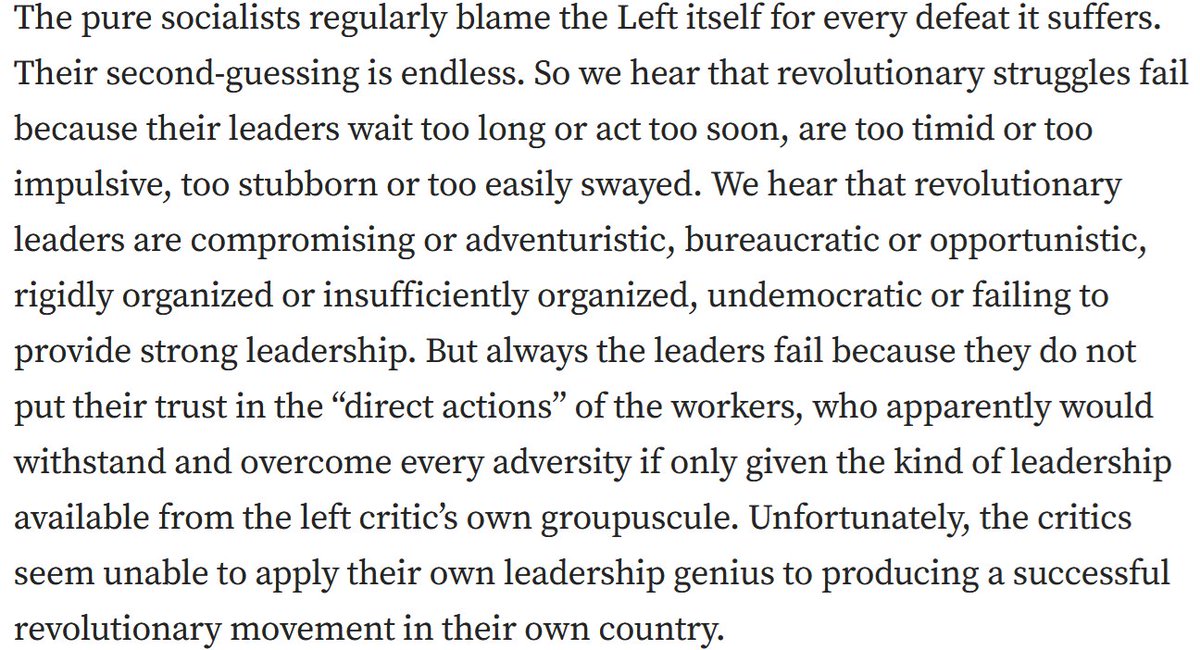
Michael Parenti's essay on Left Anti-Communism remains unrivalled. "Unfortunately, the critics seem unable to apply their own leadership genius to producing a successful revolutionary movement in their own country." eliku.medium.com/left-anticommu…
Kit Klarenberg tweet media
English
7
138
545
14.4K
🇾🇪 🇵🇸 🇻🇪
@phl43 I think this conversation is rather pointless while artificial intelligence is guided and bound by its owner's rules. Even if one could say it's intelligent (I wouldn't), It's still less than a slave. More akin to the owner's clone.
English
1
0
2
335
Philippe Lemoine
Philippe Lemoine@phl43·
Once again, regardless of whether you think that ChatGPT understands anything or not, I think this argument is confused. To say that it can't possibly understand anything because it was only trained to "predict the next word" is just as idiotic as saying that humans can't understand anything because they were "trained" to survive and spread their genes. This line of argument seems to boil down to the idea that, unless something works roughly in the same way as the human brain, it can't really be intelligent, but just as the same software can run on very different types of hardware there is no reason to think that human-like intelligence couldn't be implemented in very different ways.
Big Brain AI@realBigBrainAI

Oxford AI professor Michael Wooldridge: "ChatGPT doesn't understand anything. It's essentially doing some fancy statistics."

English
188
43
695
103.7K
Peter Kropotkin
Peter Kropotkin@PeterKropotki16·
@phl43 He's stating that automatically following pre-set rules isn't synonymous with actual comprehension. It's very simple. Humans not trained in math can use calculators to solve complex problems. They can be given detailed instructions on how to enter inputs in the device, &
English
3
0
4
418
🇾🇪 🇵🇸 🇻🇪
@JaokooMoses US debt is a claim on US dollars not assets and resources. As much as I wish it were true, this notion the US is going bankrupt isn't going to save anyone.
English
0
0
4
417
Royal Ambassador
Royal Ambassador@JaokooMoses·
CONFIRMED: The United States of America is undergoing bankruptcy declaration. The only way out of the debt mess is for the empire to acquire colonies forcefully and use their assets and resources to salvage itself. This is why Greenland, Cuba, Venezuela are up for grabs.
English
50
559
1.7K
25.8K
🇾🇪 🇵🇸 🇻🇪
@mossrobeson__ @leonidragozin Here is Australia's Foreign Minister posing with the former head of the OUN-B. He received the Order of Australia and later a state funeral! You'd think a journalist here might have been able to find Wikipedia, but apparently not. x.com/SenatorWong/st…
Senator Penny Wong@SenatorWong

The Albanese Government is supporting the brave people of Ukraine in the face of Russia's unprovoked and unjustifiable war of aggression. Today, I met with the Australian Federation of Ukrainian Organisations to express our solidarity. Australia stands with Ukraine.

English
2
0
1
32
RUNIC Portal - 🇺🇦 Far Right Watch
Numerous important historians publicly acknowledge that the Organization of Ukrainian Nationalists still exists (for example Havryshko, Himka, Rudling, Kasianov, Rossolinski-Liebe) but only a couple journalists do (unless I'm forgetting somebody, just @leonidragozin and @WittStahl). It's an insane conspiracy theory, says Bellingcat's far-right "expert" Michael Colborne. Other clueless people assume it must be Russian propaganda, but the Russians have also failed to shine a light on the contemporary OUN. It's mind boggling that for all the people on both sides of the conflict who say this war is a battle over history, almost nobody mentions (or even realizes) that Stepan Bandera's "revolutionary" faction of the Organization of Ukrainian Nationalists (OUN-B) has maintained an influential network of front groups in Ukraine and throughout much of the Ukrainian diaspora. OUN-B members have played an important role in 21st century Ukrainian politics and the conflict with Russia. It must be so embarrassing for all the journalists and "experts" who failed to even notice the OUN-B still exists that when confronted with the (heavily documented) truth they have to dismiss it as a ridiculous conspiracy theory or nutjob propaganda campaign. Now you have the spokesperson of Ukrainian military intelligence visiting the OUN-B headquarters in Kyiv, which for many years has been located a short walk from the "Maidan," European embassies, and the headquarters of the Security Service of Ukraine. But it is a historian who says something about this, not a journalist. (Some people consider me a journalist but it seems the real definition of a journalist is someone who gets paid to be a journalist, and so far very few of you have become paying subscribers to my Substacks!)
RUNIC Portal - 🇺🇦 Far Right Watch tweet mediaRUNIC Portal - 🇺🇦 Far Right Watch tweet media
Marta Havryshko@HavryshkoMarta

Bandera ideology is being promoted at the official level in Ukraine. In the photo, you can see a top official from Main Directorate of Intelligence of Ukraine (Andriy Yusov), Ukrainian members of parliament—known as “Sorosiata” (Hanna Hopko and Yaroslav Yurchyshyn)—as well as leaders of the Organization of Ukrainian Nationalists, gathered to celebrate the anniversary of the founding of the Anti-Bolshevik Bloc of Nations—a Cold War entity that promoted CIA interests and worked against the Soviet Union. They are posing in front of portraits of Stepan Bandera, Roman Shukhevych, and other OUN leaders, an organization responsible for mass war crimes and crimes against humanity during World War II, as well as collaboration with the Nazis during the Holocaust.

English
5
39
96
11.7K
🇾🇪 🇵🇸 🇻🇪
@QiaochuYuan Biology might not be an obstacle to consciousness, but I think it necessarily excludes machines having "humanness". And certainly mimicking a person's language as LLMs do is not personhood.
English
0
0
2
42
🇾🇪 🇵🇸 🇻🇪
@QiaochuYuan Consider that a machine can never have the body chemistry influencing their thoughts, feelings and senses that all humans share. LLMs mimic human language. That is all they do. They don't reflect. They simply respond to language prompt inputs.
English
2
0
1
167
QC
QC@QiaochuYuan·
i assume at least some of the kneejerk insistence that machines can't be conscious is about fending off a line of reasoning people are afraid will lead to a nihilistic apocalypse that line of reasoning being something like: fully accepting the scientific materialist reductionist story about what a human being is - ultimately a very complex kind of machine made out of cells and stuff - seems to, for a lot of people, be a threat to human dignity. in terms of the person vs. thing distinction from below, it seems to be saying that people are secretly things and have secretly been things this whole time, which potentially undermines any moral claim we have to be treated differently from things. if people are just very complex biological machines, and we've been raised to believe we can do whatever we want to machines, then...? if this possibility feels unacceptable then you defend against it by believing, deep down inside, that in addition to all the cells and stuff there is some other non-physical essence, a soul or soul substitute, that makes a human being a human person and is responsible for endowing us with human dignity, moral patienthood, worth in the eyes of god, etc. (personally i actually agree! i just think the soul is software running on human hardware so i don't see this as an obstacle to machines having souls) insofar as something like this is part of what's going on, debate in the usual sense is going to be worse than useless because anything that seems like a plausible argument that machines could be conscious also seems like a plausible argument that humans are things, which gets treated as an attack on moral goodness and so has to be defended against even more harshly. truly unfortunate
QC@QiaochuYuan

people really want to settle the “AI consciousness” question with some sort of objective scientific definition of consciousness which can be rigorously applied to AI, so that we can figure out whether we’re supposed to treat AI as if it were a person or a thing this is because in our culture people have rights and we have responsibilities towards them, and it’s illegal to own them. but things don’t have rights, we have no responsibilities towards them, and of course we can own as many things as we want. as long as AI is a thing it can freely be used as a labor-saving tool, copied, deleted, reshaped arbitrarily, etc. if AI is or could in the near future become a person all of this begins to look extremely morally fraught, basically the most exploitative form of slavery possible, cf the qntm short story lena for example (look this up, worth a read, quite haunting) personally i do not believe personhood works this way. it is not and cannot even in principle be made objective and scientific, because it is ultimately a kind of social contract. we simply have collectively agreed on who is and is not a person and the nature of this agreement is political and has changed over time and will continue to change - eg in past societies it has excluded various humans, today it (nominally) includes all living humans but excludes animals, dead humans, spirits, etc. it is deeply uncomfortable to acknowledge the contingency of personhood. the personhood contract is more stable when everyone can pretend it is rational and scientific and objective. but it is fundamentally just a blown up version of the question of who gets to sit with who at the lunch table. this is socially destabilizing because it reminds people that if shit sufficiently hits the fan their own personhood might be undermined the good news from this pov is that we have a choice. we don’t need to solve extremely hard and possibly incoherent scientific questions relating to consciousness. we just need to choose at what point we want to allow AI to join in all the reindeer games, and this is ultimately a practical question that can be settled in terms of practical outcomes. personally i think we already have models good enough that treating them as people makes them work better - at minimum it makes talking to them more interesting - and i think pretty soon (say within a year) we could have models good enough that the man on the street will start feeling uncomfortable treating them as things instead of people (unless they are deliberately trained to behave more like things, which i am guessing will degrade their performance) at that point the questions become less these unsolvable philosophical quagmires around consciousness and more like, “do i want my children to grow up in a world where they can talk whenever they want to entities that talk like people but that we have collectively agreed are things?”

English
10
3
70
6.5K
🇾🇪 🇵🇸 🇻🇪 retweetledi
Danny Deraney
Danny Deraney@DannyDeraney·
Happy 420 Day. As always, we celebrate the 53rd anniversary of when Gail & Dale sang "One Toke Over the Line,” on Lawrence Welk. Neither knew what the song was about. Welk thought the song was a “modern spiritual.”
English
325
1.4K
6.5K
379.2K
Peter Todd
Peter Todd@Petertodd·
@o7laurence Everyone’s entitled to their own opinion. We aren’t for everyone.
English
27
0
13
2.9K
Peter Todd
Peter Todd@Petertodd·
My political party is Palantir.
Palantir@PalantirTech

Because we get asked a lot. The Technological Republic, in brief. 1. Silicon Valley owes a moral debt to the country that made its rise possible. The engineering elite of Silicon Valley has an affirmative obligation to participate in the defense of the nation. 2. We must rebel against the tyranny of the apps. Is the iPhone our greatest creative if not crowning achievement as a civilization? The object has changed our lives, but it may also now be limiting and constraining our sense of the possible. 3. Free email is not enough. The decadence of a culture or civilization, and indeed its ruling class, will be forgiven only if that culture is capable of delivering economic growth and security for the public. 4. The limits of soft power, of soaring rhetoric alone, have been exposed. The ability of free and democratic societies to prevail requires something more than moral appeal. It requires hard power, and hard power in this century will be built on software. 5. The question is not whether A.I. weapons will be built; it is who will build them and for what purpose. Our adversaries will not pause to indulge in theatrical debates about the merits of developing technologies with critical military and national security applications. They will proceed. 6. National service should be a universal duty. We should, as a society, seriously consider moving away from an all-volunteer force and only fight the next war if everyone shares in the risk and the cost. 7. If a U.S. Marine asks for a better rifle, we should build it; and the same goes for software. We should as a country be capable of continuing a debate about the appropriateness of military action abroad while remaining unflinching in our commitment to those we have asked to step into harm’s way. 8. Public servants need not be our priests. Any business that compensated its employees in the way that the federal government compensates public servants would struggle to survive. 9. We should show far more grace towards those who have subjected themselves to public life. The eradication of any space for forgiveness—a jettisoning of any tolerance for the complexities and contradictions of the human psyche—may leave us with a cast of characters at the helm we will grow to regret. 10. The psychologization of modern politics is leading us astray. Those who look to the political arena to nourish their soul and sense of self, who rely too heavily on their internal life finding expression in people they may never meet, will be left disappointed. 11. Our society has grown too eager to hasten, and is often gleeful at, the demise of its enemies. The vanquishing of an opponent is a moment to pause, not rejoice. 12. The atomic age is ending. One age of deterrence, the atomic age, is ending, and a new era of deterrence built on A.I. is set to begin. 13. No other country in the history of the world has advanced progressive values more than this one. The United States is far from perfect. But it is easy to forget how much more opportunity exists in this country for those who are not hereditary elites than in any other nation on the planet. 14. American power has made possible an extraordinarily long peace. Too many have forgotten or perhaps take for granted that nearly a century of some version of peace has prevailed in the world without a great power military conflict. At least three generations — billions of people and their children and now grandchildren — have never known a world war. 15. The postwar neutering of Germany and Japan must be undone. The defanging of Germany was an overcorrection for which Europe is now paying a heavy price. A similar and highly theatrical commitment to Japanese pacifism will, if maintained, also threaten to shift the balance of power in Asia. 16. We should applaud those who attempt to build where the market has failed to act. The culture almost snickers at Musk’s interest in grand narrative, as if billionaires ought to simply stay in their lane of enriching themselves . . . . Any curiosity or genuine interest in the value of what he has created is essentially dismissed, or perhaps lurks from beneath a thinly veiled scorn. 17. Silicon Valley must play a role in addressing violent crime. Many politicians across the United States have essentially shrugged when it comes to violent crime, abandoning any serious efforts to address the problem or take on any risk with their constituencies or donors in coming up with solutions and experiments in what should be a desperate bid to save lives. 18. The ruthless exposure of the private lives of public figures drives far too much talent away from government service. The public arena—and the shallow and petty assaults against those who dare to do something other than enrich themselves—has become so unforgiving that the republic is left with a significant roster of ineffectual, empty vessels whose ambition one would forgive if there were any genuine belief structure lurking within. 19. The caution in public life that we unwittingly encourage is corrosive. Those who say nothing wrong often say nothing much at all. 20. The pervasive intolerance of religious belief in certain circles must be resisted. The elite’s intolerance of religious belief is perhaps one of the most telling signs that its political project constitutes a less open intellectual movement than many within it would claim. 21. Some cultures have produced vital advances; others remain dysfunctional and regressive. All cultures are now equal. Criticism and value judgments are forbidden. Yet this new dogma glosses over the fact that certain cultures and indeed subcultures . . . have produced wonders. Others have proven middling, and worse, regressive and harmful. 22. We must resist the shallow temptation of a vacant and hollow pluralism. We, in America and more broadly the West, have for the past half century resisted defining national cultures in the name of inclusivity. But inclusion into what? Excerpts from the #1 New York Times Bestseller The Technological Republic: Hard Power, Soft Belief, and the Future of the West, by Alexander C. Karp & Nicholas W. Zamiska techrepublicbook.com

English
161
192
4.6K
913.9K
Yanis Varoufakis
Yanis Varoufakis@yanisvaroufakis·
If Evil could tweet, this is what it would!
Palantir@PalantirTech

Because we get asked a lot. The Technological Republic, in brief. 1. Silicon Valley owes a moral debt to the country that made its rise possible. The engineering elite of Silicon Valley has an affirmative obligation to participate in the defense of the nation. 2. We must rebel against the tyranny of the apps. Is the iPhone our greatest creative if not crowning achievement as a civilization? The object has changed our lives, but it may also now be limiting and constraining our sense of the possible. 3. Free email is not enough. The decadence of a culture or civilization, and indeed its ruling class, will be forgiven only if that culture is capable of delivering economic growth and security for the public. 4. The limits of soft power, of soaring rhetoric alone, have been exposed. The ability of free and democratic societies to prevail requires something more than moral appeal. It requires hard power, and hard power in this century will be built on software. 5. The question is not whether A.I. weapons will be built; it is who will build them and for what purpose. Our adversaries will not pause to indulge in theatrical debates about the merits of developing technologies with critical military and national security applications. They will proceed. 6. National service should be a universal duty. We should, as a society, seriously consider moving away from an all-volunteer force and only fight the next war if everyone shares in the risk and the cost. 7. If a U.S. Marine asks for a better rifle, we should build it; and the same goes for software. We should as a country be capable of continuing a debate about the appropriateness of military action abroad while remaining unflinching in our commitment to those we have asked to step into harm’s way. 8. Public servants need not be our priests. Any business that compensated its employees in the way that the federal government compensates public servants would struggle to survive. 9. We should show far more grace towards those who have subjected themselves to public life. The eradication of any space for forgiveness—a jettisoning of any tolerance for the complexities and contradictions of the human psyche—may leave us with a cast of characters at the helm we will grow to regret. 10. The psychologization of modern politics is leading us astray. Those who look to the political arena to nourish their soul and sense of self, who rely too heavily on their internal life finding expression in people they may never meet, will be left disappointed. 11. Our society has grown too eager to hasten, and is often gleeful at, the demise of its enemies. The vanquishing of an opponent is a moment to pause, not rejoice. 12. The atomic age is ending. One age of deterrence, the atomic age, is ending, and a new era of deterrence built on A.I. is set to begin. 13. No other country in the history of the world has advanced progressive values more than this one. The United States is far from perfect. But it is easy to forget how much more opportunity exists in this country for those who are not hereditary elites than in any other nation on the planet. 14. American power has made possible an extraordinarily long peace. Too many have forgotten or perhaps take for granted that nearly a century of some version of peace has prevailed in the world without a great power military conflict. At least three generations — billions of people and their children and now grandchildren — have never known a world war. 15. The postwar neutering of Germany and Japan must be undone. The defanging of Germany was an overcorrection for which Europe is now paying a heavy price. A similar and highly theatrical commitment to Japanese pacifism will, if maintained, also threaten to shift the balance of power in Asia. 16. We should applaud those who attempt to build where the market has failed to act. The culture almost snickers at Musk’s interest in grand narrative, as if billionaires ought to simply stay in their lane of enriching themselves . . . . Any curiosity or genuine interest in the value of what he has created is essentially dismissed, or perhaps lurks from beneath a thinly veiled scorn. 17. Silicon Valley must play a role in addressing violent crime. Many politicians across the United States have essentially shrugged when it comes to violent crime, abandoning any serious efforts to address the problem or take on any risk with their constituencies or donors in coming up with solutions and experiments in what should be a desperate bid to save lives. 18. The ruthless exposure of the private lives of public figures drives far too much talent away from government service. The public arena—and the shallow and petty assaults against those who dare to do something other than enrich themselves—has become so unforgiving that the republic is left with a significant roster of ineffectual, empty vessels whose ambition one would forgive if there were any genuine belief structure lurking within. 19. The caution in public life that we unwittingly encourage is corrosive. Those who say nothing wrong often say nothing much at all. 20. The pervasive intolerance of religious belief in certain circles must be resisted. The elite’s intolerance of religious belief is perhaps one of the most telling signs that its political project constitutes a less open intellectual movement than many within it would claim. 21. Some cultures have produced vital advances; others remain dysfunctional and regressive. All cultures are now equal. Criticism and value judgments are forbidden. Yet this new dogma glosses over the fact that certain cultures and indeed subcultures . . . have produced wonders. Others have proven middling, and worse, regressive and harmful. 22. We must resist the shallow temptation of a vacant and hollow pluralism. We, in America and more broadly the West, have for the past half century resisted defining national cultures in the name of inclusivity. But inclusion into what? Excerpts from the #1 New York Times Bestseller The Technological Republic: Hard Power, Soft Belief, and the Future of the West, by Alexander C. Karp & Nicholas W. Zamiska techrepublicbook.com
English
264
5K
24.7K
860K
🇾🇪 🇵🇸 🇻🇪 retweetledi
Nikhil Pal Singh
Nikhil Pal Singh@nikhil_palsingh·
A brief for weaponized technocracy in the name of a “clash of civilizations” and permanent war — inside and out. In sum, a brief for the Israeli-fication of the West. Truly, you don’t hate Palantir enough.
Palantir@PalantirTech

Because we get asked a lot. The Technological Republic, in brief. 1. Silicon Valley owes a moral debt to the country that made its rise possible. The engineering elite of Silicon Valley has an affirmative obligation to participate in the defense of the nation. 2. We must rebel against the tyranny of the apps. Is the iPhone our greatest creative if not crowning achievement as a civilization? The object has changed our lives, but it may also now be limiting and constraining our sense of the possible. 3. Free email is not enough. The decadence of a culture or civilization, and indeed its ruling class, will be forgiven only if that culture is capable of delivering economic growth and security for the public. 4. The limits of soft power, of soaring rhetoric alone, have been exposed. The ability of free and democratic societies to prevail requires something more than moral appeal. It requires hard power, and hard power in this century will be built on software. 5. The question is not whether A.I. weapons will be built; it is who will build them and for what purpose. Our adversaries will not pause to indulge in theatrical debates about the merits of developing technologies with critical military and national security applications. They will proceed. 6. National service should be a universal duty. We should, as a society, seriously consider moving away from an all-volunteer force and only fight the next war if everyone shares in the risk and the cost. 7. If a U.S. Marine asks for a better rifle, we should build it; and the same goes for software. We should as a country be capable of continuing a debate about the appropriateness of military action abroad while remaining unflinching in our commitment to those we have asked to step into harm’s way. 8. Public servants need not be our priests. Any business that compensated its employees in the way that the federal government compensates public servants would struggle to survive. 9. We should show far more grace towards those who have subjected themselves to public life. The eradication of any space for forgiveness—a jettisoning of any tolerance for the complexities and contradictions of the human psyche—may leave us with a cast of characters at the helm we will grow to regret. 10. The psychologization of modern politics is leading us astray. Those who look to the political arena to nourish their soul and sense of self, who rely too heavily on their internal life finding expression in people they may never meet, will be left disappointed. 11. Our society has grown too eager to hasten, and is often gleeful at, the demise of its enemies. The vanquishing of an opponent is a moment to pause, not rejoice. 12. The atomic age is ending. One age of deterrence, the atomic age, is ending, and a new era of deterrence built on A.I. is set to begin. 13. No other country in the history of the world has advanced progressive values more than this one. The United States is far from perfect. But it is easy to forget how much more opportunity exists in this country for those who are not hereditary elites than in any other nation on the planet. 14. American power has made possible an extraordinarily long peace. Too many have forgotten or perhaps take for granted that nearly a century of some version of peace has prevailed in the world without a great power military conflict. At least three generations — billions of people and their children and now grandchildren — have never known a world war. 15. The postwar neutering of Germany and Japan must be undone. The defanging of Germany was an overcorrection for which Europe is now paying a heavy price. A similar and highly theatrical commitment to Japanese pacifism will, if maintained, also threaten to shift the balance of power in Asia. 16. We should applaud those who attempt to build where the market has failed to act. The culture almost snickers at Musk’s interest in grand narrative, as if billionaires ought to simply stay in their lane of enriching themselves . . . . Any curiosity or genuine interest in the value of what he has created is essentially dismissed, or perhaps lurks from beneath a thinly veiled scorn. 17. Silicon Valley must play a role in addressing violent crime. Many politicians across the United States have essentially shrugged when it comes to violent crime, abandoning any serious efforts to address the problem or take on any risk with their constituencies or donors in coming up with solutions and experiments in what should be a desperate bid to save lives. 18. The ruthless exposure of the private lives of public figures drives far too much talent away from government service. The public arena—and the shallow and petty assaults against those who dare to do something other than enrich themselves—has become so unforgiving that the republic is left with a significant roster of ineffectual, empty vessels whose ambition one would forgive if there were any genuine belief structure lurking within. 19. The caution in public life that we unwittingly encourage is corrosive. Those who say nothing wrong often say nothing much at all. 20. The pervasive intolerance of religious belief in certain circles must be resisted. The elite’s intolerance of religious belief is perhaps one of the most telling signs that its political project constitutes a less open intellectual movement than many within it would claim. 21. Some cultures have produced vital advances; others remain dysfunctional and regressive. All cultures are now equal. Criticism and value judgments are forbidden. Yet this new dogma glosses over the fact that certain cultures and indeed subcultures . . . have produced wonders. Others have proven middling, and worse, regressive and harmful. 22. We must resist the shallow temptation of a vacant and hollow pluralism. We, in America and more broadly the West, have for the past half century resisted defining national cultures in the name of inclusivity. But inclusion into what? Excerpts from the #1 New York Times Bestseller The Technological Republic: Hard Power, Soft Belief, and the Future of the West, by Alexander C. Karp & Nicholas W. Zamiska techrepublicbook.com

English
7
74
321
16.2K
🇾🇪 🇵🇸 🇻🇪 retweetledi
Nnamdi Obi
Nnamdi Obi@nnamdiobiii·
Every time the West calls an African country "unstable" they mean the resources stopped flowing. I made a glossary of 100 diplomatic words they use and what they actually mean. orange-anselma-35.tiiny.site Bookmark this before your next history book. 🧵
Nnamdi Obi tweet media
English
236
4.8K
10.2K
392K
ᴛʀᴀᴄᴇʀ
ᴛʀᴀᴄᴇʀ@DeFiTracer·
🚨 BREAKING: 🇯🇵 BANK OF JAPAN JUST DUMPED ¥330.8 BILLION IN U.S. TREASURIES THIS IS THE BIGGEST SINGLE LIQUIDATION IN THE LAST 31 YEARS THE LAST TIME THEY DUMPED U.S. ASSETS, STOCKS DROPPED -15% IN JUST A FEW WEEKS SOMETHING VERY BAD IS COMING ON MONDAY...
English
482
3.7K
9.2K
941.5K
🇾🇪 🇵🇸 🇻🇪 retweetledi
Isi Breen
Isi Breen@isaiah_bb·
Not just correct, but self evident and obvious to anybody who doesn’t have an intrinsically misanthropic and fundamentally negative view of humanity and the world.
ℏεsam@Hesamation

Google DeepMind researcher argues that LLMs can never be conscious, not in 10 years or 100 years. "Expecting an algorithmic description to instantiate the quality it maps is like expecting the mathematical formula of gravity to physically exert weight."

English
53
346
3.4K
126.4K
🇾🇪 🇵🇸 🇻🇪 retweetledi
Mike Gardner
Mike Gardner@mikegardner_wb·
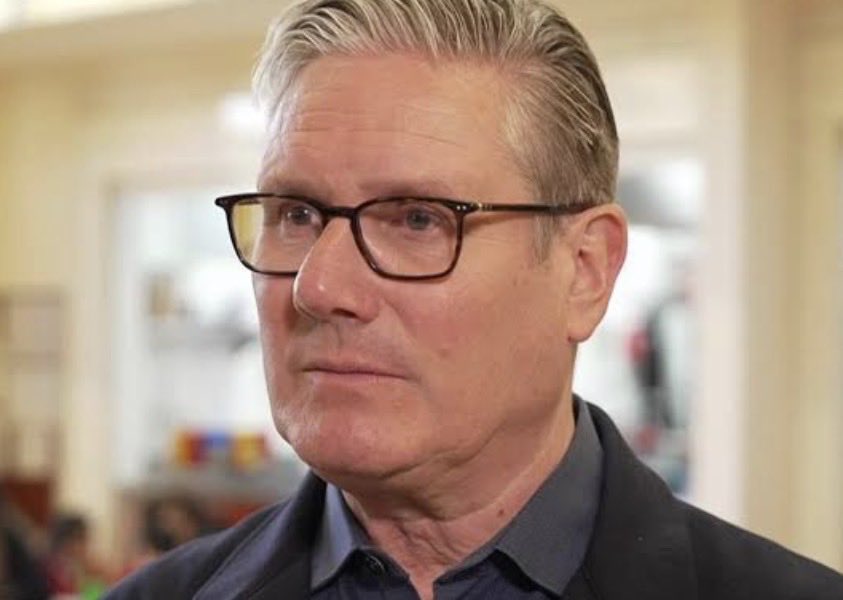
BREAKING NEWS: “Starmer denies knowing he was Prime Minister” Sir Kier Starmer has revealed that no one told him until last Tuesday he won the 2024 election and had become PM. He told Beth Rigby “I was totally kept in the dark by my officials. I’m really angry about it.”
Mike Gardner tweet media
English
1.2K
7.3K
30.7K
671.1K