Artemy Kolchinsky

135 posts

Artemy Kolchinsky banner
Artemy Kolchinsky

Artemy Kolchinsky

@artemyte

Researcher studying nonequilibrium thermodynamics, info theory, origin of life, complexity. Currently at U Pompeu Fabra in Barcelona. @artemyte.bsky.social

Katılım Temmuz 2014
375 Takip Edilen815 Takipçiler
Artemy Kolchinsky retweetledi
William Gilpin
William Gilpin@wgilpin0·
How do time series foundation models forecast unseen dynamical systems? In new experiments, we find that small transformers learn to approximate transfer operators in-context. (1/N) arxiv.org/abs/2602.18679
English
3
79
384
28.5K
Romeo Lupascu
Romeo Lupascu@RomeoLupascu·
Well, when you put "spin glass" and "neural net" in the same sentence that says something about what is our state of understanding of neural nets doesn't it? More precise, the state of understanding a trained neural net is close to zero. What can go wrong when we build systems that we don't understand or be able to predict their behavior then let them loose in the world while hyping that they are our next gods. Have we just went insane? Just thinking...
English
1
0
0
28
Artemy Kolchinsky retweetledi
Jorge Bravo Abad
Jorge Bravo Abad@bravo_abad·
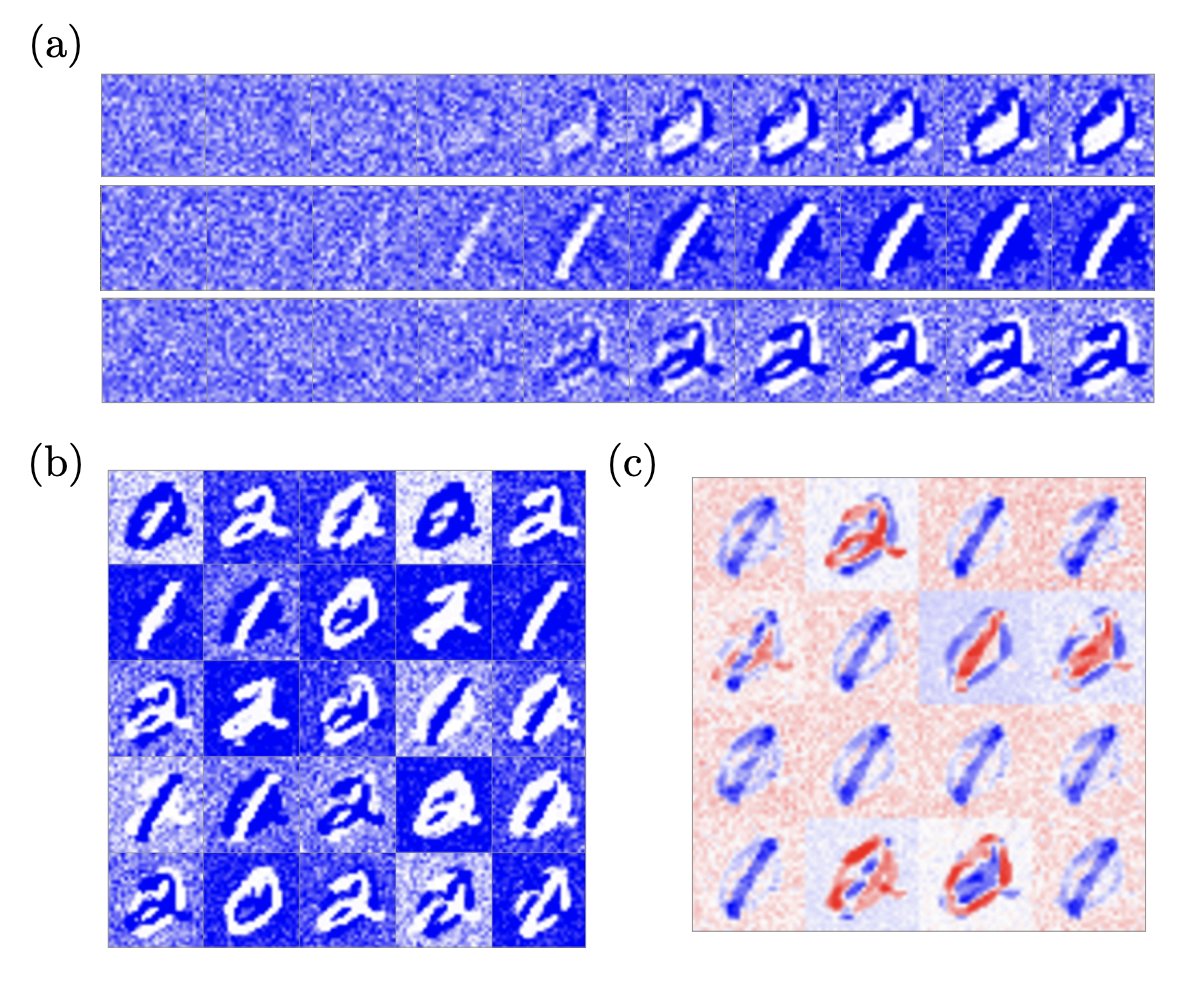
Generative thermodynamic computing Diffusion models are powerful generative tools, but they come with a hidden cost: every denoising step requires a digital neural network, artificially injected noise, and substantial energy consumption. Yet physics offers an alternative—what if the noise needed for generation arose naturally from thermal fluctuations, and the denoising process was physically enacted rather than simulated? Stephen Whitelam introduces exactly this: a generative modeling framework for thermodynamic computing. Instead of using neural networks to transform noise into structure, the approach encodes denoising information directly in the energy landscape of a physical system evolving under Langevin dynamics. The training principle is elegant: observe noising trajectories (structured data degrading into noise), then adjust the system's couplings via gradient descent to maximize the probability that a thermodynamic computer would generate the reverse—structure from noise. This process has a beautiful physical interpretation: it minimizes the heat emission and entropy production of the generative process. In a proof-of-concept simulation with 784 visible units and 512 hidden units trained on just three MNIST digits, the thermodynamic computer learns to transform noise into recognizable digit-like structures through physical dynamics alone—no external control or pseudorandom numbers required. The energy implications are striking: the simulated thermodynamic computer emits ~2,900 kᵦT of heat per generation, compared to ~5 × 10¹⁴ kᵦT for a digital neural network doing equivalent denoising—a difference of more than 10 orders of magnitude. The message is compelling: by grounding generative modeling in thermodynamic principles, we can design systems where computation emerges from physics itself, opening paths toward autonomous, energy-efficient generation that could fundamentally change how we think about the hardware of machine learning. Paper: journals.aps.org/prl/abstract/1…
Jorge Bravo Abad tweet media
English
13
81
585
53K
Artemy Kolchinsky retweetledi
Nature Physics
Nature Physics@NaturePhysics·
The chemosensing accuracy of 𝘌. 𝘤𝘰𝘭𝘪 cells is shown to be limited by internal noise in signal processing, rather than the stochasticity of molecule arrivals at their receptors, contrary to long-held understanding in the field. nature.com/articles/s4156…
Nature Physics tweet media
English
0
10
39
2.9K
Artemy Kolchinsky
Artemy Kolchinsky@artemyte·
Our paper was published on the relationship between thermodynamic driving and eigenvalues in Markovian master equations. It proves a weaker version of a beautiful conjecture proposed by Uhl and Seifert. Led by Guo-Hua Xu , with Jean-Charles Delvenne and @ito_sosuke
Physical Review Letters@PhysRevLett

A thermodynamic constraint is placed on the spectrum of Markov rate matrices, allowing for a better understanding of the dynamics of biochemical clocks #OpenAccess go.aps.org/4j8dkj4

English
0
5
11
2K
Artemy Kolchinsky retweetledi
Sosuke Ito (伊藤 創祐)
Sosuke Ito (伊藤 創祐)@ito_sosuke·
ポスドクのGuohuaさんの論文がPRLのEditors' suggestionに選ばれました。ArtemyさんとJean-Charlesさんとの共著です。マスター方程式の遷移レートの固有値に関して、熱力学的な制約から楕円の中にいる必要があるという定理を導出しています。 doi.org/10.1103/z4t2-1…
日本語
1
3
18
1.5K
Artemy Kolchinsky retweetledi
Masafumi Oizumi
Masafumi Oizumi@oizumim·
We are hiring 1-2 postdocs for next year! Please reach out if interested in: 1. Inter-brain information translation & control 2. Characterizing brain states via thermodynamics & control theory 3. Comparing qualia structures across individuals & identifying neural substrates See the new lab website for the details! oizumi-lab-website.vercel.app/join/postdocs
English
0
3
6
3.3K
Artemy Kolchinsky retweetledi
D. Sekizawa
D. Sekizawa@D_Sekizawa·
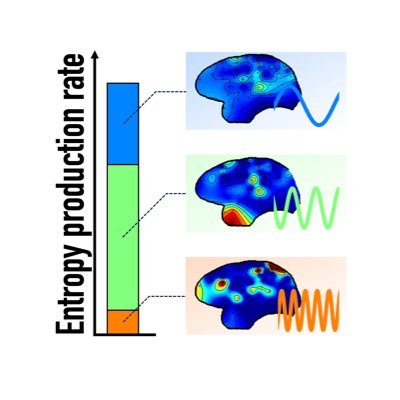
How do nonlinear oscillations generate thermodynamic dissipation? Our new arXiv preprint with @ito_sosuke and @oizumim introduces a Koopman-based framework that breaks down dissipation in nonlinear dynamics into contributions from oscillatory modes. arxiv.org/abs/2510.21340
D. Sekizawa tweet media
English
5
53
318
28.7K
Artemy Kolchinsky retweetledi
Physical Review Letters
Physical Review Letters@PhysRevLett·
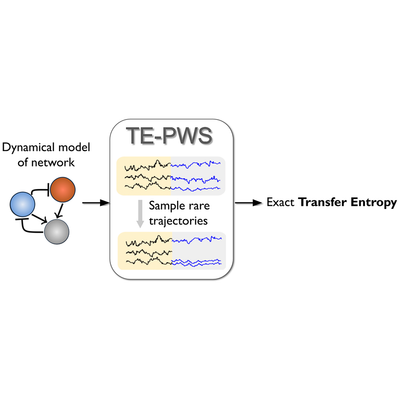
A new computational algorithm makes it possible to quantify the transfer entropy for any stochastic model without the need for approximations go.aps.org/47ooZGG
Physical Review Letters tweet media
English
1
8
30
6.5K
Artemy Kolchinsky
Artemy Kolchinsky@artemyte·
Submissions open for a really interesting workshop on quantum and stochastic thermodynamics - Kyoto, Japan, Dec 8-12 indico.yukawa.kyoto-u.ac.jp/event/68/
Hiroyasu Tajima@hiro_taji1234

A YITP Workshop on #QuantumThermodynamics & #StochasticThermodynamics will take place Dec 8–12. The talk submission deadline is 21 Sept. With an excellent lineup of invited and long-talk speakers, it’s well worth joining for anyone interested in these fields and #ResourceTheory!


English
0
2
6
593
Artemy Kolchinsky retweetledi
Quantum Energy Innovation
Quantum Energy Innovation@QEInnovation·
【発表申込締切:8/31】12/8〜12/12に京都大学基礎物理学研究所で開催される国際研究会 "Kyoto Workshop on Quantum Thermodynamics and Stochastic Thermodynamics 2025" の発表申込締切が近づいてまいりました。皆様、ぜひ奮ってご参加ください。indico.yukawa.kyoto-u.ac.jp/event/68/
日本語
0
9
21
7.4K
Artemy Kolchinsky retweetledi
PRX Life
PRX Life@PRX_Life·
A new Roadmap discusses how information influences abiogenesis and living systems. It explores how informational constraints may help gauge planet habitability — and how informational #biosignatures could indicate life beyond Earth. 🔗 go.aps.org/4mJdjD0 #Astrobiology
PRX Life tweet media
English
1
3
10
2.1K
Artemy Kolchinsky retweetledi
David Sivak
David Sivak@DavidASivak·
Postdoc opportunity! Join us in heavenly Vancouver (Canada) to develop fundamental nonequilibrium stat mech, thermo, and info theory applied to biomolecular machines and in close collaboration with experiment. Details: sfu.ca/physics/sivakg…
English
0
14
27
4.6K
Artemy Kolchinsky retweetledi
Tiago Peixoto
Tiago Peixoto@tiagopeixoto·
🚨Job alert!🚨 Come join us at the Inverse Complexity Lab! @invcomplexity We’re hiring a post-doctoral researcher to join our group at IT:U, Linz, Austria. skewed.de/lab/call.html Deadline is 30 Nov 2024. 1/8
Tiago Peixoto tweet media
English
5
65
108
28.2K
Artemy Kolchinsky retweetledi
Melanie Mitchell
Melanie Mitchell@MelMitchell1·
Graduating PhDs and postdocs in AI, ML, Cogsci, or related areas: apply to work with me and others on AI models of visual and multimodal reasoning. Two years of funding with possible extension to a third year. Application deadline November 22. santafe.edu/about/jobs/pos…
English
6
37
136
24.4K
Artemy Kolchinsky retweetledi
Jason R. Green
Jason R. Green@greenjasonr·
We are hiring! Join our Department of Chemistry at @UMassBoston as a tenure-track Assistant Professor (Inorganic Materials). Please spread the word. bit.ly/4eBeD6z
English
0
3
2
592