

English
my blue check is bigger than yours
252 posts

@austrianaviator
standing on the shoulders of giants, so blasé - social media is flat, supported by …. all the way down…

The weirdest thing about the “europoor no AC” discourse is that there is AC everywhere in Southern and Eastern Europe so this is obviously not a financial issue. It is an ideological issue in Northwestern Europe, which is admittedly even funnier.








FBI did an active shooter training with the staff and security at Temple Israel just 6 weeks ago. Today that training likely saved a lot of lives.

@shashj Iran and proxies have decent accuracy ordance up to 400-500km, that's not a secret. The lack of preparadness is a perennial problem with Arab armies. I think the issue here is more cultural and a NATO country would not fall into the same trap.

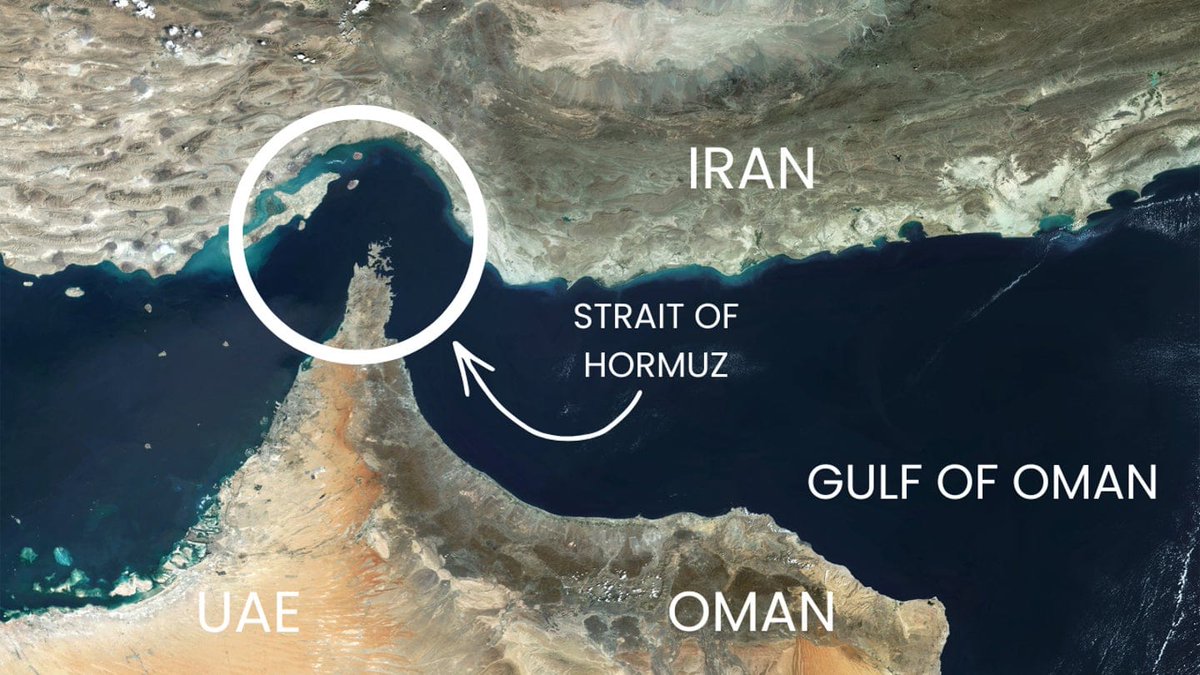
@MarineTraffic A cargo ship was hit, probably by Iran, while transiting the Straits of Hormuz today.



Add to this that Iran has so far only launched roughly 600-700 ballistic missiles in total, including short-range ballistic missiles of which it possessed substantial stockpiles prior to the war. By comparison, during the 12-Day War Iran launched around 500 to 600 medium-range ballistic missiles alone. It was also regularly able to fire salvos of 40-50 ballistic missiles at once, at times more than one volley per day. Given that the present conflict is far more existential from a regime perspective and that short-range ballistic missiles are viable, one would expect significantly greater ballistic missile use unless Iran’s missile and launcher capabilities have been heavily degraded - which evidently they are. Interceptor stockpile shortages were, and arguably remain, a valid concern, but only if Iran had been able to sustain the intensity observed during the first two nights, which it clearly has not. At present, with the possible exception of Bahrain, no Gulf state appears to be in a particularly alarming position.

Iran Launch Capability Trend:


This is potentially the biggest Iran story nobody is talking about: the global insurance market may be heading toward a systemic crisis. Here’s why… Most people don’t realize London isn’t just a financial center it’s THE center of global insurance. Lloyd’s underwrites ~40% of the world’s marine cargo. Ship sinks, port gets bombed, canal gets blocked the bill lands in London. This is why the UK punches above its weight. Not the Royal Navy. Not diplomacy. Insurance. Control insurance, control trade. And London doesn’t just control the 90% of global trade that moves by sea. Lloyd’s and the London market are major insurers of almost everything skyscrapers, factories, ports, satellites, entire supply chains. You can’t participate in public markets or raise large amounts of capital without insurance. Now, the normal playbook for war risk is repricing, not cancellation. Canceling coverage entirely is a massive escalation in underwriting posture. It signals something beyond risk, it signals uncertainty so deep the underwriter can’t even price it. The question everyone should be asking: why? Why not just jack up premiums and make a fortune off the crisis like they did in the Black Sea off Ukraine? To answer that, you have to understand WHY London has maintained a stranglehold on global insurance while losing nearly submarket related to ships. The answer: better intelligence. It is no coincidence that MI6 headquarters sits directly across the Thames from the @IMOHQ, the world’s maritime regulator & a short distance from Lloyd’s itself. I have no proof of a direct pipeline, but it has long been speculated in the industry that intelligence flows from MI6 to Lloyd’s. Having the best intel in the world would be the single greatest competitive advantage any insurer could possess: the ability to price risk that competitors can only guess at. Here’s the problem: the majority of MI6’s intel doesn’t come from its own agents. It comes from Five Eyes the alliance comprising the US, UK, Australia, Canada, and New Zealand. And within 5Eyes, the dominant partner is obvious. The CIA, NSA, NRO, etc generate the lion’s share of intel. So if Lloyd’s pricing advantage flows from MI6, and MI6’s best intelligence flows from the US… what happens when that data pipeline gets throttled? All indications are that @Keir_Starmer was blindsided by the size and scope of the US/Israel strikes on Iran this weekend. That alone tells you something about the current state of transatlantic intelligence sharing. And we know there has been serious anger in Washington over the UK’s decision to sell Diego Garcia, home to America’s most strategically important base in the Indian Ocean, to Mauritius. It is not a huge leap to conclude that the submarine cables linking Langley to London have gone dark, or at minimum have been significantly throttled. What this means for UK national security is a question for the Brits. But what it means for EVERY company globally that’s insured through the London market has massive implications for the entire financial system. Because most large insurers worldwide don’t do independent intelligence work. They index off Lloyd’s rates. If you’re insuring a skyscraper in Tokyo, a semiconductor fab in Taiwan, or a port in Argentina you get a Lloyd’s quote, then shop that price around. Other insurers see Lloyd’s number and assume the diligence was done. They price accordingly. This means if London is suddenly flying blind it’s not just Lloyd’s policyholders at risk. It’s the entire global reinsurance chain. The cancellation of war risk coverage on ships isn’t the crisis. It’s the canary. If this hypothesis is correct, we could be looking at a systemic repricing event across global insurance markets…. the kind of cascading uncertainty that defined 2008 and COVID. Watch Lloyd’s. Watch reinsurance spreads. What Five Eyes. That’s where this story, and possibly Wall Street, breaks. CC @BillAckman