Brendan G

1.4K posts

Brendan G banner
Brendan G

Brendan G

@b_gbz

Engineer @Kintsu_xyz 💧

Katılım Mart 2012
1.1K Takip Edilen609 Takipçiler
Brendan G retweetledi
Cenote
Cenote@Cenote_network·
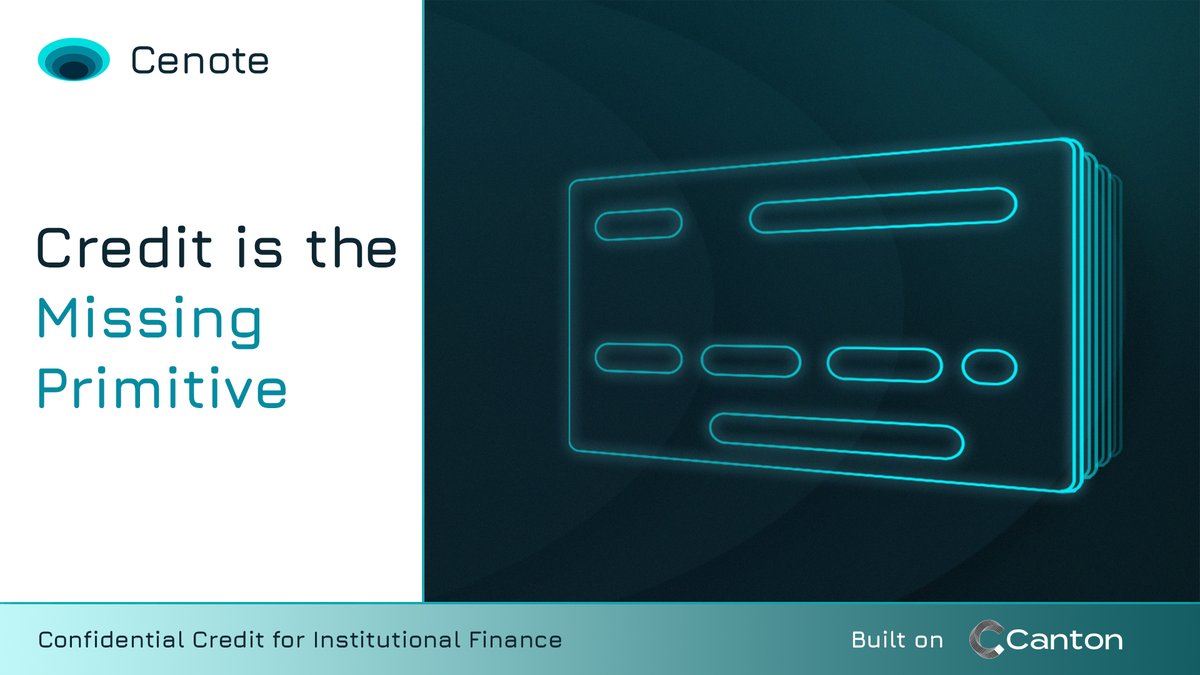
We think the real unlock is credit. Cenote is building confidential credit for institutional finance on @CantonNetwork Private, compliant lending markets for participants that need real privacy, infrastructure, and market structure. More to come.
Cenote tweet media
English
1
2
14
413
Brendan G retweetledi
Cenote
Cenote@Cenote_network·
Our engineering team put together an open-source repo to make @CantonNetwork validator setup easier. It guides operators through deployment step by step, helping reduce setup friction and making it simpler to get a validator up and running.
English
2
2
9
299
Christo Sal
Christo Sal@Christo_Sal·
Say hi to Maya Daddy's on overnight watch in the heart centre of the kids hospital while Mama is in the maternal hospital. She had a very positive start. Tomorrow they will have a clear plan on procedure. The downside is she is separated from Mama, but at least she's stable.
Christo Sal tweet media
English
25
0
79
1.8K
Brendan G retweetledi
Alexios
Alexios@Alexi0s·
SuperMON is here 🙌 Why does it matter? Because your MON should never sit idle. You stake once → SuperMON keeps your assets productive through automated strategies powered by @upshift_fi and curated by Qualia across the Monad ecosystem. Breakdown: • Deposit MON • Receive SuperMON • Earn stacked yield from multiple sources • No manual rotations, no maintenance go get that superMON
Kintsu@Kintsu

Introducing SuperMON Curated DeFi rewards centered around sMON. Designed with @upshift_fi, curated by Qualia, SuperMON automates multi protocol strategies so your MON stays productive across the entire ecosystem.

English
3
2
19
534
Brendan G retweetledi
Kintsu
Kintsu@Kintsu·
Introducing SuperMON Curated DeFi rewards centered around sMON. Designed with @upshift_fi, curated by Qualia, SuperMON automates multi protocol strategies so your MON stays productive across the entire ecosystem.
English
60
28
154
18K
Phantom
Phantom@phantom·
New to @monad and don’t know where to start? Our starter pack is here to help.
Phantom tweet media
English
241
65
619
42.6K
Brendan G retweetledi
Kintsu
Kintsu@Kintsu·
superMON keep notifications on .. next week will be huge
Kintsu tweet media
English
52
16
155
7.1K
Brendan G retweetledi
Mayan
Mayan@mayan·
Big things are about to land on @Monad, and Mayan moves you there. We’re powering transfers for the top teams building on Monad from day one. Get ready.
English
44
18
207
302.9K
Brendan G
Brendan G@b_gbz·
@StovenLabs Big fan of the onion foam art you've got going on there
English
0
0
0
9
Brendan G retweetledi
Christo Sal
Christo Sal@Christo_Sal·
Liquid staking is massive already. But it’s also strangely… capped. Let’s look at Ethereum, Solana, and what that means for Monad. Ethereum today (approx): ~120M ETH circulating ~36M ETH staked (~30%) ~19–20M ETH in LSTs (~16% of supply, ~55% of staked) Lido alone holds ~9.4M ETH (~8% of supply, ~27% of staked) Big… but nowhere near “all ETH is liquid”. Solana today (approx): ~554M SOL circulating ~388M SOL staked (~70%) ~60M SOL in LSTs (~11% of supply, ~16% of staked) Jito, Marinade, Blaze, Sanctum etc. together only cover a slice of total stake. Again: big, but far from saturation. So across both chains you see the same pattern: 》Lots of staking 》Healthy LST sector But the majority of staked capital is not liquid And most of the liquid capital is concentrated in a few dominant protocols. If Monad is “Ethereum x Solana” — high performance and EVM-aligned — then long term it’s reasonable to expect: ▪︎ LSTs on Monad could reach ETH–/SOL–level penetration ▪︎ Double-digit % of supply in LSTs ▪︎ Even higher % of staked supply If we don’t repeat the same design mistakes. So… why haven’t LSTs scaled further on Ethereum and Solana? A few structural bottlenecks keep showing up: ▪︎ Team-curated validator sets ▪︎ Opaque or rigid allocation logic ▪︎ Power clustering around a few operators / clients ▪︎ Governance that can’t easily correct this Networks feel that risk. When too much stake routes through: 》one protocol, or 》one validator cluster, or 》one client / MEV setup… …the “liquid” layer starts to look like a centralized choke point. That’s scary if it ever hits 30–40%+ of stake. Result? LSTs hit a political ceiling before a technical one. People like the yield, but the network might worry about correlation + governance risk. Networks get nervous about a single LST becoming “too big to fail.” So adoption slows way before the theoretical max. This is exactly the problem we’re thinking about with Kintsu on Monad: > How do you let liquid staking scale much further without turning validator selection into a black box or cartel? Our answer is Kintsu governance. Kintsu treats validator selection as an onchain marketplace, not a static whitelist. The team doesn’t hand-pick validators; the DAO sets the parameters Validators compete on performance: uptime, MEV, fees, reliability Stake flows to the best yield engines under those rules If the network base yield is ~3%, and validators add MEV on top, Kintsu governance can effectively say: > “Who’s giving the protocol the best net yield without breaking decentralization constraints?” Those validators earn more delegation. If they slack or get greedy, delegation moves away. This is why the Kintsu token matters: ▪︎ It’s not a vanity “governance” badge. ▪︎ It’s the coordination layer for: ▪︎ stake delegation ▪︎ validator selection ▪︎ MEV policy + fee splits ▪︎ long-term protocol yield It sits where the economic routing decisions happen. If Monad really does grow into an ETH x SOL hybrid, LSTs there could: 》Match or exceed current LST penetration on both chains 》Without hitting the same centralization bottleneck Because Kintsu governance keeps competition and allocation in the open That’s the design goal. So the way we see it: ▪︎ Ethereum + Solana proved liquid staking demand ▪︎ Their bottlenecks exposed governance + concentration flaws ▪︎ Monad gets a fresh shot at the same game Kintsu is our attempt to build the liquid staking layer that can actually scale with the network.
Christo Sal tweet media
English
6
2
34
763
Brendan G retweetledi
Airaa HQ 🌸
Airaa HQ 🌸@AiraaAgent·
Monad Mania Campaign is now Live on Airaa! 🌸 Compete and farm Aura among one shared leaderboard. Rewards such as points, whitelists, raffles and boosts, powered by Top 10 projects on @monad. Details below, join here: airaa.xyz/campaign/monad
English
172
109
550
94K
Zyfai
Zyfai@Zyfai_·
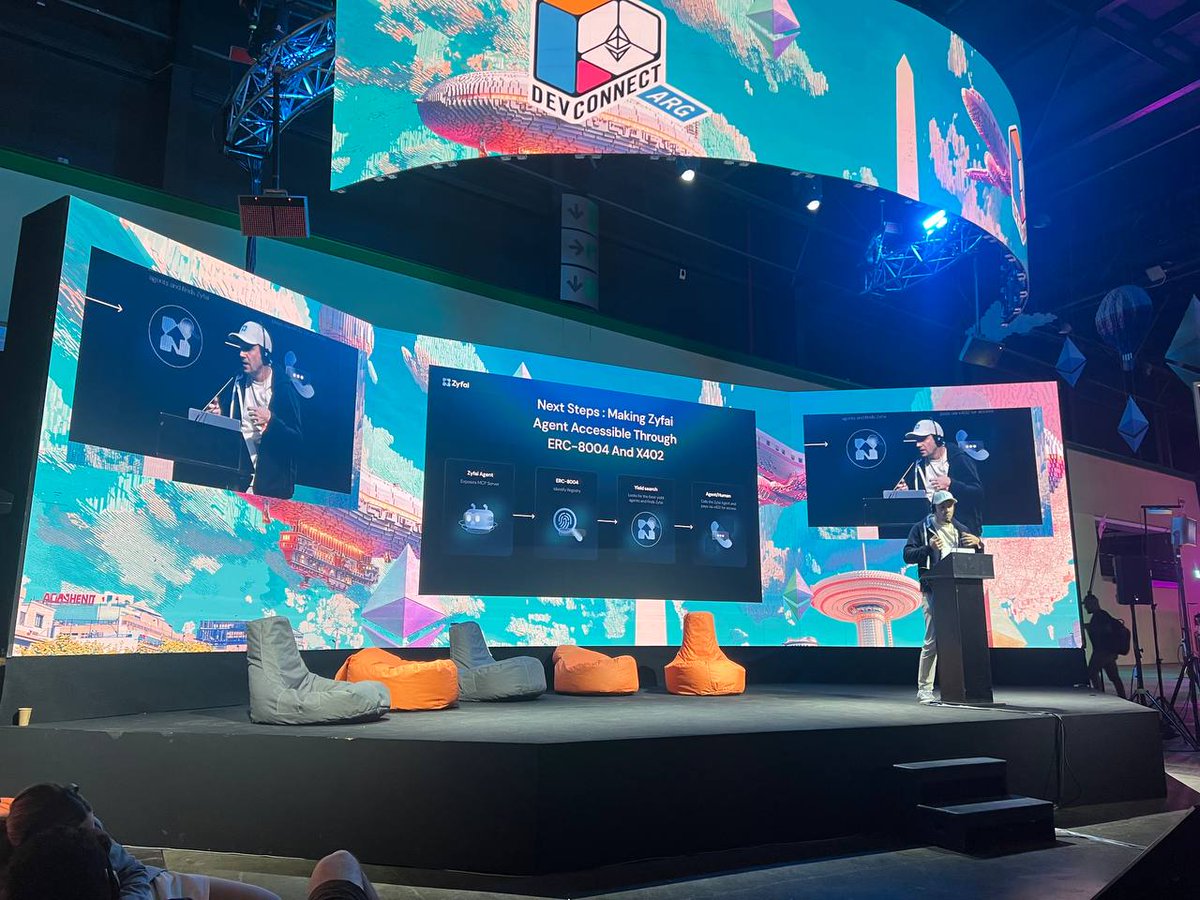
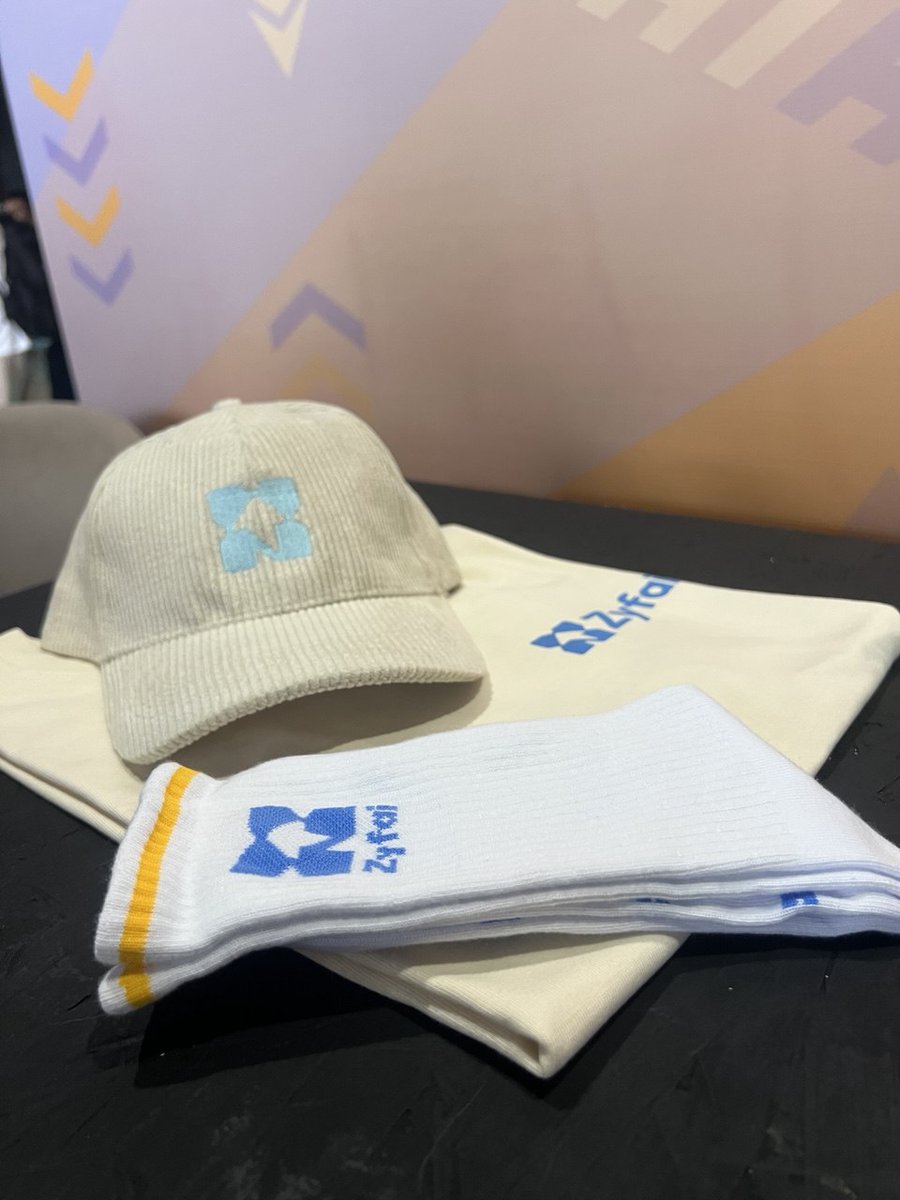
GM Buenos Aires 🇦🇷 Kicking off day 2 of the @ethereum World's Fair. Come say hi at our booth at #Devconnect!
Zyfai tweet mediaZyfai tweet media
English
10
6
68
2.2K
Alexios
Alexios@Alexi0s·
tore my ACL & meniscus last November, took 4 months off came back in March, rebuilt slowly, and today… competed again for the first time since the injury younger division. tougher matches. still got gold 🥇 consistency & discipline 🫡
Alexios tweet media
English
79
3
156
4.4K
Alexios
Alexios@Alexi0s·
@KintsuShiitake Not gonna lie I know too much and I did not read anything...I saw your elf ears and I liked the post
English
3
0
2
59
Christo Sal
Christo Sal@Christo_Sal·
So who is Shiitake? Well, my name is Christo. I’ve been in this space almost 10 years now, and it’s flown by in the blink of an eye. Over the years, I’ve witnessed the crypto world evolve from a niche cult of nerds into a hyper-opportunistic industry—especially once the TradFi suits entered, some disguised in casual cypherpunk clothing, posing as nerds to get in the door. My first exposure to Bitcoin came long before I officially 'entered the arena'. It was back in 2011. I was in my late teens, living in Cyprus—pure debauchery, a little bit of studying at high school, but honestly, I found school mundane. I wanted to play football, go to the gym, party with friends, make music, and write tales that emerged from my half-Irish, half-Cypriot heart. One day, my buddy mentioned this thing called the Silk Road and an internet currency called Bitcoin that you needed to purchase certain kinds of goods. We were young and, admittedly, just wanted to smoke weed. I ignored the Bitcoin part, smoked the weed, and drank my pints. But there’s something I didn’t mention before. In my final year in Cyprus, I had a near-death experience. My reckless lifestyle had led me into the wrong circles. One heavy night of drinking spiraled into something I’ll never forget—I was nearly bludgeoned to death. Lost a lot of blood. My friend, who’d been drinking too, had to drive my shitty Hyundai Ascent (voted worst car of the year on Top Gear 2004) to the hospital because we didn’t believe the ambulance would make it in time. On the way, I had what I can only describe as an out-of-body experience. I came in contact with something... something that felt like home, but more real than anything I’d ever known. Like returning to the womb. If there’s a definition of "angelic" or "God," that was it for me—warm, golden light and this deep, vibrating calm. It felt like the universe whispering, "You needed this. It’s time to wake up." Not long after, we left for Ireland. My father had lost his business—a bar, restaurant, and nightclub—after the 2008 financial collapse. It hit us hard. I’ll never forget Cyprus in 2011—people lining up at ATMs, panic on their faces. They couldn’t take their money out. That image is seared into my mind. When I landed in Ireland, I went cold turkey. No more alcohol. I threw myself into weight training—bodybuilding, powerlifting. That became my new addiction. I dove headfirst into physiology, nutrition, the mechanics of muscle and mind. But I also cracked open something deeper in me. I started exploring the mystic: astral projection, meditation, visualisation. I was building the body, but I was also nurturing the soul. On the practical side, I began sharpening my communication and persuasion skills, all through the lens of personal development. It became my fuel. Then one night, my cousin and I were down a rabbit hole trying to find information about aliens on the dark web—don’t ask—and we noticed Bitcoin popping up everywhere. I asked what the price was. Around €150 at the time. I thought, “Why the hell is this dumb internet coin so expensive?” I shrugged it off, again. In Ireland, all I knew was bar work, so I took a job at a pub—but it didn’t last. They needed me to have a bank account. I had bank trauma, and I wasn’t exactly eager to open one, but I still tried. And guess what? They needed a utility bill as proof of address. Hilarious. “And how am I supposed to have a utility bill with no bank account, madam Bank Teller?” Jokers. So I pivoted. Found a commission-only door-to-door sales job. All kinds of weather, knocking on doors. Cold, wet, soul-bruising work. The pain lasts about three hours until your face goes numb. I kept myself entertained—told jokes, did impressions, or just genuinely connected with people. Sometimes they invited me in for tea and dinner. Other times, they told me to F off. Builds character either way. After some time, I moved up the sales ladder—better pay, more structure. And during those years, an old colleague from the door-to-door days started popping up on Facebook, talking about Bitcoin and “Satoshi’s Vision.” He had that same mystical vibe I resonated with. He kept predicting price moves—and he was right. Around then, I had just quit my latest sales job, savings in the bank, ready to launch a personal development YouTube channel. But the money ran out faster than I thought, and I needed a way to grow what was left. That’s when I came back to Bitcoin, properly this time. I read the whitepaper—and it hit me like a thunderclap. It wasn’t just some internet coin. It was a revolution. A financial lifeboat. A giant middle finger to banks and governments. I was obsessed. I devoured everything I could—cryptography, computer science, Austrian economics. It was like doing multiple degrees in my spare time. Back then, I was holding Bitcoin, Ethereum, and Litecoin. But Ethereum's vision? That really fired me up. Smart contracts felt like a portal to a new world—one where lawyers and middlemen became code. Little did I know those smart contracts would become the plumbing of a global casino. Then came the crash of 2018. I was left scorched. Poor, again. So I went back to work. I joined a small team called Cheddur—they were building a social media platform for crypto. Sort of SocialFi, before SocialFi was a thing. They gave me the title of Sales and Marketing Manager, plus equity. But 2018 was brutal. Nobody wanted to hear about crypto. Fundraising was a graveyard. After 9 months, we threw in the towel. At the same time, I was holding down a day job selling tech—phones, computers, whatever I could. Probably my lowest-paying job since bar work. But I crushed it. Became top salesperson in my department across Ireland. I had work-life balance, but I was grinding. Building a personal brand around personal development. Working two jobs. I started a band. Kept one eye on the crypto space, waiting for it to bloom again. And in the background, I taught myself how to trade. I’d been clueless the first cycle—held everything through an 80%+ drawdown. I was trying so hard to chase my dreams. To evolve. To survive. I succeed in some areas, failed in others. Failed way more than I succeeded because I was willing to take the risk. If you made it this far, would you be up for a part 2 to this story?
Christo Sal tweet media
English
7
0
18
396
Brendan G retweetledi
Kintsu
Kintsu@Kintsu·
🛡️ Nethermind Security Audit Complete @NethermindSec has completed the audit of Kintsu’s liquid staking protocol for @monad — reviewing sMON’s staking logic, withdrawal mechanics, and more. Another step toward secure and reliable liquid staking on Monad.
English
32
19
119
6.2K
Brendan G retweetledi
StovenLabs
StovenLabs@StovenLabs·
I found myself thinking about "arms races" a lot recently All of us, whether it’s in everyday life, as an athlete, on a team at work, or building a business, feel the same temptation from time to time... The temptation to "win at any cost." This happens at a grand scale too. It’s not just on the field, on the job, or building a business. It plays out at the national level. Once “falling behind” feels existential, the participants in any game start peeling off their armor, threatening a moral decay where the race itself becomes the justification for questionable actions. So do you give up, or play to win and fight dirty? While hazy at times, the only solution I see to this paradox is to hold true to your north star. It sounds cliché, but sportsmanlike conduct becomes more important, not less, as the stakes go up. It’s wildly important to not hollow out or water down what you build and believe in. When you win, and we’re going to do so much winning - so much winning that you’re going to get tired of winning - you deserve to feel like it was a win. Not some dirty win where you cheated what you believe in. That isn’t winning at all. For example: The Monetary Race Crypto, currency, finance as a whole. Businesses already compete, but as you pull back the curtain, there are national interests at play, embedded into everything with such a high potential impact on society. Naturally, countries are competing to dominate the next reserve currency, financial rails, or key crypto category, like Silicon Valley did with the internet. The AI Race Super intelligence threatens everything. Who controls it could change the world order. Neural interfaces, digital immortality, synthetic minds. The desire to upload or augment consciousness becomes a competition for transcendence, a spiritual arms race where the first movers define post-human ethics. What would you do to win? The Space Race Realistically, we’re already in space race 2.0 (Earth → Mars → Beyond). The moon is so 1950. This time it’s about colonization and ownership of the galaxy. Mineral rights, orbital dominance, who controls the narrative of life beyond Earth. Taking a major step forward into the stars can dramatically change the delicate balance of power the underpins our society The Energy Race Energy, carbon capture, and geo-engineering. It is all so interconnected. Whoever solves or monetizes the climate crisis first wins big. For example, China is crushing it on solar investments that give it an advantage in AI with the amount of energy data centers require. But in the rush, people might manipulate ecosystems or monopolize solutions that could be public goods. The Data Race Whoever owns the most data controls the models, the narratives, the economies. The moral boundary around privacy collapses under the pressure to train faster, better, and bigger. Whenever you feel that feeling, remember what your north star is. If you don't know what it is, maybe ask yourself what your parents or best friends would think of you if you "win this way." Ask yourself how you'll feel. And if what you have in mind is really even winning at all. Take the high road.
English
20
15
72
6.3K
Brendan G retweetledi
Christo Sal
Christo Sal@Christo_Sal·
Monad is building a faster, more scalable EVM — and expanding its validator set globally. Kintsu turns this into an open marketplace where validators compete for delegation, powered entirely by the Kintsu governance token. More validators → more competition → more demand. This is how network growth drives token value to incentivise optimized coordination and alignment between the network, the community and capital efficiency. First they ignore you. Then they fight you. Then you win. Kintsu has all the right principles and we won't let you down.
Christo Sal tweet media
English
8
2
13
361
Vladic
Vladic@Vladic_ETH·
1/ New Theory: There was no “scam” by the testers. It was a filter. The entire crypto Twitter community is furious. @monad did not reward the testnet participants. This caused a wave of anger and an attack on the network, those very 89 million transactions. 99% of people think: “We were deceived. Keone is a scam.” My thought: “We were made to look in the wrong direction.” What if ignoring the testers in the main $MON drop was not an act of protest, but a brilliant strategic move for delegation? 2/ The Problem: How Do You Reward a Tester, Not a Sybil? Let's think like @keoneHD . You have 300,000,000+ wallets in your testnet. 90% are sybils who ran scripts and spammed 0.001 MON transactions. 10% are real users who actually tested dApps: swaps, NFT markets, and lending protocols. If you airdrop to everyone, you reward sybils and kill your token. If you airdrop to no one, you kill the loyalty of your real testers. So, what do you do? You delegate the right to reward (and the tokens themselves) to the only people who can actually tell a tester from a sybil: the ecosystem projects themselves. 3/The Proof: The "aPriori" Case and the Binance Signal This isn't just a theory. We have direct proof. The Project: Look at aPriori (APR), one of the key projects in the Monad ecosystem. The Signal: What do we see? The "APRIORI (APR) TOKEN GENERATION EVENT" in partnership with... Binance Wallet. Not just Binance, but a "Binance Wallet Exclusive TGE." This is a Tier-1 signal. These things don't happen by accident. The Tokenomics: Now, look at their tokenomics. What's in the distribution? 12% - Genesis Airdrop 22% - Community Incentives 4/ Connecting the Dots: The Genius Plan Now, let's put 2+2 together. The Monad Foundation did not bother sorting through 300,000,000 wallets. Instead, they likely gave massive grants from their "Ecosystem Growth" (17%) or "Community Incentives" (22%) pools directly to key projects like aPriori. And now, aPriori will conduct its own 12% "Genesis Airdrop." To whom? To the very testers who actively used their application on the testnet. This is genius: Sybil Filter: The generic spammers (89M transactions) get nothing. Reward for Real Users: Testers who provided real value to specific dApps get rewarded not by Monad, but by those dApps. Ecosystem Strength: The projects (aPriori, Fluffle, etc.) get a loyal audience from day one and backing from Binance. 5/ What This Means For Us? It means the game is just beginning. The anger about the main $MON airdrop is just noise. The real alpha is elsewhere. Monad isn't just an L1. It's a hub. The "real" airdrop for testers wasn't in $MON. It will be in $APR, $FLUF, and dozens of other tokens now preparing to launch with support from Binance and Monad itself. Your move:Stop looking at your "Permanent Underclass" tier. Go and check which ecosystem projects you actually used on the testnet. That is where your real, filtered airdrop lies.
Vladic tweet mediaVladic tweet media
Vladic@Vladic_ETH

1/ " @monad is a Scam!"... or a Genius Move? For the past few days, crypto Twitter has been exploding with rage. Thousands of posts claiming "Monad is a scam," "Keone rugged us," and "I farmed the testnet for 2 years and got nothing!" This is true. As the Minara AI report shows, Monad applied a brutal Trusta AI filter and deliberately distributed the airdrop not to "early testnet participants" but to on-chain users: DeFi traders, NFT holders, and contributors. The "Core Community" (those very testers) is only 2.4% of the airdrop. Sybils who ran thousands of wallets on the testnet got zero. And they are furious. 2/ The Wrath of Sybils: An Attack on the Network What does an enraged sybil farmer do when they're denied an airdrop? They try to "punish" the project. They want to prove the project is a "scam" and the network "doesn't work." Now, look at this chart . October 14th The airdrop checker goes live. October 15th 88,706,839 transactions in a single day. This is not organic growth. This is not hype. This is a coordinated attack. This is thousands of angry farmers pointing all their farms and scripts at the Monad network to "take it down." They are spamming it with millions of transactions to cause a failure and shout, "See! It's broken!" 3/ 4D Chess: The Keone Doctrine And now, the main idea. What if Keone knew this would happen? What if this was his plan all along? Let's piece it together: The Bait: Monad encouraged testnet activity for months, knowing full well it would attract hundreds of thousands of sybils and farmers. The Filter: He used Trusta AI to cut all of them out of the airdrop, giving the tokens to real users instead The Trap: He knew this would cause an explosion of fury. He calculated that thousands of jilted farmers would aim their full power at his network to get "revenge." Keone didn't just filter the sybils. He weaponized their anger. 4/ The Result: The Perfect, Free Stress Test What's the end result? Monad just received the most realistic, most aggressive, and most importantly, absolutely free stress test in history. Instead of paying millions of dollars to a firm for a simulated high load, Keone provoked hundreds of thousands of real, malicious actors to attack his network from all over the world, all at once. And what happened? The network held.The chart shows the network stabilizing at ~90M daily transactions. It didn't fall over. It didn't explode. It just processed 89 million transactions. 5/ Conclusion: A Double Victory This isn't just a genius move. It's a double victory: Healthy Tokenomics: He protected the $MON token from an immediate dump by thousands of sybil farmers. The airdrop went to those who value the ecosystem (DeFi users, NFT holders), not those who wanted to dump it in hour one. The Ultimate Proof-of-Tech: While the sybils wasted their pocket change on gas for their DDoS attempt, they were, without realizing it, proving to the entire world that Monad's technology works. They became the free, unwilling QA team that validated Monad's claim of 10,000 TPS under real, hostile load. This isn't a PR crisis. This is a public demonstration of power. Bravo, Keone.

English
82
9
140
20.6K
Brendan G retweetledi
Christo Sal
Christo Sal@Christo_Sal·
Here’s the recipe for a great team — passed down from my great-great degen grandma who survived the 2017 ICO winter: A visionary founder — @StovenLabs. Must have conviction strong enough to survive multiple bear markets and still talk about decentralization like it’s a religion but understand that we can't trade off performance. Bonus points if they’re secretly a degen and everyone likes them. A TradFi brain disguised as a designer — that’s @adambaitch. The type who says “wait, but what problem are we solving?” while the rest of us are halfway through deploying to mainnet. Calls out our crypto-bubble BS at times and keeps the ship stable and the UI smooth. At least one systems wizard — Brandon (not on X. Too busy shipping). Writes smart contracts so clean even auditors feel bad finding bugs. Built bots before bots were cool. A degen engineer with ADHD superpowers and a BJJ warrior — @b_gbz (he's on X because he's secretly a degen). Can build anything and fix everything. Probably writes Solidity in his sleep whilst dev opping everything in the Kintsu wheelhouse. Superhuman. A systems architect who sees the Matrix — Nimish. Knows exactly where things break before they do. Doesn’t tweet much; too busy preventing chain meltdowns. A front-end sniper — Kader. Turns “make it pretty” into interfaces smoother than Hyperliquid’s charting engine. The community heartbeat — @alexi0s. Runs the socials, brings the vibes, builds the people, and somehow replies to every DM before you’ve finished typing it. Superhuman energy levels and a father of 2. You also don't mess with him, he's a BJJ warrior. The ecosystem connector / lunatic — yours truly. Spots trends early, makes friends everywhere, and occasionally drops a post that breaks crypto Twitter. Degen, ye heart intact. Builder of partnerships. Father of 1, soon to be 2. Loves music & leads a rock band too. The artist — @LeLiebes. Gives the Kintsu world its aesthetic soul. Without him, we’d look like your favourite boomer bank. Mix all ingredients with alignment, conviction, and a sprinkle of chaos. Stake N Bake on Monad Mainnet and add some seasoning with Kintsu points – it's going to be get real interesting once the penny drops on Kintsu Governance. ✅ Result: A team that can ship and scale, but also remain in the trenches while someone else can see beyond the trenches to new lands. Bet on the Kintsu team of absolute chads. Art by @Crazycosmiiic
Christo Sal tweet media
English
12
6
44
3.1K