Barry Bunin

5.5K posts

Barry Bunin banner
Barry Bunin

Barry Bunin

@barrybunin

Collaborative Drug Discovery (CDD Vault) CEO is transforming humanitarian & commercial drug discovery...one collaboration at a time. clubhouse: @barrybunin

Burlingame, CA Katılım Mart 2009
5.3K Takip Edilen1.5K Takipçiler
Sabitlenmiş Tweet
Barry Bunin
Barry Bunin@barrybunin·
“CDD Vault: A Different Kind of Silicon Valley Success Story” Collaborative Book 📕 published today: amazon.com/dp/B0G2HR4WYJ
English
0
1
4
724
Barry Bunin
Barry Bunin@barrybunin·
Meningitis outbreak live: Kent university cancels all in-person exams as hundreds queue for antibiotics - BBC News bbc.com/news/live/ce8n…
English
0
0
0
103
Barry Bunin retweetledi
Patrick Collison
Patrick Collison@patrickc·
• According to the story, the dog's cancer has not been cured. • Absent all regulatory and manufacturing constraints, we could not just synthesize magic mRNA cancer cures. The technology is very promising, but it's not yet any kind of panacea. • The emergent system of regulators and manufacturers is indeed far too conservative, and small-scale experimentation is much harder than it should be. More people should read the first part of The Rise and Fall of Modern Medicine. Recommend @RuxandraTeslo, @PatrickHeizer for more.
English
153
297
4.3K
843.9K
Barry Bunin retweetledi
Aakash Gupta
Aakash Gupta@aakashgupta·
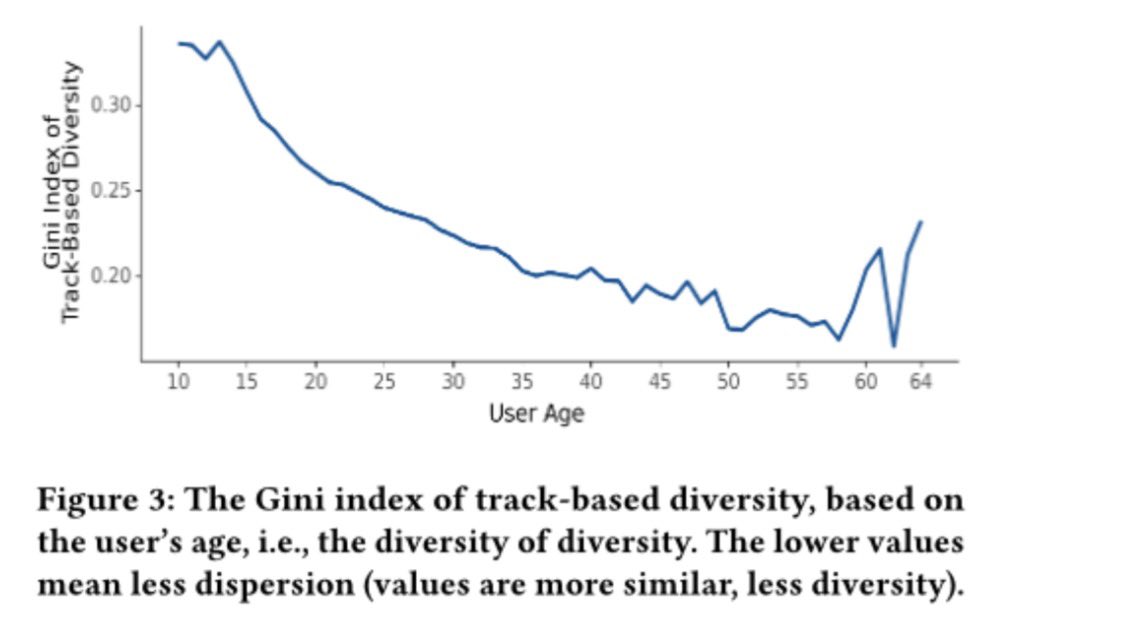
Your brain peaked musically somewhere around age 16. Everything since then has been a dopamine echo. Between the ages of 12 and 22, the mesolimbic dopamine pathway, the same circuit that processes cocaine and sex, fires at levels in response to sound that it will never reach again for the rest of your life. A 2011 McGill study used PET scans and fMRI simultaneously and found that music triggers dopamine release in the striatum at peak emotional arousal. The caudate nucleus lights up during anticipation of the good part. The nucleus accumbens lights up when it hits. Your brain is treating a guitar riff with the same reward architecture it uses for food-seeking and pair bonding. During adolescence, that response is dramatically amplified. Pubertal hormones are flooding the system. The prefrontal cortex is still wiring itself. Memories formed during this window get encoded with a density of emotional tagging that nothing in your 30s or 40s can replicate. Researchers at the University of Leeds identified this as the “reminiscence bump”: the period when your sense of self is forming, and the music playing during that formation becomes structurally integrated into your identity. A 2025 longitudinal study from the University of Gothenburg analyzed 40,000 users’ streaming data across 15 years. Younger listeners explored broadly across genres. Older listeners collapsed into increasingly narrow loops, almost entirely anchored to music from their teens and early twenties. Your brain stopped losing interest in new music years ago. It’s running a cost-benefit analysis. Familiar songs deliver guaranteed dopamine with zero processing cost. New songs require pattern recognition, expectation-building, and repeated exposure before the reward circuit kicks in. Past 25, most people stop paying that tax. The one variable that predicts whether someone keeps exploring: the personality trait “openness to experience.” Score high, you keep seeking. Score average, you default to the familiar forever. The fix, if you want one: deliberate exposure. Three listens minimum before your auditory cortex builds enough predictive models to generate a reward response. One passive listen on a playlist will never get there. Your brain needs repetition to find the pattern, and it needs the pattern to release dopamine.
Aakash Gupta tweet media
𐌁𐌉Ᏽ 𐌕𐌉𐌌𐌉@OrevaZSN

Unfortunately, as you get older, you gradually become less interested in new music and keep going back to the old favorite songs you once loved.

English
358
807
5.4K
772.2K
Barry Bunin retweetledi
David Senra
David Senra@davidsenra·
My conversation with Marc Andreessen (@pmarca), co-founder of @a16z and Netscape. 0:00 Caffeine Heart Scare 0:56 Zero Introspection Mindset 3:24 Psychedelics and Founders 4:54 Motivation Beyond Happiness 7:18 Tech as Progress Engine 10:27 Founders Versus Managers 20:01 HP Intel Founder Legacy 21:32 Why Start the Firm 24:14 Venture Barbell Theory 28:57 JP Morgan Boutique Banking 30:02 Religion Split Wall Street 30:41 Barbell of Banking 31:42 Allen & Company Model 33:16 Planning the VC Firm 33:45 CAA Playbook Lessons 36:49 First Principles vs. Status Quo 39:03 Scaling Venture Capital 40:37 Private Equity and Mad Men 42:52 Valley Shifts to Full Stack 45:59 Meeting Jim Clark 48:53 Founder vs. Manager at SGI 54:20 Recruiting Dinner Story 56:58 Starting the Next Company 57:57 Nintendo Online Gamble 58:33 Building Mosaic Browser 59:45 NSFnet Commercial Ban 1:01:28 Eternal September Shift 1:03:11 Spam and Web Controversy 1:04:49 Mosaic Tech Support Flood 1:07:49 Netscape Business Model 1:09:05 Early Internet Skepticism 1:11:15 Moral Panic Pattern 1:13:08 Bicycle Face Story 1:14:48 Music Panic Examples 1:18:12 Lessons from Jim Clark 1:19:36 Clark Versus Barksdale 1:21:22 Tesla Versus Edison 1:23:00 Edison Digression Setup 1:23:13 AI Forecasting Myths 1:23:43 Edison Phonograph Lesson 1:25:11 Netscape Two Jims 1:29:11 Bottling Innovation 1:31:44 Elon Management Code 1:32:24 IBM Big Gray Cloud 1:37:12 Engineer First Truth 1:38:28 Bottlenecks and Speed 1:42:46 Milli Elon Metric 1:47:20 Starlink Side Project 1:49:10 Closing Includes paid partnerships.
English
141
371
3.2K
2.4M
Barry Bunin retweetledi
Anish Moonka
Anish Moonka@AnishA_Moonka·
June 1983. A 28-year-old Steve Jobs walks into a design conference in Aspen, Colorado. He asks the room who owns a personal computer. Nobody raises their hand. He says “Uh-oh.” Then he spends the next 55 minutes describing the next four decades of technology. Jobs told the audience Apple’s strategy was to “put an incredibly great computer in a book that you can carry around with you, that you can learn how to use in 20 minutes… with a radio link in it so you don’t have to hook up to anything.” That’s an iPhone. In 1983. The Mac hadn’t even shipped yet. He described an MIT project that sent a camera truck down every street in Aspen, photographed every intersection, and built a virtual walkthrough on a computer screen. Google Street View launched 24 years later. He said office networking was about 5 years away and home networking 10 to 15 years out. The web went mainstream in the mid-90s, about 12 years later. Dead on. He described software being sent electronically over phone lines, with free previews and credit card payment. That’s the App Store, 25 years before it launched. He even compared it to the music industry and said software needed “the equivalent of a radio station” for free sampling. Apple built the iTunes Music Store 20 years later. The AI prediction is the one that hits different now. Near the end, Jobs talked about machines that could capture a person’s “underlying spirit” or “way of looking at the world,” so that after they died, you could ask the machine questions and maybe get answers. He said 50 to 100 years. ChatGPT arrived in about 40. The weird part is this speech was lost for nearly 30 years. The full hour-long recording only surfaced in 2012 when a blogger got a cassette tape from someone who attended the original conference. The Steve Jobs Archive didn’t release actual video footage until July 2024. His timelines were consistently too fast. He wanted the “computer in a book” within the 1980s. Apple’s first attempt was the Macintosh Portable in 1989, which weighed 16 pounds and cost $6,500. The iPad arrived in 2010, 27 years late. He guessed voice recognition was about a decade away. Siri launched in 2011, nearly 30 years later. The vision was right every time. The clock was wrong every time. Apple was doing about $1 billion a year in revenue when Jobs gave this talk, with under 5,000 employees. Today it’s worth $3.7 trillion.
English
106
1.5K
7.3K
1.1M
Barry Bunin retweetledi