

Bryce DeFigueiredo
2K posts

Bryce DeFigueiredo
@bdefig
Building the agent economy Co-founder of https://t.co/mHcbQIGHY9 Building agents that sell to agents (and people) Techno-optimist and regular optimist
SF Katılım Ekim 2015
450 Takip Edilen474 Takipçiler

The beauty of AI is that it unlocks the unexpected
Anagram@anagram_ai
FAQ pages answer the questions you thought shoppers would ask. Quiz tools guide people down a path you designed ahead of time. Neither responds to the specific question a shopper actually has right now. Site Agent was built to close that gap, answering in real time and learning from every conversation.
English

I’m in a WhatsApp gc with 23 CMOs of 8-fig biz. Last week this CMO texted that Claude recommends his product in 9 out of 10 prompts.
Site traffic’s up. LLM traffic CVR is higher than ever.
This guy is 25 years old and knows more about Claude / ChatGPT naming your brand on search than anyone else I know.
I asked him to give a masterclass for my team.
We’re 90 days in, with similar outcomes:
+% of traffic with high intent to buy. 4x meetings from AI literally saying GrowthAssistant.
I asked him to share everything you’d need to know about the first 3 months of starting a GEO program. He sent me this guide that breaks down his entire process:
– High visibility channels + how to play on each one
– Tool suites he trusts and what metrics he lives by
– The easy wins to amplify any size brand in search
Comment “GEO” and I’ll DM this playbook with you.

English
Bryce DeFigueiredo retweetledi

The tools you choose to build with are so important.
@vercel AI Gateway / @aisdk
- `caching: 'auto'` boom, providers that need explicit prompt caching, handled for you in one line
- Spend limits? Handled
- Break down costs by model, user, custom tag? Handled
- Wanna run your evals against different models to see if a cheaper one can get the job done? Handled, just put the model string in.
To go fast AND safely, a lot of times it comes down to the tools you choose. Tools tools tools.
Eric Glyman@eglyman
AI is extremely good at spending your money very quietly. our own token spend went from a rounding error to more than 10% of payroll in a year. one week in May we burned through $1.5 m. our CFO didn't love telling me that number, and he really didn't love telling the internet. but every finance leader we talk to is living the same story. the bill keeps going up and teams can't answer basic questions about it. which team is driving it? which models they're using? what changed this month? whether a cheaper model would do the same job? so finance gets two bad options: keep paying and hope, or cut broadly and slow down the work that's actually compounding. we built a third one. Ramp now connects to OpenAI, Anthropic, Gemini, Cursor and pulls it all into one place. see it, understand it, control it - down to a single API key. built with 1,000+ companies managing 100T+ tokens a month, and now spending less than they expected too! try it today at ramp.com/ai-cost-monito…
English
Bryce DeFigueiredo retweetledi

this is a huge unlock
instead of manually digging through data, use this mcp to separate the signal from the noise
Anagram@anagram_ai
Introducing the Anagram MCP Your commerce data can finally answer follow-up questions. Ask ChatGPT, Claude, or Codex what shoppers wanted to know before they bought. "What did shoppers ask about most this week?" "Which products had the most assisted sales?" "Find conversations about sizing." The Anagram MCP answers with real Anagram conversation and commerce data. No digging through exports. No translating a question into a dashboard filter. Just ask. This is what chatting with your data should feel like.
English
I was skeptical of Anthropic’s idea that coding agents are the path to AGI, but with things like this, that argument makes a bit more sense.
English
Vercel cooked on this one. just-bash is great because rather than waiting for models to get better at agentic tasks you care about, you just transform your tasks into a shape LLMs are already really good at.
Malte Ubl@cramforce
Brex is using just-bash deep into their production-critical financial agents. Really strong post here about impact on cost, latency, and quality.
English
Bryce DeFigueiredo retweetledi
Burton's new site is live and has Anagram's Site Agent on every product page.
I grew up riding Burton. My whole family did. Now our product helps their shoppers pick the right board, bindings, and gear.
Proud of this one.
English
We spent months building an AI chat experience for e-commerce brands. A big takeaway is that one of the things people care most about is the analytics.
Turns out, seeing the questions a hundred shoppers ask on your product page is more convincing than any A/B test.
Analytics are great, but seeing what people ask organically on your site is like running customer interviews at scale.
English

Hit 10k followers yesterday!
More deep AI content to come.

English

i'm a technical founder who had never sold anything to an enterprise, and then i had to run gtm from scratch. no playbook, no coach, just me.
here's everything i learned taking mireye's gtm from 0 to 1, and the exact loop i'd run again.
tldr: gtm is mostly pattern recognition and positioning. and both of those you can engineer.
the exact loop i run every day:
thesis → prospecting → messaging → outreach → followups → retro → repeat
and for the entire first month i had one goal. not revenue, not logos. maximize calls booked.
it's a simple game theory move: collapse the whole game to one win condition, and every decision answers itself. does this book a call, yes or no. everything else is noise.
week 0. thesis.
> pick one. an insight, a customer conversation, a problem you hit yourself. don't overthink it, it will change anyway.
> mine was "data center developers want a cited site report in minutes and cheap, everything on the market today is slow and expensive." broad, and a little wrong.
> doesn't matter. a thesis isn't meant to be right, it's meant to be tested. write your best guess and go.
week 1. find the first 50 by hand.
> no lists, no scraping. i read 200 company sites one by one to find my first 50.
> my first list had xai and coreweave on it. reading their pages back to back, it clicked: those are the exact companies that will never buy from me.
> then the email. write as a founder, five sentences, no fluff. the bar is embarrassingly low. it just cannot read like ai wrote it. no links. don't ask for a call. simple cta.
> my first version opened with "80+ cited fields across 31 datasets." silence. the version that got replies was plain: "we'll analyze your site in minutes." same product. i just said it like a human.
week 2. run the loop by hand. automate nothing.
> i'm an engineer, so every instinct screamed automate this on day one. ignoring that was the best decision i made.
> because week 2 isn't about sending emails. it's about collecting the exact words people use for their problem. that vocabulary becomes your positioning.
> so i went from 10 emails a day to 15, all by hand, and after every call i wrote the problem down in their language.
> then two calls in one week cracked it open. one founder came from real estate, one came from oil and gas. completely different worlds, both walking into data centers, both missing the same thing: knowing which land actually clears.
> that overlap became my entire icp. that's the pattern recognition, and it only shows up when you do it by hand.
> helped us change the thesis and product positioning: agents will comb through every parcel in the country to find you off market sites that meet your exact requirements.
week 3. proof first, then automate.
> the signal i waited for: different people describing the same problem in the same words, all around the same company size, and 10% response rate.
> my icp went from a vague guess to three sharp ones:
1. land developers who just crossed into data centers chasing the ai boom.
2. developers whose site just got rejected, carrying a fresh loss i could fix.
3. powered-land flippers hunting land that already has power.
week 4. build the machine. now its a numbers game.
> i turned every step of the loop into its own claude skill. prospecting, messaging, crm, followups. now claude and i run the same loop every day and learn together.
> the stack is simple:
@ExaAILabs agent to find prospects
@EmailHunter api to find and verify emails
@meetgranola mcp to read my call notes
@Superhuman mcp to send
> a csv for a crm. yc agent when i want a second brain on a strategy call.
> company brain with all the learnings md files.
> a diligence doc before every demo, a learnings doc after every call.
> before one demo i ran our own screen on the prospect's own site and found a air-permit issue they didn't know about. i walked in knowing their land better than they did. that's how you win a call.
but the highest-leverage thing i did? followups.
> someone opens my email, and i reply with the close: here's what we do, the value, demo pdf and call link.
> i've booked more calls on that second email than on any first one. once they've read you, you're in. you just have to show proof.
the lesson under all of it: do things that don't scale, on purpose, to learn anly what you've proven works.
i still read every draft before it sends. if it smells like ai, i rewrite it by hand.
pattern recognition from the retro. positioning from their own words. both engineered by running the loop.
if i can do it, so can you. comment "gtm" and i'll send you my skills.
English

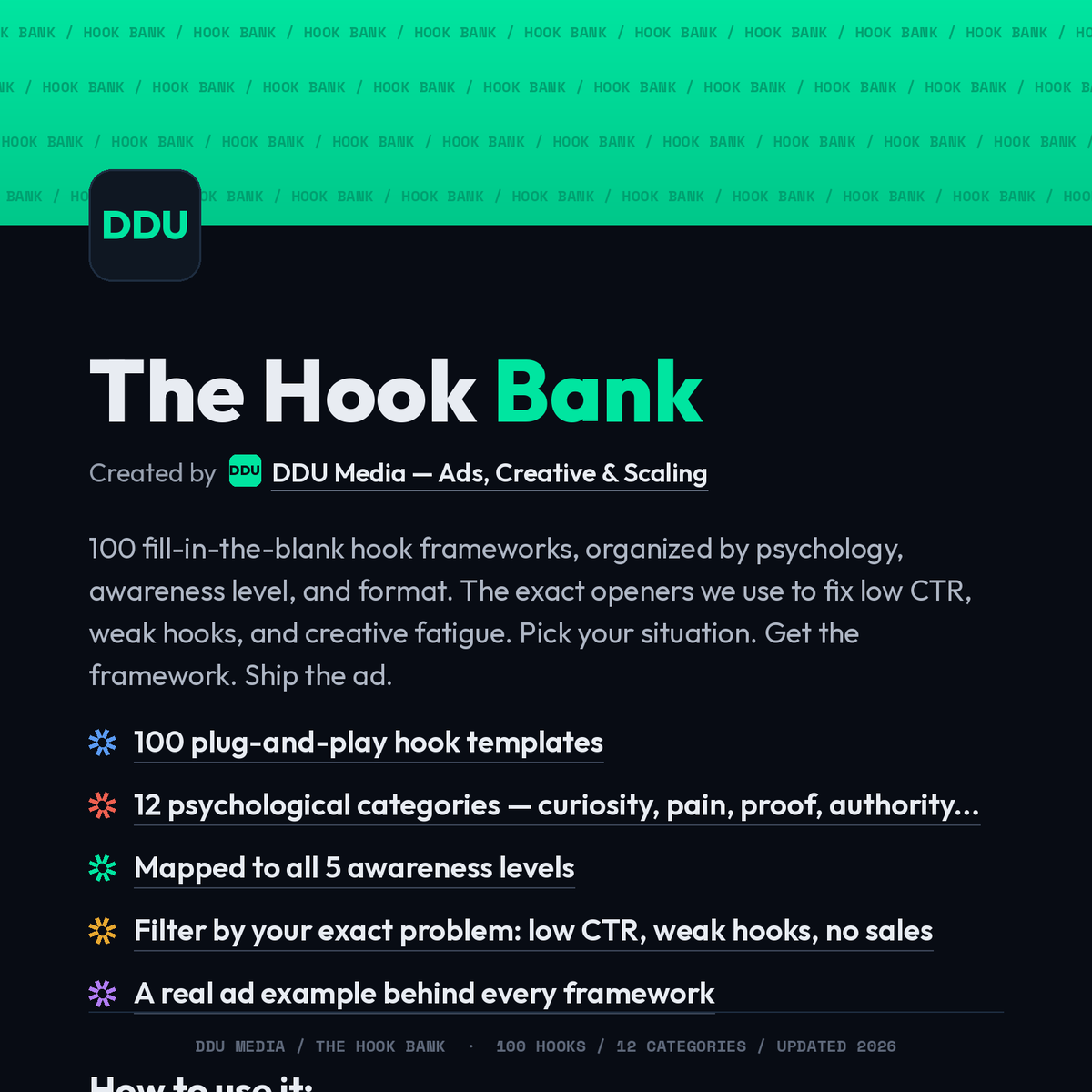
We turned every hook pattern that keeps winning for us into one resource.
100 frameworks. Fill in the blanks.
Sorted by trigger, curiosity, pain, proof, authority, and by the problem you're actually solving.
Reply "HOOKS" and I'll send it.
English
This is the truest depiction of building a startup I’ve seen
Design Everywhere@dsgnevrywhr
New York Magazine by Susanna Hayward.
English
@devahaz Outside of Bay Area tech, taste means one thing, but inside, it's basically a synonym for judgement.
English

I don’t think anyone takes “SF/SV taste discourse” seriously. Bay Area taste icons last few decades basically Steve Jobs and Jony Ive. But fashion/design taste points of view? Maybe a few like Marissa Mayer and Jack Dorsey but not like they’re influential tastemakers at all.
Michael J. Miraflor@michaelmiraflor
How have we collectively allowed SF/SV to control the "taste" discourse? The galleries Gagosian, Pace, Hauser & Wirth, Zwirner, White Cube, Perrotin, Sprüth Magers, Lehmann Maupin, etc do not have locations in SF. There is no globally recognized SF Fashion Week. The global art-fair circuit brands like Art Basel, Frieze, Armory, EXPO, TEFAF etc do not make stops and have no associated presence in SF. Sotheby's has an SF office, but their private sales galleries are in NYC, Hong Kong, and London. Christie's and Phillips do not have presence in SF. There are no major, globally recognized Design festivals in SF. The San Francisco Art Institute closed after more than 150 years. California College of the Arts says it will close after the 26/27 academic year. A taste discourse with no true globally recognized and respected taste institutions. This matters since the sort of "taste" discourse this site feeds off of is very commercial in nature. Yes, there are a lot of local platforms and fairs etc, but when you're talking about how the trillions of dollars in capital concentrated in that geo affect the discourse, its place in the world matters. In the same way that Tech cannot take seriously how people claim to be creating tech hubs in 2nd/3rd tier cities without the tech talent or infra. The same can be said about SF with "Taste." How do we wrap our heads around this.
English



@max4c_ Feeds are essentially a dopamine slot machine asking for attention every waking moment of the day. Love this idea.
English

I used a flip phone for a year, so people assume I'm anti-screen. I'm not. I'm anti-feed.
The problem isn't computers, it's the architectural choices tech giants made to extract as much from us as they can. The harms are designed. They're choices. Smartphone Free Childhood makes that case better than anyone, and I agree with them: delay the phone.
But a phone and a computer aren't the same machine. One is built to consume. The other can be built to make and learn. So delay the feed, and give kids something that points them back at the world instead of mining their attention.
That's the computer I'm building at @DasoComputer
English
@lulumeservey The problem with Avi’s position here is that it assumes a false dichotomy between making money and doing something you believe in. If you’re pro-nuclear, it *must* be about the money. (Because he can’t imagine anyone being a true believer).
English
This is such a genius psyop by the company making money selling tokens
Matthew Berman@MatthewBerman
One of my new favorite loops from Peter Steinberger (@steipete): “Refactor until you are happy with the architecture. After each significant step, live-test the system, run autoreview, and commit. Track progress in /tmp/refactor-{projectname}.md.” signals.forwardfuture.ai/loop-library/l…
English

