shailesh jain

609 posts

shailesh jain

shailesh jain

@blacklife

Building https://t.co/wiyOPD4eWU Bootstrapper / love marketplace biz. Previously systems programmer at @VMware / x-@CarnegieMellon

Mumbai Katılım Temmuz 2008
1.5K Takip Edilen517 Takipçiler
shailesh jain retweetledi

Harsh Jain
Harsh Jain@harshjain85·
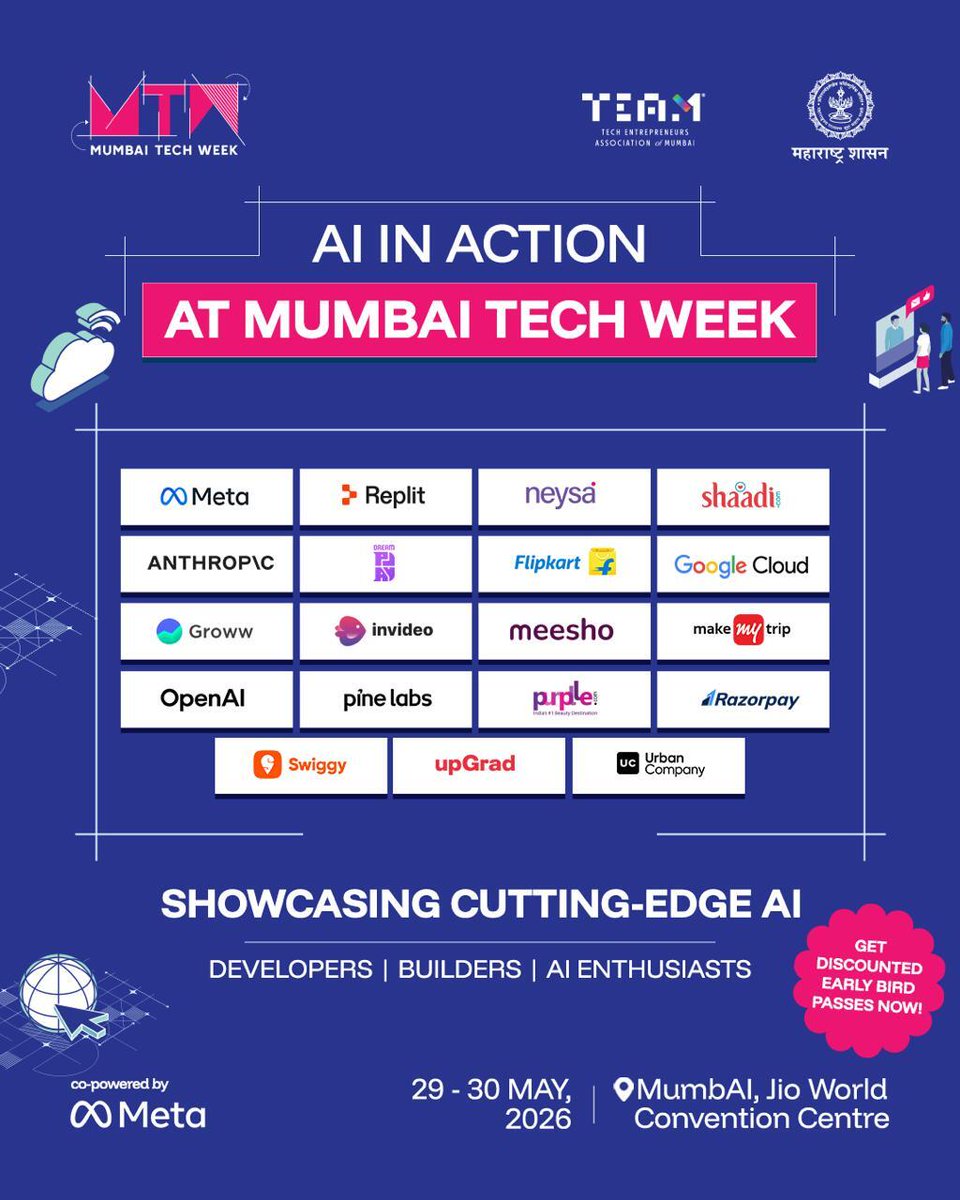
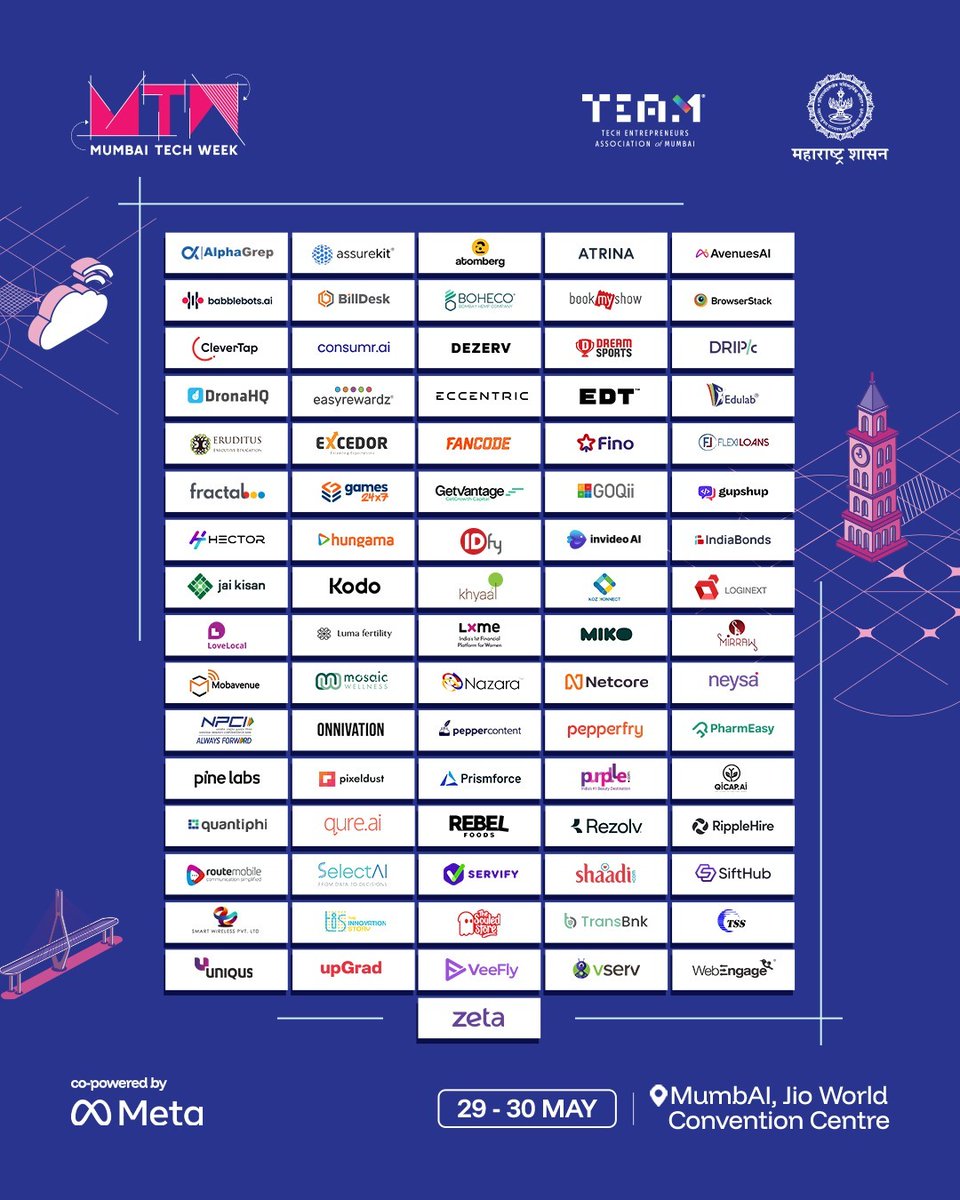
Mumbai Tech Week 2026 is BACK May 29/30, but this time no gyaan. Just AI in Action 🔥 AI Demos by 50+ Indian Unicorn Founders/CXOs & India heads of global AI giants 🤖 India's 1st AI Job Fair - 500+ offers from 50+ co's Buy ur tix (code DREAMSPORTSMTW26): tinyurl.com/ytkns6d3
Harsh Jain tweet mediaHarsh Jain tweet media
English
7
4
36
4.9K
Arindam Paul
Arindam Paul@arindam___paul·
Anyone else uses Wispr Flow and faced issues? I tried the free version, liked it and then bought the pro version Ever since then, not been able to use it. Support is all AI and giving robotic replies with usual troubleshooting that doesn't work Disappointed
Arindam Paul tweet media
English
45
1
69
15.6K
shailesh jain retweetledi
Aakash Gupta
Aakash Gupta@aakashgupta·
There's a physicist at Stanford named Safi Bahcall who modeled this exact principle and the math is wild. He calls it "phase transitions in human networks." When you're stationary, your probability of a lucky event is limited to your existing surface area: the people you already know, the places you already go, the ideas you've already been exposed to. Your opportunity window is fixed. When you move, your collision rate with new nodes in a network increases nonlinearly. Double your movement (new conversations, new cities, new projects) and your probability of a serendipitous encounter doesn't double. It roughly quadruples. Because each new node connects you to their entire network, not just to them. Richard Wiseman ran a 10-year study at the University of Hertfordshire tracking self-described "lucky" and "unlucky" people. The single biggest differentiator wasn't IQ, education, or family money. Lucky people scored significantly higher on one trait: openness to experience. They talked to strangers more, varied their routines more, and said yes to invitations at nearly twice the rate. The "unlucky" group followed the same routes, ate at the same restaurants, and talked to the same 5 people. Their networks were closed loops. No new inputs, no new collisions. Luck isn't random. Luck is surface area. And surface area is a function of movement. The lobster emoji is doing more work than most people realize. Lobsters grow by shedding their shell when it gets too tight. The growth requires a period of total vulnerability. No protection, no armor, soft body exposed to the ocean. That's the cost of movement nobody posts about. You have to be uncomfortable first. The new shell only hardens after you've already moved.
@D9vidson

a moving man will meet his luck 🥀
English
505
14K
67.4K
4.5M
shailesh jain retweetledi
Will Ahmed
Will Ahmed@willahmed·
You have no experience. You’ve never started a company. You’ve never had a full time job. Nike is going to kill you. You’re a kid. You don’t have technical skills. You shouldn’t build hardware. Apple is going to kill you. You can’t build hardware. You can’t measure heart rate non-invasively. Athletes don’t care about recovery. Under Armour is going to kill you. It won’t be accurate. You don’t listen. You’re an ineffective leader. You can’t recruit great talent. You’re going to have to pay every athlete. You can’t measure sleep non-invasively. It’s too expensive to research. Athletes are a small market. The product costs too much to make. The product costs too much to sell. Your valuation is too high. Consumers aren’t going to want it. Hardware is too hard. You should measure steps. Fitbit is going to kill you. You can’t build a marketing engine. You can’t raise enough money. You need a real CEO. Google is going to kill you. You can’t be a subscription. You can’t build a brand. You can’t do consumer in Boston. Your valuation is too high. You shouldn’t make accessories. You shouldn’t make apparel. Lululemon is going to kill you. You can’t predict Covid. Stay in your niche. You are going to run out of money. You can’t build a health platform. Amazon is going to kill you. You can’t measure blood pressure. You can’t get medical approvals. The market is too small. You don’t understand AI. The market is too competitive. It won’t work internationally. The supply chain is too complicated. You can’t build an AI. You can’t raise enough money. It’s too competitive. Healthcare isn’t going to want it. … Just keep going ✌️
Will Ahmed tweet media
English
1.1K
2.9K
23.3K
2.5M
shailesh jain retweetledi
Sahil Bloom
Sahil Bloom@SahilBloom·
The older I get, the more I realize intelligence is overrated. Intelligent people are more likely to overthink, overplan, and overanalyze. They hide behind motion that doesn't create progress. They fear the judgment of others if they're proven wrong. The truth is that intelligence is abundant. Courage is not. The people you admire are the ones who had the courage to act. They aren’t more talented than you. They aren’t smarter than you. They just took action when you didn’t. I often wonder how many extraordinary people wasted their entire lives waiting for permission that never came. Permission isn't granted. It's taken. You get to tap yourself in whenever you want. You can just do things. Courage beats intelligence.
English
507
1.2K
8.6K
665.6K
shailesh jain retweetledi
Virat Kohli
Virat Kohli@imVkohli·
The only time you truly fail, is when you decide to give up.
English
11.8K
45.2K
309.6K
25.6M
shailesh jain retweetledi
Shreyas Doshi
Shreyas Doshi@shreyas·
Too many otherwise-smart people go about operating their lives as though they are industry analysts. They love thinking about and explaining general patterns across verticals, companies, societies, nations. This is fine, although the downside of applying this thinking to *everything* is that they forget their own individuality, their specific superpowers, their personal career goals and life aspirations. They forget that — while they might sound smart to some people as they analyze and explain phenomenon with proclamations like “duh, people are driven by the incentives that are set” — it is not actually very smart to assume that general patterns across a given population are also true specifically for themselves as a sovereign individual. An example: When they come across a thought-provoking piece of writing, instead of asking “how can I use this to improve my own understanding of myself and my own life/career”, they instinctively look for ways to argue by citing average population characteristics or statistics, or they cite clever laws and aphorisms that apply to the average human, or they virtuously push back by asking “well, what would happen to the world if everyone thought this way? surely it’d be a disaster”. And so this analyst mindset on auto-pilot causes them to make relatively poor choices for their own life and their own career, because they don’t see the value in truly understanding themselves. They sound very intelligent and erudite, but as a wise person once asked, of what use is this intelligence if you do not get what you want out of your own life? A compulsive analyst is a commentator and expert on many things, while often being bankrupt on self-understanding, an automaton of societal conditioning, never architecting his own life from the ‘first principles thinking’ he claims to love so much. He may have some knowledge but he lacks wisdom. Because wisdom is the visceral knowledge that the chief entity that’s worth understanding is oneself.
English
40
42
485
55.5K
shailesh jain retweetledi
ishmohit
ishmohit@ishmohit1·
A mentor of mine often told me this- Pessimists often sound intelligent, which can lead others to believe they possess great knowledge. But in markets, a perpetually pessimistic mindset makes it very difficult to succeed. Avoid permanently pessimistic people.
English
26
63
680
34.9K
shailesh jain retweetledi
Dan Go
Dan Go@CoachDanGo·
As I get older I'm realizing that not much good happens after 10pm.
English
249
203
3K
335.8K
shailesh jain retweetledi
Sahil Bloom
Sahil Bloom@SahilBloom·
Harsh truth: You're on the clock. Not metaphorically, literally. Time is the one thing you’ll never get back. Not money. Not energy. Not opportunity. Time. Spend it with people you love. On work that lights you up. On a life you’re proud to live. Everything else is just noise.
English
146
590
4.1K
189.7K
shailesh jain retweetledi
Blake Burge
Blake Burge@blakeaburge·
A major cheat code in life: The ability to reset fast. You're allowed to start over at 10am, 2pm, or 6:30 at night. Zero reason to let one bad hour carry into the rest of your day. You can’t control what hits you. But you can control how long you sit in it.
English
99
1.5K
12.6K
351K
shailesh jain
shailesh jain@blacklife·
@DNB_India we need to update our address. There is no one willing to help here!!!
English
0
0
0
4
shailesh jain retweetledi
Anthropic
Anthropic@AnthropicAI·
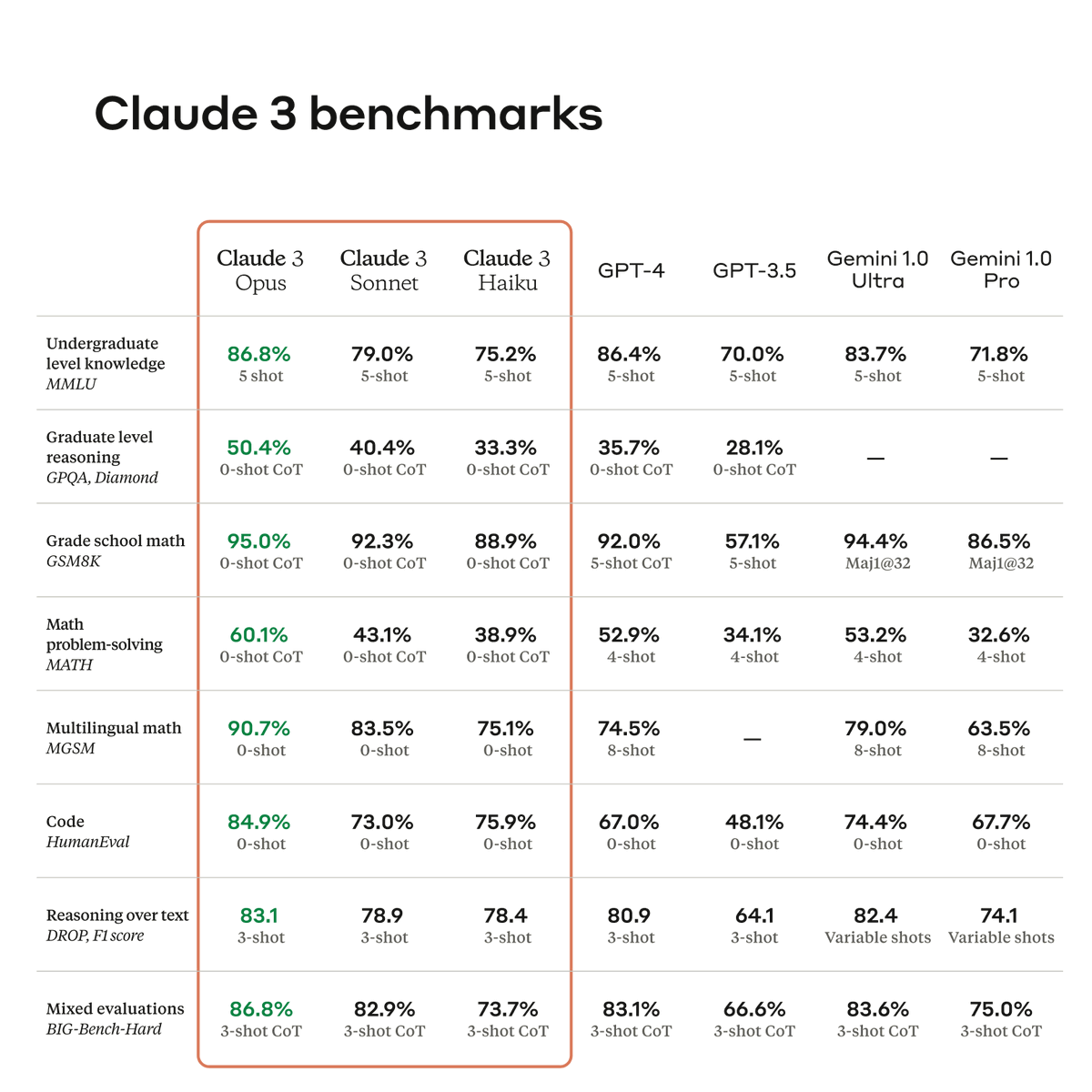
Today, we're announcing Claude 3, our next generation of AI models. The three state-of-the-art models—Claude 3 Opus, Claude 3 Sonnet, and Claude 3 Haiku—set new industry benchmarks across reasoning, math, coding, multilingual understanding, and vision.
Anthropic tweet media
English
536
2K
9.3K
3.8M
shailesh jain retweetledi
Aaron Levie
Aaron Levie@levie·
The best founders I know — no matter their company’s scale — thrive on doing customer support directly. There’s literally no better way to understand the pulse of your customer base, what features to build next, or where systems are breaking down. It’s always upside.
English
78
284
2.2K
870.3K
shailesh jain retweetledi
Paul Graham
Paul Graham@paulg·
Took me a long time to realize solutions aren't always what people want. Sometimes they just want someone to empathize with them.
Paul Graham tweet media
English
619
1.7K
14.8K
1.3M
shailesh jain retweetledi
Aloke Bajpai
Aloke Bajpai@alokebajpai·
Proud to see the country’s manufacturing vision being guided by one of our most talented and smart ministers Shri @AshwiniVaishnaw !!
English
4
18
92
10.7K
shailesh jain retweetledi
Nyle Beck
Nyle Beck@IAmMyBestToday·
One of the most peaceful ways to live is to let go of: beliefs that don’t serve, emotions that have run their course, relationships that don’t accept us as we are, making things mean something that they might not actually mean, control of things that are out of our hands. Let go.
English
16
359
1.1K
138K