Ox-Cart Man retweetledi
Ox-Cart Man
10.3K posts

Ox-Cart Man
@boundbrass
Catholic. Vice President of the Nouveau Un-American Activities Committee.
Appalachia Katılım Eylül 2009
58 Takip Edilen735 Takipçiler
Ox-Cart Man retweetledi

like dude this absolutely mogs the current anthem, especially the In God We Trust part
AJ ⚜️🇻🇦@c0ntrabane
hot take but i think the fourth verse of the Star Spangled banner should be the national anthem instead of the first verse
English
Ox-Cart Man retweetledi

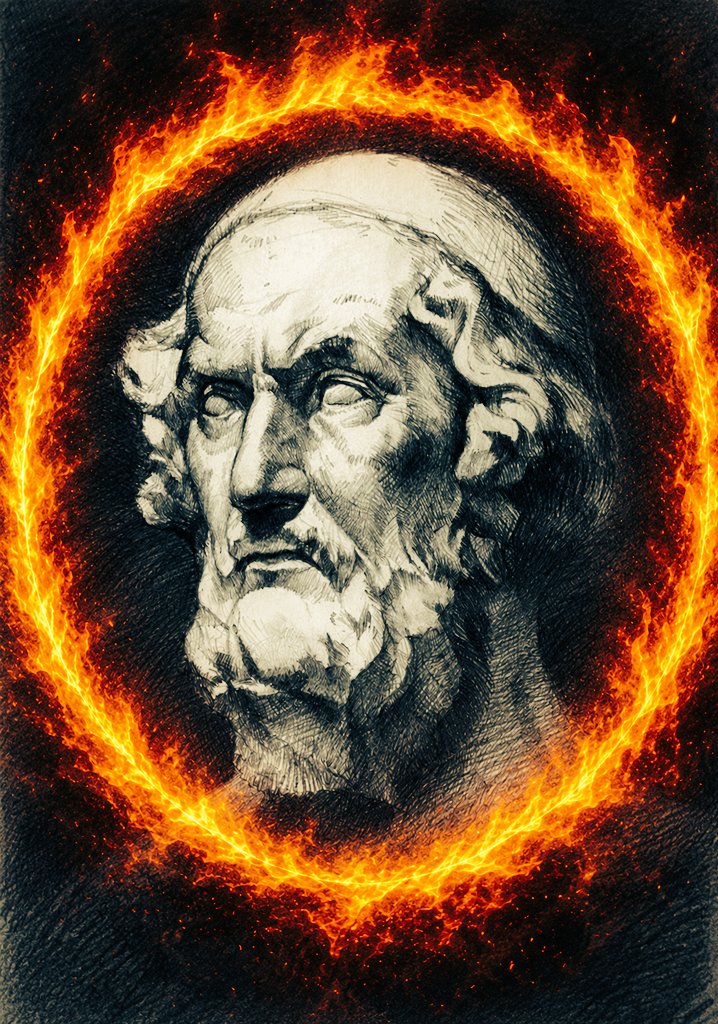
The passage above comes from Dominique Venner’s “The Shock of History,” where Homer is treated as the primordial wellspring from which Western civilization first takes shape and European consciousness receives form in poetic memory.
When Venner writes, “With Homer, the future takes root in the memory of the past,” he is speaking of something deeper than literary importance alone. Homer stands at the beginning of Europe’s civilizational self-awareness. “The Iliad” and “The Odyssey” are the songs through which a people preserved its heroic image of life and gave that memory a form strong enough to outlive the transience of the world that created it. Through Homer, memory becomes inheritance. Men born long after the heroic age could look back to his world and recognize a great ancestral patrimony that belonged to them, not as a relic to admire from afar, but as a standard to inhabit and surpass.
Homer’s world is hard and unsentimental. Men are known by the worth they reveal before fate. The hero strives toward aretē, excellence proved in action, because worth in Homer is never a private possession. It must appear in the world. A man shows what he is when danger strips away illusion. Life becomes a trial in which character is made visible. Even suffering is not left as mere ugliness, because Homer gives it form. The terror of battle and the nearness of death are raised into beauty without being made harmless.
Homer matters because his poems preserve European ancestral memory in its first great poetic form. In them, the West encounters the heroic image of life before it was weakened by abstraction. His world still knows hierarchy without apology. It still knows greatness without embarrassment. He remains dangerous because he does not flatter the present. He recalls men to the older standard from which civilizational greatness is born.
Modern translation, especially in the recent versions by Emily Wilson, can therefore become insidiously damaging. The harm is found in the quiet act of making Homer speak in the moral accent of the present. Most readers will never encounter the poems in Greek. They meet Homer through mediation, which makes tone and intent decisive. When the diction is lowered and the heroic distance softened, the ancient world is brought too near to the habits of the present. The reader no longer feels the pressure of something older and greater than himself. He receives a smaller Homer, ancient in name but modern in atmosphere, stripped of the remoteness that gives him authority.
A great translation may depart from earlier versions and still preserve the height of the original. The danger begins when translation no longer serves the work, but quietly adjusts it so that it may pass through modern sensibility without offense. In Homer’s case, such adjustment is especially destructive, because distance is part of his authority. Once that distance is softened, Homer ceases to command from antiquity. He becomes easier to consume, and therefore less able to summon.
For Venner, Homer must stand as a lodestar from the past, a measure by which later ages judge their own strength or weakness. His distance from us is not an obstacle to be removed. It is the source of his power. A domesticated Homer no longer functions as a point of origin by which men orient themselves. He becomes Homer as permitted by the present, and the reader is spared the encounter with an older greatness that might have called him beyond himself. This is the civilizational amnesia Venner’s vision of history was written to resist.

English
Ox-Cart Man retweetledi

My brother is a lifelong Republican, I called him up, I said "You been paying attention to the news?"
He goes "Yeah, it's terrible "
I say "Terrible, what are you talking about? We won in the Supreme Court, we buckbroke Iran and Venezuela, and yesterday we kicked out Massie and Mitch McConnell"
My brother goes "Exactly! If he keeps this up, I'll have nothing left to complain about!"

English
Ox-Cart Man retweetledi

Abdul Carter, Jaxson Dart 'spoke as men' after Trump rally sparks Giants drama trib.al/HOuX2ar

English
Ox-Cart Man retweetledi

@Anthonydiscere @Nullnullrob What does St Francis say in the intro?
English

@Nullnullrob Saint Francis in introduction to the devout life says something completely different. I recommend it, an excellent book.
English
Ox-Cart Man retweetledi

Ox-Cart Man retweetledi