Brandon Logeman

295 posts

Brandon Logeman banner
Brandon Logeman

Brandon Logeman

@brandon_logeman

BRAIN Initiative K99/R00 Awardee || Studying hormonal control of neuronal circuits at the single cell level || 🐷 former pig farmer 🐷 #FirstGenCollege

Harvard University Katılım Nisan 2010
148 Takip Edilen114 Takipçiler
Brandon Logeman retweetledi

Rahul Satija
Rahul Satija@satijalab·
Excited to share VIPerturb-seq! New tech from my lab which aims to improve the cost, data quality, and efficiency of single-cell CRISPR screens so that they are accessible to any lab - even at genome-wide scale Preprint and 🧵 (1/): biorxiv.org/content/10.648…
English
5
83
316
24.3K
Brandon Logeman retweetledi
Vega Shah
Vega Shah@dr_alphalyrae·
The latest issue of COB describes how AI infrastructure can create value for biotechnology beyond finding new drug candidates. Highly recommend reading if you work at the intersection of tech and life sciences
Vega Shah tweet media
English
7
56
390
28.4K
Veera Rajagopal 
Veera Rajagopal @doctorveera·
Thank you for your feedback on the podcasts. Regarding your q, in multi-ancestry GWAS, it's common for authors to also perform ancestry-specific GWAS, which was the case here. The EAS specific locus was from EAS specific GWAS meta-analysis. Note, the ancestry-specific signal doesn't mean ancestry-specific biology. It's simply the signal is detectable in one ancestry but not the others because of allele frequency differences. Should there be a different variant in the same gene present at higher frequency in, for e.g., Europeans, then we will see a similar association in Europeans as well.
English
1
0
1
110
Brandon Logeman
Brandon Logeman@brandon_logeman·
A new paper has identified an answer to this question, in which a structural variant causes the de novo creation of a cardiomyocyte-specific enhancer, leading to ectopic expression of a potassium channel and heart disease.
Brandon Logeman@brandon_logeman

I’m looking for examples where a gene is normally expressed in cell type A but a GWAS/QTL hit contains a variant that causes ectopic expression in cell type B. All examples welcome, plz RT! @jkpritch @doctorveera @SashaGusevPosts @dgmacarthur @tuuliel @anshulkundaje

English
1
0
0
199
Brandon Logeman
Brandon Logeman@brandon_logeman·
@TonyZador Others have discussed grant funding as a weighted lottery (i.e. better study section score gives you more ping pong balls in the ticket tumbler)....could something similar happen for publications?
English
0
0
0
48
Brandon Logeman
Brandon Logeman@brandon_logeman·
@TonyZador Their solution was to inject noise into the ordering of draft picks; a lottery that is weighted by the teams number of wins. It overall allocates resources (draft picks) where they belong but due to individual randomness keeps teams from gaming the system and losing on purpose
English
1
0
0
41
Tony Zador
Tony Zador@TonyZador·
Many problems in science a field boil down to Goodhart's law: "When a measure becomes a target, it ceases to be a good measure" Eg a high-profile paper didn't used to be the goal But given finite resources, we need a measure to allocate them, which invites gaming the system
Michael 英泉 Eisen@mbeisen

The most persistent problems in science trace directly to the fact that many of its practitioners hold on to banal utopian visions of how it should operate and actively choose not to engage with the reality of how it actually works and how it fits into society at large.

English
1
1
15
3K
Brittany Hugoboom
Brittany Hugoboom@BritHugoboom·
What’s the most beautiful state in America?
English
371
8
128
315.7K
Brandon Logeman
Brandon Logeman@brandon_logeman·
@OstuniLab @MolecularCell @pioneerfactors Thanks for highlighting this discussion which has a core topic (advantages / disadvantages of in vitro / in vivo studies) that is relevant beyond pioneer factors and permeates much of biology. Well written on both sides.
English
0
0
2
160
Renato Ostuni
Renato Ostuni@OstuniLab·
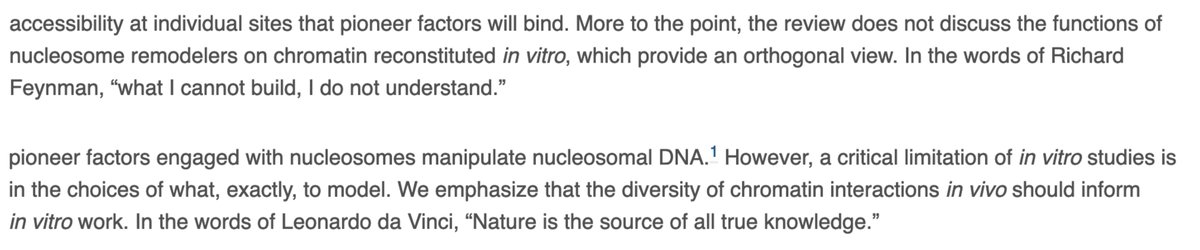
Must-read discussion by giants - Ken Zaret and Steve Henikoff - on the nature of "pioneer factors", in vitro vs in vivo, Da Vinci vs Feynman. Learning how chromatin becomes accessible is key for immunology (and biology in general) cell.com/molecular-cell… cell.com/molecular-cell…
Renato Ostuni tweet media
English
6
12
45
11.2K
Brandon Logeman
Brandon Logeman@brandon_logeman·
@GeneticsMike7 @doctorveera @Nature @mnelsonxy @NatureGenet Conceptually the important genes = low effect sizes seems measurable. Practically I'm not sure how it would be done; perhaps some kind of meta study across multiple traits comparing effect size with PhyloP scores or dN/dS...something like that. Anyone tried this?
English
1
0
0
25
Veera Rajagopal 
Veera Rajagopal @doctorveera·
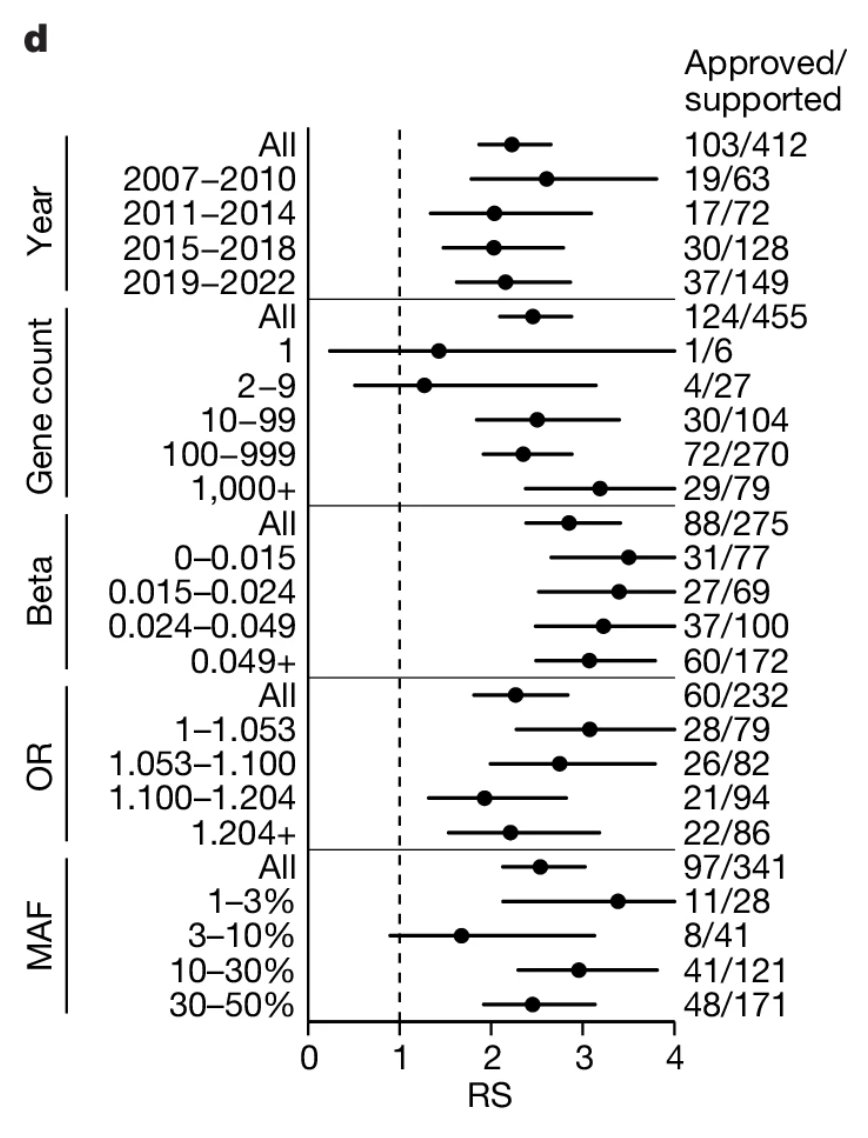
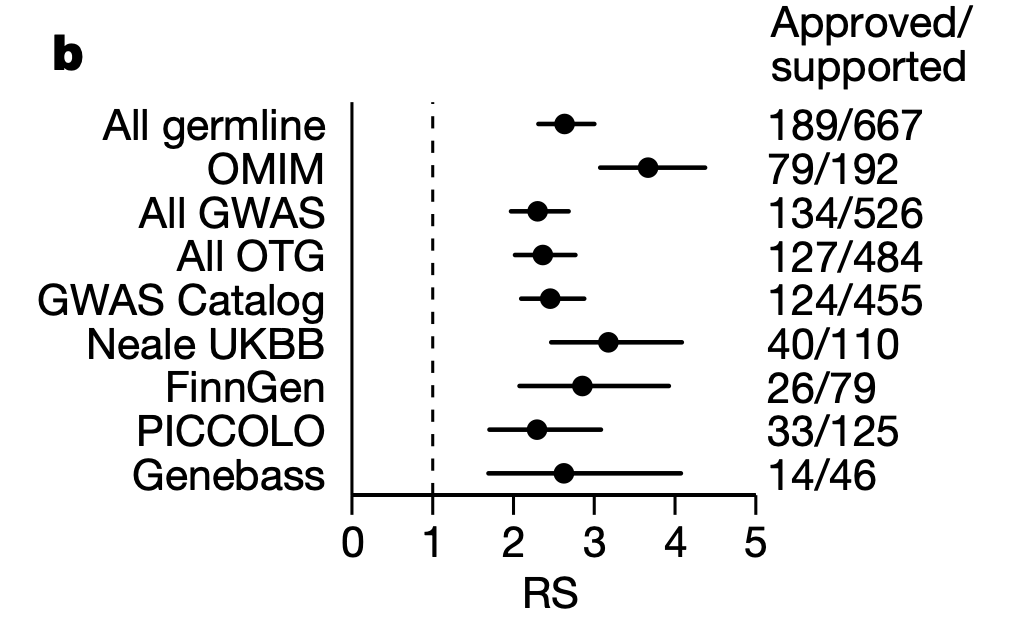
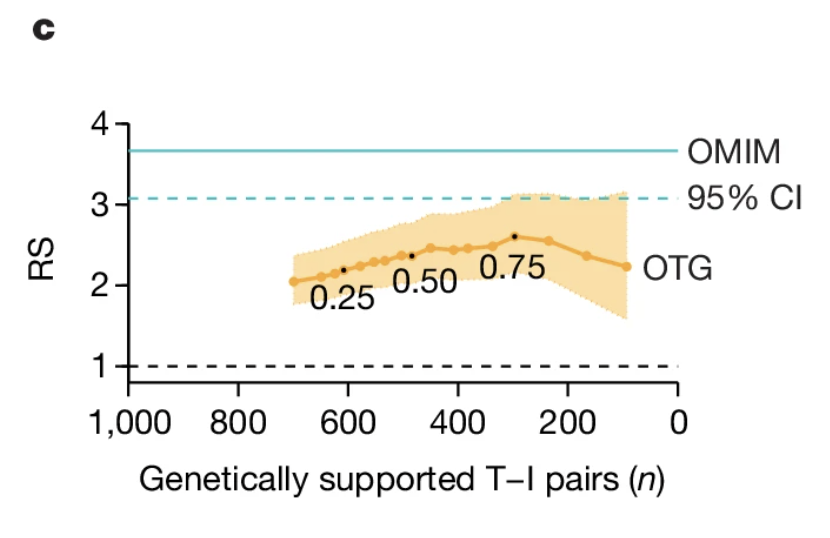
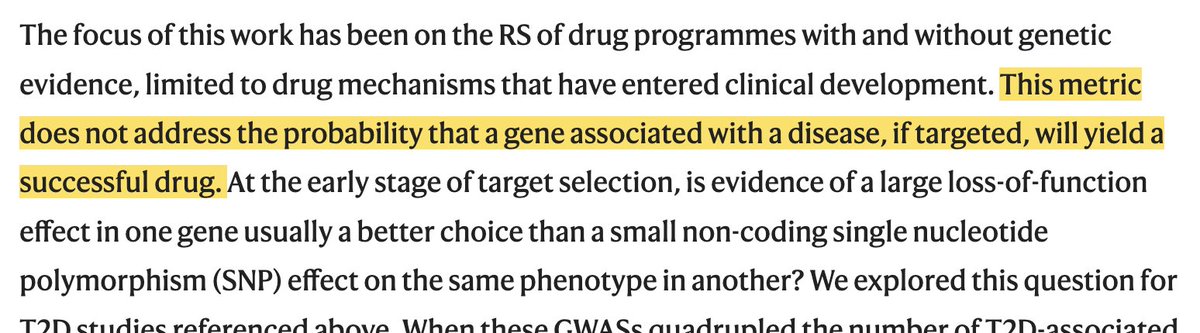
I was reading the recent @Nature paper on the impact of human genetics on drug success (nature.com/articles/s4158…). I found one of the findings particularly interesting. ​ This is a follow-up work of @mnelsonxy's famous 2015 paper published in @NatureGenet (x.com/doctorveera/st…). In their 2015 work, Nelson et al. reported that drug programs with human genetic support doubled that clinical success. In the new analysis, @cureffi et al. report that that estimate now increased from 2 to 2.6-fold, mainly because many new genetic discoveries have been published since 2015. ​ Coming to the finding that interested me most. In the paper, the authors address one of the popular criticisms of GWAS, particularly the debate on common vs rare variants. ​ GWASs, based on common variants, typically identify associations with small to tiny effect sizes. Sequencing-based rare variant studies typically identify associations with large effect sizes. The value of common variant associations to drug target discovery or to establishing a causality between a gene and a trait is often questioned. Particularly in the context of explosive growth of GWAS sample sizes, resulting in discoveries of variants with smaller and smaller effect sizes. ​ The authors address this skepticism through stratified analysis and make a couple of interesting observations. ​ Firstly, the authors show that the impact of human genetic evidence on drug success do not statistically differ across different minor allele frequencies or effect sizes or year of publication. Genetic associations of small effect sizes are as much informative as genetic associations of large effect sizes. Note, the above groupings were within the GWAS umbrella. ​ Secondly, when comparing between GWAS source and OMIM (contains Mendelian genetic associations), the authors do find a larger effect size for OMIM compared to GWAS. However, they argue that the relatively larger effect size for OMIM against GWAS sources (such as open targets, GWAS catalog etc.) mainly highlight the current challenges of GWAS to confidently identify causal genes. I've written before on this topic, using FTO as an example (x.com/doctorveera/st…). ​ In line with their hypothesis, the authors find that the impact of GWAS-based human genetic support increase with increase in our confidence on the causality of genes. When stratified based on L2G score (a score developed by @OpenTargets that quantifies the level of evidence available to map a GWAS locus to a gene), the effect sizes increased with increase in L2G score. ​ So, it's not the small or large effect size that is important, but how confident are we in the casual gene at the locus. At least for this reason, the coding variants with large effect sizes will continue to offer better value for drug development than noncoding variants of small effect sizes until we solve the problem of causal gene mapping. ​ I also like that the authors explicitly state what their findings do and don't mean. The findings inform only about how often existing drug programs with genetic support succeed compared to those without. They don't inform anything about the odds of a genetic association to become a successful drug target. That is entirely a different research question. ​ Minikel et al. Nature 2024 nature.com/articles/s4158…
Veera Rajagopal  tweet mediaVeera Rajagopal  tweet mediaVeera Rajagopal  tweet mediaVeera Rajagopal  tweet media
English
5
44
191
34.7K
Brandon Logeman
Brandon Logeman@brandon_logeman·
New GWAS study examines when a baby takes their first steps 🧬 ➡️ 🚼 ➡️ 🚶‍♀️ SNP based heritability, a lower bound of heritability calculated using only common variants, shows up at ~25%, much higher than I would have guessed. Work led by @annagui86
PGC Consortium@PGCgenetics

This recent GWAS preprint is the first to explore genetic influences on the age at onset of walking 🚶‍♀️🚶, a milestone that may indicate broader (neuro)developmental delays. Find out more⤵️ medrxiv.org/content/10.110…

English
0
0
0
251
Brandon Logeman
Brandon Logeman@brandon_logeman·
@doctorveera @Nature @mnelsonxy @NatureGenet But on the other hand I could image a set of coding mutations that very slightly decrease their function but is not enough to be completely eliminated from the population…..in this case perhaps these low effect GWAS genes would be enriched for rare variants in disease cases
English
1
0
0
46