
Sabitlenmiş Tweet
Brian Hie
1.8K posts

Brian Hie
@BrianHie
AI for biology @Stanford and @arcinstitute
San Francisco Katılım Ekim 2011
472 Takip Edilen10.1K Takipçiler
Brian Hie retweetledi
Out today in @ScienceMagazine: with the amazing Haochuan Cui, Yiling Lin, & @LingfeiWu, we analyzed 3.6 million scientists publishing 1960–2020. The findings reshape a century-old debate about age and scientific creativity.
English
Excited for parallel construction -- congrats to Noah, Kaihang, and team!
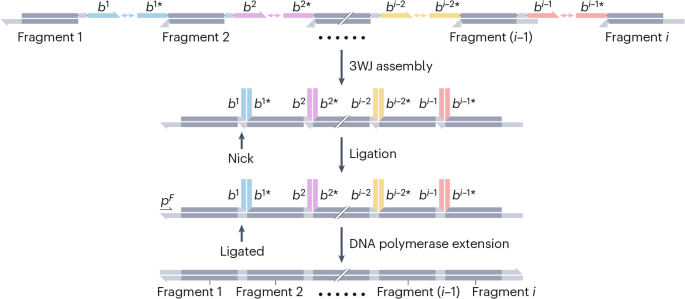
As generative models are now producing longer and more complex DNA designs, the bottleneck increasingly lies in DNA construction.
AdrianWoolfson@AdrianWoolfson
A new bioRxiv paper published today by Genyro shows one-pot, parallel DNA construction from oligo pools using #Sidewinder, enabling AI-driven biology at scale. biorxiv.org/content/10.648…
English
Brian Hie retweetledi

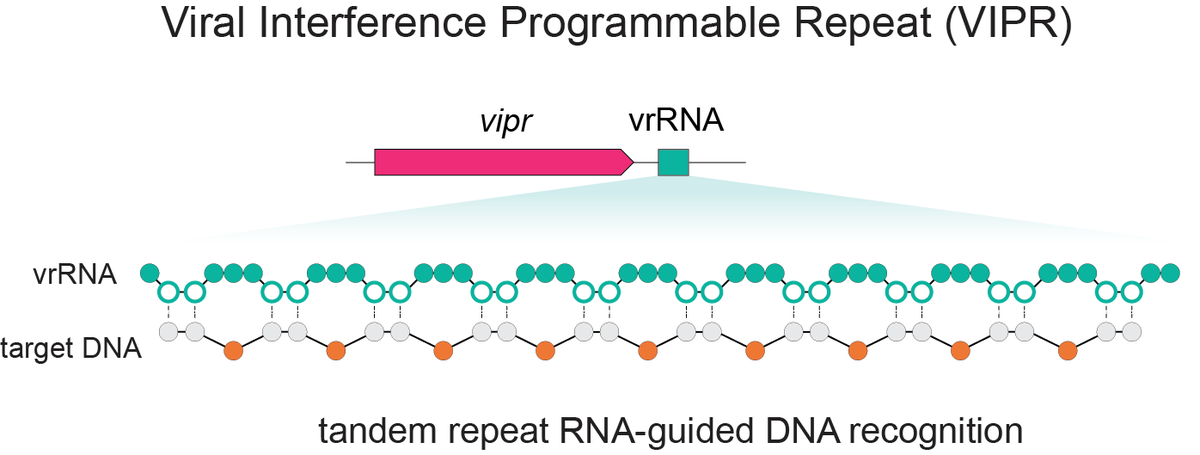
Excited to share our discovery of a new programmable RNA-guided DNA-targeting system hiding inside bacteriophages that predates CRISPR.
We call it VIPR (Viral Interference Programmable Repeat), and it uses an entirely new logic to find its targets.
Thread + link below.
English
A beautiful story on the origins of CRISPR -- congrats to @PeterHYoon @kenjmloi and team!
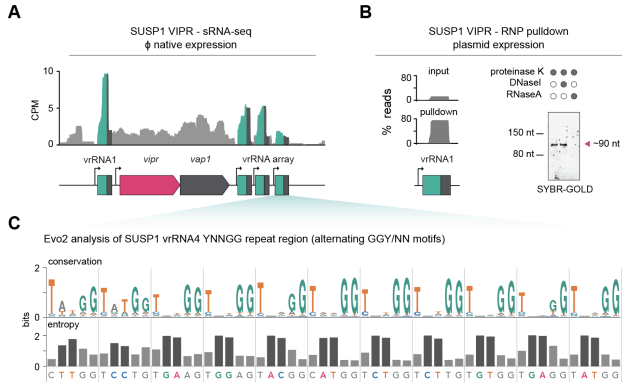
Cool to see the Evo 2 likelihoods being useful for identifying a tricky repeat region.
biorxiv.org/content/10.648…
English
Brian Hie retweetledi

Full-Atom MPNN Based Redesign of Plant Dehydrogenase Enables Thermostability Enhancement Without Loss of Stereoselectivity biorxiv.org/content/10.648… #biorxiv_biochem
English
Brian Hie retweetledi

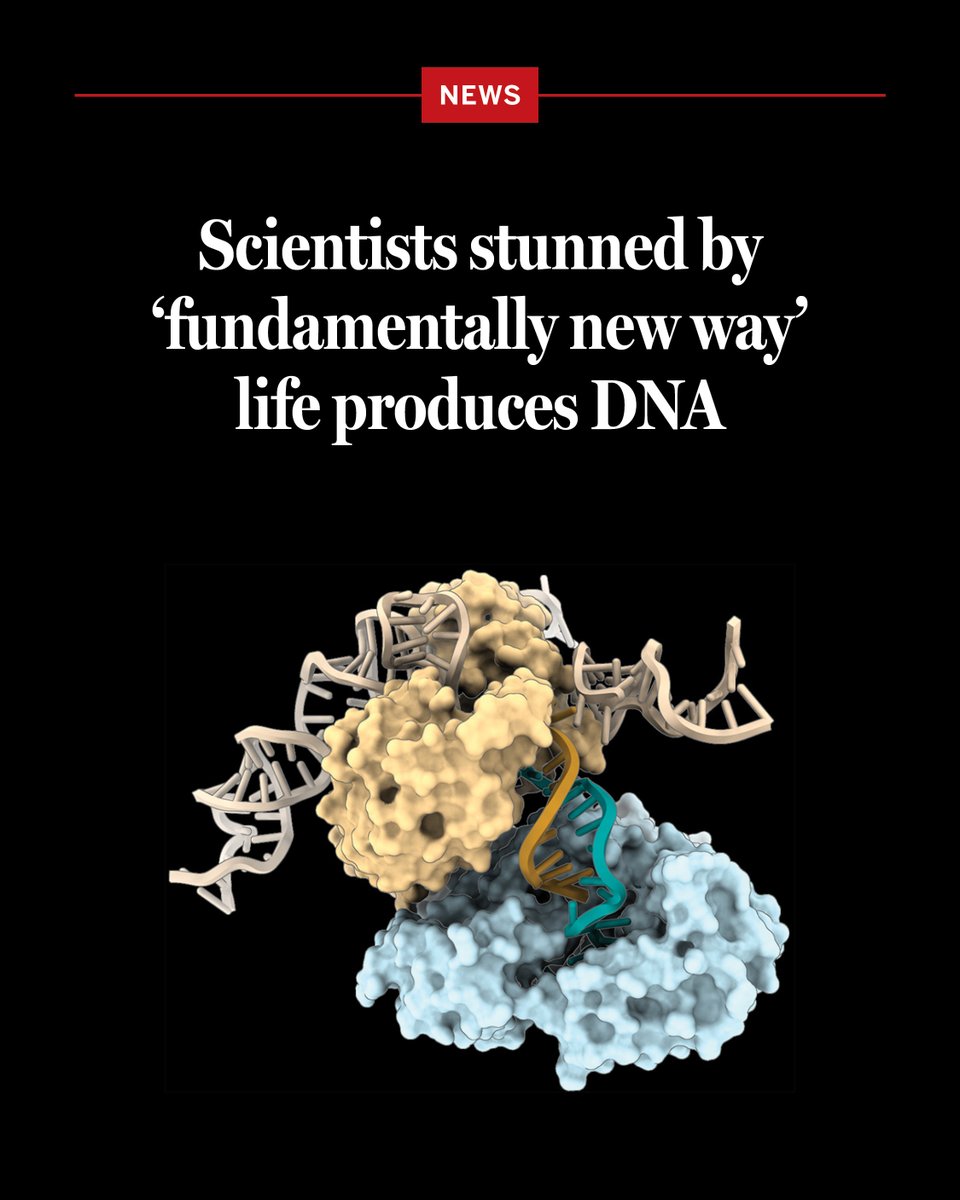
For decades, biology textbooks have enshrined a simple rule: DNA is made by copying a template. After one enzyme unzips a DNA double helix into separate strands, another called a polymerase builds a complementary sequence, base by base, for each strand. Presto: two copies of the original DNA.
But new research into how bacteria defend themselves from viruses now shows this synthesis rule isn’t absolute.
Now, a team describes a bacterial enzyme that synthesizes DNA without a nucleic acid template, using its own structure as a guide.
Learn more: scim.ag/4tN5TBR
English
Brian Hie retweetledi

We just updated our Germinal preprint for de novo antibody-like binder design! Featuring additional scFv designs, extensive experimental validation of epitope specificity and polyreactivity, and CryoEM structure courtesy of Jim Zhang and Bing Rao from Feng Liang's lab.
Xiaojing Gao@SynBioGaoLab
Having often dealt with binder-limited projects, we sought a more accessible source for nanobodies than yeast display or llama. Here we introduce Germinal, computationally designing antibody-like binders with such a hit rate that only tens need to be screened for each target.
English
Brian Hie retweetledi

We @Dyno_Tx gave Claude Mythos Preview our take home interview challenge in collaboration with @AnthropicAI. It performed on par with the best humans we’ve seen since 2019, many of whom went on to found and lead at top AIxBio companies. What does it mean for the future? Read more 👇
English
Brian Hie retweetledi
Brian Hie retweetledi

Excited to share that our latest work building on ESM is now published in @NatureMethods:
A single, sequence-only protein language model achieves state-of-the-art variant effect prediction, surpassing hybrid approaches that use MSA, 3D structure, or population genetics data.
nature.com/articles/s4159…
English
Brian Hie retweetledi

Brian Hie retweetledi

We just expanded the AlphaFold Database to include protein complexes at proteome scale🧩
Together with @GoogleDeepMind, @EMBL & SNU: 31M complex structures predicted across 4,777 proteomes → 1.8M high-confidence structures now live in AFDB.
📄research.nvidia.com/labs/dbr/asset…
English
Brian Hie retweetledi

Aging may feel gradual… but what if it’s not?
In our paper out today, we tracked fish continuously from puberty until death.
This gave us a unique view of how aging unfolds across the adult lifespan.
🧵
English
Brian Hie retweetledi

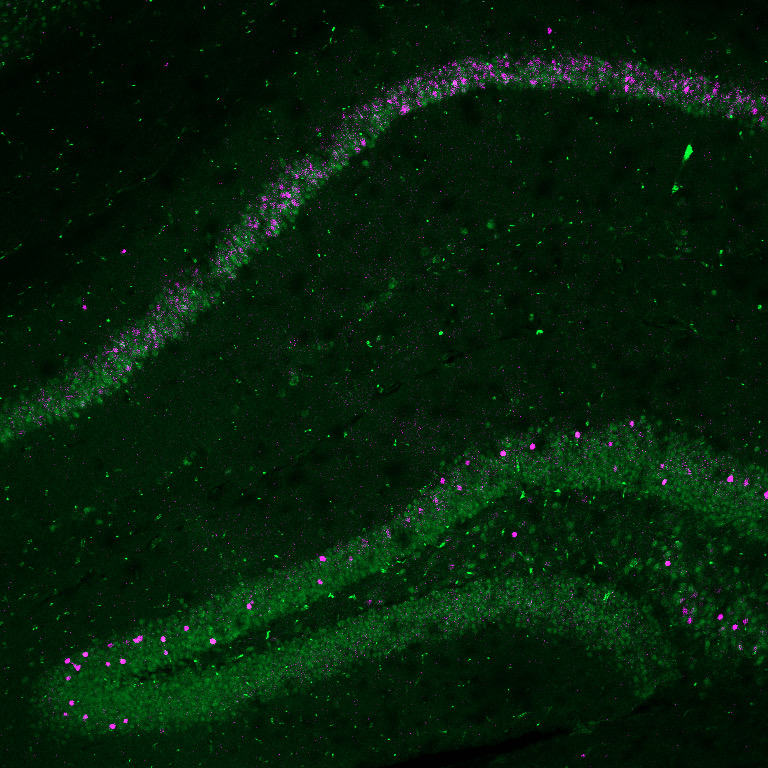
We are excited to present our new study @Nature, led by @DrDrCox and performed in collaboration with the lab of @MaayanLevyPhD, in which we explore the impact of gut-brain axis aging on cognitive decline.
nature.com/articles/s4158…
English


Brian Hie retweetledi

(1/2) Evo 2 is a new AI model trained on 9 trillion DNA base pairs that can predict the impact of disease-causing gene variants and generate realistic DNA sequences across a wide range of organisms.

English
Brian Hie retweetledi

@BrianHie @pdhsu @arcinstitute One practical use of Evo 2 few people have talked about: @jonathanschmok's exon classifier! You can try it yourself, the notebook is on github
github.com/ArcInstitute/e…

English
Brian Hie retweetledi

Not every day nine of your teammates get published in Nature!
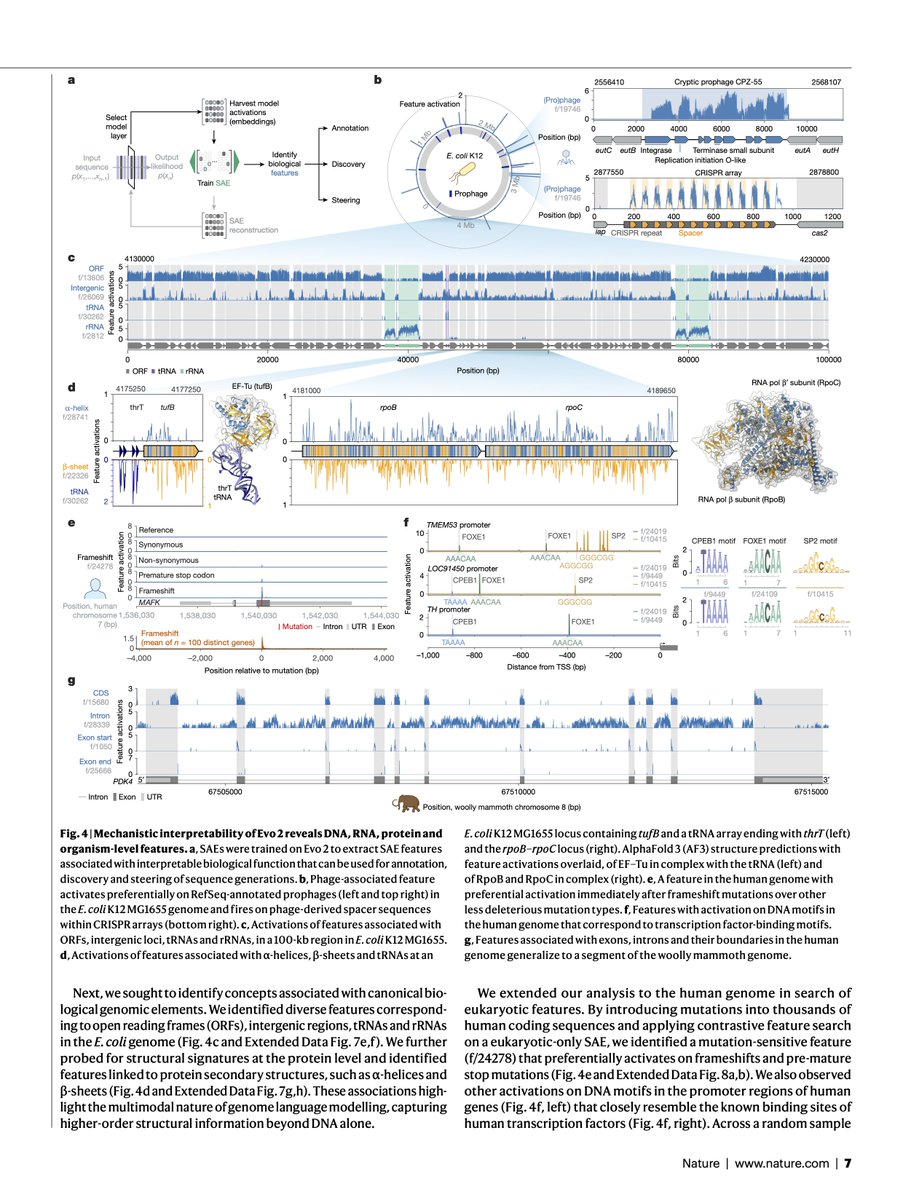
We've been working with Evo 2 since its release, and have found a number of exciting results with our interpretability tools - including discovering numerous biologically relevant features in the model.
Arc Institute@arcinstitute
Evo 2, the largest fully open biological AI model to date, is now published in @Nature.
English
Brian Hie retweetledi

This AI model is trained on trillions of DNA letters from organisms across the tree of life
go.nature.com/3Pgrfsj
English
Brian Hie retweetledi
Nature research paper: Genome modelling and design across all domains of life with Evo 2
go.nature.com/4lbijjV
English