

English
Brian Anderson
757 posts
@briyanandersen
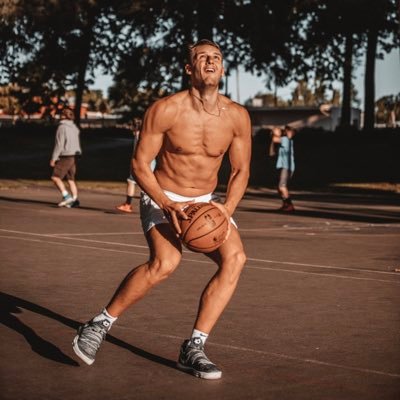
Enjoying the chase.


My FSD is still at 99%. If you have a Tesla with full self driving, and you aren’t using it every day, what are you even doing?
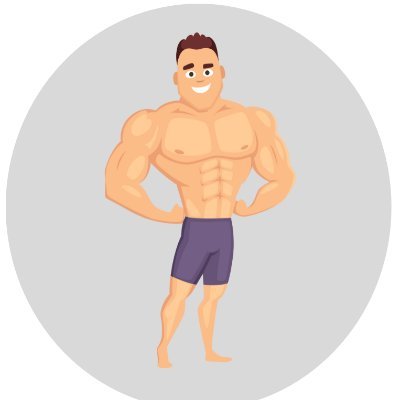
Here’s the thing most people don’t realize about fitness influencers… They aren’t super jacked year round. Most of the photos they post are when they are completely pumped up after a workout, in stage prep for a show and/or on a heavy cycle. Here’s a great example. Been following fitness influencer Dave Lipson for some time now on FB and IG. Actually puts out some great fitness content. The guy is jacked and usually posts pics of himself that most guys will never achieve no matter how much gear they run. He posted a pic of himself at the beach the other day… Looks like a normal, fit guy that work outs. Nothing crazy by any stretch. Just keep this in mind when you are comparing yourself to some of these guys online… Yes, most look great but they don’t always looked stage ready all year long. In other words, you don’t need to look like CBum on stage ever time you take your shirt off this summer.
A new study has revealed something counterintuitive about why VO₂ max declines with age. Between ages 20 and 70, maximal cardiac output falls by 31%. But VO₂ max falls by 46%. The gap between those two numbers reveals that the heart isn't the primary problem. VO₂ max represents the ceiling of oxygen utilization during maximal effort—and it's one of the strongest predictors of longevity and functional independence. For decades, declining cardiac output has been treated as the dominant explanation: the aging heart pumps less blood, so aerobic capacity falls. But the Fick equation splits oxygen consumption into two distinct components: VO₂ = Cardiac Output × Arteriovenous Oxygen Difference Delivery and extraction. If cardiac output explains only part of the decline, something else must be failing at the peripheral level—in the muscles themselves. By late middle age, nearly half of the limitation on VO₂ max is peripheral in origin. In younger adults, roughly 77% of the total limitation is central and 23% peripheral. In older adults, that ratio shifts to 56% central and 44% peripheral. The muscles are catching up to the heart as a source of failure. Oxygen extraction drops dramatically. Skeletal muscle extracts approximately 80% of delivered oxygen at maximal effort in young adults. By ages 75–80, that figure falls to 60%. That's a 20 percentage point decline in a variable that most aging research has historically underemphasized. The peripheral decline reflects four converging biological processes: Sarcopenia preferentially strips mitochondria-rich type II muscle fibers. Mitochondrial density and efficiency decline. Capillary networks thin, increasing diffusion distances. Interstitial changes further impair oxygen movement from blood to cell. None of these is catastrophic alone. Together, they compound into something substantial. The implication: training strategies that only address cardiac output—zone 2 endurance work, for example—miss half the problem. Peripheral oxygen extraction is trainable. But it requires deliberate intervention across multiple modalities. Endurance training is the most reliable builder of capillary networks. Over 8–10 weeks, it produces a 13.3% increase in capillary density and a 15% increase in capillary-to-fiber ratio. HIIT is the most time-efficient route to mitochondrial adaptation. It produces comparable mitochondrial gains to endurance training while requiring substantially less total training time—approximately 1.7 times more efficient for driving mitochondrial remodeling. SIT (sprint interval training) delivers the fastest mitochondrial signal per minute of any modality. When normalized to total training time, SIT generates three to five times greater VO₂ max improvement per hour of exercise than endurance training or HIIT. The tradeoff: capillary density shows no significant average increase with SIT alone, making it a powerful complement rather than a replacement. Meaningful adaptation begins faster than most people assume. Approximately 13.7% of total mitochondrial gains from an endurance training block occur within the first two weeks. Capillary remodeling begins similarly early, though it plateaus around four weeks without progressive increases. The decisions made in the fourth and fifth decades of life shape the physiological ceiling of the seventh and eighth. Aerobic aging is a slow, cumulative process across multiple systems simultaneously. So is the adaptive response to training. The most important variable isn't the perfect modality. It's consistency across the decades during which the oxygen cascade is quietly remodeling in one direction or the other. In this week's Healthspan Research, I analyze how VO₂ max declines with age, how central versus peripheral limitations evolve across the lifespan, and what training interventions can restore oxygen extraction capacity at the muscular level. gethealthspan.com/research/artic…



Is there a definitive answer to this? So much contradictory information. Is running everyday bad for the knees? Is it dependent on bodyweight, running surface, footwear, amount of mileage, running form, intensity....? Running everyday, of course, isn't necessary for health, but if people enjoy it that's their choice.


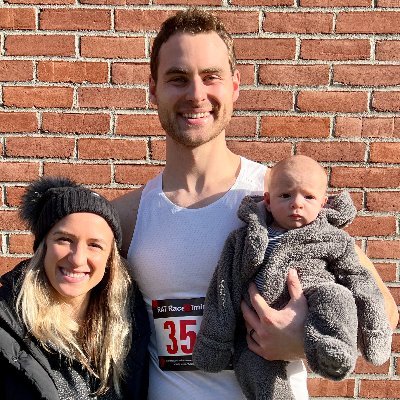


Dr. Roger Seheult just revealed one of the biggest studies on sunlight. A massive Swedish study followed 30,000 women for over 20 years and found that those who actively sought sun exposure had dramatically lower death rates from cancer, heart disease, and all causes. The shocking part? Sun avoiders had roughly double the overall mortality. Even heavy smokers who got plenty of sun had similar death rates to non-smokers who avoided it. Sunlight appears to extend life through vitamin D, nitric oxide, and immune support - yet we're still told to hide from it. Are you getting enough sun? — Dr. Roger Seheult (@RogerSeheult) on Steven Bartlett’s (@StevenBartlett) DOAC podcast
One of the coolest case reports I've seen in a while. A 37 yr amateur athlete completed the Swedish Classic Tetrathlon — 433 km across four sports in 18.5 hours, with helicopter transfers between venues. Scientists tracked everything.


I drink coffee within 10 minutes of waking up, and nothing you say will change that.
