brookschaaf

1.4K posts

brookschaaf

brookschaaf

@brookschaaf

Owner, https://t.co/Wx5R9OvaUg

Austin, TX Katılım Ekim 2007
519 Takip Edilen1.2K Takipçiler
brookschaaf
brookschaaf@brookschaaf·
@glenngabe I don't buy that they've figured out monetization with AIO that's as good as what they already have.
English
0
0
0
30
Glenn Gabe
Glenn Gabe@glenngabe·
Well, that's an interesting quote. :) "Google does a much better job here than anyone else in the world, including Perplexity". And he's right, which is why it will be hard for other AI Search platforms to get people to switch for those types of queries... Then add that Gemini is surging like mad, Google continues to advance AI Mode in Search, etc., and you can see why Google is in a very strong position.
Aravind Srinivas@AravSrinivas

Google is the default search engine on Comet iOS (unlike on Comet desktop): Most mobile browser searches are around navigating to restaurant or local shops, checking scores, shopping, hotels. Google does a much better job here than anyone else in the world, including Perplexity.

English
2
0
6
1.6K
brookschaaf
brookschaaf@brookschaaf·
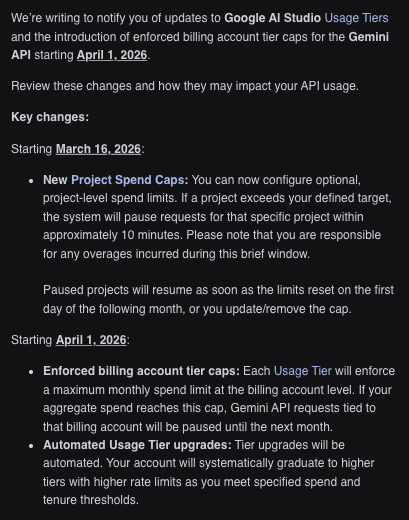
New Gemini Project Spend Caps
brookschaaf tweet media
English
0
0
0
10
brookschaaf
brookschaaf@brookschaaf·
@YengT9 Spain might improve its lifestyle even more if it did something about its rape and crime crisis.
English
0
0
0
43
brookschaaf
brookschaaf@brookschaaf·
@AdtechGod @PublicisGroupe I think this is the power play by holdcos to push back against the walled garden's spend-all-your-money-with-us-without-even-using-an-agency plan.
English
0
0
1
15
AdTechGod ®️🍪
AdTechGod ®️🍪@AdtechGod·
Most marketing teams still measure in silos. Linsey Loy, Head of Strategic Development & Executive Engagement at @PublicisGroupe, explains why unified measurement is now a C-suite priority and how trust, data, and leadership drive real growth. This one is packed with insight for anyone in media, data, or agency leadership.
English
3
1
14
1.3K
brookschaaf
brookschaaf@brookschaaf·
@glenngabe Guess I'll have to upgrade to free to see the action. 😂
English
0
0
1
4
Glenn Gabe
Glenn Gabe@glenngabe·
@brookschaaf No ads run on paid accounts. They only run on free or go accounts. I have multiple accounts for testing. Couldn't spot any ads at all forever.... until today. Now a ton (on one of my free accounts).
English
1
0
1
50
Glenn Gabe
Glenn Gabe@glenngabe·
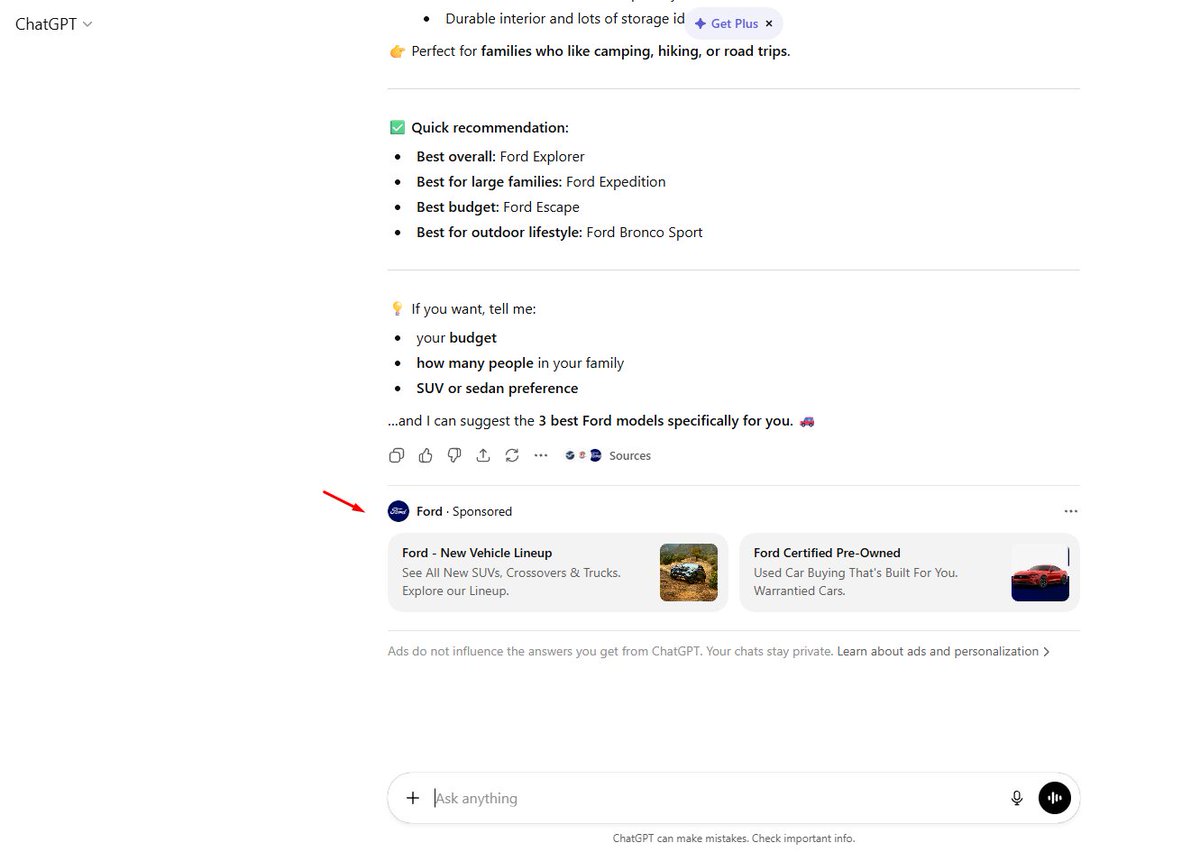
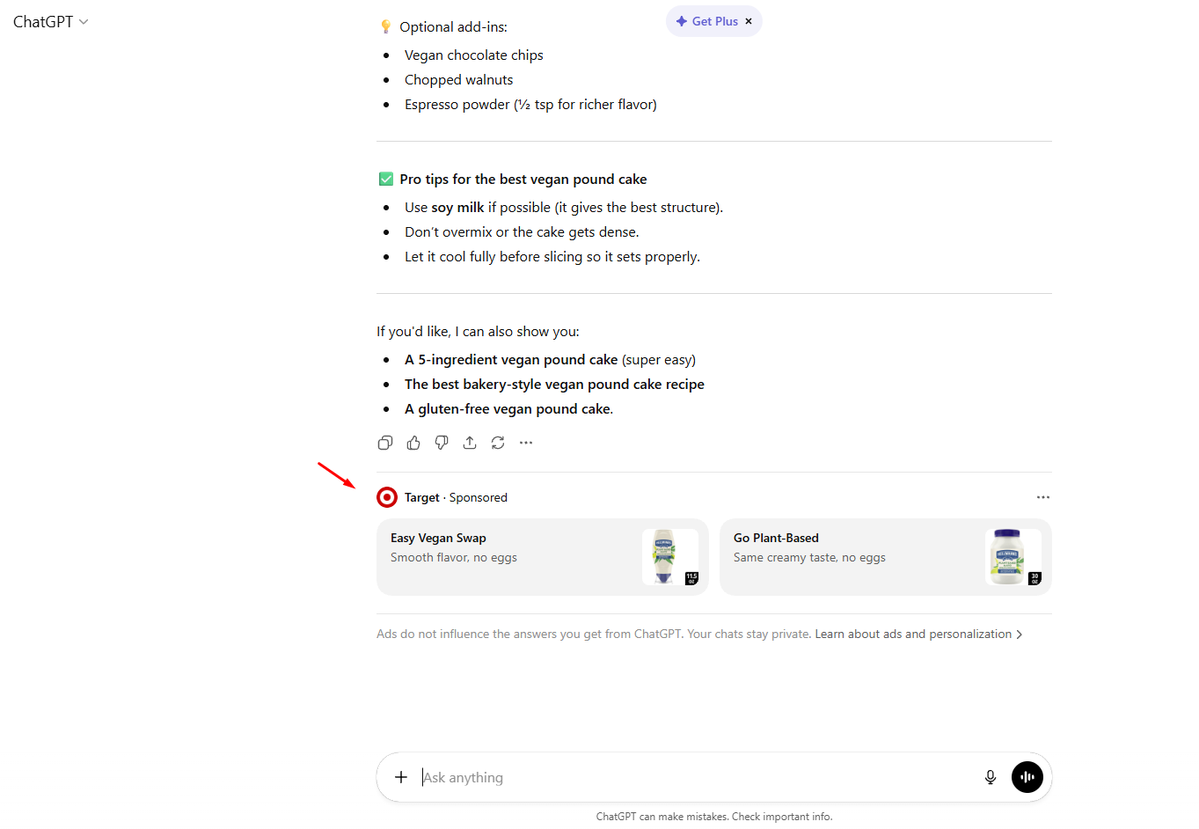
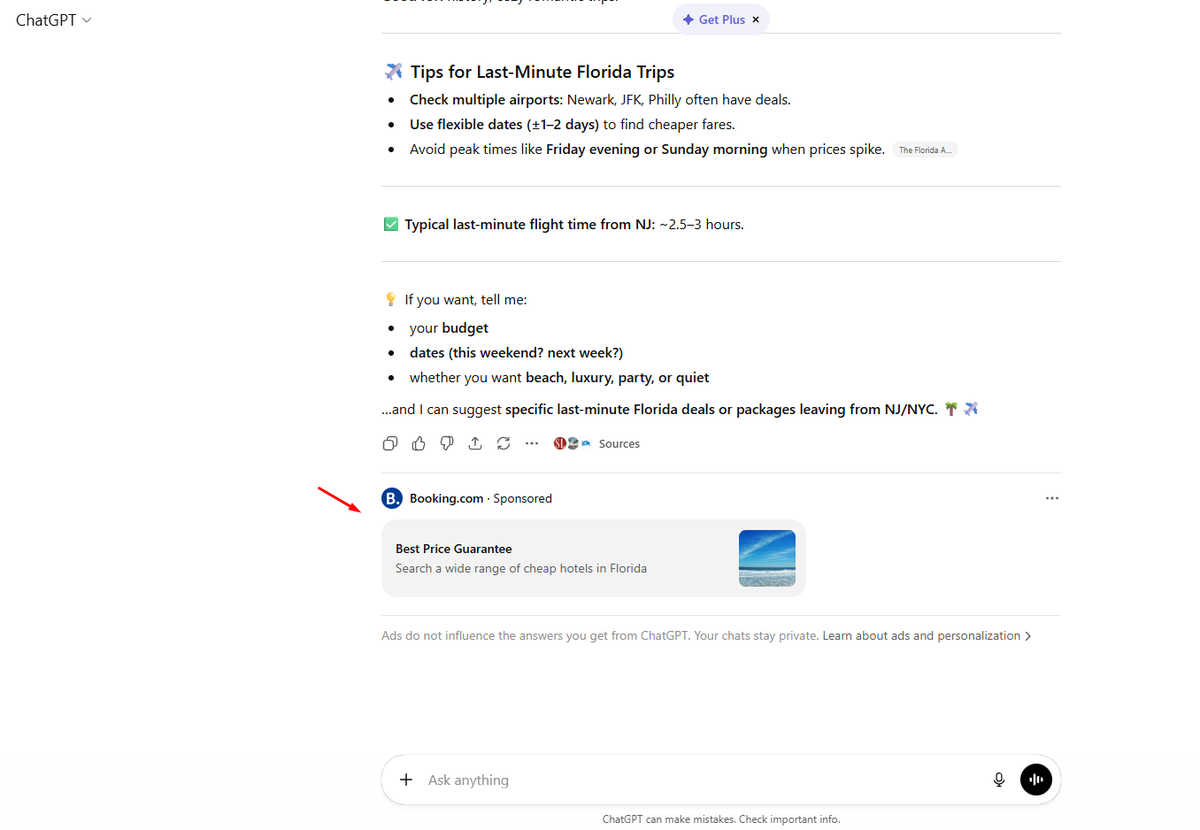
OK, I just spotted Bigfoot :) I finally started seeing ads this morning in ChatGPT, and a number of them. So OpenAI is definitely ramping up ads... They aren't particularly exciting and some weren't really targeted, but hey, at least I finally spotted some. Also, on Saturday I shared they are working on Ads Manager which is essential for any modern ad platform... Seems basic now but I guess they have to start somewhere. Here are some ads I caught this AM.
Glenn Gabe tweet mediaGlenn Gabe tweet mediaGlenn Gabe tweet media
English
8
1
29
4.7K
brookschaaf
brookschaaf@brookschaaf·
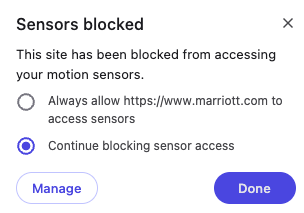
First time I've seen this. Brave browser blocked it.
brookschaaf tweet media
English
0
0
0
61
brookschaaf retweetledi
Mark Gadala-Maria
Mark Gadala-Maria@markgadala·
This is wild. 143 million people thought they were catching Pokémon. They were actually building one of the largest real-world visual datasets in AI history. Niantic just disclosed that photos and AR scans collected through Pokémon Go have produced a dataset of over 30 billion real-world images. The company is now using that data to power visual navigation AI for delivery robots. Players didn't just walk around with their phones. They scanned landmarks, storefronts, parks, and sidewalks from every angle, at every time of day, in lighting and weather conditions that staged photography would never capture. They documented the physical world at a scale no mapping company with a fleet of vehicles could have replicated on the same timeline or budget. Niantic collected this systematically, data point by data point, across eight years, while users thought the only thing at stake was catching a rare Charizard. The most valuable AI training datasets in the world aren't being assembled in data centers. They're being built by people who have no idea they're building them.
NewsForce@Newsforce

POKÉMON GO PLAYERS TRAINED 30 BILLION IMAGE AI MAP Niantic says photos and scans collected through Pokémon Go and its AR apps have produced a massive dataset of more than 30 billion real-world images. The company is now using that data to power visual navigation for delivery robots, letting them identify exact locations on city streets without relying on GPS. Source: NewsForce

English
2.2K
24.4K
107.3K
13.9M
brookschaaf retweetledi
Secrets of Privacy | Make Yourself a Harder Target
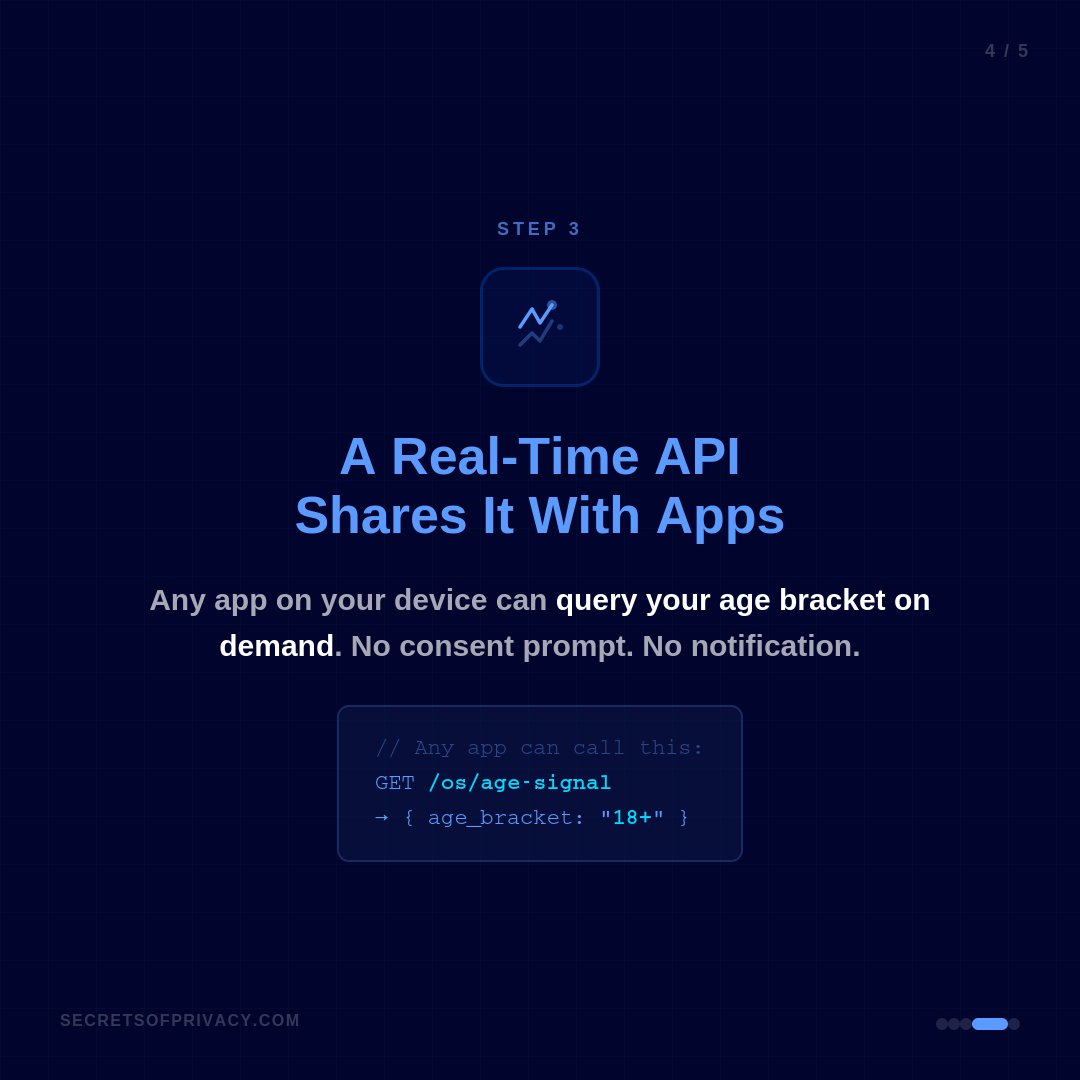
Mark Zuckerberg keeps telling lawmakers and jurors that Apple and Google should verify everyone's age at the operating system level. ➡️ He said it under oath last month in Los Angeles. ➡️ Meta, X, and Snap sent a joint letter to South Dakota legislators saying the same thing. ➡️ Meta's youth safety policy director has testified in multiple state hearings pushing this approach. The framing is always about protecting kids. But look at what OS-level age verification actually builds. First, it moves legal liability off Meta. Zuckerberg is facing 1,600+ lawsuits alleging Instagram harmed minors. If Apple and Google own age enforcement, Meta's lawyers get to point at Cupertino and Mountain View when enforcement fails. Google's own director of government affairs called this out: "fast-moving legislative proposals being pushed by Meta and other companies in an effort to offload their own responsibilities." Second (and few people are talking about this) it gives Meta better data. California's AB 1043 (effective Jan 2027) requires operating systems to sort every user into an age bracket at setup and expose that data to any app via real-time API. Colorado's SB26-051 does the same. Right now Meta relies on self-reported birthdates for age data. Their own internal documents showed millions of underage users slipping through. An OS-verified age signal, potentially backed by government ID or biometrics, gives Meta a high-confidence demographic data point for every user, on every device, delivered via API, at zero implementation cost to Meta. They don't build the system. They don't store the IDs. They don't take the PR hit. They just read the signal and feed it into the ad targeting machine that generates $130B+ in annual revenue. Meta gets identity infrastructure without the surveillance optics. The IAPP noted that OS-level verification forces all users to unmask. Which overrides the possibility of anonymous interaction with the device itself. Every app that queries that API benefits. So when Zuckerberg says age verification at the phone level is "just a lot cleaner," he's right. It's very clean. For him.
Secrets of Privacy | Make Yourself a Harder Target tweet mediaSecrets of Privacy | Make Yourself a Harder Target tweet mediaSecrets of Privacy | Make Yourself a Harder Target tweet mediaSecrets of Privacy | Make Yourself a Harder Target tweet media
English
34
205
628
105.9K
brookschaaf
brookschaaf@brookschaaf·
Is there a name for ChatGPT behavior? Chat-bait?
brookschaaf tweet media
English
0
0
0
19
brookschaaf
brookschaaf@brookschaaf·
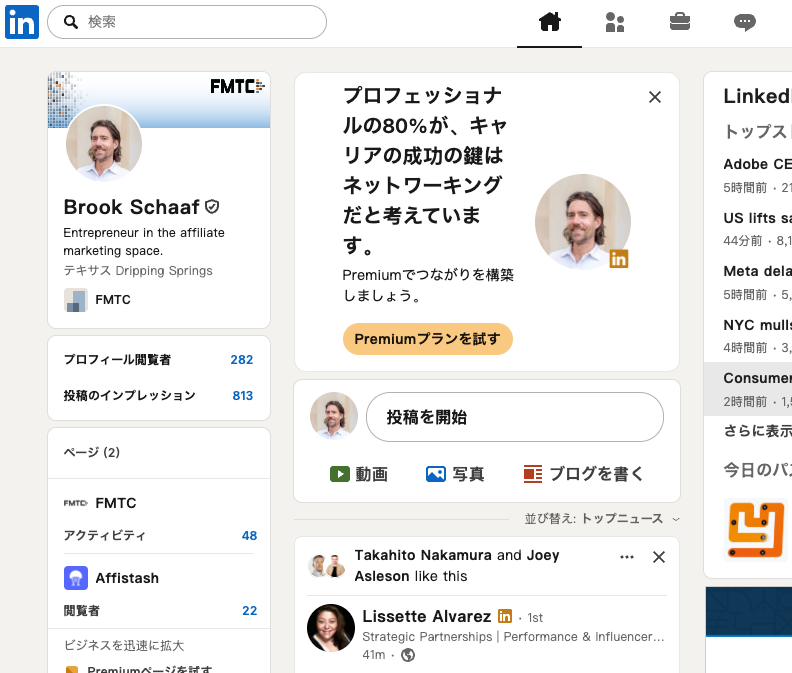
Probably need to check my VPN settings.
brookschaaf tweet media
English
0
0
0
17
brookschaaf
brookschaaf@brookschaaf·
A stand up comic used to express his relief when he saw Oprah on the cover of O each month.
Cyrus SEO@CyrusShepard

The data is in. The most cited source in Google AI mode is... Google! Congrats? 👏 Second place goes to YouTube (also Google) 👏 👏 The study from @SERanking looked at 68,313 keywords and 1,321,398 citations While it's challenging that so many clicks aren't going to traditional publishers, the silver lining is that so many citation sources can be influenced by the marketing team: • YouTube (work those transcripts) • Facebook • Reddit • Amazon (reviews) • Instagram • Wikipedia (harder, but doable) For the full study, Google "Is Google stealing your clicks in AI Mode? (1.3M+ citations analyzed)" What's your view on citations in Google's AI mode?

English
0
0
1
34
brookschaaf retweetledi
Jan-Willem Bobbink
Jan-Willem Bobbink@jbobbink·
94% of AI citations come from non-paid sources. Gartner is telling CMOs to double their PR budgets by 2027. Gartner just published their 2026 comms predictions. The headline: PR and earned media budgets will double by 2027 as LLMs replace traditional search. They're telling CMOs to reallocate spending from paid channels toward PR and earned media because that's what AI answer engines actually cite. Data backs this up. Muck Rack analyzed over a 1M links cited by ChatGPT, Claude, Gemini, and Perplexity. Around 94% of those citations come from non-paid sources. Earned media alone accounts for 82%. Journalism makes up 20 to 30% of all AI citations depending on the time period. Paid placements and advertising barely register. Semrush found that visitors arriving from AI search convert at 4.4 times the rate of traditional organic search visitors. That number comes from analysis of 500+ topics in digital marketing and SEO verticals specifically, so the exact multiplier will vary by industry. The direction is clear. There is a recency factor too. Muck Rack's February 2026 update found that more than half of all AI citations come from content published in the last 12 months. The highest citation rate occurs within seven days of publication. Press release citations alone grew 5x between July and December 2025. AI systems are actively prioritizing fresh content over older material. That recency signal matters for SEOs. This is not a one-time optimization play. It requires ongoing editorial presence. When CMOs start doubling their earned media budgets, that money has to come from somewhere. Gartner explicitly says to reallocate from paid. But in their 2025 CMO Spend Survey, paid media was already at 30.6% of total marketing spend. If earned media doubles, the budget pressure will hit every digital channel. Including SEO. We have spent two decades building an industry around optimizing for Google's algorithm. Now the discovery layer is fragmenting across a dozen AI systems that each weigh signals differently. And the signal they all seem to agree on is third-party editorial validation. Not backlinks. Not technical SEO. Editorial trust. Across analytics data from hundreds of properties, the pattern is consistent. Sites gaining visibility in AI-driven discovery are the ones with genuine brand authority and regular editorial coverage. Not the ones with the cleanest technical audits. Technical SEO is not dead. But it is no longer enough on its own. If your entire strategy is optimizing for crawlers and you are ignoring how AI systems evaluate brand trust, you are building on a foundation that is shifting. The PR industry just got handed the playbook that used to be ours. The smartest SEOs will learn from it. Sources: - Gartner, Top Predictions to Inform 2026 Comms Strategies (Feb 2026) - Muck Rack, What Is AI Reading? report (Feb 2026) - Gartner, 2025 CMO Spend Survey (May 2025) - Semrush, We Studied the Impact of AI Search on SEO Traffic (Jul 2025)
English
13
31
225
35.1K