brustkern.eth 🏴

2.5K posts

brustkern.eth 🏴 banner
brustkern.eth 🏴

brustkern.eth 🏴

@brustkern

We are at the intersection of traditional finance, fintech, DeFi and AI. What an incredible time to be a builder.

Denver, CO Katılım Nisan 2008
836 Takip Edilen1.4K Takipçiler
Trevor Jones 🎨
Trevor Jones 🎨@trevorjonesart·
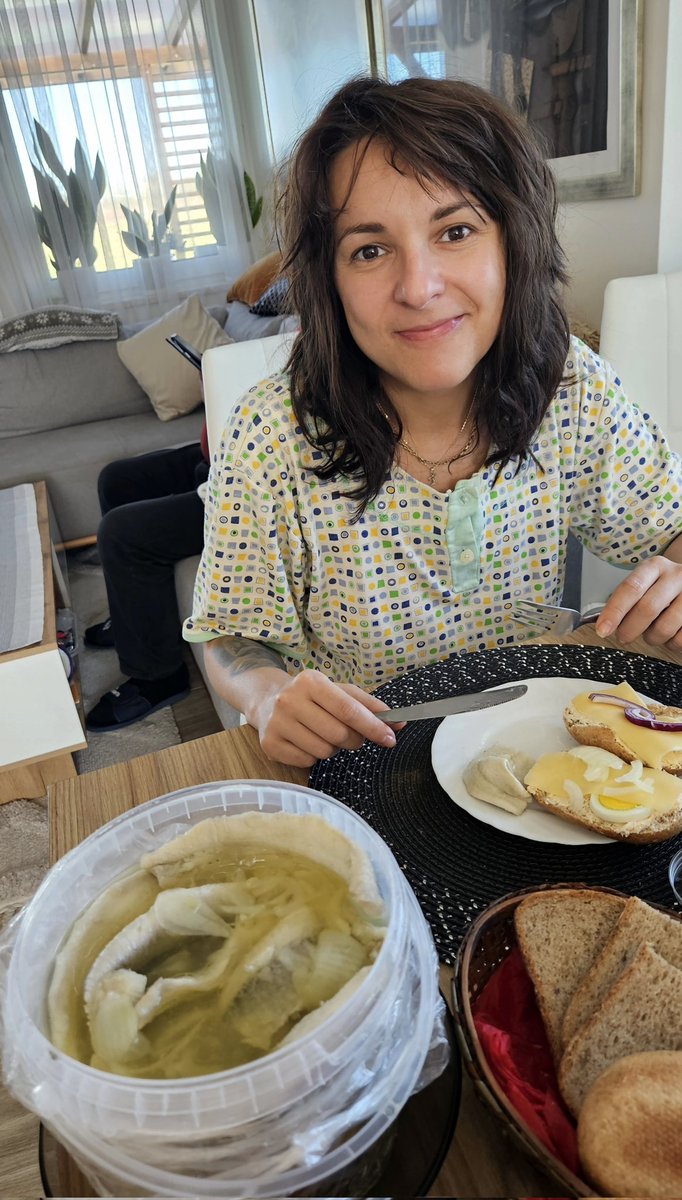
The Polish and their fish for breakfast. 🤮 Happy Easter Friday everyone 🕊 What are your food plans for the Easter weekend?
Trevor Jones 🎨 tweet media
English
33
6
128
4.7K
Trevor Jones 🎨
Trevor Jones 🎨@trevorjonesart·
Another Bitcoin ATH coming in 🚀 Guesses on when we'll hit $77,777 and who'll win the Bitcoin Angel hodler portrait drawing and 1/1 NFT?
Trevor Jones 🎨 tweet media
English
33
24
163
6.4K
frogmonkee
frogmonkee@frogmonkee·
I love it when the whole squad wins. If you're reading this, you're in my squad.
English
18
3
114
4.5K
Tedrick
Tedrick@christedrick·
@LexSokolin It's interesting to see the airdrop allocations being experimented with, and I'm curious to see how points play into this in the future.
English
1
0
1
30
Lex Sokolin | Generative Ventures
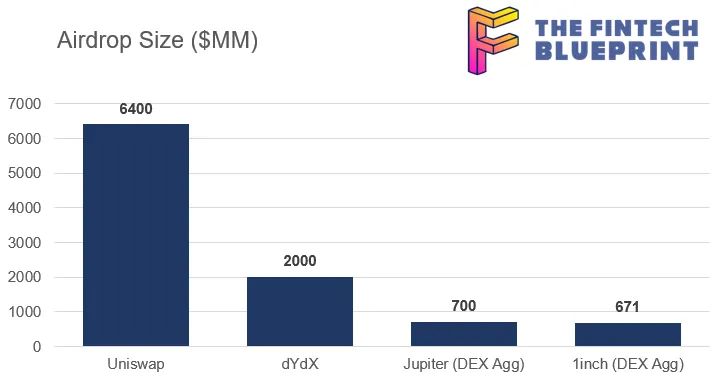
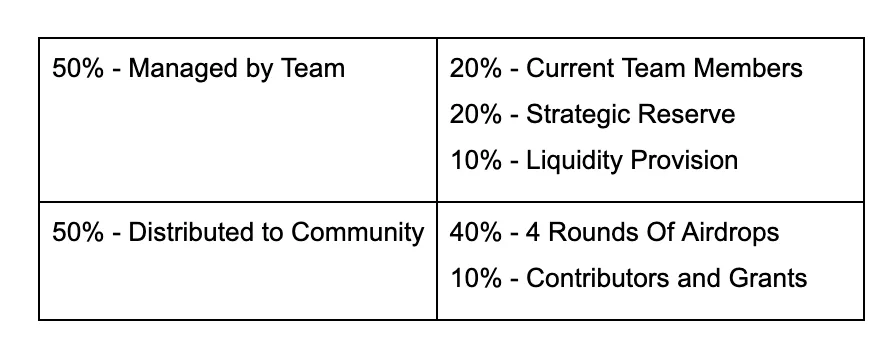
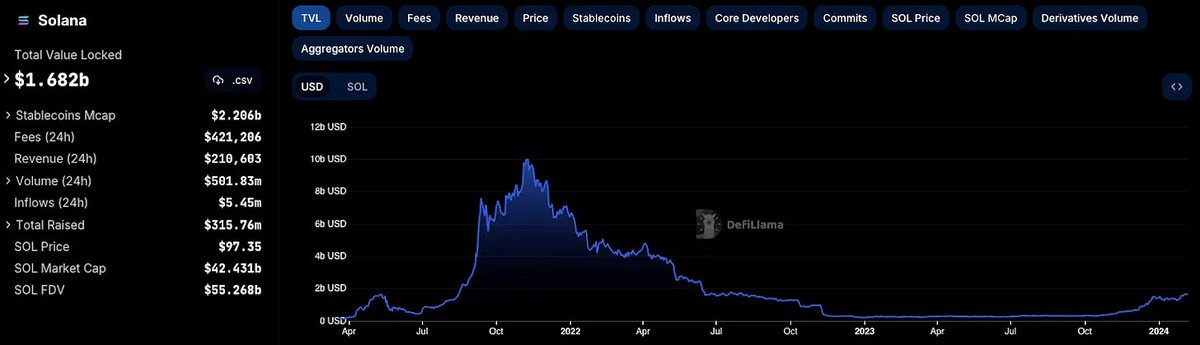
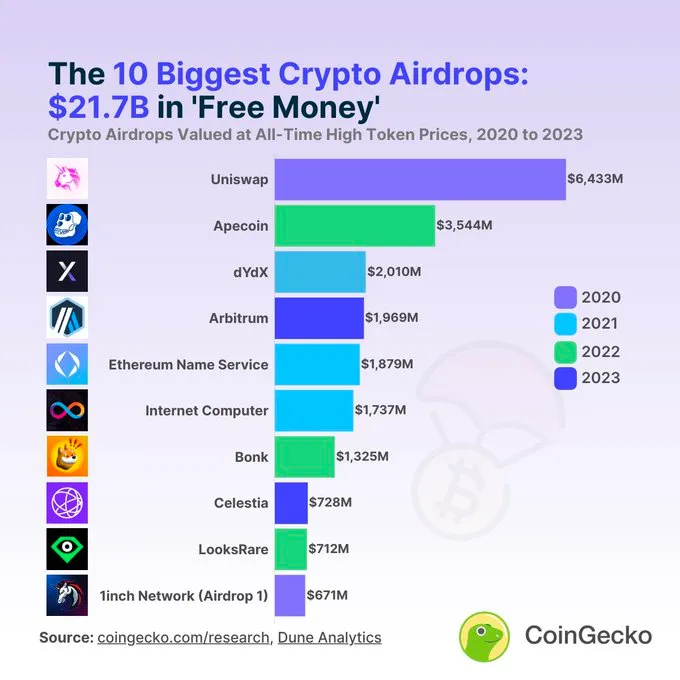
Last week Solana witnessed the biggest airdrop in its history. Jupiter, the leading Solana decentralized exchange aggregator (i.e an application that enables users to find the best prices across all Solana DEXs), accounting for 27% of Solana DEX users, airdropped $700MM in its native JUP token to its community. Assuming all-time high token prices, this ranks Jupiter as the tenth biggest airdrop of all time, with the only DEXs ranking ahead being Uniswap ($6.4B UNI airdropped) and dYdX ($2B DYDX airdropped). If we look specifically at DEX aggregators, Jupiter just about trumps 1inch’s $671MM airdrop to become the largest airdrop in its niche — no easy feat, given that 1inch accounted for 64% of the Ethereum DEX aggregator market in Q4 2023. Jupiter currently accounts for 63% of all DEX volume on Solana, a particularly large amount given that Solana overtook Ethereum for the first time in 7-day DEX volume in December 202 — totaling $10.1B compared to $8.8B. This is due to the growth of Solana in the past few months, spurred by memecoins, like BONK and Dogwifhat, and more users exploring the Solana ecosystem due to its lower fees and transaction times compared to Ethereum. Despite the rise of Solana, it is worth noting that SOL’s market cap sits at $41B vs. ETH at a $285B market cap, which we largely attribute to the developer popularity of ETH and its considerably larger ecosystem of dapps. See our analysis here. Diving into the tokenomics, Jupiter has split the token supply 50:50 between team and community. The team allocation is divided between current team members (20%), strategic reserves for new hires and investors (20%), and liquidity provisioning for the token (10%). The community allocation is split between airdrops (40%), which will be distributed across four rounds to motivate continuous growth, and grants (10%). At first glance, the team allocation, when accounting for the strategic reserves, is high. The community allocations may also seem relatively high. However, we appreciate how they are broken into four rounds designed to incentivize future growth. This is similar to Optimism’s airdrop approach, which has undoubtedly been successful when one considers that its native token’s market cap is a third higher than Arbitrum’s despite having half the market share. What we also like about the community allocations is that the first airdrop distributed 10% of the tokens as follows — 2% evenly distributed to all wallets, 7% distributed based on a tiered score based on adjusted volume, and 1% to community members on Discord and X. Distributing tokens evenly, while not necessarily a meritocracy, is an inclusive mechanism for all users, rather than benefiting airdrop farmers that are likely to move onto the next project after receiving and selling their tokens. These smaller, real users now have a vested interest in Jupiter doing well and are incentivized to continue using it in the hope of future airdrops and appreciation of their JUP token holdings. The airdrop has overall been successful, despite the token itself being limited to governance capabilities only. Tokenomics aside, key to its success has been the burgeoning interest in the Solana ecosystem, which has grown from $260MM in TVL to $1.7B in the past year, coupled with Jupiter’s dominance in the Solana DEX space. Despite these wins for Solana, we received a reminder about its greatest pitfall this week — the blockchain went down for 5 hours, the largest outage since its two-day stoppage in February 2023, due to currently unknown causes. There is profound work to be done on decentralization if Solana is to remove such points of failure and compete with Ethereum.
Lex Sokolin | Generative Ventures tweet mediaLex Sokolin | Generative Ventures tweet mediaLex Sokolin | Generative Ventures tweet mediaLex Sokolin | Generative Ventures tweet media
English
3
3
9
1K
brustkern.eth 🏴 retweetledi
Lex Sokolin | Generative Ventures
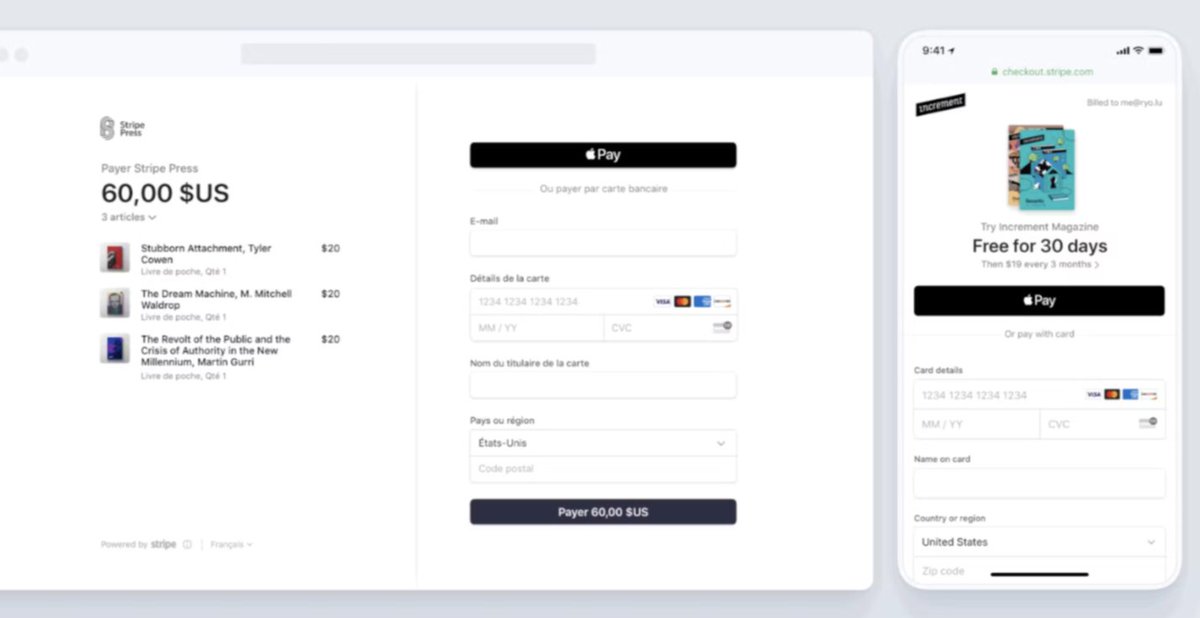
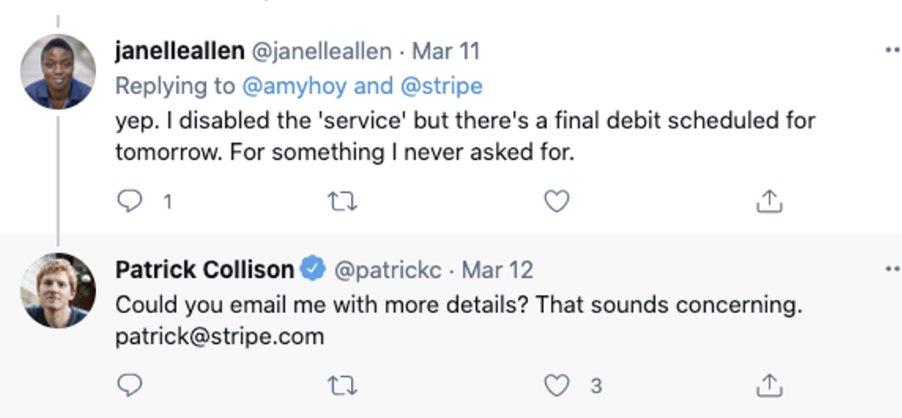
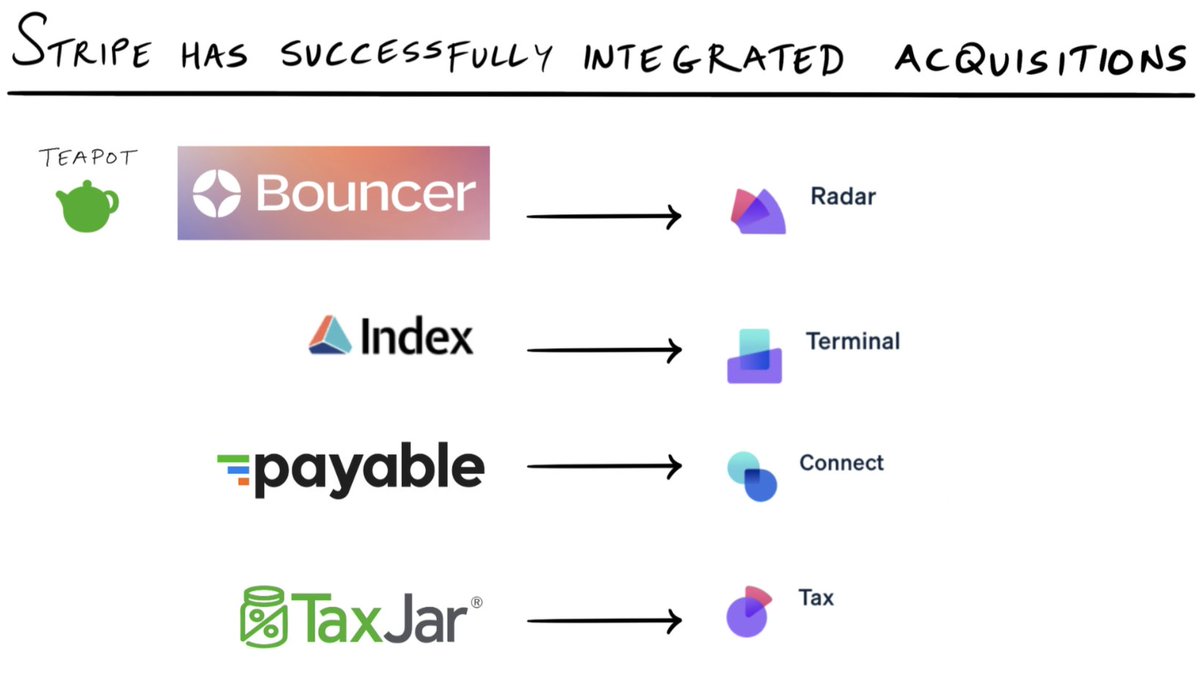
These 2 college kids made a $50B company from their dorm room. Stripe is Silicon Valley’s most valuable Fintech with quarterly sales of ~$1B. They started it all with just 7 lines of code. Here are the top 8 takeaways for every entrepreneur 👇 1. Keep Product Simple 📱 Stripe aims to be the "economic infrastructure for the internet". Before they entered the game, integrating payments was a BIG coding challenge. Their API is extremely easy to integrate with websites. Its integration takes a max of ~1-3 months and supports: - 135+ currencies - 47 countries Their core offering is the "Payments" business. What's that? Basically, an API to accept online payments. But, they went one step ahead. Launched "Stripe Checkout". A prebuilt checkout page to ingest this information is hosted on Stripe’s servers & works for both desktop and mobile. It gives the business a prebuilt checkout page that: • Works on desktop & mobile in 30+ languages • Automatically avoids common checkout flow errors • Is extremely customizable with custom colors & fonts Here is the page👇 2. Design Strategy from User Feedback 💁🏻‍♂️ In an interview, one of their employees said that building products at Stripe was easy. Why? "Because users always told them what they wanted to see next" From the very beginning, Stripe has been built with close communication with their customers. Now, one thing that works in Stripe’s favor is their customers are often technical engineers building companies or managing payment systems. Such an audience is very well-suited to provide pointed feedback. This is encouraged by great leadership. Patrick consistently responds to user requests himself, asking genuine questions on how to help them. Look how Patrick responded👇 3. Be 100% Transparent ✅ In Stripe’s early days, every employee was blind copied on every SINGLE mail📧 "This meant that every employee could see what Patrick said to John and inversely, Patrick could see what a customer sales rep sent to a customer." This form of painful transparency not only maintained pristine standards of work but also made them open to A LOT of feedback. Employees would correct each other’s grammar, delivery, and even their spelling. They follow the same rules for their pricing. Stripe charges a uniform fee of 2.9% + $0.30 per transaction with no monthly fees or service charges. Paypal also charges the same amount but it has a complex fee structure (including service charges, cross-border fees, etc) which makes it much more expensive. On top of that, there are no additional charges for failed transactions. *rare in the industry* Such transparency keeps things simple to understand for the consumer and makes the onboarding process as smooth as butter. The fewer questions a customer has to ask, the better. 4. Smartly Acquire & Expand 🤝 They have been smart in acquiring companies to improve their offerings. "Stripe has acquired ~14 companies and used funding strategically" - OpenChannel: Helped launch Stripe App Marketplace - PayStack & Touchtech: Helped expand global reach - BBPOS: Improved point-of-sale hardware They have been AGGRESSIVE acquirers. Here is how they integrated the acquisitions👇 And not just acquisitions, Stripe has partnered with many large, industry defining businesses. It is now used by companies like • Amazon • Shopify • Zoom • Slack & many more... 5. Have a LARGER Vision 🌍 Stripe’s dream is much bigger than just themselves. Their vision: “To increase the GDP of the internet". A company with this industry role needs a leader as strong as its ambition. Patrick, before founding Stripe, already had $5M on his hands from selling his company “Automatic”. He had great connections from Y Combinator and even knew Paul Graham. In fact, the very first funding came from Y Combinator. Before the worldwide success, Elon Musk was ready to invest in Stripe in 2011. This does not happen no matter what company you run. It's a matter of HOW you run it. Patrick’s view on the company's mission? “Stripe is not just a capitalist enterprise, but an endeavor to drive humanity forward.” The intent behind what you do matters! If someone was in it to make a quick buck then they would have exited the market as soon as they got $5M on their hands. This need for Patrick to constantly innovate is what keeps the made them Number 1 in the business. He still interacts with users on social media, responding to support issues with invitations for customers to email him directly. Ultimately, this “no job too small” mentality is what makes a difference between a dead startup and a successful one. 6. Innovative GTM 📈 Stripe didn't have traditional outbound sales. In the starting, they didn't sell to companies. Instead, they were selling to *developers*. They knew the problem and they knew who was facing the problem. It was the tech guys. Interestingly, it worked for them because purchasing decisions, just like picking a payment provider, were increasingly made by developers. One founder puts it like this: “Stripe offered an alternative to PayPal and Authorize that was so much easier to implement that developers around the world were naturally inclined to use it.” 7. Adding more Services 🛠️ They also went on to add multiple services. They wanted to add on everything related to financial infrastructure to increase market dominance. Stripe had launched 2 products in its first 5 years; it has launched way more in the last 5! "Once customers purchase Stripe payments, Stripe’s other services make sure that the customer never has to go to anybody else for their payments again" They have so far launched a total of 20 solutions *as per their website* 8. Prioritizing Data Security 🔐 Stripe understood the MASSIVE need for fraud detection, card issuing, financing, and more... They eventually started introducing ways that solved all these problems. What did they do? i) Used the highest level of encryption for all transactions to prevent hijacking Ensured browsers & web apps interacting with Stripe's website or products used an HTTPS connection to prevent breaches. ii) Stored transaction data so companies don’t have to worry about data security They allowed the users to control their own data by: • Requiring explicit consent before data sharing • Letting them view and delete their data iii) Encrypted sensitive data both in transit & at rest Stripe’s infra for storing, decrypting, and transmitting sensitive data is completely separate! They don't share any credentials with the rest of their services. That's how they've been dealing with the security of massive payment data... When you bring together this alchemy of fintech entrepreneurship, $100B is just the start.
Lex Sokolin | Generative Ventures tweet mediaLex Sokolin | Generative Ventures tweet mediaLex Sokolin | Generative Ventures tweet mediaLex Sokolin | Generative Ventures tweet media
English
4
19
90
8.8K
brustkern.eth 🏴 retweetledi
griptape
griptape@griptapeai·
Take your Python skills to new heights! 🛹 Who said snakes couldn't skate in the clouds? 🌥️ Apply for Early Access to our Griptape Cloud, if you want to deploy, manage, and scale 🐍 AI apps that connect securely to your data stores and APIs. Click the link below to apply! webforms.pipedrive.com/f/6k34Wv0Ye945…
griptape tweet media
English
0
6
3
543
brustkern.eth 🏴 retweetledi
griptape
griptape@griptapeai·
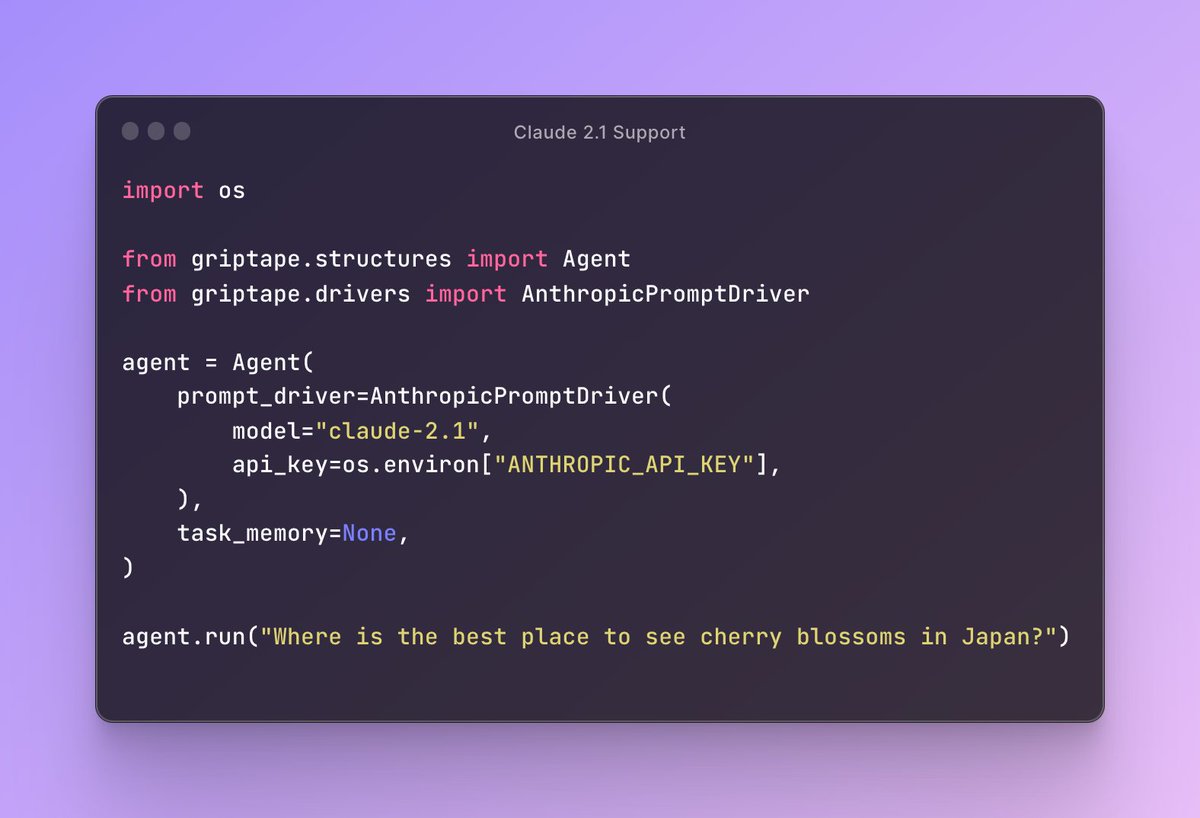
Another feature our new update supports is Anthropic Claude 2.1 in the #AnthropicPromptDriver (for models hosted by Anthropic) and #BedrockClaudePromptModelDriver (for models hosted by Amazon Bedrock). Specify claude-2.1 in the model field to use this version of the model:
griptape tweet media
English
0
3
3
263
brustkern.eth 🏴 retweetledi
Lex Sokolin | Generative Ventures
These 2 guys became Estonia’s first-ever billionaires. Kristo & Taavet founded WISE to make international fund transfers cheap and easy. In 12 years, WISE has/is: - 10M+ users with $1.1B revenue - London's biggest tech IPO The Breakdown of how they did it 🧵
Lex Sokolin | Generative Ventures tweet media
English
12
32
106
34.6K
brustkern.eth 🏴
brustkern.eth 🏴@brustkern·
I spoke with an industry expert today who said that middleware like what @griptapeai is building is a massive and crucial need right now. Kudos to the team for pushing the framework forward.
griptape@griptapeai

Hey Griptapers! We’re super excited to share the latest update of Griptape, version v0.21.0! This update packs a punch with new features, significant improvements, and some important changes. This release includes the introduction of Image Generation Drivers (OpenAI DALL-E, Azure @OpenAI DALL-E, @leonardoai , @awscloud Bedrock Stable Diffusion, and Amazon Bedrock Titan Generator), @huggingface Hub Embedding Driver, streaming functionality, and prompt Inspection capabilities. Check out our latest blog post! griptape.ai/blog/griptape-…

English
0
0
2
162
frogmonkee
frogmonkee@frogmonkee·
Dear people that are not listening to music/podcasts/audiobooks at every available moment of silence, wtf is wrong with you?
English
8
0
14
2.6K
brustkern.eth 🏴
brustkern.eth 🏴@brustkern·
@StockJabber Phenomenal advice. Really appreciate the playbook! Will do our best to repay you in kind when we learn our own hacks, tricks and optimizations.
English
0
0
0
103
Edwin Dorsey
Edwin Dorsey@StockJabber·
Launching a Substack changed my life. After three years: 🙏 ~1,100 paid subscribers 🎉 ~40,000 free subscribers 🤯 ~$500k ARR For anyone thinking about launching a newsletter, here’s everything I’ve learned
Edwin Dorsey tweet media
English
108
208
2.5K
1.7M
brustkern.eth 🏴
brustkern.eth 🏴@brustkern·
Support innovation through the future of financial services infrastructure: blockchain, crypto & web3. Your voice matters. Join now. actnow.io/z31xN5P
English
0
0
6
184