BryanPunkEcon retweetledi

“The most unresolved problem of the day is precisely the problem that concerned the founders of this nation: how to limit the scope and power of government.”
— Milton Friedman

English
BryanPunkEcon
3.8K posts


@bryanstrummer
TradeRocker 🎸 Punk Lover | Write when you find some interesting cheap flights!




The % of workers who plan to quit their jobs has fallen to its lowest level since the start of the NY Fed's survey.



A big part of the problem we have is that I don't believe the human brain is able to comprehend or visualize these levels of inequality


What is the most important economics lesson someone can learn?


To study the question of occupational change under structural transformation, I digitize 354 million voter roll and census records (name, occupation, geography) from Australia (1903-1980), Canada (1871-1980), and New Zealand (1853-1981), spanning nearly their entire histories.
A new regional order — with Iran at the top. @ProfessorPape




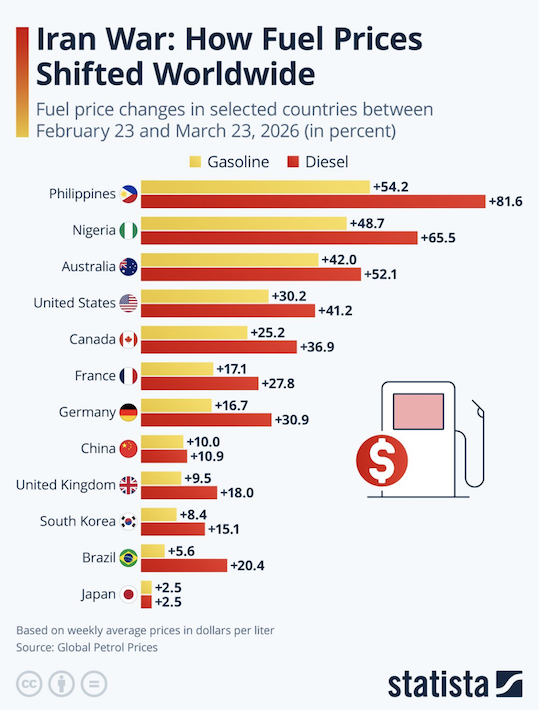
The world’s gold hub is inside an active war zone. Singapore just noticed. Dubai handles approximately 20% of global gold flows with African-mined bullion refined in the UAE and exported to Asia by air. When Iranian strikes forced partial airspace closure in early March, those flows stopped entirely. Gold sat stranded in Dubai warehouses and was sold at discounts of up to $30 per ounce just to clear inventory. India flipped from a $50 discount to the London price to full parity in 48 hours. Singapore’s push to become a gold hub is a direct response to that disruption. It sits outside the Gulf war zone, has no airspace exposure, and is already working with JPMorgan, UBS and ICBC Standard Bank on vaulting and clearing infrastructure. The Monetary Authority of Singapore is evaluating vault space near Changi Airport specifically to host foreign central bank gold reserves. The Iran war did not just disrupt Dubai’s gold trade. It exposed Dubai’s structural vulnerability as a hub that sits inside a conflict zone. Central bank gold does not move back easily once it moves. 📡CSN24X7
Europe imports 80% of the hydrocarbons it consumes and that oil and gas keeps getting more expensive as they unplug from Russian gas and become hostages of the Strait of Hormuz. Germany resisted deindustrialization during the “China Shock” of the early 2000’s in large part due to the ultra cheap Russian pipeline gas that it built its economy around since the 1970’s oil shocks. France electrified its way out of its oil dependence with 54 large reactors built in 20 years. Today’s Europe is short on domestically produced hydrocarbons, refuses to explore for more and has lost the state and industrial capacity to build nuclear effectively. It has somehow convinced itself that deindustrialization and offshoring emissions to Asia was climate heroism. That buying hydrocarbons from elsewhere rather than producing them at home would absolve them from their sins. Will 1970’s energy literate leadership return to Europe? What do you think?

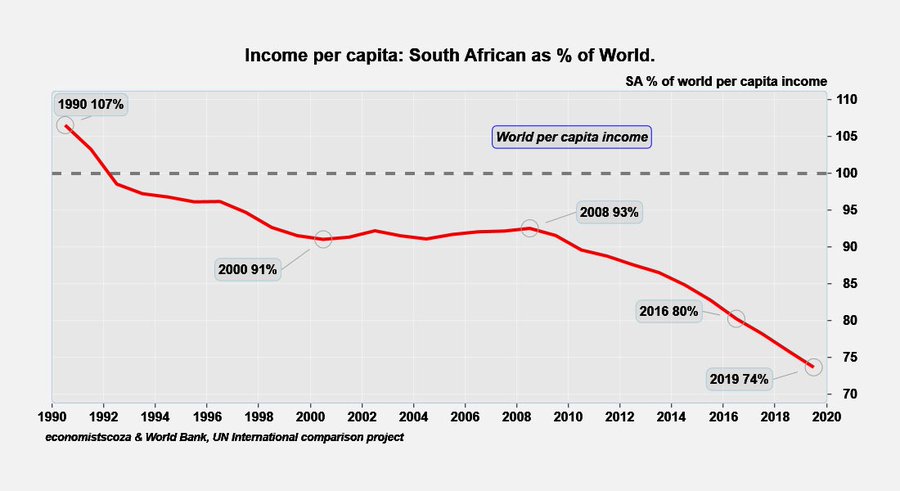
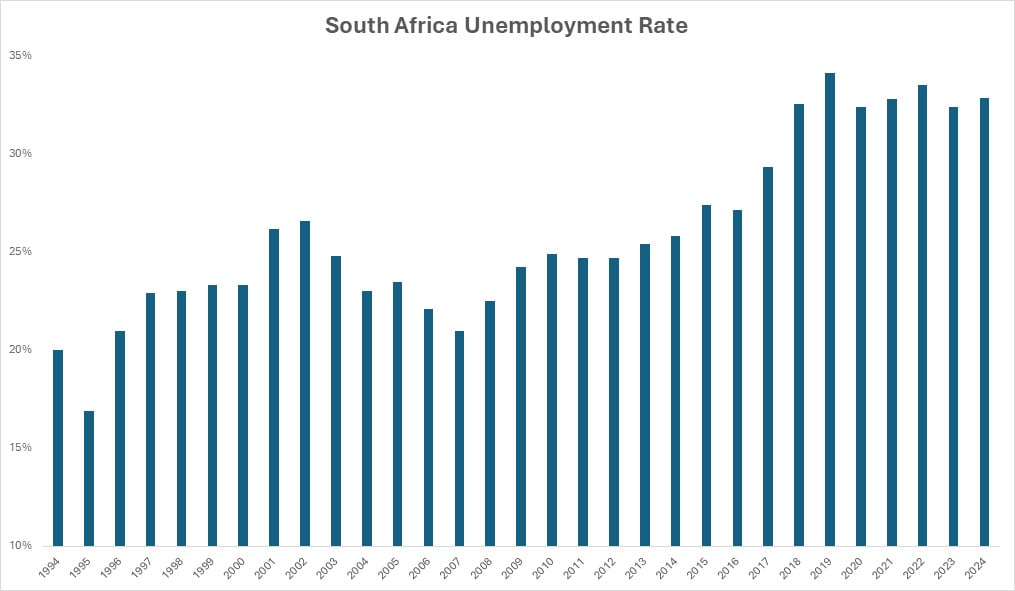
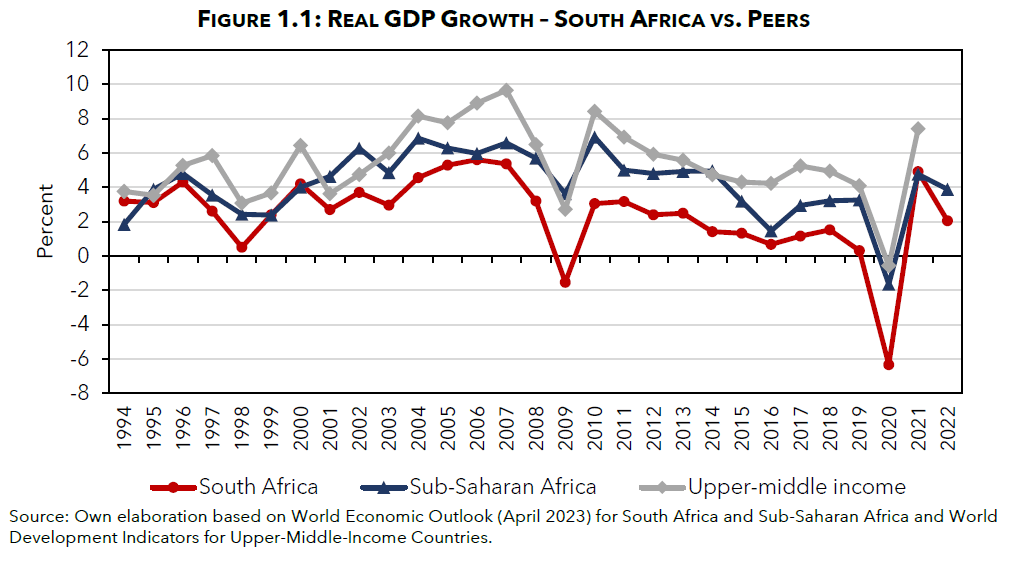
South Africa is a sober reminder that economic growth is not a given. Over 25 years, the income of South Africans in the bottom 50% has fallen substantially, only offset by transfers/benefits.