Brad Chapman

1.6K posts

Brad Chapman

Brad Chapman

@chapmanb

Biologist and programmer @chapmanb.bsky.social @[email protected]

Boston, MA Katılım Aralık 2008
590 Takip Edilen2.7K Takipçiler
Brad Chapman retweetledi
Deniz Kavi
Deniz Kavi@kavi_deniz·
Today we announce the Tamarind Bio assay portal: The wet lab, now driven by software We’ve partnered with @AAlphaBio, @adaptyvbio, and @Ginkgo to bring protein and antibody assays directly into Tamarind, making it much easier to move from computational design to real experimental feedback. Protein design is not bottlenecked by generating candidates, but by validating them quickly enough to learn from them. We’re starting with the workhorse experiments: protein-protein binding affinity characterization, developability, expression, and stability. The Assay Portal helps scientists: Get fast, low-friction, cost-effective validation of designed proteins and antibodies, transparent pricing without needing separate MSAs Specialize models on their own experimental data for affinity maturation, developability, and property optimization Run lab-in-the-loop campaigns where each assay result improves the next design cycle Turn wet lab data into model training infrastructure, including RL environments and large-scale datasets for pretraining As computational molecular design matures, we believe integration between wet lab feedback and continuous learning will yield the highest quality results. That’s why we’re excited to bring the unique, differentiated capabilities of our partners to the leading biopharma R&D organizations.
English

6
29
171
19.1K
Brad Chapman retweetledi
Adam C Palmer
Adam C Palmer@ac_palmer·
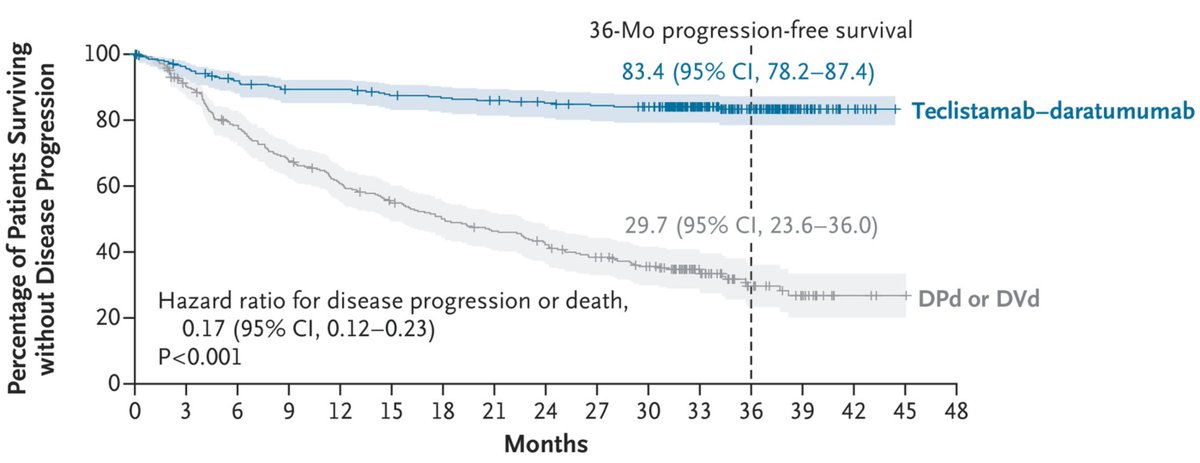
Sometimes cancer treatments are subject to hype, but here’s an advance that’s been understated: Combining a T-cell engager antibody with daratumumab allowed >80% of people with relapsed or refractory multiple myeloma to go years without progression. Might be *permanent* control
Adam C Palmer tweet media
Blood Cancer United@BloodCancerUtd

Encouraging news for patients living with multiple myeloma. The FDA has expanded the use of a combination treatment for multiple myeloma, allowing it to be used earlier when the disease returns or starts to worsen. “This approval is due to years of scientific progress and will be a meaningful improvement for many patients,” says Dr. Gruenbaum. Learn more: bloodcancerunited.org/resources/news…

English
11
68
346
79.3K
Brad Chapman retweetledi
Pranam Chatterjee
Pranam Chatterjee@pranamanam·
Now, THIS is something I am VERY excited about. 🤩 The farther out we can predict clinically, the better we can guide strong molecular generators to design therapeutically-ready molecules! 💊 Super proud of @kalyanmpalepu (one of my first students!) for building this!! ☺️ My vision has always been a drug development paradigm where a model (like Warpseed) could guide and/or tilt a multi-objective discrete generator (i.e. discrete diffusion/flow matching) to enforce clinical success when generating peptides or small molecules, alongside other ADMET and developability properties. 🧪 Best of luck to the team and excited to see where this goes! 🤗
Rohil Badkundri@rohilbadkundri

We used AI to predict the failure of a Phase 3 trial before the results were announced. Today, we're publishing 10 more predictions for the future. Thread 🧵

English
1
8
116
50.5K
Brad Chapman retweetledi
Heng Li
Heng Li@lh3lh3·
LongcallR for competitive SNP calling and haplotype phasing, and simplified allele-specific analysis with long RNA-seq reads. Found ~100 junctions affected by SNPs per sample with most junctions novel. Published in @naturemethods. Read at rdcu.be/faKhL
NENG HUANG@csuhuangneng

Excited to share our new Nature Methods paper on longcallR, a Rust tool for long-read RNA-seq that jointly performs SNP calling and phasing, and enables haplotype-specific junction analysis. Thanks to @lh3lh3 for the support and guidance. Paper: nature.com/articles/s4159…

English
0
18
53
5.1K
Brad Chapman retweetledi
Heng Li
Heng Li@lh3lh3·
If you have HiFi or Nanopore R10 metagenomic data, try myloasm from Jim Shaw. You will probably find more complete circular contigs to higher resolution especially for R10 or environmental samples. Scalable to >500GB data. Written in Rust. Published in @NatureBiotech
Jim Shaw@jim_elevator

Myloasm, our long-read metagenome assembler, is now published! w/ Max Marin & @lh3lh3 Very rewarding after > a year of development and countless hours thinking about assembly. Thanks to beta testers, Li lab, and reviewers for helpful feedback. Link: rdcu.be/famFj

English
0
32
91
8.7K
Brad Chapman retweetledi
Debora Marks
Debora Marks@deboramarks·
Meet evedesign: a new open-source ML framework that makes protein design accessible and interoperable. 📢 See our post: deboramarkslab.substack.com/p/evedesign-bi… Protein design models are powerful, but combining them shouldn’t require custom glue code. ✅Combine models for multi-objective optimization ✅Integrate lab-in-the-loop experimental of data ✅100% secure: run on your own infra, no data sharing Get started building therapeutics & industrial enzymes today 👇 📄Paper: biorxiv.org/content/10.648… 💻Code: github.com/evedesignbio 🌐Webserver: evedesign.bio Reach out to collaborate: hello@evedesign.bio
Debora Marks tweet media
English
2
65
260
14.7K
Brad Chapman retweetledi
Richard McElreath 🐈‍⬛
Richard McElreath 🐈‍⬛@rlmcelreath·
Statistical Rethinking 2026 is done: 20 new lectures emphasizing logical & critical statistical workflow, from basics of probability to causal inference to reliable computation to sensitivity. It's all free, made just for you. Lecture list & links: #calendar--topical-outline" target="_blank" rel="nofollow noopener">github.com/rmcelreath/sta…
English
14
296
1.6K
110.8K
Brad Chapman retweetledi
Simon Kohl
Simon Kohl@saakohl·
Today we're launching Latent-Y: the world's first autonomous agent for drug design, lab-validated end to end. Give it a research goal. Latent-Y reasons, designs, iterates, and delivers lab-ready antibodies, autonomously or collaboratively, with the biological reasoning of a PhD protein design expert. Technical report: tinyurl.com/latent-y-techr… Blog post: latentlabs.com/latent-y Apply for access: platform.latentlabs.com
English
36
148
866
110.3K
Brad Chapman retweetledi
Hani Goodarzi
Hani Goodarzi@genophoria·
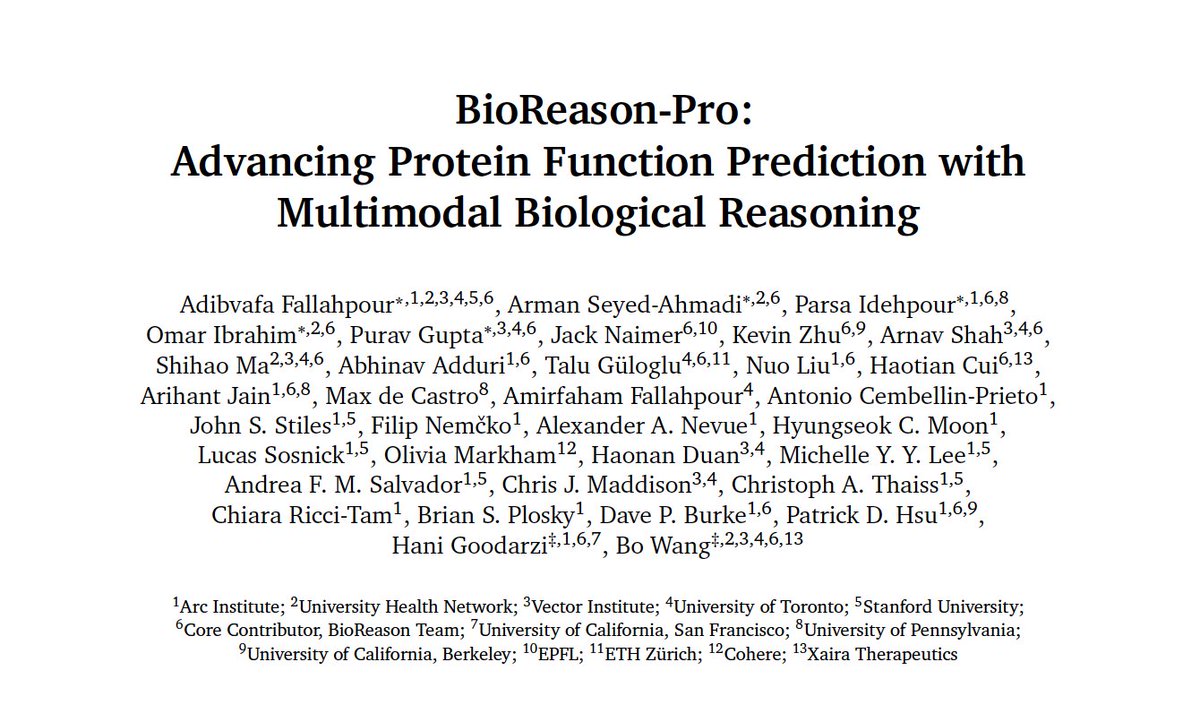
BioReason-Pro, the second model in our BioReason series is here! Congratulations @adibvafa, @arman1sa, @Radii2323, and the entire BioReason team!
Hani Goodarzi tweet media
English
2
16
48
6.6K
Brad Chapman retweetledi
Tychele Turner
Tychele Turner@tycheleturner·
❄️ Introducing SNOW - the Second-pass de Novo variant Offspring Workflow. A Python toolkit for cleaning, merging, phasing, and annotating de novo variants from trio sequencing data for QC and downstream analysis. Works with short-read and long-read data, adds parent-of-origin annotation, and yes; there is a snowfall mode ☃️ github.com/tycheleturner/… #genomics #bioinformatics #denovo
English
0
2
12
870
Brad Chapman retweetledi
Aaron Ring
Aaron Ring@aaronmring·
How specific are therapeutic monoclonal antibodies, really? In our new paper, @Yile_Dai led a collaboration with Adimab to profile 174 FDA-approved and clinical-stage mAbs against 6,172 human extracellular proteins. What we found surprised us.🧵 sciencedirect.com/science/articl…
English
16
116
399
55.9K
Brad Chapman retweetledi
Sri Kosuri
Sri Kosuri@srikosuri·
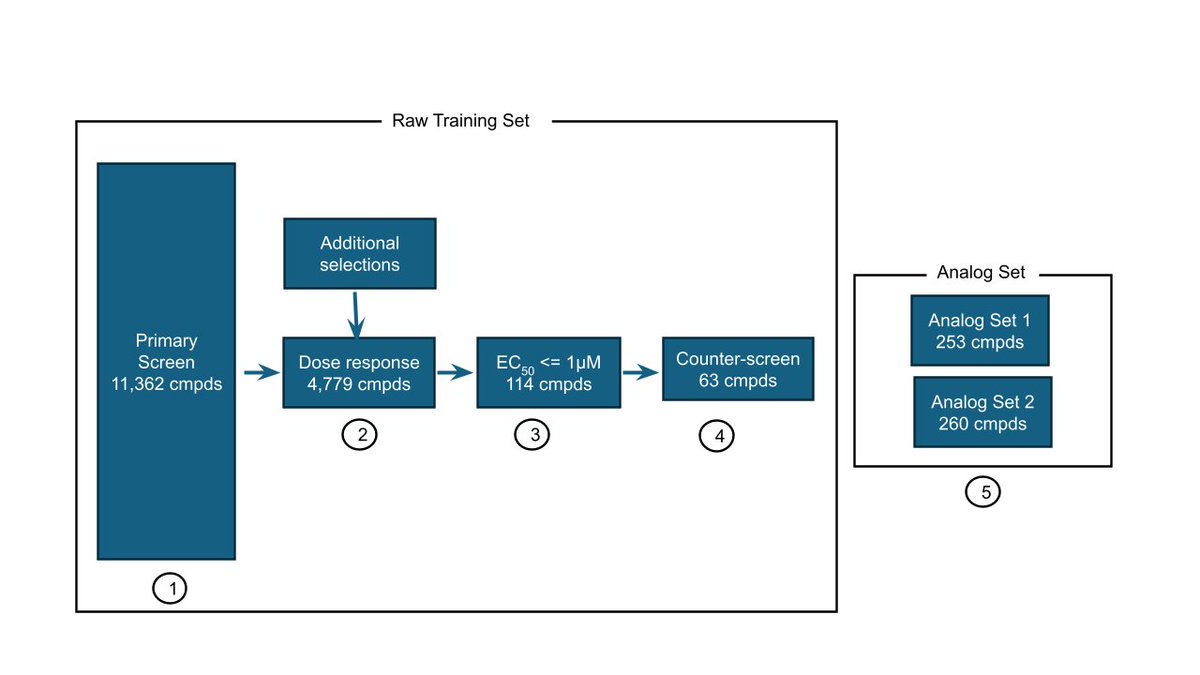
Calling all AI4Science Model builders! Announcing OpenADMET's 3rd Blind Challenge: Predicting PXR Induction We are releasing the largest self-consistent datasets on PXR induction and producing 110 new structures of PXR-ligand complexes. Details 👇 1/2
Sri Kosuri tweet mediaSri Kosuri tweet mediaSri Kosuri tweet media
English
2
15
42
10.4K
Brad Chapman retweetledi
Georgia Channing
Georgia Channing@cgeorgiaw·
I’ve been at a small conference this week, one where the AI people have been presenting early in the week and the domain science people will be presenting later in the week. At the end of the talks last night, the conversation turned very doomer with all the AI people talking about how well Claude Code or Codex can do hill-climbing AI research and how we (the AI people) are maybe all about to lose our jobs! The domain science people expressed their shock at this attitude because, though Claude Code can be let loose to complete lots of banal hill-climbing AI research projects, basically no experimental science is hill-climbing or even metric driven. Most scientific fields are about much more taste-driven exploration that is incredibly difficult to make metrics for or to parameterize, and this misunderstanding from the AI community is one of the most damaging things to the realization of great science with AI. Seems like we’re actually pretty far from having AI models do that… Over the summer, @evijit and I wrote about this (and some other things hindering AI for science) at a bit more length, and today that work is out in Patterns! So, if you care about these problems and the real challenges in bringing AI to science in the real work, I recommend giving it a read!
Georgia Channing tweet media
English
23
92
596
79.4K
Brad Chapman retweetledi
Christian Dallago
Christian Dallago@sacdallago·
🧵 We ran the largest head-to-head benchmark of protein binder design methods in the wet lab. Project page: research.nvidia.com/labs/genair/pr… 1 million designs. 127 targets. RFdiffusion, BindCraft, BoltzGen, and Proteina-Complexa — all tested side by side.👇
English
4
65
224
30K
Brad Chapman retweetledi
Elizabeth Wood 🧬🖥️🥼
Our paper on variational synthesis is out now in Nature Biotechnology. Manufacturing-aware generative models — AI architectures that know how to physically build their own designs — enabling synthesis of DNA encoding ~10^16 AI-designed proteins at a cost that would be roughly a quadrillion dollars using conventional methods.
Elizabeth Wood 🧬🖥️🥼 tweet media
English
6
36
196
28.5K
Brad Chapman retweetledi
Georgia Channing
Georgia Channing@cgeorgiaw·
Absolutely killer new blog from one of the OGs in open protein engineering, @amelie_iska. This is the only piece of writing I've come across that explains to someone in non-specialist language why you need each of these models and what role they all have to play in making sure that your protein design pipeline isn't actually splitting out garbage that you'll only discover after spending tens of thousands on wetlab validation. She does a deep dive on how to build a full-stack protein design sequence model with all the appropriate filters so that we, in her words, "do not merely reconstruct plausible sequences, but actively sample diverse, high-value protein variants under a multi-fidelity oracle stack." This blog covers all the big models that are used in industry for these kinds of generative pipelines (i.e., SPURS, BioEmu, UMA, GraphKcat, KcatNet, and MMKat) and why you need them all.
English
1
23
135
8.3K
Brad Chapman retweetledi
Brian Naughton
Brian Naughton@btnaughton·
Another amazing post from Nick Boyd and Sam Guns at Escalante Bio, finetuning and RLing BoltzGen on a small dataset, but showing extremely strong results. This process, borrowed from LLMs, combines the best of hallucination and generative into one! blog.escalante.bio/teaching-gener…
Brian Naughton tweet media
English
3
25
108
6.2K
Brad Chapman retweetledi